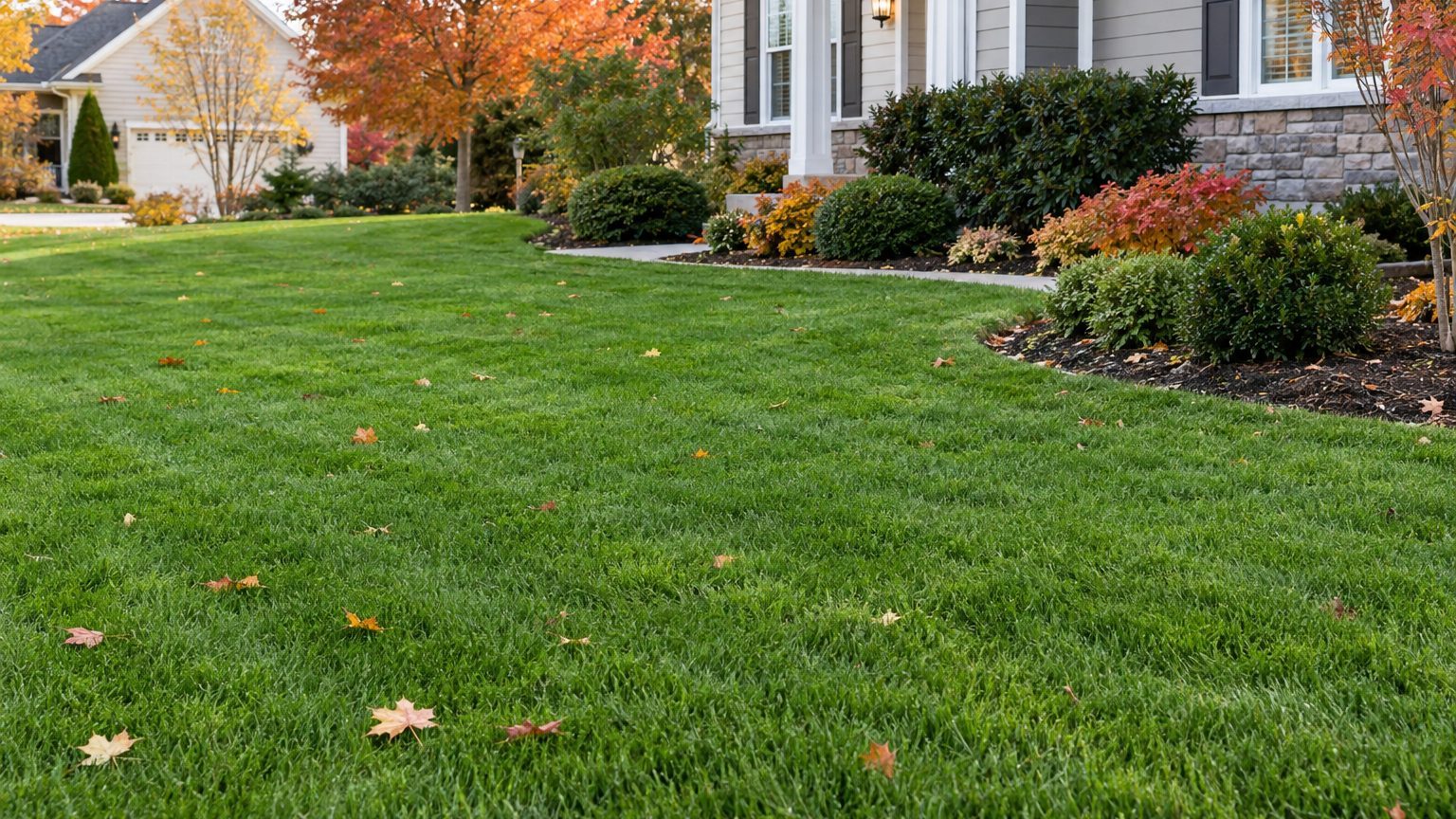
Grass tells you what it needs long before the calendar does: a lawn that greens up and starts to need mowing is awake, and one that turns straw-colored during summer heat may be resting rather than dying. Growing a good lawn comes down to knowing which grass you have, what season it wants to work in, and when your state’s window opens.
Lawn Care Calendar by Season
A lawn follows the same rhythm each year, but the dates shift with climate and with the type of grass. The work changes with climate and grass type, and the by-state guide later on helps you find the right local window.
- In early spring, the lawn wakes slowly, so rake out matted leaves and debris to let light and air reach the crowns. Hold off on heavy feeding until the grass is actually growing, because fertilizer applied to a sleeping lawn mostly feeds weeds.
- Once the soil warms, warm-season grasses such as Bermudagrass and zoysiagrass take off. This is the time to seed, sod or plug them, since young plants need warm soil to root fast.
- As growth accelerates, mowing becomes regular. Cut often enough that you avoid removing too much of the blade at once, which helps protect the roots and shade out weed seedlings.
- In midsummer, cool-season lawns slow down in the heat and may go off-color. Water deeply and less often rather than a little each day, so roots chase moisture downward.
- In early fall, cool-season grasses recover, and warm soil with cooler air is ideal for seeding and overseeding tall fescue, Kentucky bluegrass and perennial ryegrass. New seedlings root well before winter arrives.
- As cold settles in, growth slows; warm-season lawns may turn tan and go dormant, while cool-season lawns may stay green but grow more slowly. Keep leaves off the grass and stay off frozen turf, which breaks easily underfoot.
Dormancy alone does not mean grass is dead; healthy turf can green up when growing conditions return.
From the almanac
When to seed the lawn, state by state
The months each state's extension calendar marks for this, kept inside that state's own frost-free season. Open your state for the frost dates, the USDA zone and the rest of the year.
Northeast
- ConnecticutAug–SepUSDA 6a-7b
- MaineAug–SepUSDA 3b-6a
- MassachusettsAug–SepUSDA 5a-7b
- New HampshireAug–SepUSDA 3b-6a
- New JerseyAug–SepUSDA 6a-7b
- New YorkAug–SepUSDA 3b-7b
- PennsylvaniaAug–SepUSDA 5a-7b
- Rhode IslandAug–SepUSDA 6a-7b
- VermontAug–SepUSDA 3b-5b
Southeast
- AlabamaMayUSDA 7a-9a
- ArkansasAugUSDA 6b-8a
- DelawareAug–SepUSDA 7a-8a
- FloridaMayUSDA 8b-11b
- GeorgiaMayUSDA 6a-9b
- KentuckyAugUSDA 6a-7a
- LouisianaMayUSDA 8a-10a
- MarylandAug–OctUSDA 5b-8a
- MississippiMayUSDA 7b-9a
- North CarolinaAugUSDA 5b-8b
- South CarolinaMayUSDA 7a-9a
- TennesseeAugUSDA 5b-8a
- VirginiaAugUSDA 5a-8b
- West VirginiaAug–SepUSDA 5a-7a
Midwest
- IllinoisAug–SepUSDA 5a-7b
- IndianaAug–SepUSDA 5b-7a
- IowaAug–SepUSDA 4b-6a
- KansasAugUSDA 5b-7a
- MichiganAug–SepUSDA 4a-6b
- MinnesotaAug–SepUSDA 3a-5a
- MissouriAugUSDA 5b-7b
- NebraskaAug–SepUSDA 4a-5b
- North DakotaAug–SepUSDA 3a-4b
- OhioAug–SepUSDA 5b-6b
- South DakotaAug–SepUSDA 3b-5b
- WisconsinAug–SepUSDA 3b-6a
Southwest
West
- AlaskaJunUSDA 1a-8a
- CaliforniaSep–OctUSDA 5a-11a
- ColoradoAug–SepUSDA 3b-7b
- IdahoAug–SepUSDA 3b-7b
- MontanaAug–SepUSDA 3a-6a
- NevadaAug–SepUSDA 4a-10a
- UtahAug–SepUSDA 4a-9a
- WyomingAug–SepUSDA 3a-6a
Pacific Northwest
Canada
- AlbertaAug–SepZone 4a
- British ColumbiaAug–SepZone 9a
- ManitobaAug–SepZone 3b
- New BrunswickAug–SepZone 5a
- Newfoundland and LabradorAug–SepZone 6a
- Northwest TerritoriesJunZone 1b
- Nova ScotiaAug–SepZone 6b
- NunavutJunZone 0a
- OntarioAug–SepZone 7a
- Prince Edward IslandAug–SepZone 5b
- QuebecAug–SepZone 5b
- SaskatchewanAug–SepZone 3a
- YukonJunZone 1b
Sources: state frost facts and Penn State Extension — Lawn Management through the Seasons; Lawn Establishment · UMass Extension — BMPs for Lawn and Landscape Turf, Appendix B (calendar) · Clemson Cooperative Extension, HGIC — Bermudagrass / Zoysiagrass / Centipedegrass / St. Augustinegrass maintenance calendars · University of Tennessee Extension — PB1903 Lawn Maintenance Calendar (2025). A state with no marked month is not shown.
Types of Lawn Grass and How to Tell Them Apart
Grasses fall into cool-season and warm-season groups. Cool-season types grow hardest in spring and fall and stall in summer heat. Warm-season types do the opposite, thriving in summer and browning after hard frosts.
Between them lies the transition zone, a band across the middle of the country where winters are too cold for some warm-season grasses and summers too hot for most cool-season ones. Lawns there often lean on tall fescue or on hardy zoysiagrass.
| Grass | Season | How it does here |
|---|---|---|
| Kentucky bluegrass | Cool | Dense and self-repairing, best in the northern states, needs regular water in summer |
| Tall fescue | Cool | Deep roots and good heat tolerance, a common choice in the transition zone |
| Perennial ryegrass | Cool | Sprouts quickly, often mixed into seed blends and used for overseeding |
| Bermudagrass | Warm | Loves full sun and heat, spreads aggressively, turns tan in cold weather |
| Zoysiagrass | Warm | Dense, slow to establish, reaches north into the transition zone |
| St. Augustinegrass | Warm | Broad blades, tolerates some shade, suited to the Gulf Coast and the South |
Fine fescues handle shade and poor soil in cool regions, while centipedegrass and bahiagrass are low-maintenance choices on the acidic, sandy soils of the Southeast. To identify what you have, look at the blade and the habit. Fine, upright blades in a clump often mean fescue, while creeping stems running across the surface (stolons) point to Bermudagrass or St. Augustinegrass.
Best Grass Types by Region
Winter cold, summer heat and rainfall decide which grass holds up, and the same state can ask for different choices in different corners.
- Upper Midwest: In Minnesota and Wisconsin, Kentucky bluegrass and fine fescues survive hard winters and rebound each spring. Warm-season grasses need careful local selection in this region.
- Gulf Coast: In Florida, Alabama and coastal Texas, St. Augustinegrass, centipedegrass and Bermudagrass handle the heat and humidity. Cool-season grasses fade in the long summers.
- Transition zone: In Kentucky, Missouri and Virginia, tall fescue is a common cool-season choice, and zoysiagrass and Bermudagrass are the warm-season options. Each trades some summer or winter stress for the other.
- Puget Sound and the Willamette Valley: Mild, damp weather suits perennial ryegrass, fine fescues and bentgrass, which stay green through much of the year. Summers can run dry, so deep watering matters.
Your state’s lawn guide narrows these choices to your own climate, with local mowing heights and seeding months.
Common Lawn Problems and What Causes Them
Brown Patches in Midsummer

Straw-colored grass that still has firm, white roots and greens up after a good soaking is usually heat or drought dormancy. If the patches are circular, with a darker ring at the edge during humid weather, a fungal disease is more likely. Water deeply in the morning and avoid heavy nitrogen in hot spells.
Thin Grass Under Trees
Thin turf under mature trees usually lacks light, and the roots also compete with the trees for water. Raise the mowing height, choose a shade-tolerant grass such as fine fescue, and overseed in the right season for your type.
Weeds Filling Bare Spots
Weeds move into gaps, so a thin lawn with dandelions and crabgrass is often a lawn that was cut too short or seeded too lightly. Mow higher, overseed in the cool-season grass window or the warm-season one, and let dense turf crowd them out.
Spongy, Matted Turf
A lawn that feels springy underfoot, with a brown layer of stems and roots above the soil, has built up thatch. Hard, compacted soil is a separate cause, and resistance to a screwdriver can point to compaction, though dry or rocky soil can also resist it. Dethatch or aerate when your grass is actively growing so it recovers fast.
Lawn Care Guides by State
Dates depend on where you live, so a state guide is the quickest way to turn general advice into a plan for your yard.
- Your state’s lawn care guide gives the seeding, feeding and mowing months for your climate, so read it before the season you want to act in.
- The grass types pages compare species in more detail, and they help most when you are choosing seed or sod.
- The lawn calendar maps the year for your zone, and it is worth checking again as each season turns.
Common Questions
How Tall Should You Mow a Lawn?
The right mowing height depends on the grass. Cool-season grasses such as tall fescue and Kentucky bluegrass do well at a higher cut, while Bermudagrass and zoysiagrass tolerate lower mowing. Sharp mower blades leave a cleaner cut and less browning at the tips.
Is It Better to Seed or Lay Sod?
Seed costs less and offers more varieties, but it needs steady moisture while it establishes. Sod gives an instant lawn and suits slopes and quick fixes, but it costs more and must be kept watered until it roots. Some warm-season grasses are mostly planted as sod, plugs or sprigs.
Why Does a Lawn Turn Brown in Winter?
Warm-season grasses go dormant when soil cools, so tan turf in a Florida or Georgia winter is normal. A cool-season lawn that browns in the cold may be stressed from salt, dry wind or traffic on frozen grass, which is worth checking before you blame the type.
Can You Mix Grass Types in One Lawn?
Blends of the same season, such as bluegrass with fine fescue, work well and spread the risk. Mixing cool-season and warm-season grasses usually leaves a patchy lawn because each goes dormant at a different time.
Every page in this guide
Care
- When to Aerate Your Lawn, and How to Do It
- When to Dethatch a Lawn
- Fall and Winter Lawn Care, Month by Month
- When to Fertilize Your Lawn
- How High to Mow, by Grass Type and by Season
- How Much to Water a Lawn, and How Often
Choosing
Diseases
- Lawn Diseases: Brown Patch, Dollar Spot and Leaf Spot
- Anthracnose in Lawns: Signs, Treatment and Prevention
- Brown Patch in Lawns: Signs, Treatment and Prevention
- Dollar Spot in Lawns: Signs, Treatment and Prevention
- Fusarium Blight in Lawns: Signs, Treatment and Prevention
- Gray Leaf Spot in Lawns: Signs, Treatment and Prevention
- Large Patch in Lawns: Signs, Treatment and Prevention
- Pink Snow Mold (Microdochium patch): Signs, Treatment and Prevention
- Powdery Mildew on Lawns: Signs, Treatment and Prevention
- Pythium Blight in Lawns: Signs, Treatment and Prevention
- Red Thread in Lawns: Signs, Treatment and Prevention
- Spring Dead Spot in Lawns: Signs, Treatment and Prevention
- Summer Patch in Lawns: Signs, Treatment and Prevention
- Take-all Patch in Lawns: Signs, Treatment and Prevention
Growing
- When to Overseed Your Lawn, and How Much Seed
- When to Plant Grass Seed, State by State
- When to Lay Sod
Guides
- Lawns in Drought: Dormancy, Watering and Recovery
- Lawn Edges and Bed Lines
- Leveling a Bumpy Lawn
- Fixing Bare Spots in a Lawn, Step by Step
- Grass for Shade: Which Species Actually Grow There
- Lawn Weeds by Season: How to Identify and Stop Them
Pests
- Lawn Pests, Season by Season: How to Spot and Stop Them
- Armyworms in Lawns: How to Spot Them and Get Rid of Them
- Billbugs in Lawns: How to Spot Them and Get Rid of Them
- Black Turfgrass Ataenius: How to Spot Them and Get Rid of Them
- Chinch Bugs in Lawns: How to Spot Them and Get Rid of Them
- Crane Fly Larvae in Lawn: How to Spot Them and Get Rid of Them
- Cutworms in Lawns: How to Spot Them and Get Rid of Them
- Fiery Skipper in Lawns: How to Spot Them and Get Rid of Them
- Nematodes in Lawns: How to Spot Them and Get Rid of Them
- Moles in Lawns: How to Spot Them and Get Rid of Them
- Sod Webworms in Lawns: How to Spot Them and Get Rid of Them
- White Grubs in Lawns: How to Spot Them and Get Rid of Them
Problems
- Lawn Problems: Brown Patches, Yellowing and Thin Grass
- Compacted Lawn Soil: What It Means and What to Do
- Dog Urine Spots: What It Means and What to Do
- Rings in the Lawn (fairy ring): What It Means and What to Do
- Fertilizer Burn: What It Means and What to Do
- Grass Tips Turning White After Mowing: What It Means and What to Do
- Herbicide Damage: What It Means and What to Do
- Mole Tunnels in the Yard: What It Means and What to Do
- Mushrooms in the Lawn: What It Means and What to Do
- Scalped Lawn: What It Means and What to Do
- Slime Mold on Grass: What It Means and What to Do
- Standing Water in the Yard: What It Means and What to Do
- Thatch: What It Means and What to Do
- Thin Grass in Shade: What It Means and What to Do
- Lawn Turning Yellow: What It Means and What to Do
Grass types
- Bahiagrass: Zones, Mowing Height and Care
- Bermudagrass: Zones, Mowing Height and Care
- Carpetgrass: Zones, Mowing Height and Care
- Centipedegrass: Zones, Mowing Height and Care
- Fine Fescues: Zones, Mowing Height and Care
- Kentucky Bluegrass: Zones, Mowing Height and Care
- Perennial Ryegrass: Zones, Mowing Height and Care
- Rough Bluegrass: Zones, Mowing Height and Care
- Seashore Paspalum: Zones, Mowing Height and Care
- St. Augustinegrass: Zones, Mowing Height and Care
- Tall Fescue: Zones, Mowing Height and Care
- Zoysiagrass: Zones, Mowing Height and Care
Weeds
- Annual Bluegrass (Poa annua) in Lawns: How to Identify It and Kill It
- Barnyard Grass in Lawns: How to Identify It and Kill It
- Bermudagrass in a Lawn: How to Identify It and Kill It
- Black Medic in Lawns: How to Identify It and Kill It
- Broadleaf Plantain in Lawns: How to Identify It and Kill It
- Buckhorn Plantain in Lawns: How to Identify It and Kill It
- Burclover in Lawns: How to Identify It and Kill It
- Chickweed in Lawns: How to Identify It and Kill It
- Crabgrass in Lawns: How to Identify It and Kill It
- Dallisgrass in Lawns: How to Identify It and Kill It
- Dandelion in Lawns: How to Identify It and Kill It
- English Daisy in Lawns: How to Identify It and Kill It
- Field Bindweed in Lawns: How to Identify It and Kill It
- Foxtail in Lawns: How to Identify It and Kill It
- Goosegrass in Lawns: How to Identify It and Kill It
- Common Groundsel in Lawns: How to Identify It and Kill It
- Kikuyu Grass in Lawns: How to Identify It and Kill It
- Prostrate Knotweed in Lawns: How to Identify It and Kill It
- Mallow in Lawns: How to Identify It and Kill It
- Nutsedge in Lawns: How to Identify It and Kill It
- Common Purslane in Lawns: How to Identify It and Kill It
- Spotted Spurge in Lawns: How to Identify It and Kill It
- White Clover in Lawns: How to Identify It and Kill It
- Wild Onion and Wild Garlic in Lawns: How to Identify It and Kill It
- Creeping Woodsorrel in Lawns: How to Identify It and Kill It