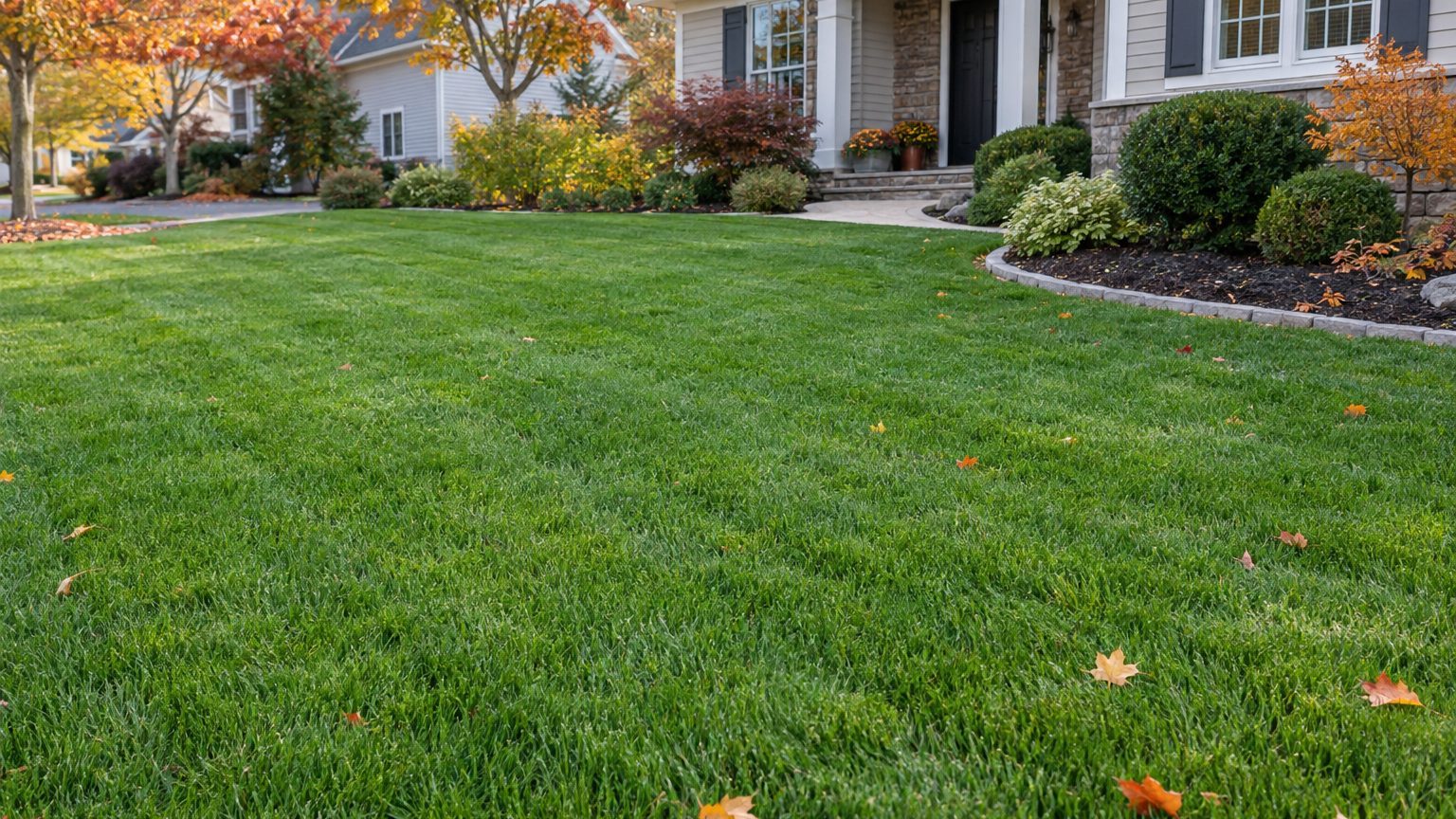
Wide, flat blades the color of a deep green lake, and runners crawling across the soil toward the driveway: that is St. Augustinegrass in a Gulf Coast summer. It is a warm-season lawn grass for coastal and southern yards, mowed at 2 to 4 inches, and it grows in places where other lawns sulk.
What Is St. Augustinegrass?
St. Augustinegrass is a warm-season grass, so it grows hard in summer heat and slows down or goes tan when the weather cools. It spreads by creeping stems above the soil, which is why a healthy lawn knits together into a thick mat with broad, coarse blades.
Its best trait is shade. Its shade tolerance is excellent, and it is the most shade-tolerant of the warm-season grasses. Drought tolerance is good, wear tolerance is only fair, and cold hardiness is poor.
The budget changes here. This grass cannot be started from seed. You establish it with sod, sprigs or plugs, and that makes a new lawn cost more up front than a bag of seed would.
From the almanac
Lawn in your state
The dates on this page depend on where you live. Your state's page carries its frost dates, its USDA zones and the year laid out month by month.
Northeast
Southeast
- Alabama
- Arkansas
- Delaware
- Florida
- Georgia
- Kentucky
- Louisiana
- Maryland
- Mississippi
- North Carolina
- South Carolina
- Tennessee
- Virginia
- West Virginia
Midwest
Southwest
West
Pacific Northwest
Canada
Where Does St. Augustinegrass Grow Best?
It belongs where winters are mild and summers are long, and it struggles as soon as hard freezes become routine; the figures below come from a reference city in each state.
- Gulf Coast: Florida, Louisiana, Mississippi and Alabama are home ground. Louisiana’s coldest month averages a low of 46F, so the grass rarely meets the cold it cannot take.
- Texas and the Southwest: Texas, Arizona and Nevada count as first-choice warm-season territory. Arizona piles up 169 days at 90F or more, which suits a heat-loving grass as long as you water it.
- Coastal California and Hawaii: California has only 2 days at 90F or more and Hawaii’s coldest month averages a low of 67F, so cold is not the worry in either place.
- Oklahoma, Kansas and Tennessee: these sit in the transition zone, where St. Augustinegrass is a compromise and no grass excels. Kansas drops to a low of 22F in its coldest month, which is hard on a grass with poor cold hardiness.
- Nebraska, Iowa, Ohio and Indiana: winters are too cold for it to hold. Iowa’s coldest month averages a low of 14F, so plant tall fescue or Kentucky bluegrass instead.
A state is not a zone, so the far ends of a large state can fall into the neighboring group. The state selector right below this section takes you to the page for your own state.
How to Care for St. Augustinegrass Through the Year
Spring Green-Up
St. Augustinegrass wakes with soil warmth, not with the last frost date. Early warmth will not do it, so wait until the lawn is visibly greening across the whole yard before you start feeding it.
Spring is also the usual time to lay sod, sprigs or plugs, because the runners need a long warm season to fill in. Keep new pieces moist and off limits to foot traffic while they root.
Mowing Height
Mow at 2 to 4 inches, and lean toward the taller end for most yards. In Georgia, 2 to 3 inches is suggested, with up to 4 inches acceptable.
Dwarf varieties are the exception, and they want to stay near 2.5 inches. Cutting a standard type too low exposes the runners and invites weeds, so raise the deck before you think about lowering it.
Summer Heat

Good drought tolerance does not mean you can ignore a dry spell. When blades fold and the lawn takes on a grayish cast, water deeply and let the soil dry a little before the next soaking.
Mow high in the hottest stretch. The extra leaf shades the soil and the runners, and it helps the grass through dry weather.
Fall
Growth slows as nights cool, and the lawn needs time to harden off before winter. Skip heavy nitrogen late in the season, since soft new growth is what a freeze damages first.
Keep mowing at a steady height while the grass is still growing, and rake leaves off the lawn so they do not smother the runners.
Winter
Where winters are mild, expect the lawn to fade to tan and rest. That is dormancy and not death, so a tan lawn with firm, intact runners will come back.
Poor cold hardiness is the real winter risk. In the cooler edge of its range, keep traffic off frosted blades and expect thin patches in spring after a hard freeze.
St. Augustinegrass Diseases, Pests and Weak Points
The lawn’s strengths and weak spots come down to climate and site more than to pests. Cold is the hard limit, while heavy foot traffic also causes trouble.
If a patch turns yellow or thin, pair what you see with where it is, for example a spreading ring in damp shade, before choosing any treatment.
| Threat | How St. Augustinegrass handles it |
|---|---|
| Cold winters | Poor cold hardiness, so it fails where freezes are hard |
| Dry spells | Good drought tolerance |
| Shade | Excellent tolerance, ahead of other warm-season grasses |
| Foot traffic | Fair wear tolerance |
A lawn that gets daily play from kids or dogs will show the wear sooner than the rest of the table suggests, so plan a worn path or a stepping-stone route for the busiest strip.
Is St. Augustinegrass Right for Your Yard?
It suits a coastal or southern yard with mild winters, especially one with big trees that shade out other lawns. It suits less well a cold-winter yard, a play area, or any plan that depends on a cheap bag of seed.
- In the Gulf Coast, Texas and the Southwest, your state page will help you plan green-up and mowing for your own climate.
- In transition states such as Oklahoma, Kansas and Tennessee, read your state page before buying sod, to see how it compares with other grasses there.
- In cool-season states such as Ohio, Iowa and Nebraska, skip this grass and open your state page to find a lawn that will survive the winter.
Common Questions
Does St. Augustinegrass Stay Green in Winter?
Usually not. It is a warm-season grass, so a tan lawn after cold nights is normal, especially if the color fades evenly across the whole yard. A lawn that stays brown after warm weather returns, with brittle runners, may be dead and needs a closer look before patching.
Is St. Augustinegrass Good for Kids and Pets?
Its wear tolerance is only fair. It will handle casual play, but daily running in the same spot thins it out faster than it recovers, so give heavy-use areas a path or a patch of mulch.
Should You Use Sod, Sprigs or Plugs?
All three work. Sod creates a continuous surface when installed, while sprigs and plugs spread across the soil as they grow. Whichever you pick, keep the new pieces moist while they root.