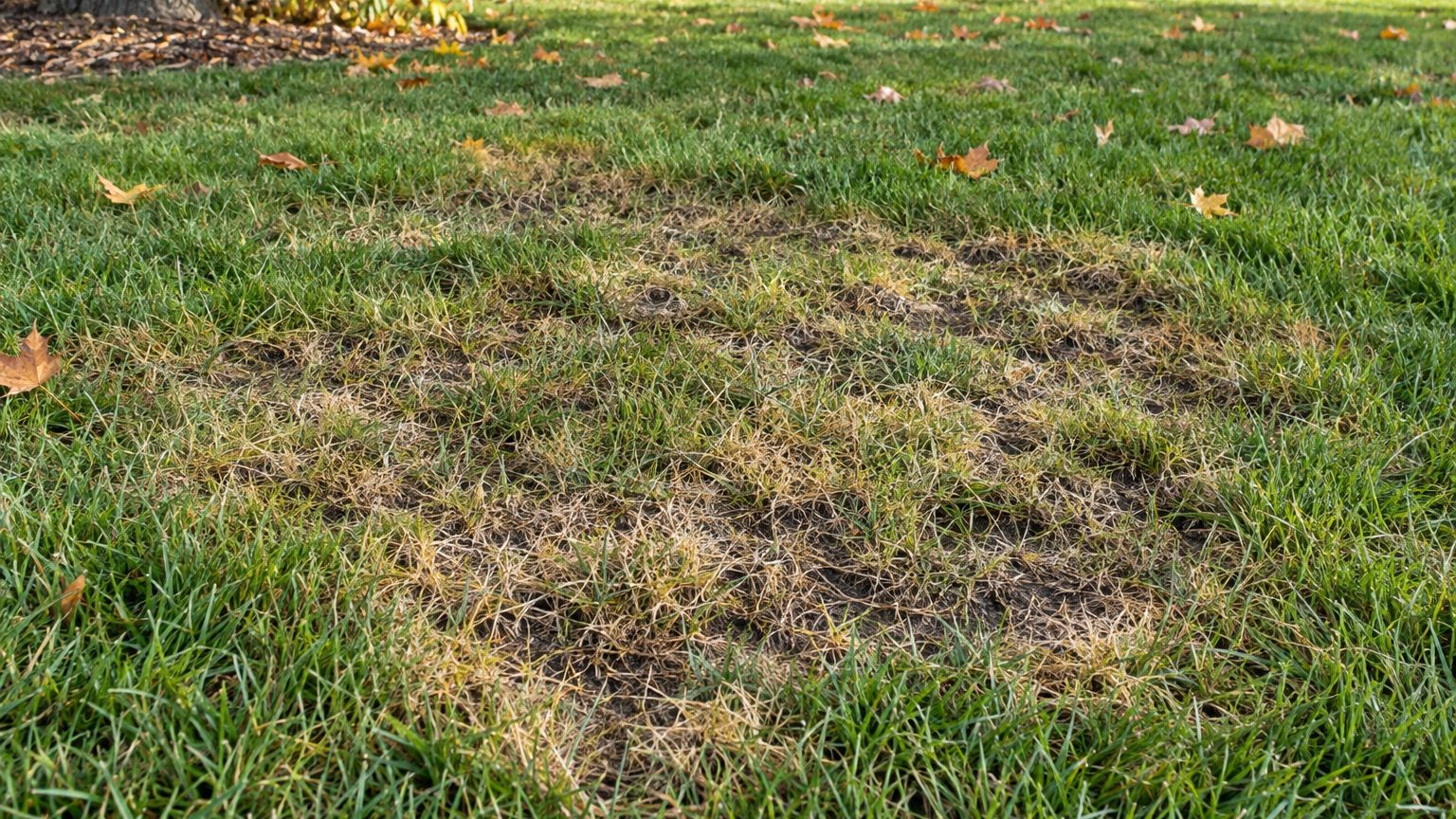
Circular brown patches may be take-all patch, a root disease caused by a fungus; in Pennsylvania, infection occurs in cool, moist weather and symptoms become most conspicuous after hot, dry stress. It attacks the roots rather than the leaves, so the grass above simply runs out of water and dies in rings. Treatment is mostly about soil and stress, not a quick spray.
Take-all Patch Symptoms

Look for circular damage because the shape helps distinguish this disease from other turf problems.
- Circular or ring-shaped dead areas, from a few inches up to 3 feet or more across, are a key sign.
- Young patches start small and light brown or reddish brown before they spread outward.
- Older patches are often slightly sunken, so the lawn dips where the grass has died.
- A patch can grow to over 3 feet in diameter if it goes unchecked.
- Roots pulled from the edge of a patch look dark and rotted, which fits a disease that works below the surface.
Because the damage shows up on top only after the roots have already suffered, the patches often seem to appear overnight.
From the almanac
Lawn in your state
The dates on this page depend on where you live. Your state's page carries its frost dates, its USDA zones and the year laid out month by month.
Northeast
Southeast
- Alabama
- Arkansas
- Delaware
- Florida
- Georgia
- Kentucky
- Louisiana
- Maryland
- Mississippi
- North Carolina
- South Carolina
- Tennessee
- Virginia
- West Virginia
Midwest
Southwest
West
Pacific Northwest
Canada
Lawn Problems Mistaken for Take-all Patch
Necrotic ring spot is a close lookalike because both diseases leave rings and patches in the turf. Each disease calls for its own management, so a careful look is worthwhile.
Take-all patch can also produce a frog-eye pattern, with green grass left alive at the center of a dead ring. That is the same signature necrotic ring spot is known for, which is why the center alone settles nothing.
| Looks like | How to tell them apart |
|---|---|
| Necrotic ring spot | Dead rings with green centers, much like a frog-eye. Check the roots and the grass type, and note whether the patches are sunken. |
| Drought or heat stress | Brown, irregular areas that follow dry ground. Check for round shape and rotted roots, which stress alone does not produce. |
Kentucky bluegrass and creeping red fescue are highly resistant to take-all patch, so rings in those grasses point toward necrotic ring spot or another cause. When the diagnosis stays unclear, your state extension office can examine a sample.
What Causes Take-all Patch
A soil fungus causes the disease. In Pennsylvania, its runner hyphae colonize and infect root systems under cool, moist conditions in fall and spring. By the time the lawn shows color loss, much of the root system is already damaged.
Timing varies by region. According to UC IPM, University of California, the disease principally occurs in late fall and winter, when air temperatures are 50° to 60°F and soils are wet or moist. In Utah, symptoms typically appear in late spring or early summer, and in severe infections they may show in fall as well as in spring.
Stress makes the damage worse. In Pennsylvania, symptoms are most conspicuous after turf has been stressed during periods of hot, dry weather. Soil acidity matters too, because high pH soils favor the fungus, which is why the treatment below starts with the soil rather than the grass.
How to Treat Take-all Patch
No single quick fix clears the disease, so treatment works on the soil and the conditions around the roots.
- Test the soil pH, so you know whether acidity is part of the problem.
- Lower a high pH gradually if needed. According to Penn State Extension, use an acidifying fertilizer on soils above pH 6.5, aiming for 5.5 to 6.0.
- According to Penn State Extension, apply that fertilizer at low rates and water it in during spring and fall, since high rates can burn turf in hot weather above 80°F.
- Keep the lawn evenly watered through dry spells, so stressed roots are not pushed further.
- Reseed or overseed damaged patches with a resistant grass once conditions are right, because sunken dead areas will not refill alone.
According to Utah State University Extension, maintaining soil pH around 5.5 to 6.0 reduces disease severity. For fungicide choices that are approved where you live, ask your state extension service.
How to Prevent Take-all Patch
Prevention follows local conditions, with soil work timed to the season in your region.
- In Pennsylvania, check soil pH in spring and plan any acidifying fertilizer at a low rate, watered in.
- In Utah, watch for new rings in late spring and early summer, when symptoms typically appear.
- During hot, dry weather in Pennsylvania, water deeply and avoid extra stress, since symptoms are most conspicuous after turf has been stressed.
- In Pennsylvania, repeat a light, watered-in acidifying application in fall if your soil pH tests high.
- In late fall and winter in California, watch wet lawns closely, because that is when the disease principally occurs.
Choosing resistant grasses such as Kentucky bluegrass or creeping red fescue when you reseed lowers the risk further.
Common Questions
Can Take-All Patch Kill an Entire Lawn?
It usually damages the lawn in rings that widen over time, so a large area can be affected if the disease is left alone. Patches can grow to over 3 feet across, and older patches are often slightly sunken.
Does Take-All Patch Come Back Every Year?
It can return when the same wet, cool or stressed conditions come back, because the fungus stays in the soil. Managing soil pH and stress is the way to lower the odds.
Should You Reseed Right Away?
Reseed after you have corrected the soil conditions, not before. Seed placed into the same high pH, stressed soil can be infected again.