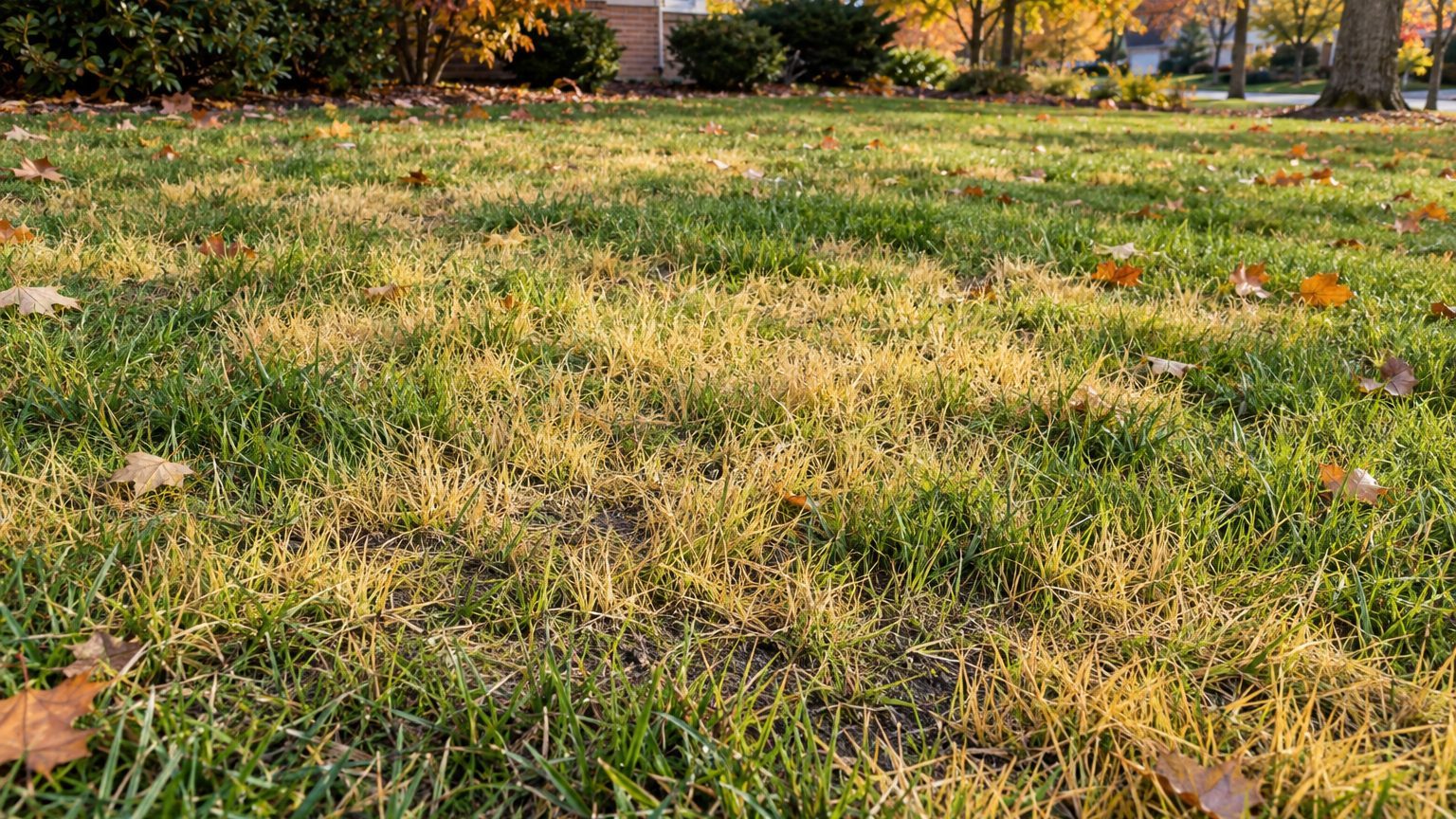
A lawn that fades from green to pale yellow, sometimes in neat round patches, is telling you something about moisture, soil or feeding. The pattern of the yellow matters more than the shade. Patches, bands on the blades and an even wash across the whole yard each point somewhere different, and each calls for a different fix.
How to Recognize a Yellow Lawn

Start by looking at the shape of the damage, then crouch down and read individual blades.
- Patches and rings are the giveaway, with patches running anywhere from 4 to 12 inches across.
- A patch usually starts about 1 ft. in diameter, turns yellow, then fades to reddish brown, brown or straw as the leaves die.
- On a single blade, the yellow starts at the tip and moves toward the base.
- Where iron is short, the youngest leaves go yellow first while the veins stay dark, giving a banded look.
- From across the yard, that banded yellowing reads as mottled rather than as clean patches.
- Patches that show up from November through May, in cool weather, point to a disease rather than summer stress.
Walk the edge of a patch and compare the outer ring with the center.
From the almanac
Lawn in your state
The dates on this page depend on where you live. Your state's page carries its frost dates, its USDA zones and the year laid out month by month.
Northeast
Southeast
- Alabama
- Arkansas
- Delaware
- Florida
- Georgia
- Kentucky
- Louisiana
- Maryland
- Mississippi
- North Carolina
- South Carolina
- Tennessee
- Virginia
- West Virginia
Midwest
Southwest
West
Pacific Northwest
Canada
Problems Mistaken for a Yellow Lawn
Iron and nitrogen shortages can mimic disease because the grass is missing a nutrient rather than facing an attack. Each gives itself away with a pattern on the blade and a quick test.
| Looks like | How to tell them apart |
|---|---|
| Iron shortage | Young leaves yellow between dark veins in a banded pattern, usually on Kentucky bluegrass or zoysia growing in soil with a pH above 7.2. |
| Nitrogen shortage | The whole lawn looks pale rather than patchy, and in Arizona, if it greens up in a week or so after feeding, nitrogen was the missing piece. |
Drought stress also turns grass yellow and then straw colored, but it follows dry spells and dry spots rather than cool, wet weather. Check soil moisture and recent watering before ruling out drought stress.
What Causes a Yellow Lawn
The patch-forming kind comes from a fungus that thrives in cool, damp conditions. It is most active when temperatures sit between 50 and 65°F, though it can infect grass in a wider range of 45 to 75°F. That is why it shows up from late fall through spring and normally fades once summer heat arrives.
Moisture is the trigger. Heavy rainfall, too much irrigation or long stretches of humid weather can leave the blades wet for 48 hours or more, and that is enough for infection to take hold. Conditions that keep the blades wet can allow infection to take hold.
Iron trouble has a different root. It is most common where soil pH climbs above 7.2, because the iron is in the ground but the grass cannot take it up. Kentucky bluegrass and zoysia are the grasses that suffer most. The pattern on your lawn matters more than your zip code.
How to Fix a Yellow Lawn
Start with the pattern and soil pH before moving to treatment.
- Examine the blades and the pattern, since patches point to disease and banded young leaves point to iron.
- Test the soil pH, because an alkaline reading explains iron trouble and tells you whether feeding alone will help.
- Start by reviewing how much nitrogen the lawn receives. According to NC State Extension, avoid high rates, more than 0.25 lb N/1,000 square feet, in late fall and early spring, when yellow patch is most active.
- Water early in the day and only when the lawn needs it, so the blades dry out and the fungus loses its edge.
- Follow the recommended fertilization rate for your turfgrass species.
- In Arizona, a lawn that greens up after feeding was nitrogen deficient; without that response, reassess for disease or iron trouble.
Kansas guidance notes that chemical controls are sometimes necessary, but that adjusting cultural practices prevents or limits the problem in many cases. If the patches keep spreading after you have corrected watering and feeding, your state extension office can say what is approved where you live.
How to Prevent a Yellow Lawn
Prevention starts with careful feeding and watering.
- In North Carolina, avoid heavy nitrogen in late fall and early spring, when yellow patch is most active.
- Test the soil, because in California turfgrass grows best at a pH between 6 and 7 and does poorly when soil runs too acidic or too alkaline.
- Feed at the rates recommended for your grass species rather than guessing.
- In summer, water deeply and on a sensible schedule, since in Kansas poor watering is flagged as a cause of drought stress that leaves turf open to disease and insect damage.
- Avoid leaving the grass wet as cool weather returns.
Soil rich in organic matter helps with all of it, and around 5% is considered ideal.
Common Questions
How Long Does an Iron Treatment Last?
The effect of iron treatment can be temporary. The yellowing can return if the soil is still alkaline, so the lasting answer is correcting the conditions that locked up the iron.
Can Yellow Patch Come Back After the Lawn Greens Up?
Yes, when cool, wet weather returns. Drier blades, moderate feeding and good drainage help limit the problem when cool, wet weather returns.
Does Yellow Grass Always Mean Disease?
No. Yellowing can come from poor feeding, soil chemistry, drought or disease, and the shape of the damage tells them apart. Patches and rings suggest disease, banded young leaves suggest iron, and an even pale lawn suggests nitrogen.