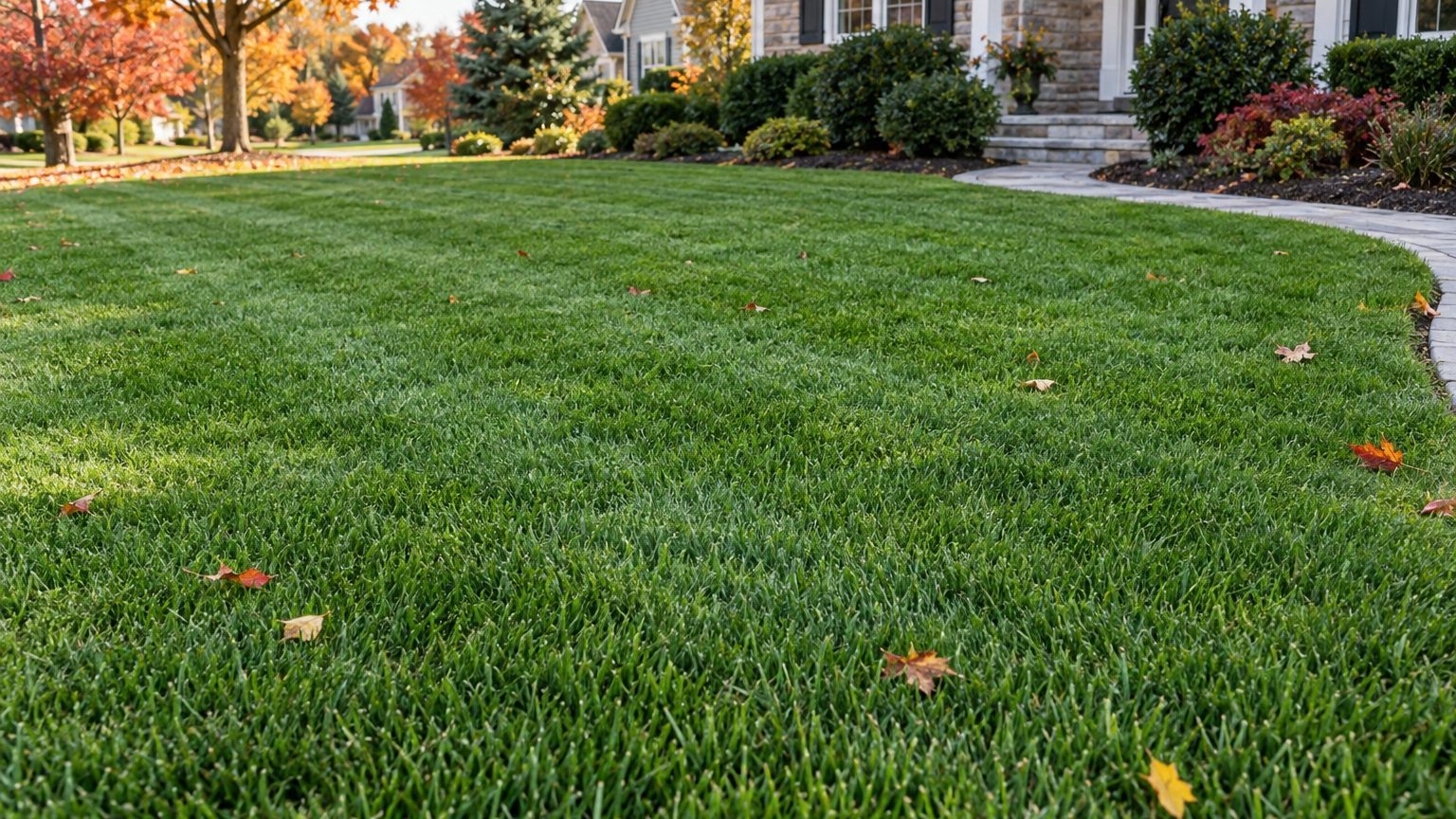
Spring brings a flush of green and a few stubborn weeds, while August can leave a tall fescue lawn pale and tired. Lawns in Maryland sit in the transition zone, where cold winters and hot, humid summers both test the grass. A handful of well-timed jobs does most of the work.
Frost Dates and Growing Season in Maryland

Maryland spans USDA hardiness zones 5b to 8a, and the dates below are Baltimore’s: the mountains run later and the coast milder. Frost sets the edges of the season, but grass grows when the soil warms, so the year runs in a few distinct moments.
- In Baltimore, the last freeze in early spring usually lands between April 3 and April 16, so a seedling sown too early can be burned back by a late cold night.
- Once the soil warms in March and April, crabgrass preventer goes down before the weed germinates, and mowing begins to settle into a routine.
- Through June, July and August, heat slows cool-season grass, and watering becomes the main job to keep it from going dormant.
- In early fall, the window for seeding opens in August, and new grass gets time to root well before the first freeze arrives in Baltimore between October 26 and November 5.
- In late fall, mowing continues into November while the grass is still growing, and the last feeding of the year goes on before the legal cutoff.
Seed sown after the fall window closes has little time to establish, which is why fall timing matters more here than spring timing.
Maryland — the year and the numbers
- State
- Maryland
- USDA zones
- 5b-8a
- Last spring frost
- April 3 to April 16
- First fall frost
- October 26 to November 5
- Annual rain
- 45 in
- Lawn type
- cool-season
- Source
- NOAA NCEI 1991-2020 Climate Normals, 32F freeze probabilities · Baltimore
Cool-Season or Warm-Season Grass in Maryland?
Cool-season grass carries most Maryland lawns. It stays green through the cold months and thrives in spring and fall, though summer heat and dry spells can stress it.
Warm-season grass has a place on sunny lawns, but it browns after the first frosts and wakes late in spring.
| Grass | How it does in Maryland | Why |
|---|---|---|
| Tall fescue | Found on most Maryland lawns | Cool-season grass with good tolerance of summer stress |
| Kentucky bluegrass | Common in sunny, well-kept lawns | Cool-season grass that fills in dense turf |
| Fine fescues | Suited to shady yards | Cool-season grass that copes with less light |
| Zoysiagrass | Used on some sunny lawns | Warm-season grass, started from sod or plugs |
Zoysiagrass turns tan in winter, a trade-off some homeowners accept for its heat tolerance. Choosing between these comes down to how much sun the yard gets and how much green you want in winter.
When to Seed, Fertilize and Aerate a Lawn in Maryland
Most of the big jobs belong to fall, when cool-season grass roots quickly and weeds lose their edge. Spring is a second chance for a few of them.
One legal rule shapes feeding: Maryland’s Lawn Fertilizer Law bars homeowners from applying lawn fertilizer from November 16 to March 1.
| Task | Timing in Maryland | Why then |
|---|---|---|
| Seeding | August to October; March also works | Warm soil and cooler air help seed root, and October 15 is the cutoff for fall seeding |
| Fertilizing | September to November (April only if needed) | Fall feeding builds roots; use spring fertilizer only if the lawn needs it |
| Core aeration | September and October; April also works | Opens compacted soil while grass is actively growing |
| Crabgrass preventer | March and April | Goes down before the weed seed germinates |
| Dethatching | September | Grass recovers quickly in fall conditions |
| Laying sod | September and October; April and May also work | Roots take hold in mild, moist weather |
Aeration and seeding pair well, since seed that falls into the holes meets soil directly. Watering matters most in June, July and August, when a deep soak helps grass ride out the dry stretches.
Lawn Problems to Watch for in Maryland
Summer Browning and Thinning

Tall fescue and bluegrass slow down in Maryland’s hot, humid summers, and the lawn can turn straw-colored or thin out in patches. Watering deeply during June, July and August helps, and mowing higher shades the soil and keeps roots cooler.
Humid weather also favors fungal disease, so water early in the day to let blades dry before evening.
Crabgrass in Thin Turf

Bare spots left by summer stress give crabgrass an opening the following spring. A preventer applied in March or April can stop crabgrass seedlings from taking hold, and fall seeding fills the gaps so there is less space for it to move in.
Compacted, Heavy Soil
Where water pools or the lawn feels hard underfoot, the soil is likely compacted. Core aeration in September or October opens it up, and a soil test through the extension service tells you whether anything else is missing before you add fertilizer.
How Lawn Care Dates Change Across Maryland
Maryland is small, but elevation and the Chesapeake Bay shift the season noticeably from one end to the other.
- Garrett and Allegany counties: These mountain areas run weeks later in spring and see frost earlier, so seeding in late summer matters even more.
- The Eastern Shore: Milder conditions here mean the season starts earlier and ends later, giving fall seed a little extra time to root.
- Baltimore and the central Piedmont: This middle ground fits the general timing for the state most closely.
Use Baltimore’s dates only as a reference, then adjust each job to local soil conditions and frost timing.
Where to Get Lawn Advice in Maryland
Local help is easy to find, and a soil test takes the guesswork out of fertilizing and liming.
- University of Maryland Extension publishes lawn guides on seeding, renovation and fertilizing that apply to local conditions.
- Your county extension office can take a soil sample or help identify a problem from a photo or a bit of turf, and early fall is a good time to go.
Common Questions
Can You Fertilize a Lawn in Maryland in Winter?
No; wait until the permitted feeding window returns.
Is Tall Fescue a Good Choice for a Maryland Lawn?
Yes, it is the grass found on most Maryland lawns, and it handles the state’s mix of cold winters and hot summers better than many alternatives.
Can You Plant Zoysiagrass in Maryland?
Yes, on sunny lawns, and it is started from sod or plugs rather than seed. Expect it to go tan once cold weather arrives.