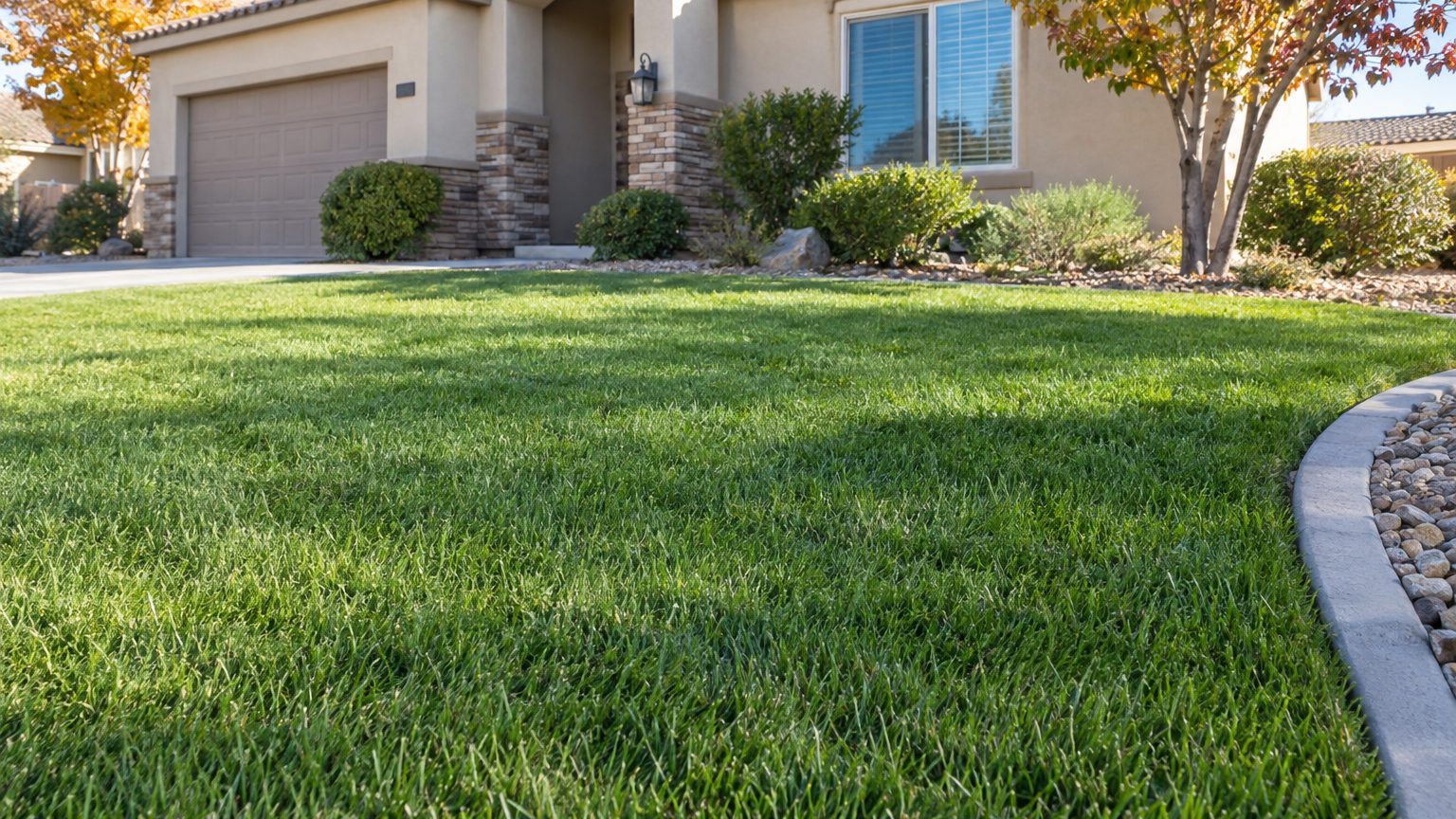
A Nevada lawn spends most of the year either stressed by dry heat or waking up from a cold, dry winter. Healthy Nevada lawns depend on matching the grass and maintenance schedule to local heat, water, and winter cold. What you do, and when, changes a lot between the low desert and the high valleys.
Frost Dates and Growing Season in Nevada
Nevada spans USDA hardiness zones 4a to 10a, so a single frost date means little here. In Las Vegas, the last spring freeze usually falls between January 7 and February 1, but that is a desert heat-island extreme. Reno, Carson City and any yard at elevation freeze months later in spring.
The same split shows up in fall. In Las Vegas, the first freeze comes between December 8 and December 23, while higher and cooler towns freeze months earlier. Grass does not start or stop on a frost date, though. Growth follows soil warmth, and frost marks only the risk to young seedlings. Your county extension office can give the dates for your own town. The lawn year runs roughly like this:
- In April, mowing begins and crabgrass preventer goes down, and it is also a workable month for seeding, core aeration and dethatching if you missed the fall window.
- In May, you can still fit in seeding, aeration or a feeding, and preventer still works if April slipped by.
- From June through August, watering matters most, because this is when heat and dry air pull moisture out of the root zone fastest.
- In August and into September, seeding and dethatching get the best results, since the new grass roots in warm soil and then meets cooler weather without a freeze waiting for it.
- In September, core aeration and the main feeding fit together, and a second feeding follows in November.
Mowing continues from April through November, easing off as growth slows in the cool weeks near the end.
Nevada — the year and the numbers
- State
- Nevada
- USDA zones
- 4a-10a
- Last spring frost
- January 7 to February 1
- First fall frost
- December 8 to December 23
- Annual rain
- 4 in
- Lawn type
- cool-season
- Source
- NOAA NCEI U.S. Climate Normals 1991-2020, 32F freeze probabilities · Las Vegas
Cool-Season or Warm-Season Grass in Nevada?
Cool-season grass is the standard choice for most Nevada yards. Winters in the northern and higher valleys keep warm-season turf dormant and brown for long stretches.
The trade-off is summer. Cool-season grass slows down and thirsts in desert heat, so the species you choose and the way you water decide whether it stays green.
| Grass | How it does in Nevada | Why |
|---|---|---|
| Tall fescue | Holds up well in heat and dry spells | Deep roots reach moisture that shallower grasses miss |
| Kentucky bluegrass | Looks dense and rich, but needs steady water in summer | Shallower roots and a thirst for water show up fast in dry air |
| Perennial ryegrass | Sprouts quickly and fills bare spots | Fast germination helps in a short seeding window |
| Fine fescues | Fine-textured and lower in water demand | Fits lighter-use areas and some shade |
Some homeowners in the low desert around Las Vegas grow a warm-season grass such as bermudagrass instead. It tolerates the heat well but turns tan in winter, so a local extension office can tell you which trade-off suits your yard.
When to Seed, Fertilize and Aerate a Lawn in Nevada
The big jobs cluster in late summer and early fall, when soil is still warm and the worst heat has passed. Spring works as a backup for several tasks, but it puts young grass up against summer sooner.
Missing a window is not a disaster. If September gets away from you, another month often still works.
| Task | Best months in Nevada | Why then |
|---|---|---|
| Seeding | August, September (April and May also work) | Warm soil speeds germination and roots form before winter |
| Core aeration | September (April and May also work) | Grass is actively growing and recovers quickly from the plugs |
| Dethatching | August, September (April also works) | Turf can fill in the stressed spots while growth is strong |
| Fertilizing | September, November (May also works) | Roots store the nutrients as growth slows into the cold months |
| Crabgrass preventer | April (May also works) | It has to be down before the weed seeds sprout |
| Watering | June, July, August | Heat and dry air draw moisture from the soil fastest |
| Mowing | April through November | Grass grows from spring warmth until growth fades in late fall |
Pair aeration and seeding in September when you can. The holes the aerator leaves give seed good contact with soil, and the turf closes the gaps before winter.
Lawn Problems to Watch for in Nevada
Brown Patches in Midsummer

Grass that turns straw-colored in patches, mostly along hot driveways, south-facing slopes and sidewalk edges, is usually short of water rather than diseased. A footprint that stays pressed into the lawn is another sign of thirst. Water deeply during June, July and August so roots chase moisture downward instead of staying near the surface.
Compacted, Crusty Soil
If water pools or runs off the surface and a screwdriver barely pushes into the ground, the soil is packed. Many Nevada soils are dense and dry hard, and foot traffic makes it worse. Core aeration in September opens the soil so water and air reach the roots.
Yellow Grass with Green Veins
Pale yellowing between green veins on the blades, especially across a lawn that gets plenty of water, often points to alkaline soil that locks up iron. One sign alone proves nothing, so get a soil test before buying products.
How Lawn Care Dates Change Across Nevada
Elevation and latitude shift the season more than anything else, and Nevada has both in extremes.
- Las Vegas Valley: Spring warmth arrives early and summer heat lasts long, so the season starts sooner and the late-summer seeding window opens later in the heat. Winters are mild enough that grass is dormant less often than elsewhere.
- Reno and Carson City: Cold nights hold spring back and bring fall freezes earlier, so the safest seeding window closes sooner than it does in the south.
- Lake Tahoe and the Sierra foothills: The growing season is the shortest, with a late spring start and an early finish, and young grass has little time to establish before cold arrives.
- Elko and the northeastern high desert: Cold winters and a late spring leave a compressed season, with timing closer to the mountain towns than to the southern valley.
Outside the Las Vegas Valley, use local conditions to move spring work later and fall work earlier where cold arrives sooner.
Where to Get Lawn Advice in Nevada
Local conditions vary so much here that nearby advice beats general advice. The state’s land-grant extension service and your county office know the soil, water and microclimate of your own area.
- The state’s land-grant extension service offers lawn and soil guidance written for Nevada conditions, useful before you pick a grass or plan a project.
- Your county extension office can help you find local testing and diagnostic options when the lawn looks off.
Common Questions
Should You Leave Grass Clippings on a Nevada Lawn?
Yes, in most cases. Clippings break down quickly and return nutrients to the soil, and they shade the surface a little in dry weather. Bag them only if the grass was very long or has been wet and clumps are smothering the turf.
How Can You Tell Dormant Grass from Dead Grass?
Dormant grass is tan or brown, yet the crown at the base stays firm and a little green, and the blades resist a gentle tug. Dead grass pulls out easily with no resistance and smells musty. Dormant turf can recover when favorable growing conditions return, but dead crowns will not.
What Time of Day Should You Water a Lawn in Nevada?
Water early in the morning, when wind is calm and the air is cool. Less is lost to evaporation, and the water reaches the roots instead of drifting away in the dry desert air.