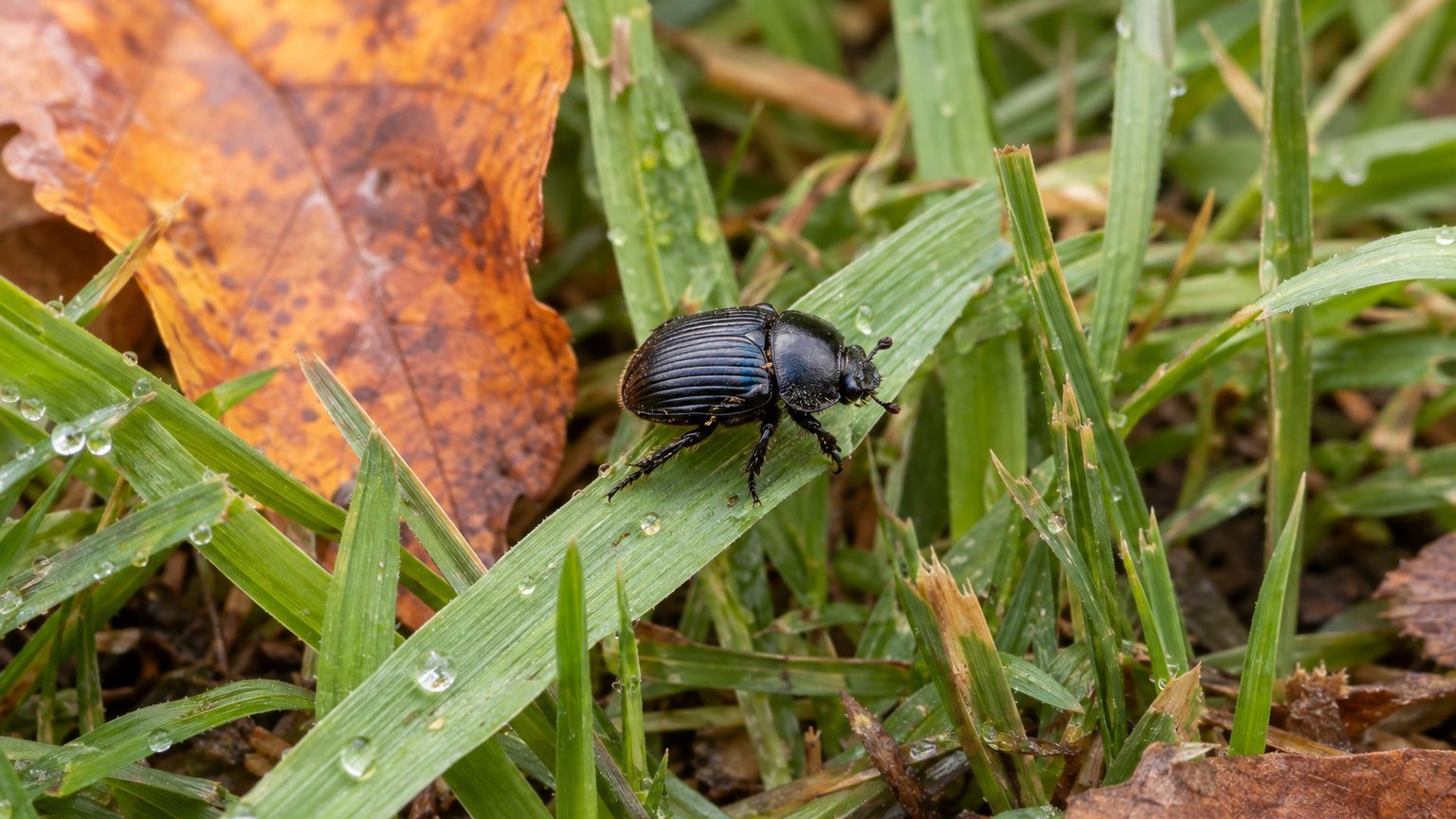
Irregular brown patches that look thirsty even though the sprinklers run can signal black turfgrass ataenius in a lawn. The culprit is a small beetle whose grubs feed on grass roots. Knowing what the grub and the adult look like, and when they work, makes the fix straightforward.
Signs of Black Turfgrass Ataenius in a Lawn

Start with the grub itself, because the roots tell the story before the grass leaves do.
- Digging around the roots turns up whitish, C-shaped grubs with 6 legs and reddish heads, up to 1/3 inch long.
- The turf pulls up easily in irregular dead patches, because the larvae have eaten the roots that held it down.
- The affected grass looks drought stressed, even where irrigation is sufficient.
- Adult beetles are shiny jet black, about 1/5 inch long, with parallel grooves on the wing covers.
- According to UC IPM, University of California, adults stay continuously active during the warm months in inland areas.
Pairing the thirsty look with grubs in the soil is what settles the diagnosis.
From the almanac
Lawn in your state
The dates on this page depend on where you live. Your state's page carries its frost dates, its USDA zones and the year laid out month by month.
Northeast
Southeast
- Alabama
- Arkansas
- Delaware
- Florida
- Georgia
- Kentucky
- Louisiana
- Maryland
- Mississippi
- North Carolina
- South Carolina
- Tennessee
- Virginia
- West Virginia
Midwest
Southwest
West
Pacific Northwest
Canada
Lawn Damage Mistaken for Black Turfgrass Ataenius
Several lawn problems produce the same dull, dying patches. The difference lies underground and in how the turf responds to water.
Because the grubs are so small, a quick glance at the soil can miss them. Dig along the edge of a patch, where living and dying grass meet.
| Looks like | How to tell them apart |
|---|---|
| Plain drought stress | Grass revives after a deep watering and roots are intact. With ataenius, the patch stays stressed despite enough irrigation, and the roots are chewed with grubs in the soil. |
| Larger white grub damage | Turf lifts like a carpet, but the grubs are bigger. The damage threshold is 10 to 12 per square foot for the larger species, compared to 50 for ataenius. |
Fungal disease can look similar. It shows on the blades, with spots or discolored leaf tissue, while ataenius leaves the leaves intact and works on the roots.
When Black Turfgrass Ataenius Damage Shows Up
The cause is the larval stage. Female adults lay clutches of 11 or 12 eggs, and the grubs that hatch feed on roots, so the damage follows each generation as it grows.
Timing depends on climate. According to UC IPM, University of California, at least two or three generations develop each year, with up to five in the warmest part of the state. Adults stay continuously active during warm months in inland areas, so the grub pressure there can last through the season.
According to UC IPM, University of California, the beetles probably overwinter in reproductive dormancy, so inspect the roots again if damage builds as the weather warms.
How to Get Rid of Black Turfgrass Ataenius
Confirm the grubs first, then match the response to their numbers.
- Dig around the roots at the edge of a damaged patch, because that is where whitish, C-shaped grubs with reddish heads show up.
- Count the grubs in a square foot of soil, because in California control may be needed only above about 40 per square foot.
- Hold off on treatment if the count is lower, since healthy turf can tolerate a small population.
- Schedule irrigations carefully, because in California managing water is one way to help turf withstand low levels of the grubs.
- Adjust your mowing practices, since the same California guidance points to mowing changes that help the grass cope.
- Ask your state extension office about any product registered locally, because labels and approvals differ from state to state.
If damage returns, sample the soil again to check for grubs.
How to Prevent Black Turfgrass Ataenius
Prevention starts with healthy turf and regular checks for grubs.
- Sample the soil to look for larval stages.
- Schedule irrigation carefully so the turf can better withstand low grub levels.
- Adjust mowing practices so the turf can better withstand low grub levels.
- Maintain healthy plants with proper cultural practices.
- When thirsty patches appear despite watering, dig and check the roots before changing your irrigation.
Careful irrigation and mowing can help turf withstand low grub levels.
Common Questions
Do Black Turfgrass Ataenius Grubs Damage Grass as Much as Other White Grubs?
Individually they do less harm, which is why the damage threshold is 50 per square foot, far above the 10 to 12 for larger species. A lawn can carry a fair number before it suffers.
Why Does My Lawn Look Dry When the Sprinklers Are Working?
Roots chewed by grubs cannot take up water, so the grass looks drought stressed even with enough irrigation. Digging up a small section will show whether grubs are the reason.
What Does the Adult Beetle Look Like?
It is shiny jet black, about 0.2 inch long, with parallel grooves on its wing covers. It is small enough to pass for a speck of debris on the turf.