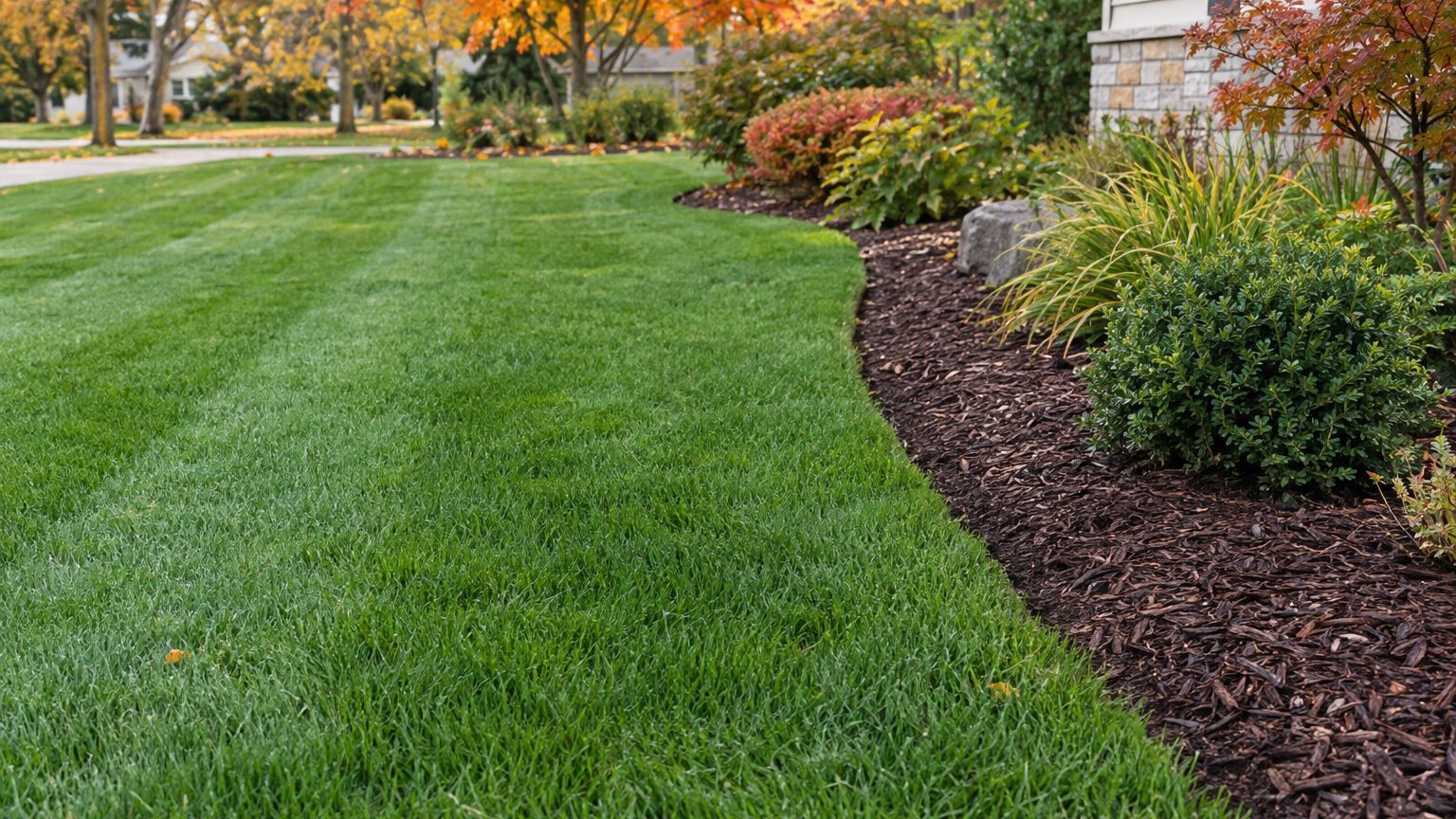
A fresh edge along the driveway or around a shrub bed makes a lawn look cared for, and it takes only a flat spade and a little patience. Lawn edging is the practice of cutting a clean boundary where grass meets beds, walks and pavement so the turf stays where you want it.
How Do You Edge a Lawn?
In Illinois, cut a clean vertical line with a sharp spade wherever grass meets a bed or hard surface, then lift out the loose soil and grass. The general rule is simple, but timing shifts with grass type, season and region, because edging follows active growth rather than a fixed date.
Spreading grasses push into beds steadily. In Illinois, grass grows toward and into beds about 3 to 4 inches a year, so a yearly cut keeps the line from drifting. Warm-season lawns in the South tend to need attention through summer, while cool-season lawns in the North reward a cut in spring and a touch-up later.
The state selector just below this section leads to the page for your state.
From the almanac
Lawn in your state
The dates on this page depend on where you live. Your state's page carries its frost dates, its USDA zones and the year laid out month by month.
Northeast
Southeast
- Alabama
- Arkansas
- Delaware
- Florida
- Georgia
- Kentucky
- Louisiana
- Maryland
- Mississippi
- North Carolina
- South Carolina
- Tennessee
- Virginia
- West Virginia
Midwest
Southwest
West
Pacific Northwest
Canada
How to Edge a Lawn and Cut Bed Lines

Work in this order and the line stays crisp, with the soil and mulch doing their jobs.
- Mark the line with a garden hose or string, so the curve looks natural and you avoid recutting it.
- In Illinois, push a sharp spade straight down along the mark, because a sharp blade slices roots cleanly instead of tearing them.
- Cut the trench deep enough to hold back roots. In Utah, a 6 inch deep line between the bed and grass is a cost-free option, and in Illinois a channel 4 inches deep and wide can easily contain bluegrass.
- In Illinois, remove the soil and grass on the bed side to form a small cliff, so the grass has a visible gap to cross before it reaches the bed.
- Spread mulch in the bed up to the cliff, about 2 to 3 inches in shrub and evergreen beds, which smothers weeds without burying the edge.
- Leave a strip of open dirt at the lawn side when you mulch, so touch-up cuts are easy and grass does not creep into the mulch (this is advice from Illinois).
In Illinois, you can leave the bed hand-edged like this or fill the trench with something solid. In Illinois, steel, wood, brick, stone and plastic are used; in Utah, the options also include cement, redwood binder board, vinyl and rubber. In Illinois, stone has to be at least 3 inches thick and at least 4 inches wide to stop the grass.
Edging by Grass Type
Lawn grasses spread in different ways, and some barely creep at all. Cool-season grasses such as bluegrass and tall fescue are active in spring and fall. Warm-season grasses are active in summer heat.
The type decides how stubborn the edge is, and how deep a barrier needs to go.
| Grass | Season | What it means for edging |
|---|---|---|
| Kentucky bluegrass | Cool | Spreads underground, so a trench 4 inches deep and wide can easily contain it (Illinois) |
| Spreading turf grasses | Cool or warm | Move 3 to 4 inches a year toward beds, so a yearly cut keeps up (Illinois) |
Bunch-type grasses such as tall fescue stay more in place and rarely run into beds, so their edges hold longer between cuts. Bermudagrass and zoysiagrass are aggressive spreaders in warm regions, and a solid barrier tends to serve them better than a cut line alone. If you are not sure which grass you have, your state extension office can help you identify it.
Lawn Edging Mistakes to Avoid
Cutting Too Shallow
A scratch of a cut lets roots hop straight across, and the line disappears in a season. The cost is a repeat job and grass growing into the mulch.
Dig the trench deep enough to hold roots. Where bluegrass is the lawn, 4 inches deep and wide is the Illinois guide.
Mulching Right Up to the Grass
Piling mulch against the lawn bridges the gap, and grass starts moving into the bed. The edge then needs more frequent cuts.
Leave some open dirt at the lawn edge, as Illinois advice suggests, so touch-ups stay easy. Keep mulch at about an inch deep in flowerbeds once settled, and 2 to 3 inches in shrub and evergreen beds.
Using Thin Stone
Narrow stones or thin pavers may look tidy, but grass roots slip under or between them. You end up pulling grass out of the joints.
Choose stone at least 3 inches thick and at least 4 inches wide, the size Illinois guidance gives to stop the grass.
Lawn Edging in Your State
The sign to edge is growth: when grass starts reaching into the bed, or the old line has softened, it is time to recut. Cool-season lawns and warm-season lawns reach that point at different times.
- Each state page gives the months when grass in that state is actively growing, so you can pick the cutting window.
- Go to your state page in spring, before growth peaks, and again when you plan a touch-up.
Common Questions
Should You Edge Before or After Mowing?
Edge before mowing, so the mower picks up the loose clippings and soil bits the edger throws onto the turf. The lawn looks finished when mowing is done.
Is a Hand-Cut Edge Enough, or Do You Need a Border?
A hand-cut edge works well if you are willing to touch it up regularly. In Illinois, it needs a touch-up once or twice a year. A solid border of brick, stone, steel or plastic cuts down on that work, though it costs more to install.
What Tool Works Best for Cutting a New Bed Line?
A sharp spade or shovel handles a new line well, and in Utah it is the cost-free option. Once the line exists, a half-moon edger or a powered edger can keep it sharp.