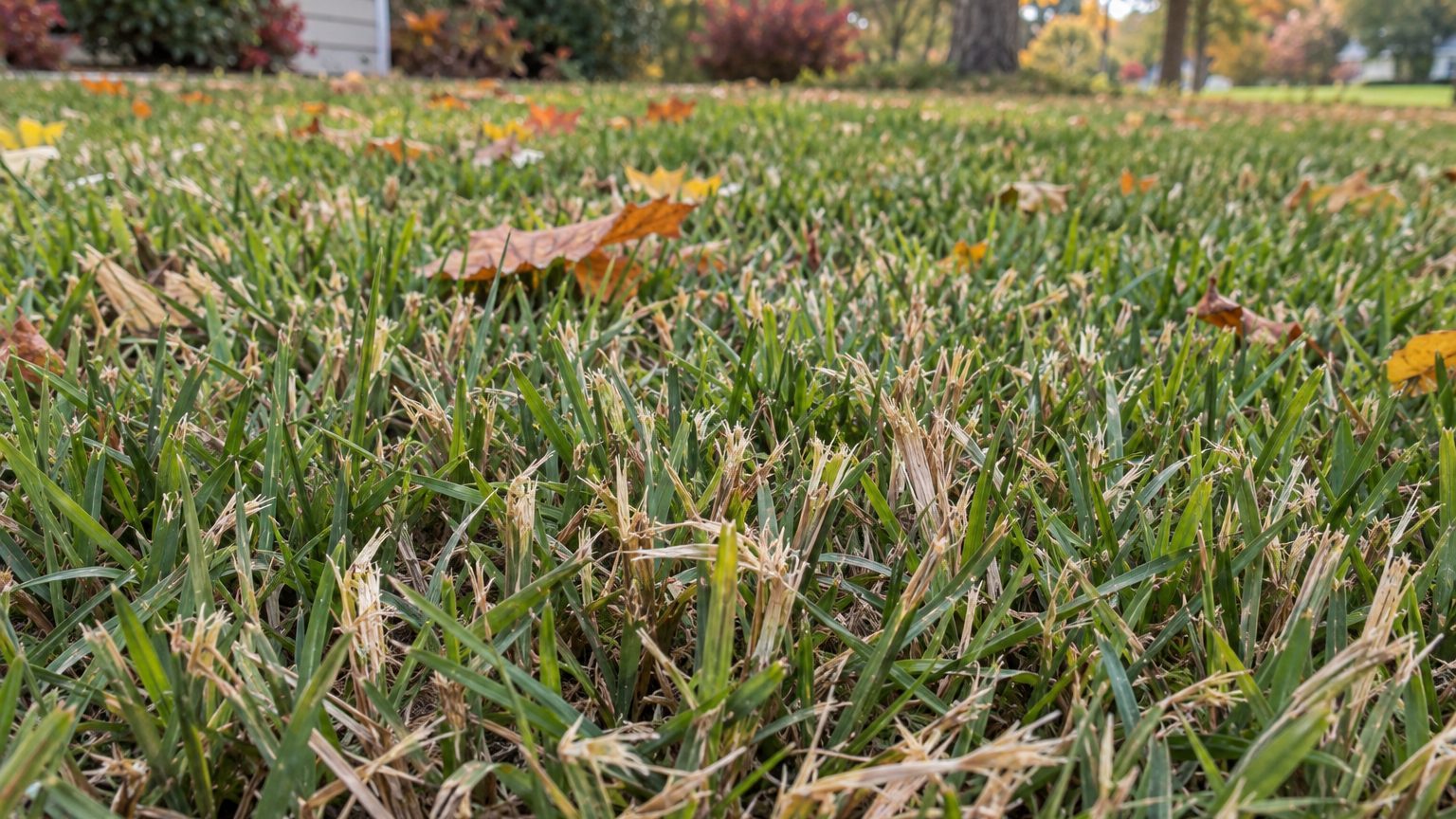
A freshly mowed lawn that looks pale, almost frosted at the tips, is telling you something about the mower. The grass may not be sick. The blade did not cut the leaf cleanly, and the torn ends dry out and fade to a washed-out color.
How to Recognize White Grass Tips

Crouch down and look at the ends of individual leaves in the cut area, because the clues sit right at the tips.
- The leaf ends look torn, frayed or shredded instead of sliced straight across.
- The lawn takes on a somewhat gray cast soon after mowing, which is easy to see when you look across the yard.
- The damage stays at the tips while the rest of each blade is still green.
- Over time the ragged ends turn yellow to brown and die back.
- The pattern repeats in every strip you mow with the same blade rather than staying in an isolated patch.
Ragged brown tips are the classic signal that mower blades need sharpening, and they show up in any lawn, whatever the grass type.
From the almanac
Lawn in your state
The dates on this page depend on where you live. Your state's page carries its frost dates, its USDA zones and the year laid out month by month.
Northeast
Southeast
- Alabama
- Arkansas
- Delaware
- Florida
- Georgia
- Kentucky
- Louisiana
- Maryland
- Mississippi
- North Carolina
- South Carolina
- Tennessee
- Virginia
- West Virginia
Midwest
Southwest
West
Pacific Northwest
Canada
Problems Mistaken for White Grass Tips
Pale grass after mowing does not always point to the blade. A leaf disease can bleach turf in a similar way, so inspect the whole leaf to distinguish the causes.
Checking the leaf from tip to base is the habit that matters, since a torn tip and a bleached blade call for different responses.
| Looks like | How to tell them apart |
|---|---|
| Ascochyta leaf blight | The bleaching starts at the tip but can run down the whole blade, and the tip is not torn. Damage is seldom permanent, and the lawn recovers quickly in good growing weather. |
A dry, stressed lawn can also look dull and pale, but it fades across entire leaves and whole areas rather than only at cut ends. If the cause stays unclear after you have checked the blade and the leaves, your state extension office can help identify what is going on in your turf.
What Causes White Grass Tips
Dull mower blades are the cause. Instead of slicing, a worn edge tears and shreds the end of each leaf, and the damaged tissue dries out and fades, first to a gray or whitish cast and later to brown.
Mowing conditions can make it worse. In California, the advice is to avoid mowing under drought conditions or when the leaf blades are wet.
How to Fix White Grass Tips
The fix starts with the mower and ends with how you cut. Work through these steps in order.
- Inspect leaf blades up close so you can tell torn tips from bleaching that runs down the whole leaf.
- Sharpen the mower blade, since a sharp edge slices the leaf cleanly instead of shredding it. In New York, the advice is to do this at least once a season or whenever ragged brown tips appear, and in California, as needed.
- Take the mower in for a tune-up and blade sharpening at the start of the season if you do not do it yourself. New York guidance suggests doing this at the start of the season.
- Wait for the grass to dry before mowing, following the California advice.
- Mow again with the sharpened blade and look at the tips afterward, so you can see whether the cut is clean.
- Check the leaf blades regularly after mowing, which catches a dulling blade before the whole lawn turns gray.
Tips that are already torn will not mend themselves. As the grass grows, mowing with a sharp blade leaves clean ends.
How to Prevent White Grass Tips
Prevention is mostly a matter of timing the blade work and choosing the right moment to mow.
- At the start of the season, have the mower tuned up and the blade sharpened, following the New York advice.
- Through the growing season, sharpen again as soon as ragged brown tips appear, rather than waiting for the whole lawn to look gray.
- During dry spells and drought, hold off on mowing, as California guidance recommends, so drought-stressed grass is not cut.
- After rain or heavy dew, wait until the leaf blades are dry before you mow, which also follows the California advice.
- After each mow, take a moment to look at the leaf tips, so a dulling blade shows up early.
A sharp blade and dry grass support a clean cut that keeps tips green.
Common Questions
Will White Grass Tips Kill the Lawn?
Damage from a dull blade stays at the leaf tips, which die back and turn brown, while the rest of the plant keeps growing. If the cause is Ascochyta leaf blight instead, the damage is seldom permanent and the lawn recovers quickly in good growing weather.
How Can You Tell the Mower Is the Problem and Not Disease?
Compare the condition of the tips with the pattern across the lawn. Torn, shredded tips that line up with the mowing pattern point to the blade, while bleaching that runs down the whole blade without a torn tip points toward leaf blight.
Should You Keep Mowing While the Tips Look Bad?
Yes, once the blade has been sharpened and the grass is dry. Mowing with a dull blade keeps tearing fresh leaf tips, so sharpen it before mowing again.