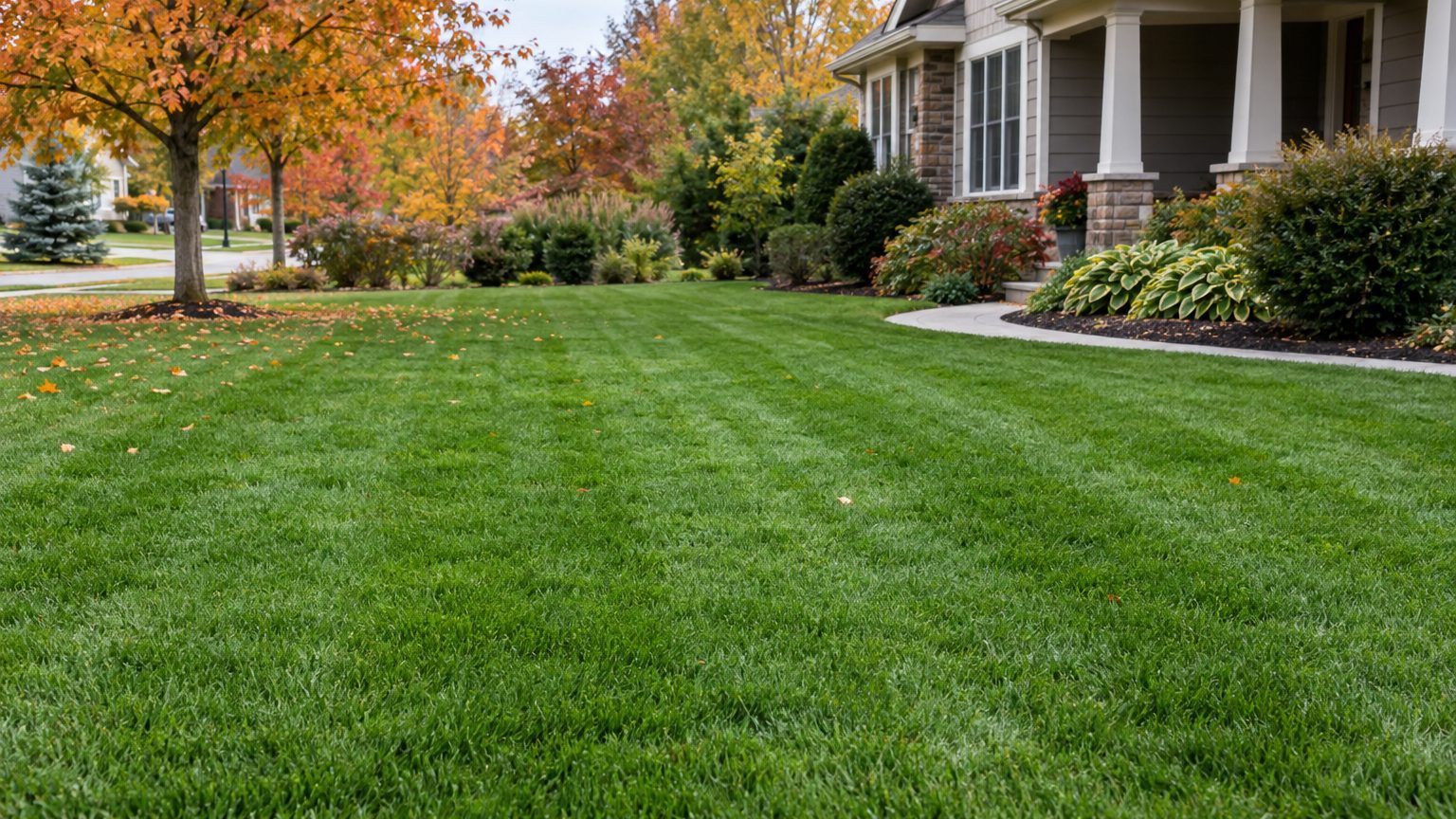
A ryegrass lawn shows its worth early, when a bare patch turns green again while the soil is still cool. Perennial ryegrass is a cool-season grass that is started from seed and covers ground quickly. Where it grows well, how tall to mow it and what it needs through the year all follow from that.
What Is Perennial Ryegrass?
Perennial ryegrass is a cool-season grass, so it does its growing in spring and autumn and slows when summer turns hot. You establish it from seed, and it is up in seven to ten days, which makes it one of the fastest grasses to sprout.
That speed explains why homeowners use it in different ways. Homeowners use it for quick cover on new or repaired ground, and southern lawns borrow it for winter overseeding, when a warm-season grass goes brown and dormant.
It does best on sunny, well-drained sites in the cool-season zone. Cold hardiness is excellent to very good, shade tolerance is very good to good, and wear tolerance is very good to good. Drought tolerance is the weak spot, rated fair to poor.
From the almanac
Lawn in your state
The dates on this page depend on where you live. Your state's page carries its frost dates, its USDA zones and the year laid out month by month.
Northeast
Southeast
- Alabama
- Arkansas
- Delaware
- Florida
- Georgia
- Kentucky
- Louisiana
- Maryland
- Mississippi
- North Carolina
- South Carolina
- Tennessee
- Virginia
- West Virginia
Midwest
Southwest
West
Pacific Northwest
Canada
Where Does Perennial Ryegrass Grow Best?
It is at home wherever winters are cold and summer heat is brief, and it struggles where hot weather stretches on. Large states cross zone lines, so these regions describe the general pattern.
- Upper Midwest and Great Plains: Nebraska, Iowa and Minnesota suit it well. Shorter stretches of extreme heat give a cool-season lawn time to recover.
- Great Lakes and Northeast: Ohio, Michigan and New York are a first choice for it. The comparatively short hot season gives the grass time to recover.
- Transition belt: Oklahoma, Kansas, Tennessee and Kentucky make it a compromise where no grass excels. Oklahoma’s long summer heat makes ryegrass a compromise that often thins by late summer.
- Gulf Coast and Desert Southwest: Texas, Louisiana, Florida, Arizona and Nevada will not hold it through summer. The long hot season there rules it out as a permanent lawn. Bermudagrass or zoysia is the sturdier choice for a permanent lawn, with ryegrass added only as a winter overseed.
The state selector just below this section leads to the page for your own state, where the local picture is spelled out.
How to Care for Perennial Ryegrass Through the Year
Spring Wake-Up
Ryegrass greens up early because it grows in cool soil. Rake out matted leaves and look for thin spots, since seed sown into bare soil sprouts fast and fills gaps before weeds claim them.
Mowing and Height
Mow between 1 and 3 inches. Extension sources differ on the exact figure, with northern programs favoring the taller end and southern overseeded lawns often cut lower.
For a permanent lawn, aim toward the middle or upper part of that range. Taller leaf shades the soil and helps a grass that tolerates drought poorly.
Summer Heat

Heat is where ryegrass loses ground. Water deeply and regularly in dry spells, and raise the mower a notch so the grass keeps more leaf. A lawn that turns straw-colored in the hottest weeks may be dormant rather than dead, so wait for cooler weather before replacing it.
Autumn Seeding
Autumn is the season for repair and renewal. For a new lawn, spread 4 to 10 lb of seed per 1000 square feet, with the low end used for straight ryegrass and the high end for mixes with fescue. Keep the seedbed moist until the grass is established.
Winter
In cold states, ryegrass sits through winter with no fuss thanks to its strong cold hardiness. In the South, an overseeded ryegrass lawn stays green while the warm-season grass sleeps, then fades as spring warms and the permanent grass returns.
Perennial Ryegrass Diseases, Pests and Weak Points
Disease and insect resistance for perennial ryegrass has no reliable rating to quote. What is clear is how it copes with weather and traffic.
Its strengths are cold, foot traffic and shade. Its main weakness is dry heat, which is why it fails across the Gulf Coast and Desert Southwest.
| Threat | How Perennial Ryegrass handles it |
|---|---|
| Winter cold | Excellent to very good |
| Foot traffic | Very good to good |
| Shade | Very good to good |
| Drought | Fair to poor |
If a ryegrass lawn browns in summer, check whether the patches sit in full sun and whether the soil is dry near the surface. Dry soil in sun points to drought stress rather than a pest, and watering should come before any treatment.
Is Perennial Ryegrass Right for Your Yard?
It suits a sunny or partly shaded yard with well-drained soil, plenty of foot traffic and a cool-season climate. It is a poor match where summers are long and hot, or where you cannot water through dry spells.
- Choose it for kids’ play areas, quick repairs and winter color in the South, where its fast start pays off.
- Skip it as a permanent lawn in the hottest states, and plant a warm-season grass instead.
- Pick your state in the selector to see the months that fit your yard, then plan your seeding around them.
Common Questions
Can You Mix Perennial Ryegrass with Kentucky Bluegrass?
Yes, perennial ryegrass and Kentucky bluegrass are often seeded together in cool-season lawns. Ryegrass sprouts fast and covers the soil while the bluegrass fills in behind it.
Does an Overseeded Ryegrass Lawn Come Back the Next Year in the South?
Usually not as a lasting lawn. Summer heat thins it out, so southern homeowners typically reseed each autumn.
How Do You Fix Thin Spots in a Ryegrass Lawn?
Loosen the surface, spread seed on the bare soil and keep it damp. Because the seed sprouts quickly, you can see whether it took before the season turns.