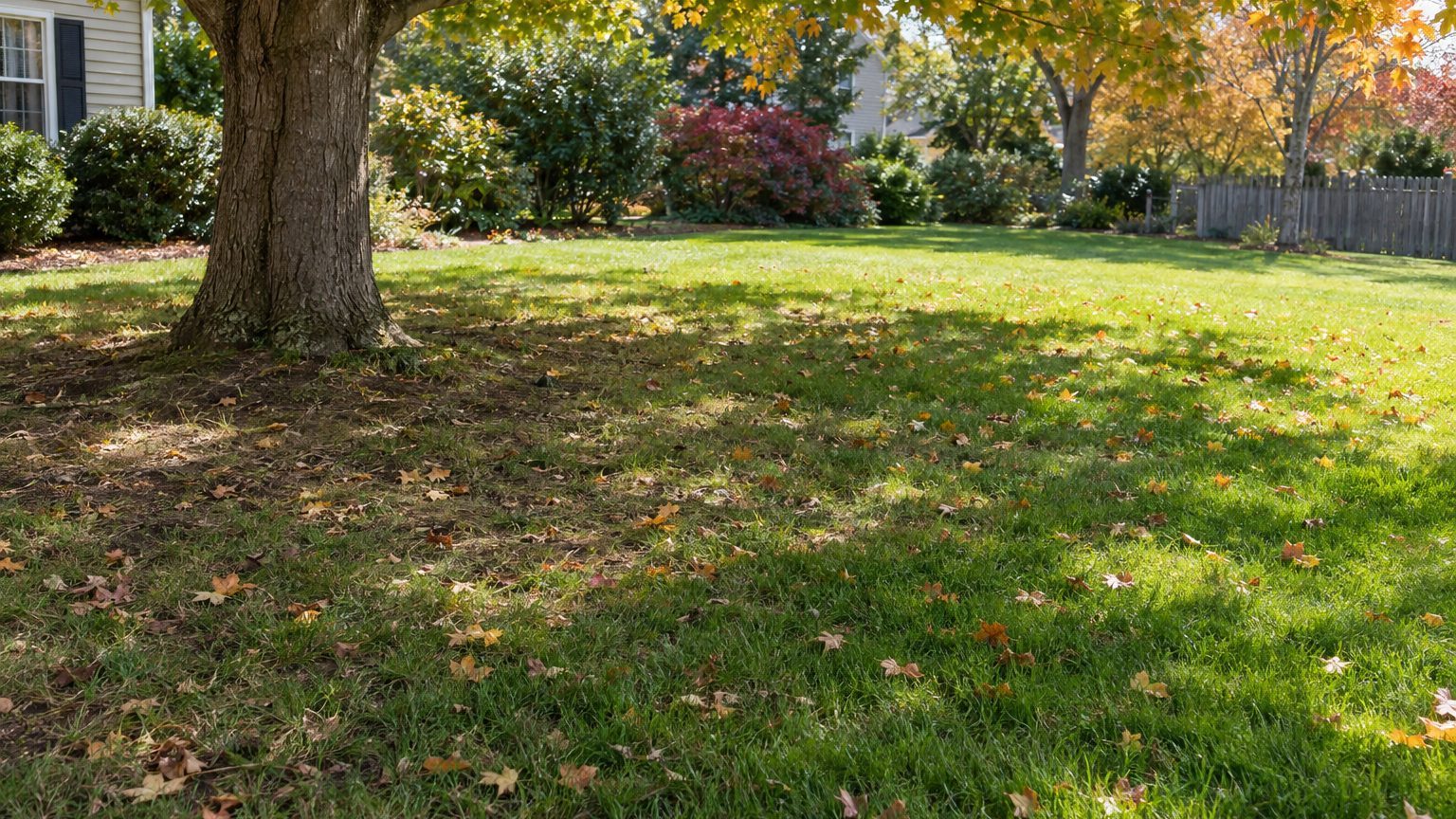
Thin, mossy grass under a maple or along the north side of the house is a common sight by midsummer. Some grasses cope with dim light while others quickly fade out. Knowing which species hold on in shade, and how much shade is simply too much, decides whether you seed or plant something else.
What Grass Grows Best in Shade?
Some lawn grasses tolerate shade better than others. How well any of them does depends on the grass type, how dense the shade is, how wet the soil stays, and where you live.
In Pennsylvania, fine fescues (red, Chewings, sheep and hard) and rough bluegrass are listed as the most shade-tolerant grasses. Tall fescue suits moderate shade there, which is a step up in light from the fine fescues.
Seasons and regions shift the picture, because a cool, damp Northeast yard treats shade very differently from a hot Southern one. The state selector right below this section takes you to the page for your own state.
From the almanac
Lawn in your state
The dates on this page depend on where you live. Your state's page carries its frost dates, its USDA zones and the year laid out month by month.
Northeast
Southeast
- Alabama
- Arkansas
- Delaware
- Florida
- Georgia
- Kentucky
- Louisiana
- Maryland
- Mississippi
- North Carolina
- South Carolina
- Tennessee
- Virginia
- West Virginia
Midwest
Southwest
West
Pacific Northwest
Canada
How to Grow Grass in Shade

Success comes from matching the grass to the light and then easing the pressure from trees, mower and watering can. These steps run in the order you would do them.
- Watch the spot as the sun moves across it and note when direct light reaches the grass, so you know whether turf has a realistic chance before you spend on seed.
- Choose a fine fescue blend for heavy shade or tall fescue for moderate shade, since each species has a limit and a mismatch leaves bare soil as the grass thins.
- Leave a turf-free ring around each trunk, at least 2 to 4 feet in diameter in North Carolina guidance, so tree and grass roots stop fighting over water and nutrients.
- Feed with a fertilizer in a 2-1-1 or 1-1-1 ratio, which Pennsylvania recommends with 30% or more of the nitrogen as slow-release, so shaded grass gets a steady supply without a surge of weak growth.
- Mow high, and in Nebraska the advice is 3 to 3.5 inches all summer, because taller blades gather more of the weak light and anchor deeper roots.
- Water deeply and let the soil dry between sessions, since in Nebraska the aim is to moisten the root zone, typically 6 inches, and then wait until the top 2-3 inches look dry.
Shaded soil dries slowly, so check it with a finger or a trowel before each watering instead of following a habit. Lawns under trees often fail from soggy conditions and root competition as much as from lack of light.
Shade Tolerance by Grass Type
Shade tolerance varies by species, and the same label can hide wide differences. A fine fescue and a Kentucky bluegrass may both be called cool-season grasses, yet they sit at opposite ends of the shade scale.
The list below comes from Pennsylvania guidance, which sorts grasses by how much shade they take. Use it as a starting point in Pennsylvania; elsewhere, check the recommendations for your state.
| Grass | Shade level | Note |
|---|---|---|
| Fine fescues (red, Chewings, sheep, hard) | Heavy shade | Most shade-tolerant group |
| Creeping fine fescue | Heavy shade | Listed for deep shade |
| Rough bluegrass | Heavy shade | Suited to wet conditions |
| Tall fescue | Moderate shade | Handles more light than fine fescue needs |
| Kentucky bluegrass (Glade, Bensun) | Light shade | Only specific varieties tolerate it |
The practical lesson is to read the variety, not just the species. Ordinary Kentucky bluegrass sold for sunny lawns will struggle where Glade or Bensun might hold. Warm-season lawns in the South follow different rules, so check your state page for what suits your region.
Shady Lawn Mistakes to Avoid
Seeding Where Light Is Too Low
An area with less than 50 percent open sunlight or less than four hours of sunlight per day is much too shady for turfgrass, according to North Carolina guidance. Seeding there wastes money because the grass will not grow well.
Switch to a groundcover and keep the grass for the brighter edges of the yard.
Mowing Too Short
Cutting shaded grass like sun-lit lawn leaves little blade to catch light, and weeds fill the gaps. Raise the mower to the tall setting and keep it there through summer.
In Pennsylvania and Nebraska, never remove more than one-third of the leaf surface at a mowing. If the grass has gotten ahead of you, cut it in stages rather than all at once.
Ignoring Tree Roots
According to NC State Extension, most of a shade tree’s feeder roots in clay soil sit in the upper 8 inches, the same layer where turf roots grow. Grass beneath a tree is therefore competing for every drop of water, however much you seed.
Check the soil before watering, and keep the trunk’s turf-free ring so tree and grass roots compete less.
Shade Grass for Your State
Seed and fertilize shaded lawns when the grass is actively growing, which follows soil warmth and the grass type rather than a frost date. Cool-season grasses push in mild weather, and the right months differ widely from state to state.
- The page for your state gives the months that suit your region’s grasses, so go there before buying seed.
- Recheck it as trees leaf out or drop their leaves, because the amount of shade changes through the season.
Common Questions
How Much Sun Does Grass Need to Stay Healthy?
According to University of Nebraska-Lincoln Extension, turfgrasses need a minimum of 6 hours of full sun a day to be healthy and vigorous. Shade grasses get by on less, but they still thin out as the light drops.
What Can You Plant Where Grass Will Not Grow?
Pennsylvania guidance names periwinkle, pachysandra, purple wintercreeper and English ivy as suitable groundcovers. They make sense where changing the site is difficult or too costly, and where grass cannot give adequate cover.
How Far Apart Should Shade Trees Be Planted?
According to Penn State Extension, shade trees are planted 40 to 100 feet apart, depending on the mature size and density of the species. Wider spacing leaves more open sky for the lawn between them.