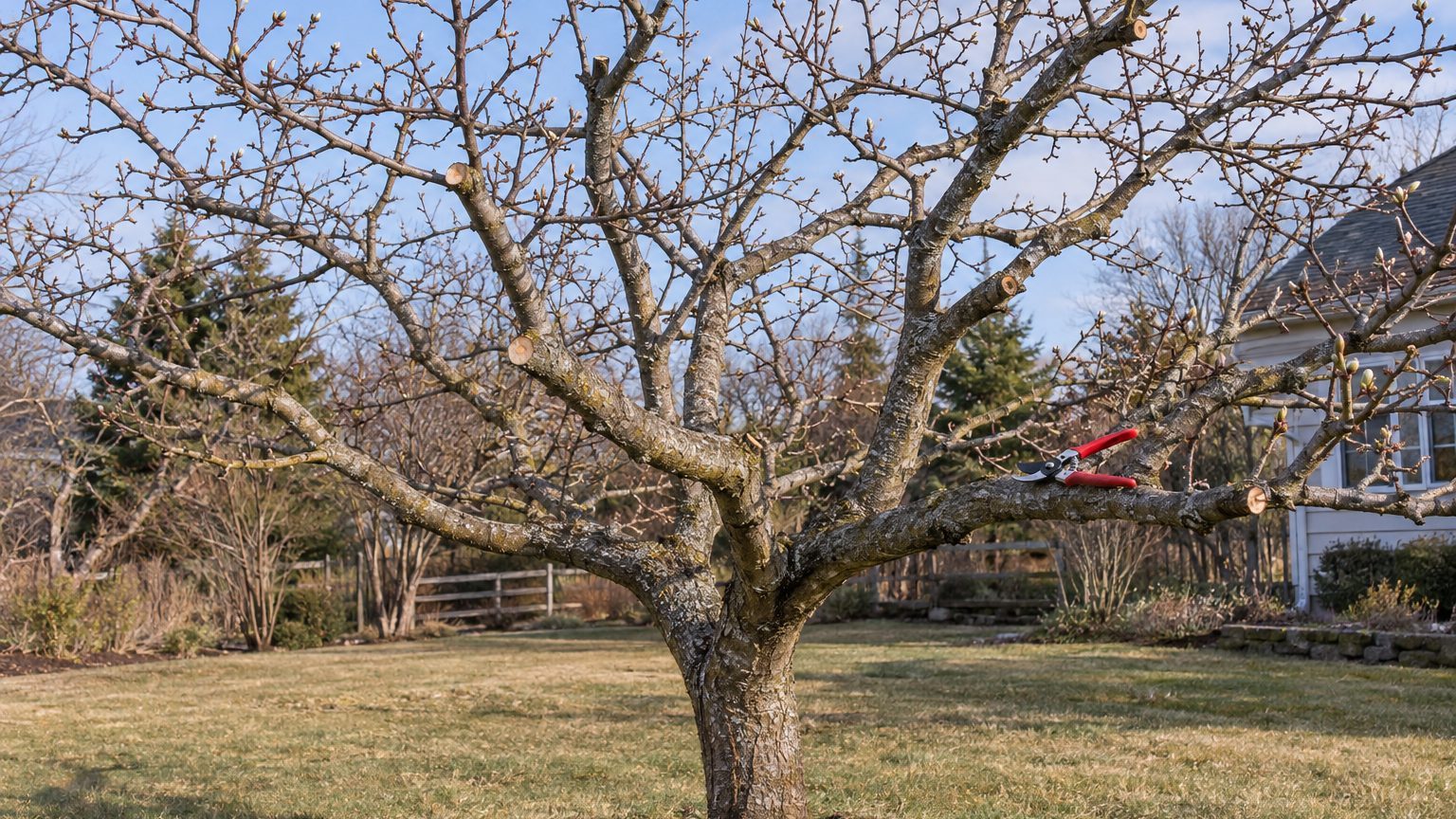
Bare branches against a gray winter sky, a ladder leaned on the plum, loppers sharpened: that is the picture of pruning season in a California yard. The work belongs to the dormant months, when the tree is resting and the leaves are gone, and the timing shifts a little by fruit.
When to Prune Fruit Trees in California

Prune fruit trees while they are dormant, with the leaves down and before spring bud break. In California that means January and February, and December can also work. The tree’s own dormancy is the signal, not a statewide frost date.
| Fruit tree | When to prune in California | Why |
|---|---|---|
| Apples and pears | January and February, the heart of dormancy | Heavy pruning belongs in the dormant period |
| Peaches and nectarines | Late in the dormant season, closest to bloom | Their flower buds are easily hurt by cold |
| Plums | Dormant season, then again in summer | Most fruit trees get a winter pass and a summer touch-up |
| Young bare-root trees | At planting, typically January | Topping at 20-24 inches encourages low branching |
Apricots and cherries are the exceptions, since they are not pruned in winter here. Avoid cutting in fall or early winter, because new growth may not harden before the cold reaches it.
How to Tell Your Fruit Trees Are Ready to Prune
The tree gives clearer signals than the calendar, and a look at the branches tells you whether the window is open.
- Bare branches and fully dropped leaves are signs that the tree is dormant.
- Tight, closed buds mean you are still ahead of bud break, which is the point after which heavy cuts should wait.
- Swelling buds on a peach or nectarine mean the tree is close to bloom, which is exactly when those trees are pruned last.
- Apples and pears are pruned while the trees are dormant and the leaves are down.
- Open blossoms or green tips on an apricot or cherry mean you should skip winter cutting altogether, because apricots and cherries are handled differently here.
When buds start to open, set the loppers down and stop any remaining heavy pruning.
When to Prune Peach and Apple Trees in California
Apples go first. Their heavy pruning fits the middle of dormancy, in January and February, when the tree is fully asleep and the structure is easy to read without leaves in the way. Pears follow the same rhythm.
Peaches wait. Their flower buds are easily hurt by cold, so the cutting happens last, closest to bloom, once the worst of winter has passed. That later timing lets you see which buds survived before deciding what to remove.
Summer is another pruning season for most fruit trees, which are pruned in the dormant season and again in summer. Apricots and cherries skip the winter round entirely.
Where to Get Fruit Tree Advice in California
Climate varies a great deal from the coast to the Central Valley to the Sierra foothills, so local advice is worth having. University of California Agriculture and Natural Resources publishes pruning and planting guidance for the whole state.
- Local Master Gardeners answer pruning questions and can help you plan the dormant-season work.
- The county extension office can tell you which varieties suit your chill hours, which is worth settling before you order trees in winter.
Common Questions
Can You Prune Fruit Trees in Summer in California?
Yes. Most fruit trees are pruned in the dormant season and again in summer, with the summer pass used to keep size in check. Apricots and cherries are the ones to leave alone in winter.
Is It Too Late to Prune Once Buds Start to Swell?
Heavy pruning belongs before the buds swell. Peaches can be pruned close to bloom, so a swelling peach bud is not yet a stop sign.
Do You Need to Worry About Frost When Pruning in Coastal California?
Coastal and southern California is frost-free in an average year, so the guide is the tree’s dormancy, not a freeze date. Northern California, the Central Valley and the Sierra do freeze, which is another reason peaches are pruned last.