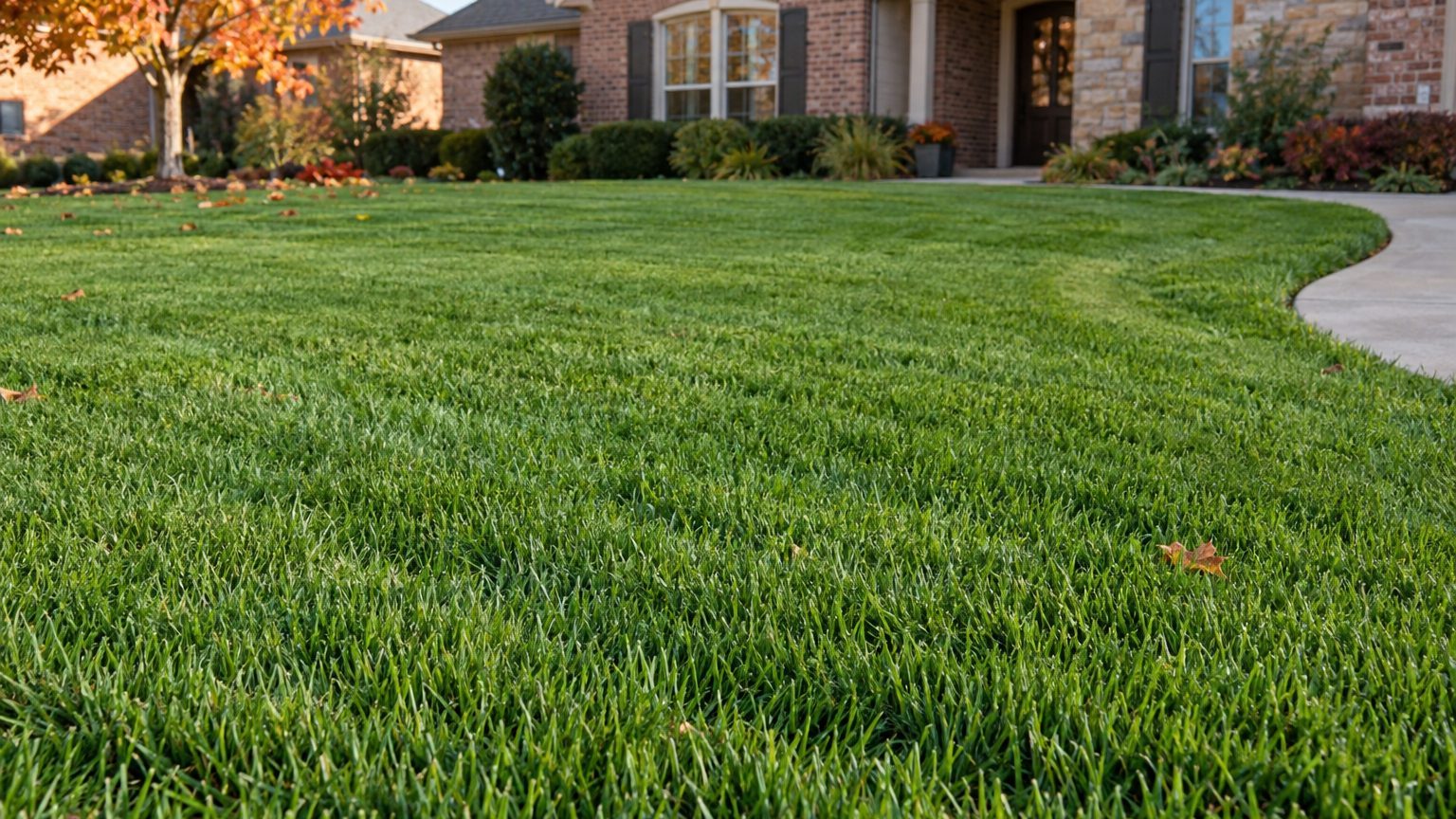
A lawn in Oklahoma spends the summer dealing with heat and the winter dealing with sudden cold, and the grass you grow decides which season gives you trouble. Warm-season turf browns up after the first hard freeze, while tall fescue stays green but struggles in July.
Frost Dates and Growing Season in Oklahoma

For Oklahoma City, the last spring freeze usually falls between March 28 and April 10, and the first fall freeze between October 29 and November 8, in a state spanning USDA zones 6a to 8a. Suburban and rural yards often freeze later in spring and earlier in fall, so check your own county. Grass growth follows soil warmth, not the calendar.
- In late winter, warm-season lawns are still dormant and tan, so leave them alone and let the soil warm before asking them to grow.
- In March, cool-season lawns wake up, and this is the window to put down crabgrass preventer and give tall fescue its spring feeding.
- From May through July, bermudagrass and zoysiagrass grow vigorously. Feed them throughout that period; seed in May or June, lay sod from May through July, and dethatch in May or June.
- In August and September, tall fescue recovers from summer stress, so this is when you aerate, dethatch and overseed it before the first freeze arrives.
- Give cool-season turf its final fall feeding in October, and keep mowing through November while it is still growing.
A frost in the spring window can nip a young seedling, and a seeding done too late in fall may not root before the first freeze, which is why late summer beats a rushed October job.
Oklahoma — the year and the numbers
- State
- Oklahoma
- USDA zones
- 6a-8a
- Last spring frost
- March 28 to April 10
- First fall frost
- October 29 to November 8
- Annual rain
- 36 in
- Lawn type
- cool- and warm-season
- Source
- NOAA NCEI U.S. Climate Normals 1991-2020, 32F freeze probabilities · Oklahoma City
Cool-Season or Warm-Season Grass in Oklahoma?
Warm-season grass is the safer bet across most of Oklahoma, because it shrugs off summer heat and dry spells. Cool-season grass can work, but it needs more water and care to get through July and August, and it fits best in cooler, higher ground.
| Grass | Season | How it does here |
|---|---|---|
| Bermudagrass | Warm | Thrives in heat, grown from seed or sod |
| Zoysiagrass | Warm | Handles the summers well, mostly laid as sod or plugs |
| Tall fescue | Cool | Stays green in winter but needs help in midsummer |
| Kentucky bluegrass | Cool | Best in cooler, higher ground |
Bermudagrass spreads fast and recovers from wear, while zoysiagrass fills in more slowly but forms a dense mat. Both turn tan after a hard freeze and green up again as the soil warms in spring. If you want green all winter, tall fescue is the usual choice, with the extra summer watering that comes with it.
When to Seed, Fertilize and Aerate a Lawn in Oklahoma
The right month depends on your grass type. Warm-season lawns get their work in late spring and early summer, while tall fescue gets its work in late summer and fall.
Tall fescue should be fed in early spring and fall, never in summer.
| Task | When to do it | Why then |
|---|---|---|
| Seeding tall fescue | August, with September as a fallback | Aerate and overseed in late summer so seedlings root before cold |
| Seeding bermudagrass or zoysiagrass | May, and June also works | Warm soil gets seed sprouting quickly |
| Laying sod, warm-season | May, and June or July also work | Roots take hold in the heat |
| Core aeration | August, and September also works | Opens compacted soil while fescue is recovering |
| Fertilizing, cool-season | March, September, October | Feeds the grass when it is actively growing |
| Fertilizing, warm-season | May, June, July | Matches the peak of growth |
| Crabgrass preventer | March, and February, April or May also work | Goes down before weed seeds sprout |
| Dethatching, warm-season | May, June, and April also works | Grass recovers quickly in warm weather |
Dethatching a fescue lawn belongs in August or September, in step with aeration. Mowing runs from March through November for cool-season grass, and from April through October for bermudagrass and zoysiagrass. Watering matters most in June, July and August.
Lawn Problems to Watch for in Oklahoma
Brown Fescue in Midsummer
Tall fescue often thins and turns straw-colored when heat and dry weather stack up, but disease can cause similar symptoms. Water deeply through the hottest months, and plan to aerate and overseed in late summer to fill in the gaps.
Winter-Tan Bermudagrass
A bermudagrass or zoysiagrass lawn goes tan after the first hard freeze, and that is normal dormancy, not death. Tan turf with firm, living stolons is simply asleep. It greens up again once the soil warms in spring, so wait before you reseed.
Weedy Thin Spots
Bare patches in spring, especially along edges and thin areas, invite crabgrass. A preventer applied in March keeps it from sprouting, and a thick, well-fed lawn shades out the rest.
How Lawn Care Dates Change Across Oklahoma
Oklahoma stretches a long way east to west and north to south, so the season starts earlier in some corners and later in others.
- The Panhandle: Higher and more exposed, it runs cooler, so spring warms later and fall freezes arrive sooner. Delay warm-season seeding until the soil is truly warm.
- Oklahoma City and central Oklahoma: This is the middle of the range, and the dates above fit it best.
- Southeastern Oklahoma: Milder winters let warm-season grass wake up sooner, and the growing season runs longer.
Suburban and rural yards freeze later in spring and earlier in fall than city airports, so give your own yard a little extra margin.
Where to Get Lawn Advice in Oklahoma
Oklahoma State University Extension offers research-based lawn guidance, and your county office can help with local questions.
- Visit the extension website for guidance on grass types and seasonal care before you buy seed or fertilizer.
- Contact your county extension office for a soil test or to diagnose a problem patch, and bring a sample of the grass.
Common Questions
Can You Grow Tall Fescue in Oklahoma?
Yes, and it stays green through winter. It needs more care in midsummer than bermudagrass or zoysiagrass, so expect to water through the hottest months and overseed in late summer.
Is It Normal for a Lawn to Turn Brown in Winter?
Warm-season lawns go tan after a hard freeze. If the grass is tan across the whole yard and the stolons are firm, it is dormant, and it should green up again in spring.
Should You Mow a Dormant Lawn?
Not much is needed while the grass is dormant. Mowing resumes in April for bermudagrass and zoysiagrass, and in March for cool-season grass such as tall fescue.