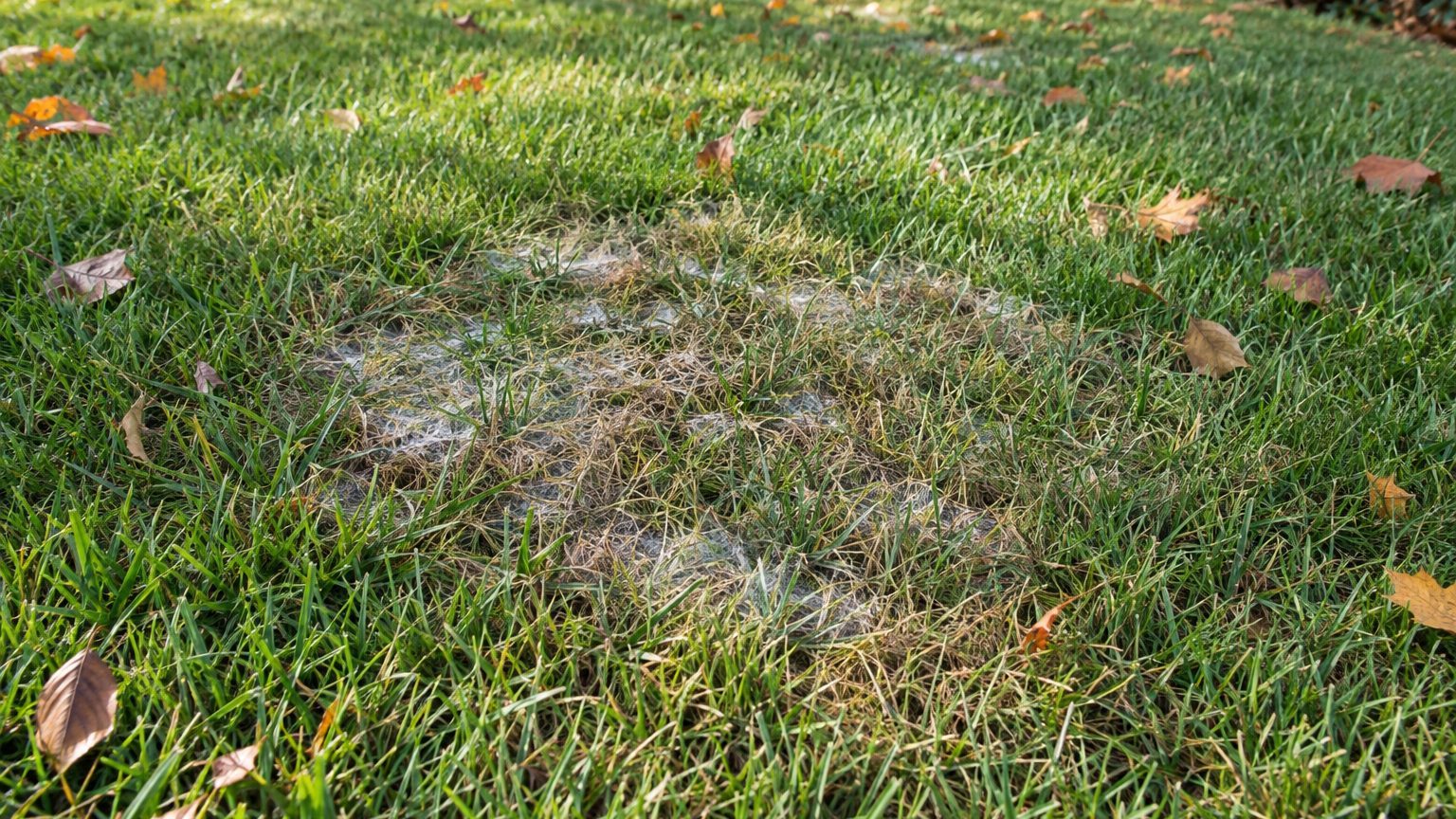
A patch of turf that looks wilted and greasy after a hot, sticky night, then collapses quickly, is the classic picture of Pythium blight. It is a fungus-like disease that attacks grass when heat, humidity and wet leaves stack up in summer. Catching it early and changing how you water, mow and feed are what protect the lawn.
Pythium Blight Symptoms

The sign that sets this disease apart is the speed and the setting: small sunken patches that appear in hot, humid weather and spread fast.
- In cool-season turf, the first patches are small, sunken and circular, reaching up to 1 foot across.
- Across the lawn the damage is irregular, with patches of 4 to 12 inches scattered through the stand.
- Gray, cottony threads may show on the affected grass when the leaves are wet or the air is very humid.
- Perennial ryegrass and annual bluegrass can be badly damaged in 2 to 3 days when conditions are right.
- Severe outbreaks in cool-season lawns are often found the morning after a late afternoon or early evening summer thunderstorm.
Look for the cottony growth early in the morning, while dew is still on the blades, because it fades as the grass dries.
From the almanac
Lawn in your state
The dates on this page depend on where you live. Your state's page carries its frost dates, its USDA zones and the year laid out month by month.
Northeast
Southeast
- Alabama
- Arkansas
- Delaware
- Florida
- Georgia
- Kentucky
- Louisiana
- Maryland
- Mississippi
- North Carolina
- South Carolina
- Tennessee
- Virginia
- West Virginia
Midwest
Southwest
West
Pacific Northwest
Canada
Lawn Problems Mistaken for Pythium Blight
Dead or thinning grass in summer can have other causes, so a patch alone proves nothing. Pair what you see with where and when it shows up.
Leaf spot can resemble Pythium blight, so an accurate diagnosis matters before you change anything.
| Looks like | How to tell them apart |
|---|---|
| Leaf spot | Spotted blades and thinning turf, but no gray cottony growth on wet mornings and no sunken circular patches spreading after a hot, humid night. |
| Pythium blight | Sunken circular patches up to 1 foot across, with gray cottony threads in wet or very humid conditions and fast collapse in hot, muggy weather. |
If the patches keep growing after a storm and the grass looks soaked and collapsed, Pythium is the likelier suspect. For a firm answer, your state extension office can confirm the cause from a sample.
What Causes Pythium Blight
Pythium blight is caused by Pythium fungus-like organisms that live in the lawn and strike when the weather turns hot and wet. In cool-season grasses it is most severe in hot, humid or rainy weather with warm nights, typically when temperatures run from 86 to 95°F.
Warm nights matter as much as hot days. In the Mid-Atlantic, the disease thrives at 86 to 95°F with nights staying above 68°F, and humidity above 90% for 14 hours or longer with a minimum of 68°F sets the stage for an outbreak.
Every turfgrass can be attacked, and both cool-season and warm-season lawns can be hit, though cool-season grasses suffer more. Warm-season lawns are at risk through long humid, rainy or cloudy stretches whenever temperatures stay above 50°F. In North Carolina, symptoms show up from June to August.
How to Treat Pythium Blight
Once patches appear, the goal is to dry the grass out and stop feeding the disease while the weather breaks.
- Confirm the diagnosis before taking action, since leaf spot looks similar and needs a different approach.
- Hold off on fertilizer, because cool-season lawns should get no more than 0.25 lb N per 1,000 square ft when conditions favor the disease.
- In North Carolina, water in the early morning hours, before sunrise, to reduce prolonged leaf wetness.
- Keep mowing at the recommended height for your grass, such as 3 inches for a tall fescue home lawn, so the turf is not stressed further.
- If the damage keeps spreading, check local rules before considering a fungicide.
How to Prevent Pythium Blight
Prevention follows the season, with most of the work done before the first hot, muggy stretch.
- For a tall fescue home lawn, maintain the recommended 3-inch mowing height.
- In North Carolina, water in the early morning hours, before sunrise, to reduce prolonged leaf wetness.
- When hot, humid weather arrives, hold nitrogen to 0.25 lb N per 1,000 square ft or less on cool-season grass.
- In cool-season turf, check for sunken patches or gray cottony growth the morning after a late afternoon or early evening summer thunderstorm.
- During warm, wet, cloudy spells in the warm-season range, keep watching, because those lawns stay at risk whenever temperatures hold above 50°F.
Avoid putting extra water on a lawn that already stays damp, and be cautious with ryegrass and annual bluegrass, which suffer most.
Common Questions
Can Pythium Blight Kill a Whole Lawn?
It can do heavy damage quickly in perennial ryegrass and annual bluegrass, which can be hurt in 2 to 3 days.
Does Pythium Blight Only Hit Cool-Season Grass?
No. All turfgrasses can be attacked, though cool-season species take more damage than warm-season ones.
What Weather Brings Pythium Blight On?
In cool-season grasses, hot, humid or rainy weather with warm nights favors the disease, especially after a summer thunderstorm. Wet leaves and high humidity make it worse.