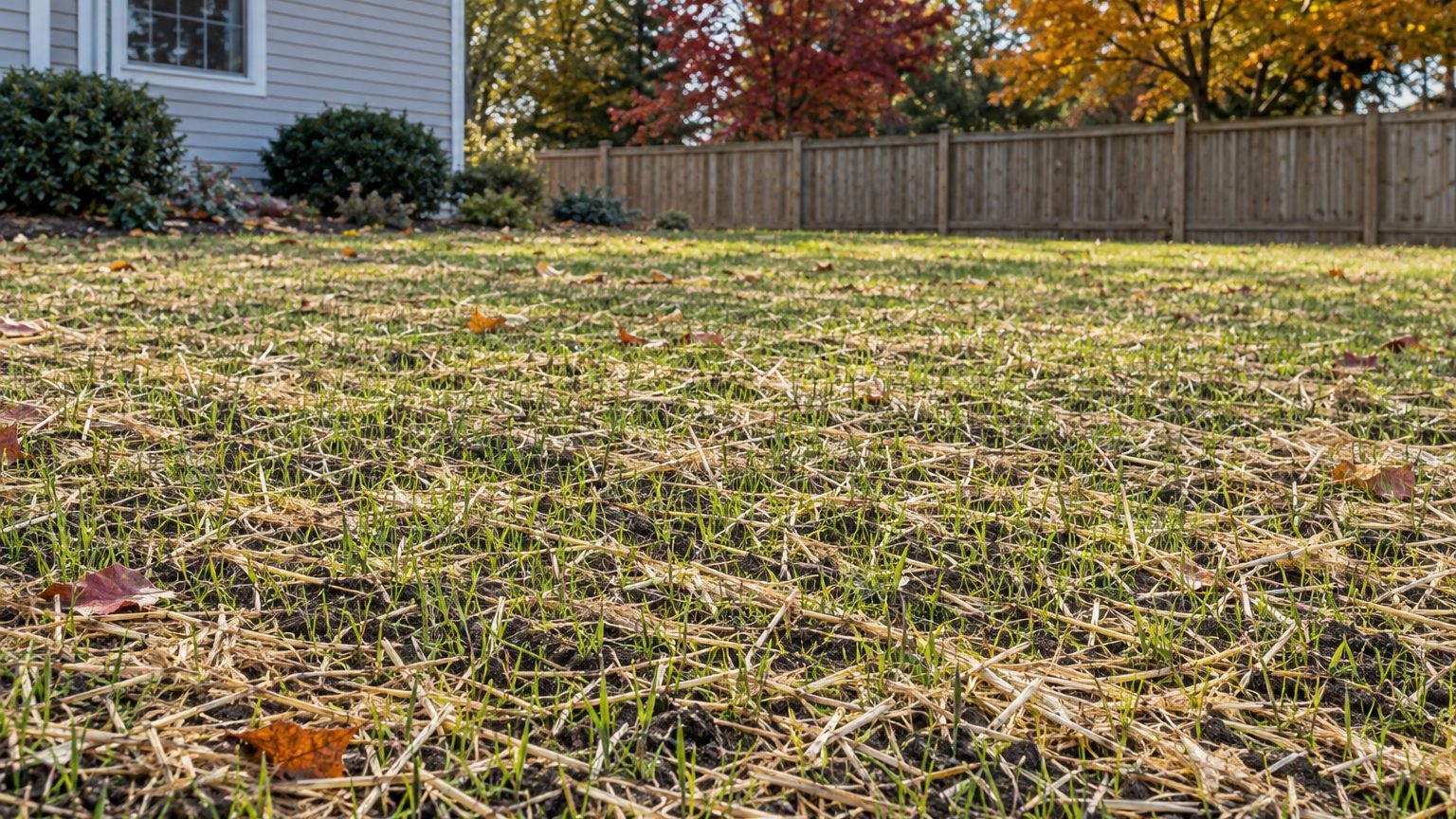
Bare patches show up after a hot summer, and thin turf shows up after a hard winter. Both send you out with a bag of seed. Seeding works when the seed sits in warm soil with a long stretch of mild weather ahead, and that moment depends on your grass and where you live.
When Is the Best Time to Plant Grass Seed?
The right window for cool-season grasses, such as tall fescue, Kentucky bluegrass and fine fescue, depends on local conditions. The right window for warm-season grasses, such as bermudagrass and zoysia, also varies by location. Seed placed in the wrong season either stalls or gets killed by the next weather swing.
The window depends on the type of grass, the season, and your region. Warm soil with cooling air favors cool-season seed, and steady heat favors warm-season seed.
The state-by-state table just below gives each state’s months and zone.
From the almanac
When to seed the lawn, state by state
The months each state's extension calendar marks for this, kept inside that state's own frost-free season. Open your state for the frost dates, the USDA zone and the rest of the year.
Northeast
- ConnecticutAug–SepUSDA 6a-7b
- MaineAug–SepUSDA 3b-6a
- MassachusettsAug–SepUSDA 5a-7b
- New HampshireAug–SepUSDA 3b-6a
- New JerseyAug–SepUSDA 6a-7b
- New YorkAug–SepUSDA 3b-7b
- PennsylvaniaAug–SepUSDA 5a-7b
- Rhode IslandAug–SepUSDA 6a-7b
- VermontAug–SepUSDA 3b-5b
Southeast
- AlabamaMayUSDA 7a-9a
- ArkansasAugUSDA 6b-8a
- DelawareAug–SepUSDA 7a-8a
- FloridaMayUSDA 8b-11b
- GeorgiaMayUSDA 6a-9b
- KentuckyAugUSDA 6a-7a
- LouisianaMayUSDA 8a-10a
- MarylandAug–OctUSDA 5b-8a
- MississippiMayUSDA 7b-9a
- North CarolinaAugUSDA 5b-8b
- South CarolinaMayUSDA 7a-9a
- TennesseeAugUSDA 5b-8a
- VirginiaAugUSDA 5a-8b
- West VirginiaAug–SepUSDA 5a-7a
Midwest
- IllinoisAug–SepUSDA 5a-7b
- IndianaAug–SepUSDA 5b-7a
- IowaAug–SepUSDA 4b-6a
- KansasAugUSDA 5b-7a
- MichiganAug–SepUSDA 4a-6b
- MinnesotaAug–SepUSDA 3a-5a
- MissouriAugUSDA 5b-7b
- NebraskaAug–SepUSDA 4a-5b
- North DakotaAug–SepUSDA 3a-4b
- OhioAug–SepUSDA 5b-6b
- South DakotaAug–SepUSDA 3b-5b
- WisconsinAug–SepUSDA 3b-6a
Southwest
West
- AlaskaJunUSDA 1a-8a
- CaliforniaSep–OctUSDA 5a-11a
- ColoradoAug–SepUSDA 3b-7b
- IdahoAug–SepUSDA 3b-7b
- MontanaAug–SepUSDA 3a-6a
- NevadaAug–SepUSDA 4a-10a
- UtahAug–SepUSDA 4a-9a
- WyomingAug–SepUSDA 3a-6a
Pacific Northwest
Canada
- AlbertaAug–SepZone 4a
- British ColumbiaAug–SepZone 9a
- ManitobaAug–SepZone 3b
- New BrunswickAug–SepZone 5a
- Newfoundland and LabradorAug–SepZone 6a
- Northwest TerritoriesJunZone 1b
- Nova ScotiaAug–SepZone 6b
- NunavutJunZone 0a
- OntarioAug–SepZone 7a
- Prince Edward IslandAug–SepZone 5b
- QuebecAug–SepZone 5b
- SaskatchewanAug–SepZone 3a
- YukonJunZone 1b
Sources: state frost facts and Penn State Extension — Lawn Management through the Seasons; Lawn Establishment · UMass Extension — BMPs for Lawn and Landscape Turf, Appendix B (calendar) · Clemson Cooperative Extension, HGIC — Bermudagrass / Zoysiagrass / Centipedegrass / St. Augustinegrass maintenance calendars · University of Tennessee Extension — PB1903 Lawn Maintenance Calendar (2025). A state with no marked month is not shown.
How to Plant Grass Seed

Good seed-to-soil contact matters more than the brand on the bag, so the work is mostly in the preparation. Take these steps in order:
- Mow the old grass short and rake out the clippings, so the seed reaches the soil instead of hanging in thatch.
- In North Carolina, loosen the surface and, in heavy clay or very sandy ground, mix compost into the top 6 to 8 inches, because the new roots need soil that holds both air and moisture. In North Carolina, 1 to 2 cubic yards per 1,000 square feet is the suggested amount.
- Spread a starter fertilizer, since seedlings need nutrients near the surface from the start. In Pennsylvania, apply 0.5 to 1 lb nitrogen/1000 sq ft; amounts in excess of 1.5 lb nitrogen/1000 sq ft can burn young turf.
- In Iowa, sow the seed evenly, then rake it in lightly so it ends up 1/8 to 1/4 inch deep. Seed left on top dries out and feeds the birds, while seed buried deeper may never reach daylight.
- Keep the top 1.5 inches of soil moist, which in North Carolina can mean light watering two or three times a day for 7 to 21 days. A seed that dries out after it has started to sprout is lost.
- In North Carolina, mow when the new grass is about 50 percent taller than its final height, such as cutting tall fescue back to 3 inches once it reaches 4.5 inches. Mowing at that point encourages the plants to thicken instead of stretching.
In New Jersey, once the seedlings have a real root system, water less often but more deeply, down to 3 to 5 inches. Deep, spaced-out watering pulls the roots downward and prepares the lawn for seasonal weather stress.
Seeding Time and Rate by Grass Type
Seeding rates vary by species. Tall fescue seed is large and goes down heavily, while zoysia and bermudagrass seed is tiny and needs very little.
Maryland seeding rates are given here, and the timing notes below show where each one applies.
| Grass | Season | Seed per 1,000 sq ft |
|---|---|---|
| Tall fescue | Cool | 6 to 8 pounds |
| Kentucky bluegrass | Cool | 2 to 3 pounds |
| Fine fescue | Cool | 4 to 6 pounds |
| Zoysia | Warm | 1 pound |
| Bermudagrass | Warm | 1 pound |
For timing, cool-season lawns in Southern New Jersey are seeded from August 20 to October 10, while Kansas City lawns often do well with seed down as late as October 15. Warm-season grasses in North Carolina can be seeded between March 1 and July 1, and in Maryland they go in from mid-May into June. Bluegrass is slow, taking 7 to 14 days longer to germinate than other cool-season grasses in North Carolina, so do not give up on it early. In North Carolina, use 1.5 pounds per 1,000 square feet when fine fescue is mixed with tall fescue or Kentucky bluegrass.
Grass Seeding Mistakes to Avoid
Seeding into Cold Soil
In Maryland, the optimum soil temperatures for grass seed germination are 50 to 70°F, measured around a 1-inch depth. Seed sown into colder ground sits idle and can be washed or eaten away. Check the soil with a thermometer instead of trusting the date.
Dormant seeding is the exception. In Iowa, it works when soil stays at 40°F or lower, so nothing sprouts before winter.
Overdoing the Starter Fertilizer
More fertilizer feels like a head start, but too much burns the tender seedlings. In Pennsylvania, amounts in excess of 1.5 lb nitrogen/1000 sq ft can damage young turf. With no soil test, Iowa suggests 5 pounds of a 20-5-10 type fertilizer per 1,000 square feet, tilled in. Measure the area first and weigh the product.
Mowing Too Short Too Soon
Scalping a young lawn strips the blades the seedlings use to feed themselves. In Iowa, new grass is mowed once it reaches 3 inches, at a height of 2 to 2.5 inches. Keep the blade sharp and the height steady until the lawn fills in.
When to Plant Grass Seed in Your State
Let the soil and the grass type set the day. Cool-season lawns want warm soil and cooling air, and warm-season lawns want steady heat. A soil thermometer tells you more than the calendar.
- Open your state’s page for its seeding months and zone, then check the soil before you buy seed.
- If you are unsure which grass you have, look at the lawn through the growing season and match it to a cool or warm type before choosing a window.
Common Questions
Can You Plant Grass Seed Over an Existing Lawn?
Yes, if you mow low and rake first so the seed can touch bare soil. Thick thatch or tall grass keeps seed suspended above the ground, where it dries out before it roots.
How Long Does Grass Seed Take to Sprout?
In Maryland, grass seed takes about 2 weeks to germinate. Slower species such as bluegrass can take longer, so keep the soil moist while you wait.
Can You Plant Sprigs or Plugs Instead of Seed?
For warm-season grasses, yes. In North Carolina, sprigs or plugs can go in from March 1 through July 1, which lets you cover bare areas without waiting on seed.