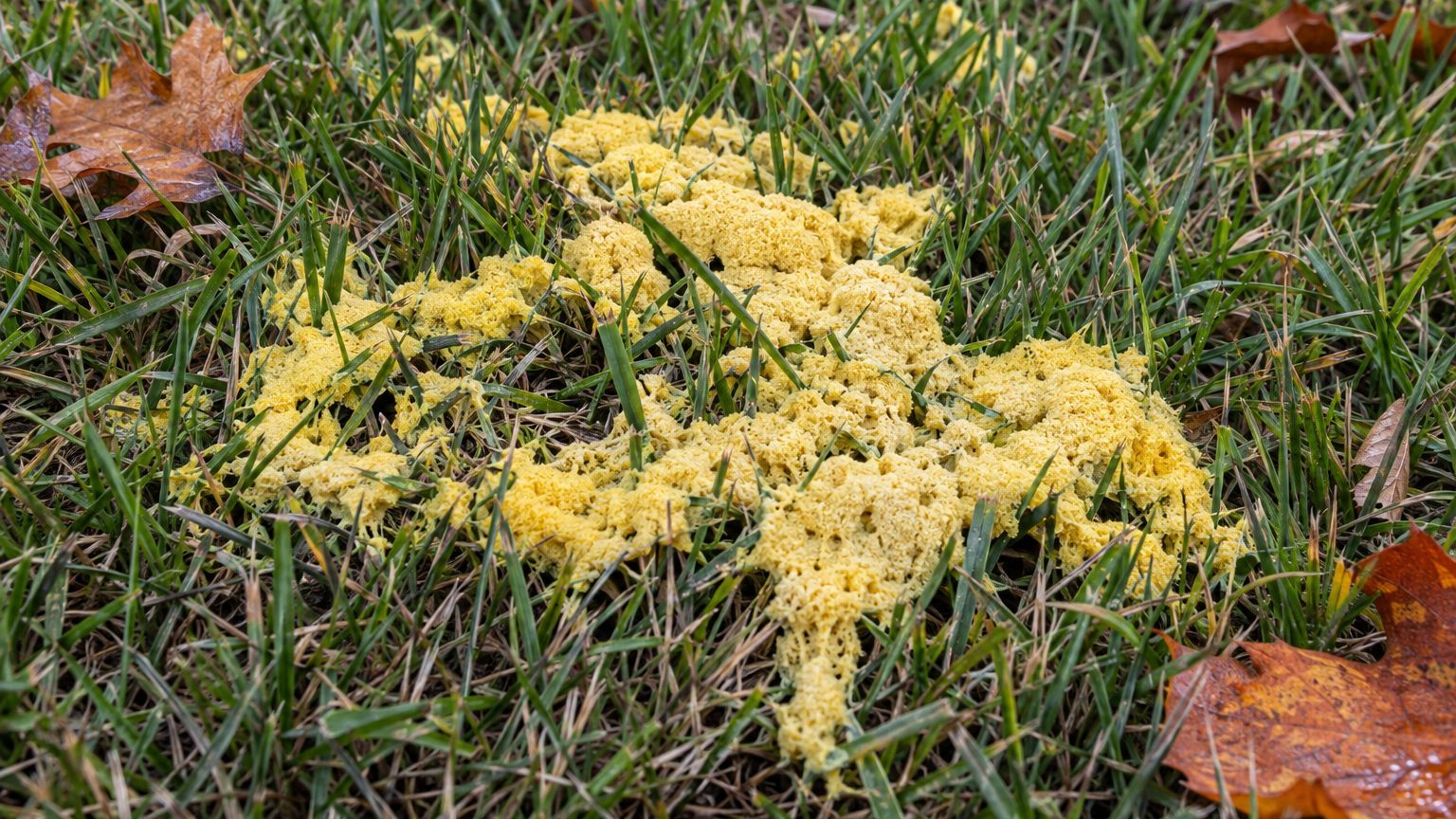
A yellow, scrambled-egg-looking smear or a patch of gray dust on the grass after several days of gloomy, wet weather can be alarming, but it is rarely harmful. Slime mold sits on top of the turf rather than feeding on it, and it usually clears without any treatment.
How to Recognize Slime Mold

The look changes as the organism matures, so what you see depends on the stage, and these are the signs to check, starting with the one that sets it apart from lawn diseases.
- The grass blades show no disease symptoms, because slime mold does not infect plants and simply rests on them.
- Small round pustules sit on the leaves in circular to irregular patches usually 4 to 8 inches in diameter.
- Early on, the common species forms a yellow, gooey mass that can look like vomit and creeps slowly across the surface, especially at night.
- Later the mass dries and crusts over on the lawn surface.
- The dried crust releases dusty masses of spores that rub off on your shoes or mower.
- The patches may return to the same part of the lawn from year to year.
Late spring and summer are when this tends to happen, usually after cloudy, damp stretches.
From the almanac
Lawn in your state
The dates on this page depend on where you live. Your state's page carries its frost dates, its USDA zones and the year laid out month by month.
Northeast
Southeast
- Alabama
- Arkansas
- Delaware
- Florida
- Georgia
- Kentucky
- Louisiana
- Maryland
- Mississippi
- North Carolina
- South Carolina
- Tennessee
- Virginia
- West Virginia
Midwest
Southwest
West
Pacific Northwest
Canada
Problems Mistaken for Slime Mold
Several things leave a powdery or discolored film on grass, and a quick look at the blades themselves sorts most of them out. Slime mold wipes off and leaves healthy tissue underneath.
Check where the patch sits and whether the leaf tissue beneath is damaged, because no clue should be read alone.
| Looks like | How to tell them apart |
|---|---|
| Powdery mildew | White to gray coating that stays on the leaf and is most common in shaded, humid spots, while slime mold wipes off and leaves clean blades. |
| Leaf spot or other turf disease | Blades show lesions, yellowing or thinning that persist and spread, while slime mold leaves foliage symptom-free. |
| Mushrooms or other fungal growth | Firm caps or stalks grow from the soil or thatch, while slime mold forms a flat, gooey or dusty film on the blades. |
Dog waste or spilled material can also leave a smear, but it will not form in a rounded patch that dries to spores and then vanishes.
What Causes Slime Mold
Slime molds are not true fungi but primitive organisms that thrive in similar damp environments. They sometimes turn up in lawns, though they are more common on mulch in landscaped beds, so a patch near a mulched border is no surprise.
Moisture is the trigger. Slime molds are most prevalent after prolonged periods of leaf wetness, and they appear most often during several days of cloudy, wet weather, usually in late spring and summer. Nothing about this is tied to one region, so any lawn with a stretch of gray, damp days can see it.
Some spots invite it more than others. In Alabama, slime molds may be more common on heavily thatched or poorly drained portions of a lawn.
How to Fix Slime Mold
Because the organism sits on the surface, removal is simple and a bit forgiving. According to Alabama Cooperative Extension System, the pustules typically disappear after 2 to 3 days, so treatment is not needed.
- Wait and watch first, since the crust or fruiting bodies disintegrate on their own and leave no trace.
- Mow the area if the dusty crust bothers you, because mowing is an effective way to destroy the crusty fruiting bodies.
- Rake lightly to break up the mass and lift it off the blades, taking care not to tear the grass.
- Spray the patch with a stream of water from a hose, which in California is a recommended way to wash the mold off.
Left undisturbed, slime mold usually disappears in a week or so in California. Thick growth can shade and suffocate the grass underneath, which is why it is worth removing sooner.
How to Prevent Slime Mold
You cannot stop gray, wet weather, but you can make the lawn a less welcoming surface for these organisms.
- Address heavy thatch so the turf can dry faster after rain.
- In Alabama, renovating low spots and poorly drained areas may reduce how often slime mold appears.
- In Alabama, selective pruning of overhead trees to increase sunlight may help reduce how often and how badly slime molds appear.
- During cloudy, wet spells in late spring and summer, mow when the grass is dry and rake off any patches you spot early.
- Keep mulch from creeping up against the lawn edge, because slime molds are more common on mulch than on lawns.
A patch that keeps returning to the same corner is a hint that moisture lingers there, so that spot deserves the most attention.
Common Questions
Is Slime Mold Harmful to Dogs or Kids?
Slime mold does not infect plants, but that does not establish whether it is safe for people or pets. Rinsing the area with a hose or raking it away keeps things tidy. If a pet eats a large amount and seems unwell, call your veterinarian.
Will Slime Mold Kill My Grass?
Usually not, since it does not feed on the blades. The one risk is heavy coverage that shades and suffocates the turf beneath it, which is why removing thick patches helps.
Why Does Slime Mold Keep Coming Back in the Same Spot?
Patches often reappear in the same area from year to year. Thatch buildup, poor drainage, and shade from trees may make slime mold more likely, so improving those conditions matters more than removing each outbreak. Your state extension office can suggest local steps.