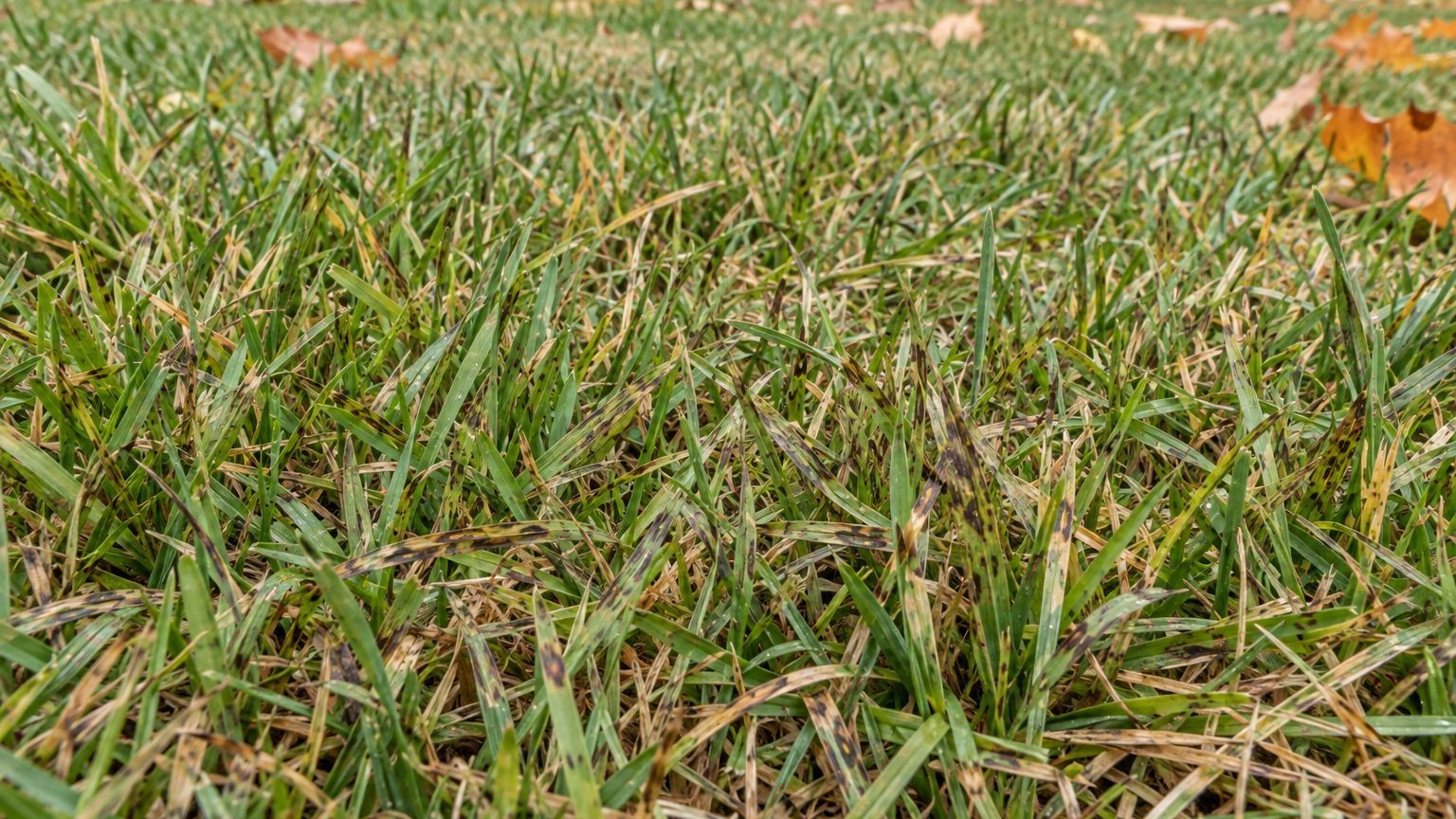
Irregular tan to bronze patches that spread across a lawn in the heat of summer, with grass blades that yellow from the tips down, often point to anthracnose. It is a fungal disease that targets grass already stressed by heat, drought or poor fertility. Knowing the signs, the look-alikes and the habits that keep it away makes the difference between a passing blemish and a thinning lawn.
Anthracnose Symptoms

The disease leaves signs you can check on the grass itself, beginning with changes in the blades and stems.
- Leaf blades turn yellow, then reddish brown or bronze, starting at the tips and working down toward the crown.
- Look closely at the lower stems and leaf sheaths, where the base of the plant turns dark brown or black and rots.
- Tiny black specks, like pepper, dot the dead tissue, and a hand lens reveals their tiny spiny structures.
- Patches are irregular in shape and range from small spots to large stretches of thin, yellowing turf.
- In South Carolina, the disease shows up at the peak of hot weather on cool-season grasses that are barely growing, and in Kansas it is tied to midsummer heat injury but can also appear in spring and fall.
Give the grass a gentle tug. Infected stems at the base often break away easily, which tells you the damage is at the crown and not just on the leaf.
From the almanac
Lawn in your state
The dates on this page depend on where you live. Your state's page carries its frost dates, its USDA zones and the year laid out month by month.
Northeast
Southeast
- Alabama
- Arkansas
- Delaware
- Florida
- Georgia
- Kentucky
- Louisiana
- Maryland
- Mississippi
- North Carolina
- South Carolina
- Tennessee
- Virginia
- West Virginia
Midwest
Southwest
West
Pacific Northwest
Canada
Lawn Problems Mistaken for Anthracnose
Yellow or tan turf in summer has many causes, and the fungus is only one of them. The pattern in the lawn and the condition of the plant base help separate the usual suspects.
Dry weather and insect feeding can look similar, so rule them out before you treat for disease.
| Looks like | How to tell them apart |
|---|---|
| Drought stress | Grass turns bluish gray and stays curled or footprinted, and it greens up again soon after a deep watering, while anthracnose stems are rotted at the base. |
| Grub damage | Turf feels spongy and lifts like a loose carpet, and white C-shaped grubs sit in the root zone, while anthracnose leaves roots attached. |
| Dog urine spots | Round dead patches ringed with darker green grass, found where pets go regularly, while anthracnose patches have no green ring and show black specks on stems. |
If the grass has dark, rotted stem bases and those black specks, the cause is the fungus. A local extension office can confirm a diagnosis from a small turf sample.
What Causes Anthracnose
A fungus living in thatch and old plant debris causes the disease, and it waits for grass to weaken. Spores germinate within 2-6 hours once conditions allow, according to Pennsylvania guidance, so a short wet spell on stressed turf is enough to start an infection.
Weather sets the stage. In Illinois, the leaf blight phase generally occurs during periods of 80 to95 F heat stress combined with prolonged leaf wetness. In Iowa, warm and humid weather favors both leaf blight and basal rot on almost all turfgrass species. Cool, damp spells in early spring can also trigger it, as Pennsylvania notes.
Stress and feeding habits tip the balance. Low potassium in the soil leaves grass more vulnerable, and in Iowa the advice is to avoid high nitrogen rates during dry periods or high temperatures. Compacted soil, close mowing and shallow, frequent watering add to the problem. Cool-season lawns such as Kentucky bluegrass, perennial ryegrass and annual bluegrass in hot summers are common victims, while centipedegrass in South Carolina can be hit during very rainy spells in spring and summer.
How to Treat Anthracnose
Once symptoms appear, the goal is to ease stress on the grass and give it a chance to recover while the weather turns.
- Confirm the diagnosis by checking stem bases and black specks, so you do not treat drought or grubs as a disease.
- Raise the mower height and mow only when the grass needs it, because taller blades shade the crown and shed less heat stress.
- Water deeply but not too frequently, as Iowa guidance puts it, so leaves dry between waterings and roots reach deeper.
- In Iowa, avoid high nitrogen rates during dry periods or high temperatures.
- Test the soil and correct potassium if it is low. Pennsylvania guidance sets the target above 50 ppm in soil and above 2% in clipping tissue.
- Bag or remove clippings from infected areas, so spores do not spread across the yard on the mower.
Fungicides exist for severe or repeated outbreaks, but which products are registered varies by state. Your state extension office can name what is legal and suitable for your grass, and the lawn may recover as the weather changes and care improves.
How to Prevent Anthracnose
Prevention follows the growing year, with each season adding a habit that keeps the grass strong before heat arrives.
- In early spring, test the soil and fix potassium if it is short, so the lawn enters summer with the nutrients it needs.
- In late spring, set the mower to a taller height and keep blades sharp, which reduces wounds that let the fungus in.
- Water thoroughly but not too frequently, giving the leaves time to dry between waterings.
- In Iowa, avoid high nitrogen rates during dry periods or high temperatures.
- In fall, rake or dethatch heavy buildup and aerate compacted areas, which cuts down the debris where the fungus overwinters.
Choose resilient grass types when overseeding, since a dense, well-adapted lawn handles heat and wet spells far better than a thin one.
Common Questions
Will Anthracnose Kill My Whole Lawn?
Rarely. Healthy turf usually recovers when conditions improve, though badly rotted patches may need overseeding once the weather settles.
Can Anthracnose Come Back Every Year?
Yes, because the fungus lives in thatch and debris. Strong turf and good watering habits keep outbreaks mild.
Does Anthracnose Spread to Other Plants in the Yard?
Lawn anthracnose affects grass. Many trees and shrubs have their own forms of the disease, but they do not usually pass it to turf.