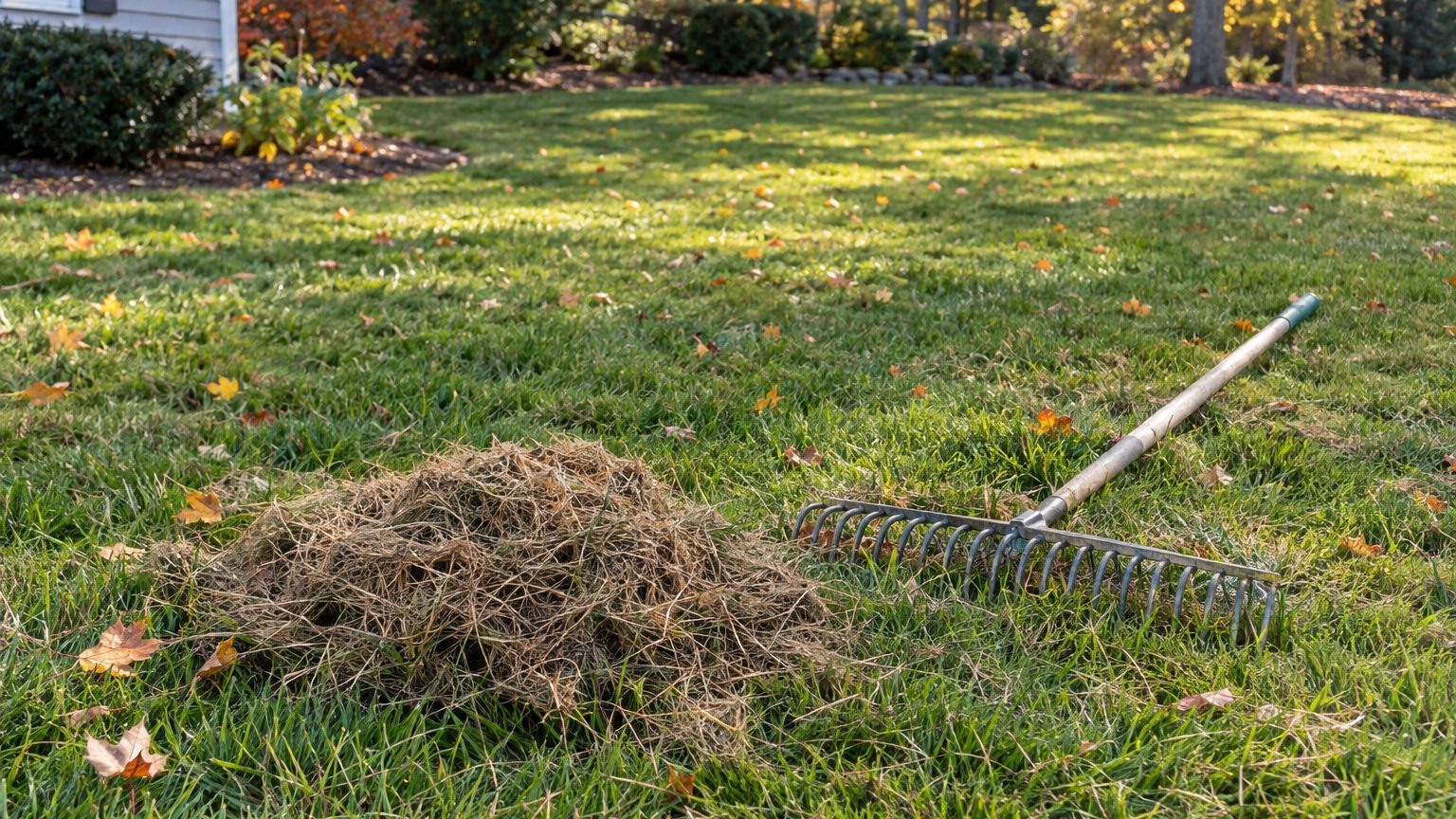
A lawn that feels spongy underfoot, with a brown mat showing when you part the blades, is asking for dethatching. Most lawns need the job when that mat grows thick, and the right moment follows the grass, not the calendar. Cool-season turf gets its turn in late summer or early fall, while warm-season turf is ready in spring after green-up or in early summer.
Does Your Lawn Need Dethatching?
Not every lawn does. Thatch is a dense layer of living and dead organic matter that builds up between the grass plants and the soil, and a thin layer is harmless. According to UC IPM, University of California, act once that layer is more than 1/2 inch deep.
Timing depends on the grass, the season and the region. Cool-season lawns, common in the North, do best with late summer to early fall work, while warm-season lawns across the South want spring after green-up or early summer, when growth is fast. The state-by-state calendar right below gives each state’s window of months and its zone.
From the almanac
When to dethatch, state by state
The months each state's extension calendar marks for this, kept inside that state's own frost-free season. Open your state for the frost dates, the USDA zone and the rest of the year.
Northeast
- ConnecticutAug–SepUSDA 6a-7b
- MaineSepUSDA 3b-6a
- MassachusettsSepUSDA 5a-7b
- New HampshireSepUSDA 3b-6a
- New JerseyAug–SepUSDA 6a-7b
- New YorkAug–SepUSDA 3b-7b
- PennsylvaniaAug–SepUSDA 5a-7b
- Rhode IslandAug–SepUSDA 6a-7b
- VermontSepUSDA 3b-5b
Southeast
- AlabamaMay–JunUSDA 7a-9a
- ArkansasAug–SepUSDA 6b-8a
- DelawareAug–SepUSDA 7a-8a
- FloridaMay–JunUSDA 8b-11b
- GeorgiaMay–JunUSDA 6a-9b
- KentuckyAug–SepUSDA 6a-7a
- LouisianaMay–JunUSDA 8a-10a
- MarylandSepUSDA 5b-8a
- MississippiMay–JunUSDA 7b-9a
- North CarolinaAug–SepUSDA 5b-8b
- South CarolinaMay–JunUSDA 7a-9a
- TennesseeAug–SepUSDA 5b-8a
- VirginiaAug–SepUSDA 5a-8b
- West VirginiaAug–SepUSDA 5a-7a
Midwest
- IllinoisAug–SepUSDA 5a-7b
- IndianaAug–SepUSDA 5b-7a
- IowaAug–SepUSDA 4b-6a
- KansasAug–SepUSDA 5b-7a
- MichiganAug–SepUSDA 4a-6b
- MinnesotaAug–SepUSDA 3a-5a
- MissouriAug–SepUSDA 5b-7b
- NebraskaAug–SepUSDA 4a-5b
- North DakotaAug–SepUSDA 3a-4b
- OhioAug–SepUSDA 5b-6b
- South DakotaAug–SepUSDA 3b-5b
- WisconsinAug–SepUSDA 3b-6a
Southwest
- ArizonaMay–JunUSDA 4b-10b
- New MexicoAug–SepUSDA 4b-9a
- OklahomaAug–SepUSDA 6a-8a
- TexasMay–JunUSDA 6a-10a
West
- CaliforniaSepUSDA 5a-11a
- ColoradoAug–SepUSDA 3b-7b
- IdahoAug–SepUSDA 3b-7b
- MontanaAug–SepUSDA 3a-6a
- NevadaAug–SepUSDA 4a-10a
- UtahAug–SepUSDA 4a-9a
- WyomingAug–SepUSDA 3a-6a
Pacific Northwest
Canada
- AlbertaAug–SepZone 4a
- British ColumbiaAug–SepZone 9a
- ManitobaAug–SepZone 3b
- New BrunswickAug–SepZone 5a
- Newfoundland and LabradorAug–SepZone 6a
- Nova ScotiaAug–SepZone 6b
- OntarioAug–SepZone 7a
- Prince Edward IslandAug–SepZone 5b
- QuebecAug–SepZone 5b
- SaskatchewanAug–SepZone 3a
Sources: state frost facts and Penn State Extension — Lawn Management through the Seasons; Lawn Establishment · UMass Extension — BMPs for Lawn and Landscape Turf, Appendix B (calendar) · Clemson Cooperative Extension — Controlling Thatch in Lawns · University of Minnesota Extension — Lawn care calendar. A state with no marked month is not shown.
How to Dethatch a Lawn

Start by checking the layer, then work in this order so the machine does its job without hurting the turf.
- In California, cut a small square of sod about 3 inches deep; in South Carolina, cut a pie-shaped wedge with a knife or spade, then measure the brown layer between the blades and the soil.
- Mow the grass a little shorter than usual, so the dethatching blades reach the thatch instead of tangling in tall leaves.
- According to UC IPM, University of California, set the blades of a dethatching machine to cut about 1 inch into the soil and 1 inch apart on creeping grasses, so they pull up the mat without gouging the lawn.
- In California, make a second pass at an angle perpendicular to the first once the whole lawn is done, so thatch missed on the first run comes loose.
- Rake up the debris and dispose of it so the pulled thatch does not settle back on the turf.
- Follow up by aerating, fertilizing and watering as needed, and overseed where the grass looks thin.
Work when the grass is growing strongly, because it recovers quickly then. The lawn will look rough for a while, with bare streaks and torn tufts, and that is normal.
Dethatching by Grass Type
Grass habit decides both how fast thatch builds and how far apart the blades should sit. Vigorous growers pile it up from sheer speed, while slow, fibrous ones keep it because the tissue barely breaks down.
In South Carolina, blade spacing is matched to the species, which keeps the machine from tearing coarser turf.
| Grass | Season | Thatch and blade spacing |
|---|---|---|
| Kentucky bluegrass | Cool | Heavy thatch builder, blades 1 to 2 inches apart |
| Red fescue | Cool | Blades 1 to 2 inches apart |
| Hybrid bermudagrass | Warm | Heavy thatch builder, blades 1 to 2 inches apart |
| Zoysiagrass | Warm | Slow growing, fibrous tissue breaks down slowly, blades 1 to 2 inches apart |
| Centipedegrass | Warm | Blades 2 to 3 inches apart |
| St. Augustinegrass | Warm | Blades 2 to 3 inches apart |
In South Carolina, Kentucky bluegrass and hybrid bermudagrass build thatch quickly, so lawns with either grass merit more frequent checks. Zoysiagrass grows slowly, yet its fibrous tissue breaks down slowly and accumulates on the soil surface. Overwatered or overfertilized lawns and lawns on heavy clay soil may build thatch quickly.
Dethatching Mistakes to Avoid
Dethatching Without Measuring
Running a machine over a lawn with a thin layer tears healthy turf for no gain. Dig out a small piece of soil or a pie-shaped wedge of sod and look at the brown layer first. If it falls short of 1/2 inch, which is the California guideline, leave the machine in the shed.
Working in the Wrong Season
Pulling thatch while the grass is dormant or stressed leaves bare ground with no growth to cover it. Cool-season lawns recover in late summer to early fall, and warm-season lawns in spring after green-up or early summer. Wait for that active growth, then go.
Ignoring a Badly Thinned Lawn
When desirable grasses make up less than 30 percent of the lawn, dethatching alone will not rescue it. New Jersey sorts these lawns into renovation categories, with a thatch layer under 1 inch in one case and over 1 inch in the other. In either case, plan on full renovation with new seed, not just a raking.
When to Dethatch a Lawn in Your State
Let the grass tell you. Cool-season turf is ready when summer heat eases and growth picks up, and warm-season turf is ready once it has greened up and is racing along in warm soil.
- Open your state’s page to find its months of the year for the job and its zone.
- Check the thatch layer a little before those months arrive, so you know whether to bring out the machine.
Common Questions
Can You Dethatch with a Hard Rake Instead of a Machine?
Yes, on a small lawn a stiff rake pulls out a light layer. Thicker mats go faster and cleaner with a powered dethatcher, which cuts into the soil along set lines.
Is Spring or Fall Better for Cool-Season Grass?
Late summer to early fall is the usual choice, with early spring as the next option in New Jersey. Fall gives the turf cool weather to fill in the gaps.
What Should You Do After Raking Up the Thatch?
In California, aerate, fertilize and water as needed after dethatching, and overseed where the turf has thinned. That follow-up is what turns a rough-looking lawn into a thick one.