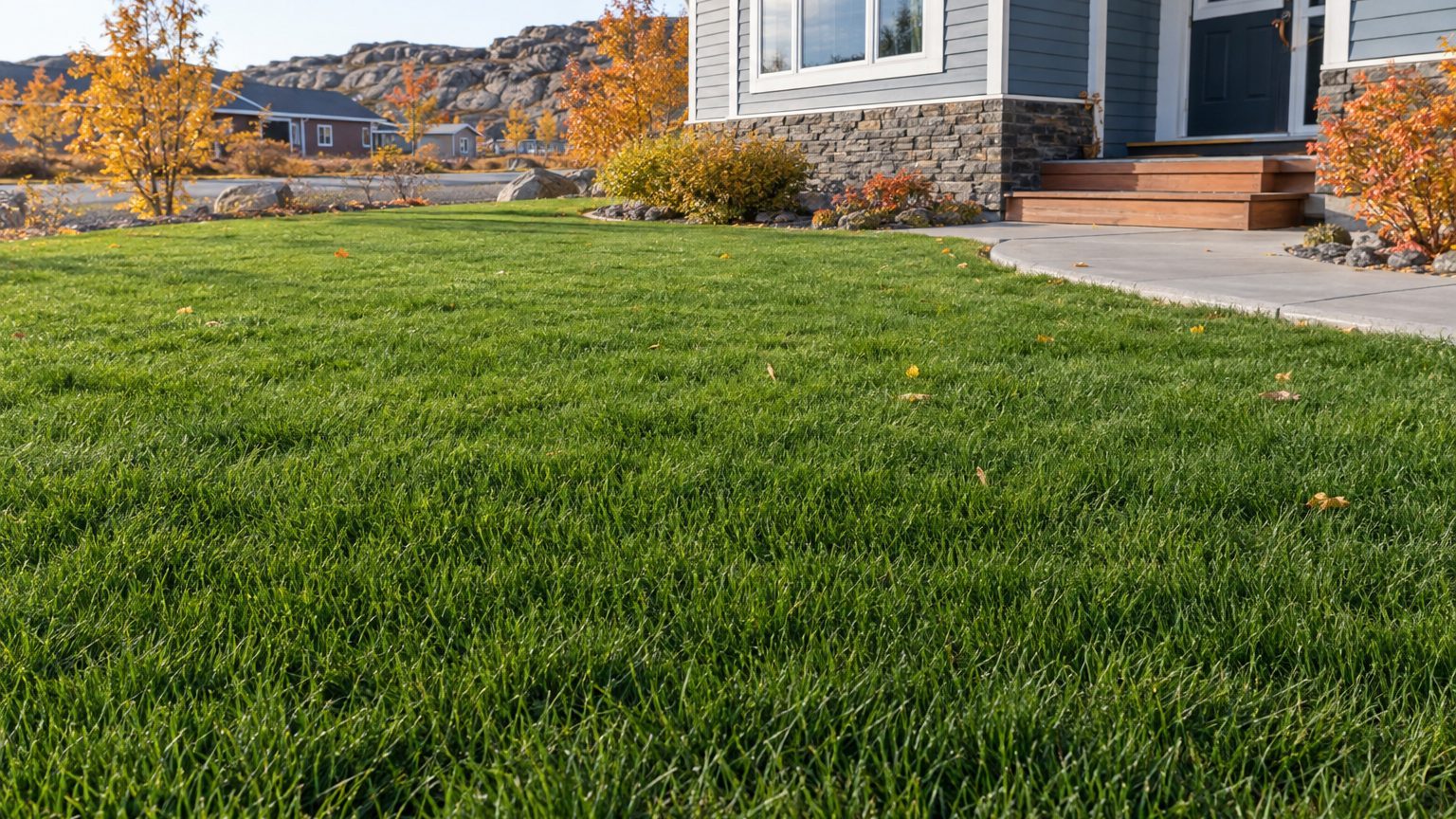
Snowmelt on a northern lawn shows you what survived the winter: green blades where the grass held on, straw-colored patches where it did not. Lawns in Nunavut live on a short, cool season, and the work that matters falls into a few summer months, tied to when the ground thaws and the soil warms.
Frost Dates and Growing Season in Nunavut
In Rankin Inlet, the last spring frost falls on average around June 19, a midpoint rather than a safe date, so in about half of years frost arrives later and can still nip a young seedling.
- In early spring, the ground is still frozen or soggy, so the job is to wait and keep traffic off the thawing turf, which tears easily when wet.
- In June, once the ground has thawed, seeding is at its best, and the first feeding goes down as the grass starts to grow.
- Through June, July and August, regular watering keeps the short season productive, and mowing begins as soon as the grass needs it.
- In July, you can still seed if June slipped away, though the grass then has less warm time to root before the cold returns.
- If you skipped feeding in June, August still works for a lawn that looks hungry, while mowing carries on.
- In September, mowing continues; in Rankin Inlet, the first fall frost falls on average around September 13, a midpoint rather than a safe deadline for new work.
Frost dates mark risk to tender growth, not the day grass starts or stops. Growth follows soil warmth, and in this territory the soil warms late and cools early, so judge by the ground as well as the date.
Nunavut — the year and the numbers
- State
- Nunavut
- Hardiness zones
- 0a
- Last spring frost
- June 19
- First fall frost
- September 13
- Annual rain
- 12 in
- Lawn type
- cool-season
- Source
- Environment and Climate Change Canada — Canadian Climate Normals 1981-2010, station RANKIN INLET A · Rankin Inlet
Cool-Season or Warm-Season Grass in Nunavut?
Cool-season grass is the only kind that makes sense here. It tolerates long, hard winters and grows in mild summer weather, while warm-season grasses need a stretch of real heat that the territory does not supply.
Drought matters less than cold. The real test is whether the grass comes through winter with its crown alive, so choose the toughest cool-season types and expect a modest lawn.
| Grass | How it does in Nunavut | Why |
|---|---|---|
| Kentucky bluegrass | A standard lawn grass for cold regions | Cool-season type that spreads to fill gaps |
| Fine fescues (creeping red, chewings, hard) | Suited to cold, low-input lawns | Cool-season types that cope with lean soil |
| Perennial ryegrass | Short-lived in the coldest winters | Less winter-hardy than bluegrass or fescue |
A mix of Kentucky bluegrass and fine fescues gives the lawn a backup if one species struggles. Ryegrass can help a new lawn green up quickly, but plan to reseed it. Warm-season types, including St. Augustinegrass, have no place in a Nunavut yard.
When to Seed, Fertilize and Aerate a Lawn in Nunavut
Seed in spring, once the ground has thawed. The season is too short for fall seeding, because seedlings need the full run of summer to root before freeze-up.
Feeding waits until the grass is actually growing, which is later than in most of the country, and the other jobs follow the same short stretch of summer.
| Task | Best months in Nunavut | Why then |
|---|---|---|
| Seeding | June, and it also works in July | Thawed ground and the whole growing season ahead |
| Fertilizing | June for the first feeding, and August also works | Grass is growing and can use the nutrients |
| Mowing | June, July, August, September | Cut whenever the grass is growing |
| Watering | June, July, August | Warm months, when the lawn is putting on growth |
June does most of the work. If June slips away, July still works for seeding, and August still works for feeding. After that, mowing is the only job left.
Lawn Problems to Watch for in Nunavut
Winter-Killed Patches

Straw-colored, matted patches that appear as the snow melts and stay brown while nearby grass greens up usually mean winter killed the turf. A gentle tug that lifts the grass with no roots supports that diagnosis, but it does not prove the cause.
Rake the dead grass away and reseed the bare spots early in the season, giving the new grass as much summer as possible. Perennial ryegrass suffers most in hard winters.
Pale, Slow Spring Growth
Grass that stays thin and yellowish-green well after thaw, especially in low, damp corners, is usually waiting on cold soil. Feeding does not cure it.
Hold off on fertilizer until the lawn is visibly growing, then give the first feeding. Pushing nutrients into cold ground wastes them.
Dry, Browning Blades
Grass that turns brown and crisp in a warm, windy stretch of summer may be short of water. Push a screwdriver into the soil; if it meets hard, dry ground beneath the surface, the lawn may need water.
Water deeply through the summer months and not just on the surface. Thin turf on shallow, gravelly soil dries out fastest.
How Lawn Care Dates Change Across Nunavut
Nunavut covers a huge area, so the dates here shift with latitude and with how close you are to cold water, and the farther north you go, the later spring comes.
- Kivalliq: Rankin Inlet and Arviat sit on the west coast of Hudson Bay, where the cold water holds spring back along the shore. The dates in this article speak for Rankin Inlet.
- Kitikmeot: Cambridge Bay faces the Arctic coast and tends to run later in spring and earlier in fall, so seeding gets a tighter window.
- Qikiqtaaluk: Iqaluit on southern Baffin Island is exposed to the sea, and communities farther north on the island, such as Pond Inlet, run later still.
Treat every date as a starting point and let the thaw and the feel of the soil in your own yard decide when to begin.
Where to Get Lawn Advice in Nunavut
Canada has no county extension office, so advice comes from agriculture departments, gardening groups and garden centers. Local experience counts for a lot in a place where few people grow lawns.
- Agriculture and Agri-Food Canada offers general guidance on soils and plant growth, useful when you are planning a seeding.
- A local gardening group or garden center, if your community has one, can tell you what has survived winters in your town.
Common Questions
What Hardiness Zone Is Nunavut?
Rankin Inlet falls in Canadian hardiness zone 0a. That is Canada’s own system, which weighs several climate variables, and it does not convert to a USDA zone, so do not match it to a US map.
Can You Grow St. Augustinegrass in Nunavut?
No. It is a heat-loving grass that is never sold as seed, and the cool summers here would not support it. Stick with bluegrass and fine fescue.
Is a Lawn Practical Everywhere in Nunavut?
It depends on the community and the site. A sheltered, thawed patch with some soil can hold a small lawn, while exposed or rocky ground may not. Start with a small area and see how it winters.