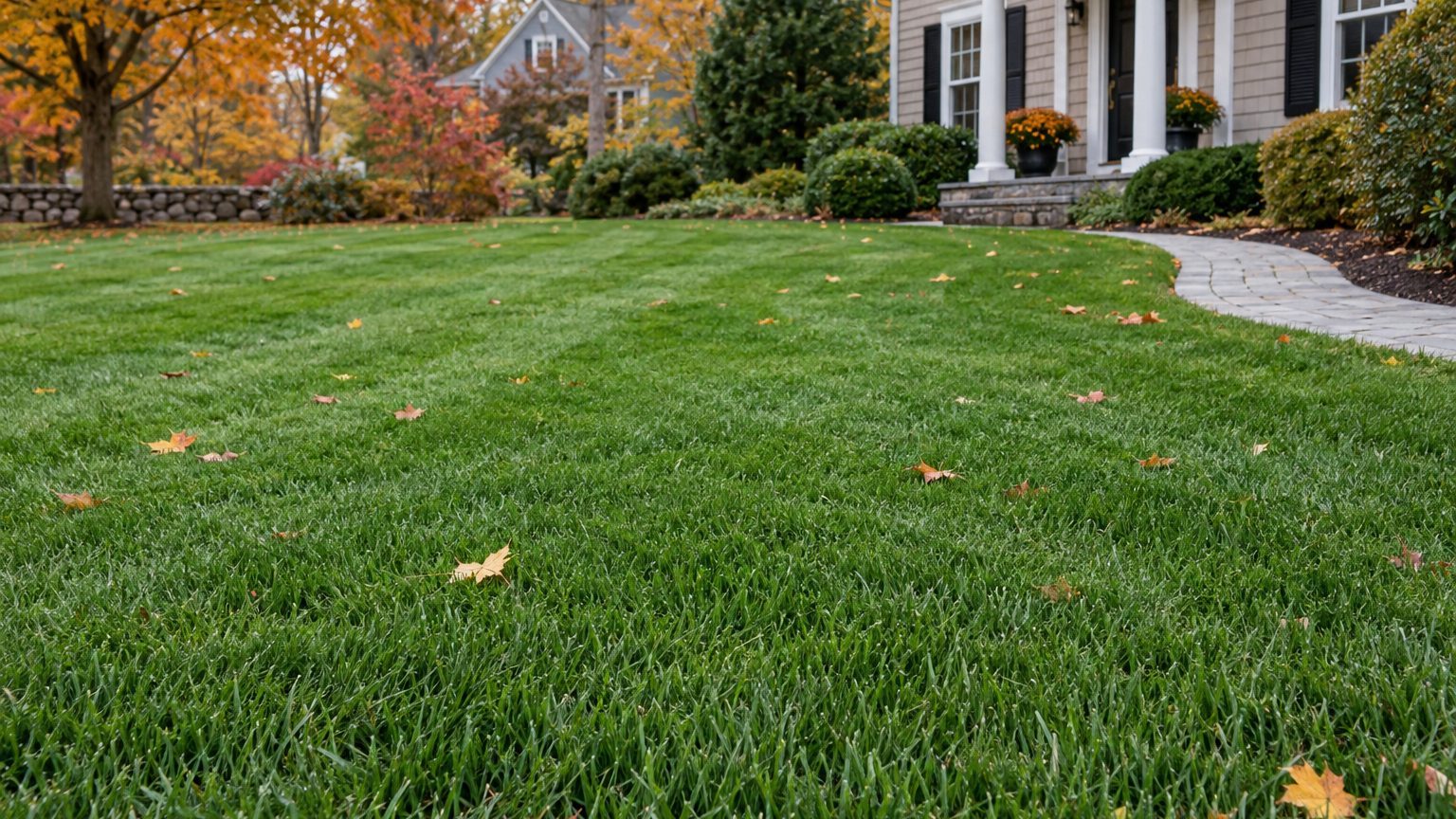
Walk a Connecticut lawn in late March and you will see tan, matted grass still waiting on warmer soil, while the first green shows up on south-facing slopes. The yard here runs on cool-season grasses, with the big jobs of seeding, feeding and aerating clustered in spring and, above all, late summer into early fall.
Frost Dates and Growing Season in Connecticut
For Bridgeport, the last spring freeze usually lands between April 2 and April 12. The first fall freeze usually lands between October 28 and November 10. Inland towns freeze later in spring and sooner in fall. Statewide, the USDA hardiness zone runs from 6a to 7b, so winters are cold enough to matter.
- In early spring, freezing nights can still arrive after the first warm days, so a young seeding is at risk and heavy feeding can wait. Grass growth follows soil warmth, not the calendar.
- In April, crabgrass preventer goes down before the weed germinates, and mowing begins as the lawn greens up. If April is not practical, March or May can also work.
- From May into early summer, feeding in May suits an actively growing lawn, and mowing continues regularly through the season.
- In June, July and August, watering matters most, because cool-season grass slows down in heat and dries out fast.
- In August and September, seeding, sod, core aeration and the main feeding all fit, and the new grass roots before the first fall freeze closes the season for seeding.
- In October and November, mowing carries on until growth stops, and a late feeding in November is still possible if September passed.
Because the fall freeze is the real deadline for new seed, aiming for the earlier part of that late-summer window gives seedlings the most time to toughen up.
Connecticut — the year and the numbers
- State
- Connecticut
- USDA zones
- 6a-7b
- Last spring frost
- April 2 to April 12
- First fall frost
- October 28 to November 10
- Annual rain
- 44 in
- Lawn type
- cool-season
- Source
- NOAA NCEI 1991-2020 Climate Normals, 32F freeze probabilities · Bridgeport
Cool-Season or Warm-Season Grass in Connecticut?
Cool-season grass is the answer here. Connecticut winters are cold enough to damage warm-season turf, and cool-season species grow best in spring and fall, when most of the lawn work happens.
Summer heat and dry spells are the stress point, so the choice is less about whether the grass survives winter and more about how it handles August.
| Grass | How it does in Connecticut | Why |
|---|---|---|
| Kentucky bluegrass | Dense, self-repairing lawn in sun | Cool-season grass suited to the cold winters |
| Tall fescue | Holds up well through summer stress | Cool-season type that copes with heat and dry spells |
| Perennial ryegrass | Quick to sprout, often mixed with other grasses | Cool-season grass that establishes fast in cool weather |
| Fine fescues | Fit lighter, shadier or lower-input lawns | Cool-season group including creeping red, chewings and hard fescue |
Warm-season grasses such as zoysia and bermudagrass sit at the edge of what the winters allow, so they are not the usual choice for lawns in Connecticut.
When to Seed, Fertilize and Aerate a Lawn in Connecticut
Late summer carries most of the load. Seed, sod, aeration and dethatching all peak in August and September, when warm soil and cooler air favor root growth.
Connecticut law bars fertilizer, compost or soil amendment containing phosphate on lawns from December 1 to March 15, and none may go within 20 feet of a stream, pond or other water.
| Task | When to do it in Connecticut | Why then |
|---|---|---|
| Seeding | August, September (April, May also work) | Warm soil and cooler air help seedlings root |
| Laying sod | August, September (April, May, October also work) | Roots knit in before winter or summer heat |
| Core aeration | August, September (April, May also work) | Grass recovers quickly while it is growing hard |
| Fertilizing | May, September (April, November also work) | Feeds grass during active growth |
| Crabgrass preventer | April (March, May also work) | Applied before weed seed sprouts |
| Dethatching | August, September (April, May also work) | Recovery is fastest in growing weather |
Dethatch only when the thatch layer is thicker than about an inch. Thinner thatch does no harm and the lawn is better left alone.
Lawn Problems to Watch for in Connecticut
Brown Patches in Midsummer

Cool-season grass slows down in July and August heat. Pale, crisp areas that spring back after a soaking are usually thirsty, not dead. Water deeply and regularly in June through August, and keep mowing at a taller setting.
Thin Grass Under Trees
Connecticut yards are full of mature trees, and grass beneath them gets less light and competes for water. Thin turf plus bare soil near the trunk points to shade stress. Choose shade-tolerant fine fescues and overseed in August or September.
Weak Spring Green-Up
After a hard winter, patches that stay tan while the rest greens up may need seed. Rake lightly, check for thatch, and overseed in April or May if you cannot wait for the late-summer window.
How Lawn Care Dates Change Across Connecticut
Dates here lean toward the mild shoreline and slip later as you move inland and uphill.
- Fairfield County shore and the Long Island Sound coast: Spring warms sooner and fall freeze comes later, so mowing and seeding windows stretch a little longer.
- Litchfield Hills and the northwest corner: Freezes arrive earlier in fall and linger later in spring, so seed and sod are safer in the earlier part of the late-summer window.
- Connecticut River Valley: Conditions sit between the shore and the hills, and sheltered yards green up a bit sooner than exposed ones.
Treat these dates as a guide and shift them a little toward your own microclimate.
Where to Get Lawn Advice in Connecticut
When something looks off or you want to know what your soil needs, local help is close at hand.
- UConn Extension offers soil testing guidance and lawn care information, a good first stop before you spend on lime or fertilizer.
- Your county extension office can help diagnose patchy or thinning turf from a sample or photos, which is best done while the problem is visible.
Common Questions
When Should You Aerate a Lawn in Connecticut?
August and September are the best months, while the grass is growing strongly. April and May also work if you missed late summer.
Is November Too Late to Fertilize a Lawn in Connecticut?
No, November still works as a fallback if you skipped September. The grass can store the nutrients for spring, though it will not grow much.
Can You Lay Sod in Connecticut in October?
Yes, October is still workable, though August and September give sod more time to root before winter.