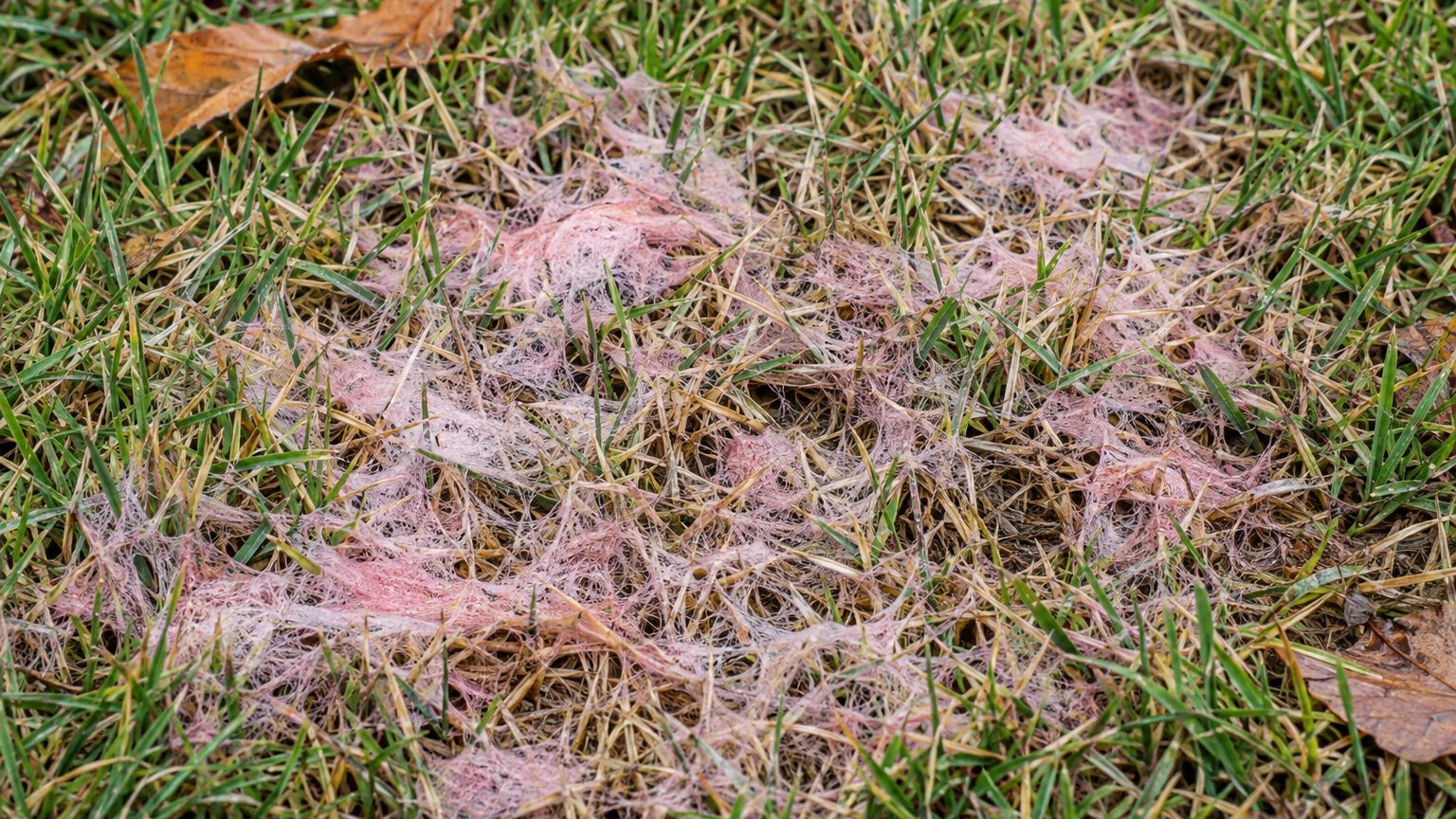
In North Carolina, pinkish patches can appear as snow melts; in northern California, they can appear after a cool, damp stretch without snow. It leaves rough circles of damaged grass in the turf. Knowing what the patches look like, what feeds them and which habits keep them away makes a big difference to how the lawn greets spring.
Pink Snow Mold Symptoms

A useful clue is a pink tint on the grass blades themselves, so look closely at the edges of any damaged circle.
- Leaf blades carry a pink coloration from fungal threads and tiny spore-bearing structures, which sets this disease apart from other snow molds.
- Patches are roughly round and usually run from 2 inches to 10 inches across.
- Neighboring patches sometimes merge and damage a large area of turf.
- Leaves go through a color change, first watersoaked, then reddish brown, and finally bleached.
- Symptoms show from November to March in North Carolina, and they become obvious as snow melts where a snow blanket sat on the lawn.
Because the color fades as the grass dries, check on a damp morning or just after the snow goes while the pink is still visible.
From the almanac
Lawn in your state
The dates on this page depend on where you live. Your state's page carries its frost dates, its USDA zones and the year laid out month by month.
Northeast
Southeast
- Alabama
- Arkansas
- Delaware
- Florida
- Georgia
- Kentucky
- Louisiana
- Maryland
- Mississippi
- North Carolina
- South Carolina
- Tennessee
- Virginia
- West Virginia
Midwest
Southwest
West
Pacific Northwest
Canada
Lawn Problems Mistaken for Pink Snow Mold
Several winter lawn problems leave tan or bleached circles, and color alone does not settle the question. Pair what you see with where and when it appears.
Pink on the blades, together with the conditions around the patch, is what separates this disease from its relatives.
| Looks like | How to tell them apart |
|---|---|
| Other snow mold diseases, with bleached patches after snow melts | Pink snow mold shows pink on the leaf blades from fungal threads and tiny spore-bearing structures, and the other snow molds do not. |
| Similar patches after a cool, wet winter with no snow cover | The same fungus can cause a disease with similar symptoms without any snow cover. Look for the same pink on the blades and the same cool, damp weather. |
Winter dryness, pet spots and other leaf diseases can also leave pale circles. If the blades show no pink and the patch sits in an odd spot, such as along a walk or fence, suspect something other than this fungus.
What Causes Pink Snow Mold
A fungus that stays in the turf is behind the disease, and it wakes up when conditions turn cool and wet. It does not need deep cold. According to Purdue Extension, the pathogen can be active from 30°F to 60°F, so infection can happen in fall and spring as well as winter.
Snow is not required. According to UC IPM, University of California, the pathogen stays active across cooler temperatures from 32° to 65°F, and consistently cool, wet weather of 40°–65°F favors the disease. In northern California, it appears in cool, wet spells where no snow falls at all.
Where snow does fall, as in North Carolina, the disease develops under the snow cover and shows as the snow melts. All cool-season turfgrass species can be infected.
Mowing and feeding habits matter too. On Kentucky bluegrass and perennial ryegrass, the disease is most common on turf kept at 3 inches or greater. Tall grass mats down under wet leaves or snow, creating a damp pocket the fungus likes. In California, excess nitrogen in fall adds to the risk.
How to Treat Pink Snow Mold
Treatment focuses on gentle cleanup and patience rather than aggressive intervention.
- Rake the patches lightly to break up the matted, damp blades, so air and light reach the crown of the plant.
- Remove leaves, thatch scraps and debris sitting on the patches, because they hold moisture against the turf.
- Mow when the grass is dry and growing, and bag the clippings from the infected areas so you do not carry the fungus across the yard.
- Water only when the lawn is dry, and do it in the morning, so the blades are not wet through the cold nights.
- Overseed bare spots with a cool-season grass once the soil warms and the grass begins to grow, since seed needs warmth to sprout.
- Ask your state’s extension office which fungicides, if any, are approved for home lawns where you live, since labels and rules differ from state to state.
Many lawns knit back together as spring growth picks up, so give the grass time before deciding that a patch is dead.
How to Prevent Pink Snow Mold
Prevention focuses on preparing the lawn before winter.
- In California, avoid excess nitrogen in fall, because lush growth is more prone to the disease.
- On sports turf and professional landscapes, keep taller mown turf at 2 1/2 to 3 inches to prevent matting.
- Before snow or a cold, wet stretch, clear fallen leaves from the lawn so they cannot pack down into a damp mat.
- According to UC IPM, University of California, maintain soil pH between 6.5 and 6.7.
- Once snow melts or the cold, wet weather eases, rake out any matted grass so the lawn dries quickly and can start growing.
Piling plowed snow onto the same corner of the lawn each winter is worth avoiding, since deep, packed snow keeps that spot wet and cold longer.
Common Questions
Will Pink Snow Mold Come Back on the Same Lawn?
It can return whenever cool, wet weather returns, because the fungus survives in the turf. Matted grass and heavy fall feeding make a repeat more likely, so the same habits matter each year.
Should You Rake the Lawn When the Snow Melts?
A light rake over matted or pinkish areas helps them dry and lets new growth come through. Wait until the ground is no longer soggy, since raking soft turf can pull up weak grass.
Does Pink Snow Mold Affect Warm-Season Grasses?
It is a problem of cool-season turfgrasses such as Kentucky bluegrass and perennial ryegrass. If your lawn is a warm-season grass and shows winter patches, a local garden center can help you work out what else may be behind them.