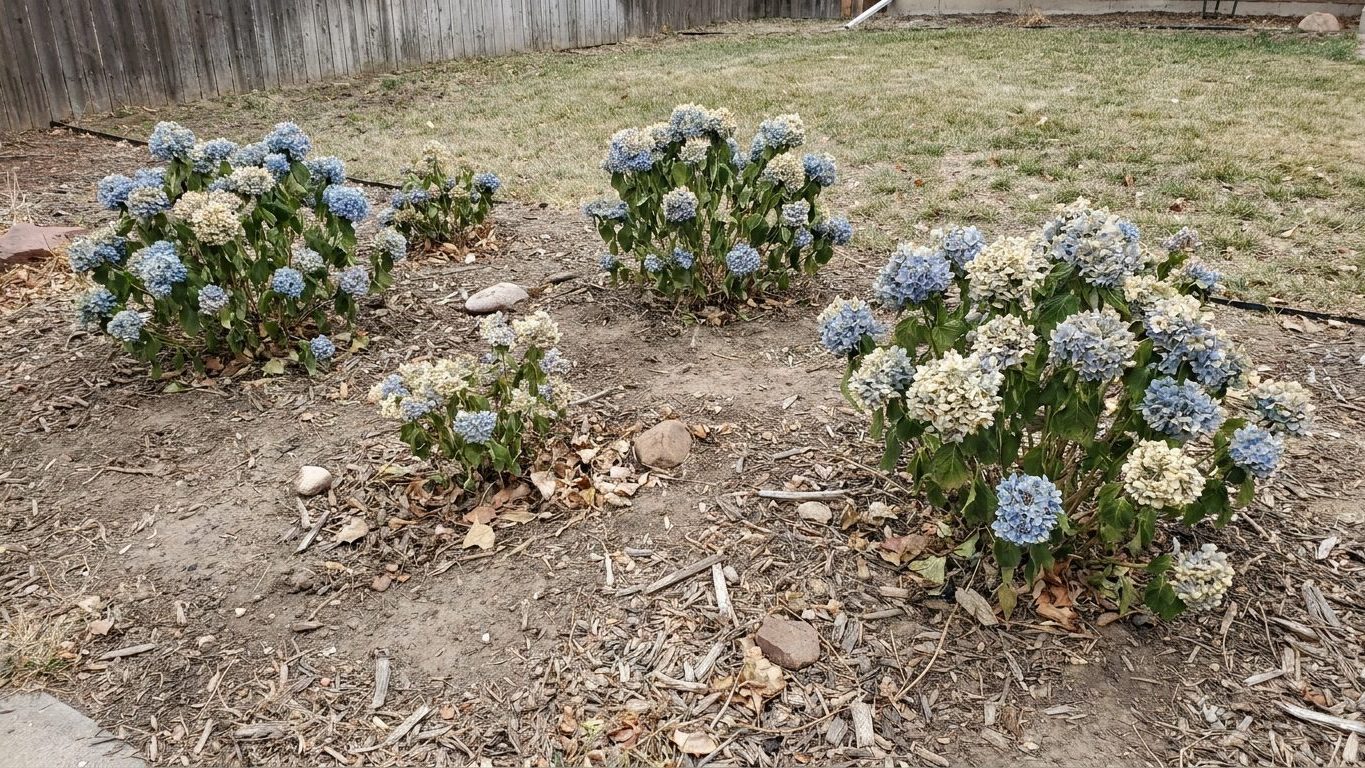
Florida splits into two hydrangea calendars. North Florida, anchored by Jacksonville, sees real frost and follows a spring-to-fall rhythm. Central and south Florida stay essentially frost-free and flip that rhythm, with winter as the main growing stretch and summer heat as the hard season. USDA zones span 8b to 11b, and where you sit in that range decides everything else.
Hydrangeas Care Calendar for Florida

In Jacksonville, last spring frost runs February 16 to March 7 and first fall frost lands November 26 to December 13, per NOAA NCEI 1991-2020 Climate Normals, station USW00013889. Florida’s USDA zone spread of 8b to 11b means that window only holds for the north, since central and south Florida rarely freeze at all.
- Dormancy: from December through February is the safe window to dig up or move a dormant hydrangea in north Florida.
- Planting: set new shrubs two to three weeks after the last frost window closes, so mid to late March in Jacksonville.
- Bud break: new leaves push within a month of that spring window, faster wherever soil warms early.
- Bloom: flowers open through late spring into summer heat, and afternoon shade keeps petals from scorching.
- Pruning: cut spent old-wood blooms right after flowering, never in fall, or next year’s buds go with them.
- Slowdown: growth eases as nights cool toward the November 26 to December 13 frost window, and that is the cue to stop feeding.
That rhythm belongs to Jacksonville and the northern tier, since south of Ocala the ground rarely freezes and the season runs almost year round instead.
Best Hydrangeas for Florida
Florida’s USDA Plant Hardiness Zone Map spread of 8b to 11b covers everything from Jacksonville’s occasional frost to the Keys, where it never freezes, and that range decides which kind actually blooms well.
Bigleaf sets its flower buds on last year’s wood, which works fine where winters stay mild but backfires wherever a late cold snap or an eager fall pruning removes those buds before spring.
| Kind | Verdict here | Why |
|---|---|---|
| Bigleaf (mophead, lacecap) | Best in the north, risky in the deep south | Blooms on old wood, and heavy heat and humidity stress the buds |
| Panicle | Reliable statewide | Blooms on new wood, no buds to protect, and takes heat across the 8b to 11b range |
| Oakleaf | Strong in north and central Florida | Native to the southeast, built for heat and part shade |
| Smooth | Struggles south of Ocala | Prefers a cooler summer than the state’s warm end offers |
Climbing hydrangea and the newer reblooming bigleaf hybrids are the other kinds worth a look, but they belong on the pages that go deeper on which varieties hold up where you garden.
When to Plant, Prune and Feed Hydrangeas in Florida
Three dates matter more than any calendar month, and each one counts from Jacksonville’s frost window rather than from a fixed day on the wall.
Planting waits until frost risk passes, pruning follows the bloom instead of the season, and feeding stops well before the shrub needs to slow down.
| Task | Window here | Counted from |
|---|---|---|
| Planting | Mid to late March in Jacksonville | Two to three weeks after the March 7 end of the last frost window |
| Pruning old wood kinds | Within a month of the last bloom fading | Timed so new growth hardens before the November 26 first frost date |
| Last feeding | Early October | About six weeks ahead of the November 26 start of the fall frost window |
South of the frost line, in central and south Florida, none of these three dates work the same way, since the ground rarely freezes and the shrub’s slow season is summer heat instead of winter cold.
Hydrangeas Problems in Florida and What Causes Them
No flowers on a healthy shrub

Most often this comes from pruning old wood bloomers at the wrong moment, cutting away next year’s buds along with this year’s spent flowers, worse in south Florida where winters rarely turn cold enough to force a clean dormancy anyway.
Leaves scorched on the sunny side

Florida’s summer sun burns leaf edges brown by midafternoon, especially in the state’s southern reaches where the growing season runs almost year round, and the fix is afternoon shade plus deep, less frequent watering instead of a quick daily sprinkle.
Wilting despite regular watering

Sandy Florida soil drains fast and dries out between waterings even when rainfall looks adequate, so a hydrangea can wilt by midday and recover by evening, a pattern that mulch and morning watering usually solve.
Florida North to South: How the Dates Shift
The state’s frost line moves fast from north to south, and each part of Florida adjusts the calendar above in its own direction.
- North Florida (Jacksonville, Tallahassee, Pensacola): frost still shows up on schedule, so the calendar above runs largely as written.
- Central Florida (Orlando, Tampa, Ocala): frost turns rare and light, shortening dormancy and pushing the safe pruning window later in the year.
- South Florida (Miami, Fort Lauderdale, the Keys): frost essentially disappears, the calendar inverts, and summer heat becomes the hard season instead of winter cold.
None of these shifts show up in the USDA zone number alone, so match your planting date to the region above rather than to the state average.
Florida Extension Offices and County Contacts
Florida’s UF/IFAS Extension network runs a county office in nearly every county, and that local office knows your soil and your microclimate better than any statewide range can.
- The 12-month calendar: month-by-month tasks for wherever you garden in Florida.
- Which hydrangeas hold up here: a deeper look at varieties matched to each part of the state.
- Your county extension office: find local contacts and soil guidance through UF/IFAS Extension’s Solutions for Your Life, and call before you dig this month.
Common questions
Do hydrangeas need a freeze to bloom in Florida?
No, only bigleaf types set buds on old wood and benefit from a mild winter rest, and in south Florida, where frost is rare, that rest is short but the shrub still blooms if pruning avoids cutting off next year’s buds.
Can I grow hydrangeas in Miami or the Keys?
Panicle and oakleaf types generally handle the heat better than bigleaf, and success there depends more on afternoon shade and consistent watering than on the USDA zone number alone.
When is the last safe frost date in north Florida?
In Jacksonville, the last spring frost falls between February 16 and March 7, so most gardeners wait until that window closes before setting new plants in the ground.