Skip to content

Lawn

Creeping Woodsorrel in Lawns: How to Identify It and Kill It

Creeping Woodsorrel in Lawns: How to Identify It and Kill It

A patch of clover-like leaves that keeps coming back after you pull it, and then shoots tiny seeds across the lawn, is usually creeping woodsorrel. It is a low perennial that spreads by stems rooting along the ground and by seed pods that fire.

How to Identify Creeping Woodsorrel

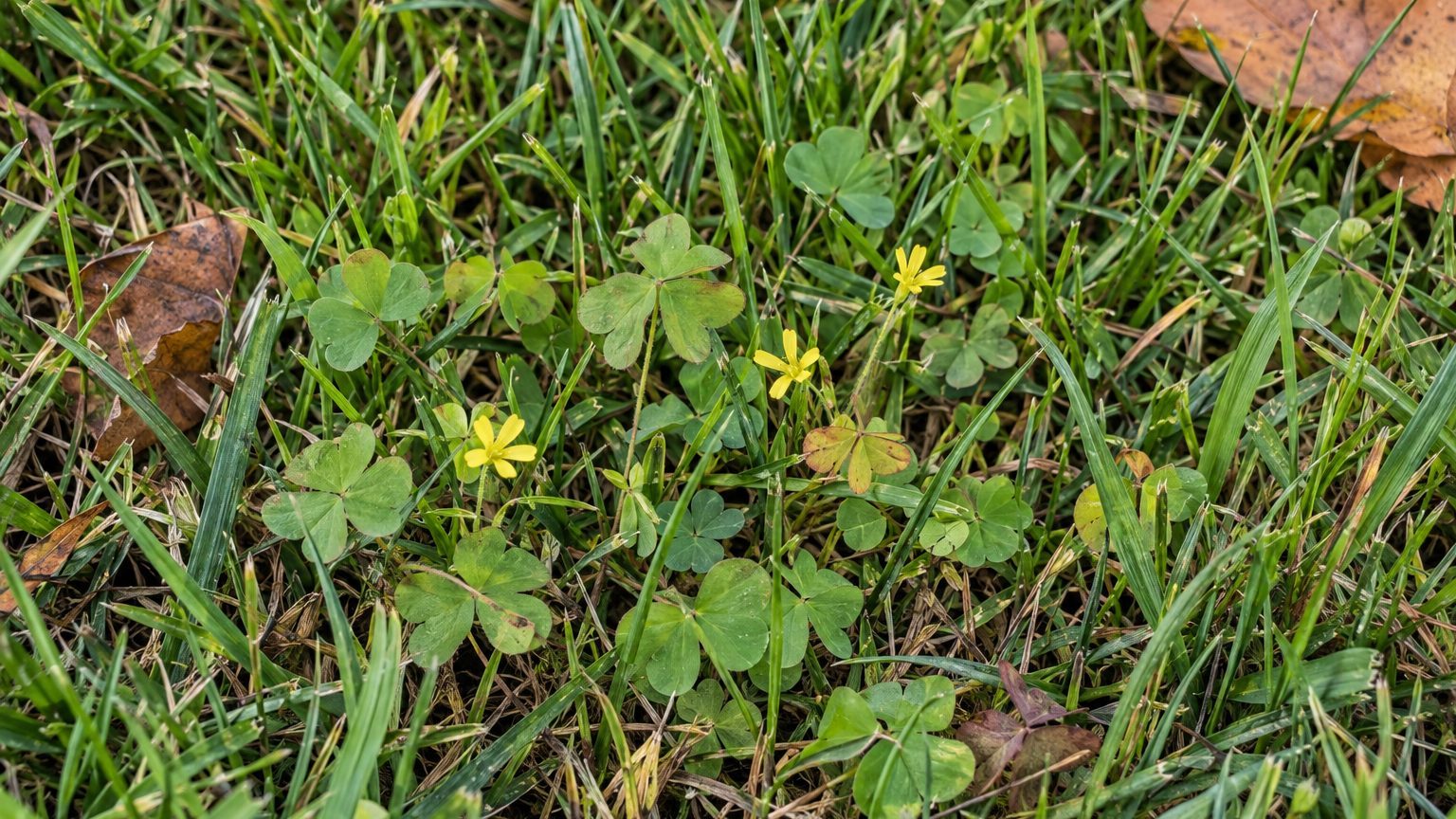
Creeping Woodsorrel in Lawns on a lawn

Look low to the ground, because this weed hugs the turf and hides well among the blades.

  • The leaves are made of 3 heart-shaped leaflets, folded down the middle like tiny butterflies.
  • Many leaves carry a purple tint, which helps you pick the plant out of green turf.
  • Hairy stems creep along the surface and root where they touch soil, so the plant grows into a mat.
  • Stems stay around 4 inches tall, though they can stretch as long as 20 inches when left alone.
  • Slim, cylindrical seed pods stand upright, and the ripe ones burst open to throw seed.

In North Carolina, plants in warmer climates can remain present year-round.

Weeds Mistaken for Creeping Woodsorrel

Clover-like leaves can be misleading. White clover and black medic are the usual suspects, and an upright cousin in the same plant family also gets mixed up with it.

Check the leaflet shape, then look at how the plant sits on the ground. Together, those clues help separate the lookalikes.

Looks like How to tell them apart
White clover Leaflets are rounded or oval rather than heart-shaped, so a heart-shaped notch on each leaflet points to woodsorrel.
Black medic Leaflets are oval and not heart-shaped, while woodsorrel leaflets are distinctly heart-shaped and often purple-tinted.
Oxalis stricta It grows more upright, while creeping woodsorrel lies flat, roots at the nodes and often shows purple-tinted leaves.

Oxalis corniculata, the creeping type, is often confused with Oxalis stricta. Confirm the creeping habit before using the control steps below.

What Causes Creeping Woodsorrel in Lawns

Seed is the root of the problem. The pods can eject seed up to 16 feet away.

Seed sprouts at the soil surface when temperatures are between 60-80°F. Thin turf lets light and warmth reach the soil, which gives the seedlings an open spot to start in.

Moisture and fertility help it along too. Yellow woodsorrel thrives in moist, fertile soils but grows under a wide range of conditions. In North Carolina, it is treated as a weed in many turf and garden areas, and it grows best in spring or fall there, with plants present year-round.

Once it is in the lawn, the creeping stems carry it further. Creeping stems can root at nodes that touch soil, so pieces left behind after pulling may restart a patch.

How to Get Rid of Creeping Woodsorrel

Pulling and good lawn care can help with small patches, and acting before pods form limits new seed.

  1. Pull young plants early, before pods form, so no seed gets thrown into nearby turf.
  2. Dig out established patches, taking the whole stem and root, because pieces left at the nodes can regrow.
  3. Bag the pulled plants instead of leaving them on the lawn, since stems that touch soil can root again.
  4. Fill bare spots with fresh seed or sod, so open soil does not give new seedlings a place to start.
  5. Keep the turf dense with regular mowing and watering suited to your grass, so shade from the blades crowds out sprouts.
  6. Where the weed has taken over a large area, ask your state extension office which herbicides are approved for your lawn and your grass type.

Keep the plants from going to seed. Check the patch again soon after clearing it, because seed already in the soil will keep sprouting.

How to Prevent Creeping Woodsorrel

Prevention follows the weed’s growth, from emergence until seed set.

  • Walk the lawn edges and beds during active growth and pull seedlings before they root and spread.
  • When soil temperatures are between 60-80°F, seed can germinate at the surface. According to Utah State University Extension, apply a mulch layer 3 inches deep on planting beds to reduce seed germination.
  • Keep turf dense with mowing and watering suited to your grass, so the blades shade the soil.
  • In North Carolina, the weed grows best in spring or fall in warmer climates, so check thin spots during those seasons.
  • Sanitation is critical for controlling woodsorrel in container plants, especially in propagation areas, so keep pots, tools and nursery areas clean.

Weed beds near the lawn edge as faithfully as the lawn itself, since a neglected bed is where the seed that lands in your turf often comes from.

Common Questions

Does Creeping Woodsorrel Come Back Every Year?

Yes, because it is a perennial and it also drops seed. Surviving plants and seed in the soil can restart patches, so follow-up is often needed.

Can You Mow Creeping Woodsorrel Away?

Mowing alone does not remove it. The stems lie so close to the ground that the mower often passes over them, and the weed keeps rooting at the nodes.

Why Does Woodsorrel Appear in My Flower Beds and Lawn at the Same Time?

Seed thrown from ripe pods can land in flower beds and lawns. Bare soil in beds and thin turf can let seedlings appear at the same time.
Wild Onion and Wild Garlic in Lawns: How to Identify It and Kill It

Wild Onion and Wild Garlic in Lawns: How to Identify It and Kill It

In South Carolina, wild onion and wild garlic emerge in late fall and grow through winter and spring. Both are perennial weeds that show up in turfgrass and landscape beds. Knowing the leaf shape tells you which one you have.

How to Identify Wild Onion and Wild Garlic

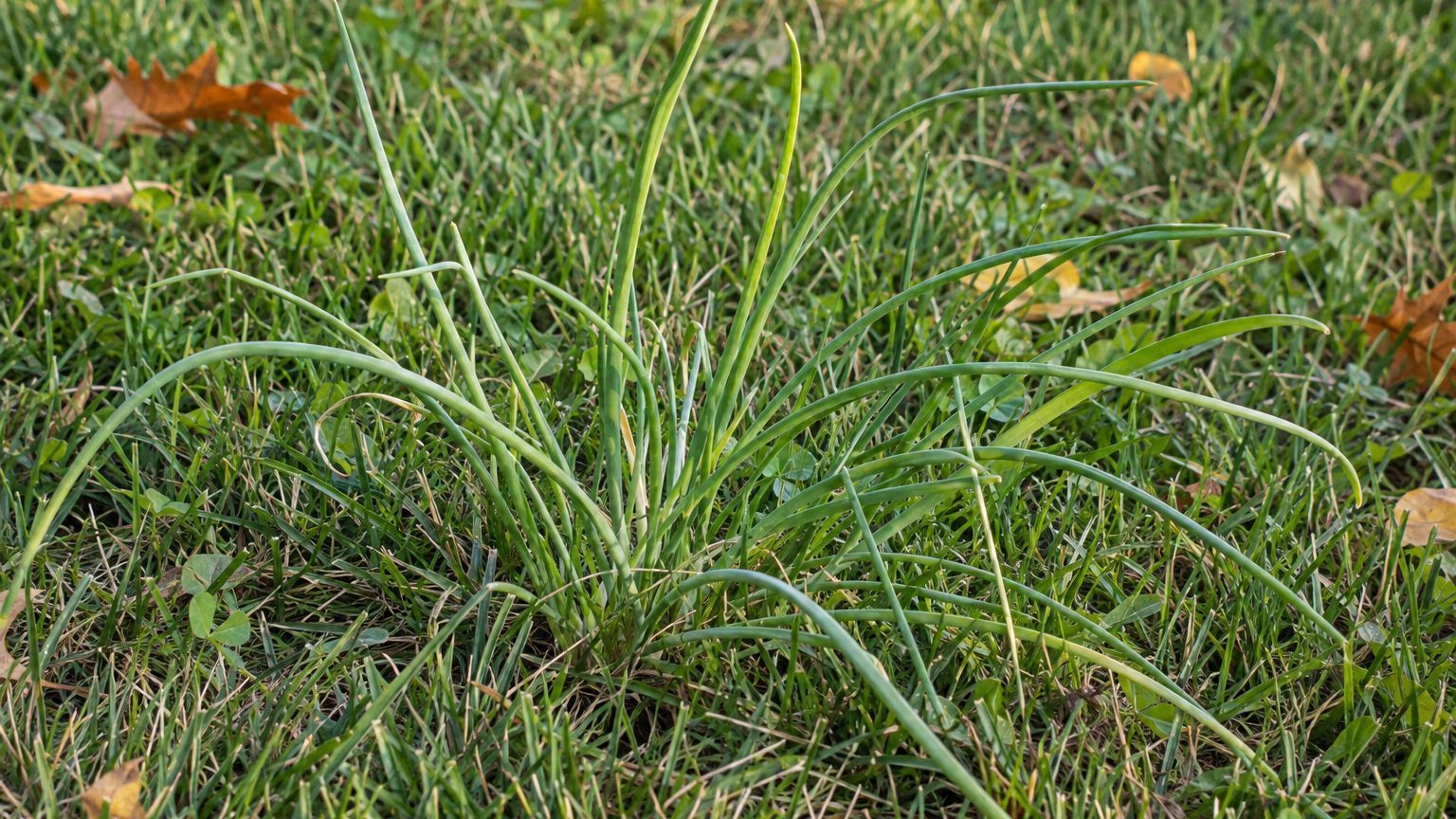
Wild Onion and Wild Garlic on a lawn

Start with the leaf, because it separates wild onion from wild garlic and is easy to check by pinching a blade.

  • Cut or pinch a leaf: wild garlic leaves are round and hollow, like a tiny straw.
  • Wild onion leaves are flat and solid, with no hollow center.
  • In South Carolina, their dark green, grassy tufts emerge in late fall and grow through winter and spring.
  • The stems are thinner than garden onions and garlic, and the plants do not grow as tall.
  • Wild garlic makes flowers and dormant bulbs on the flowering stem, while wild onion only makes flowers, in the spring.

Dig up a clump and you will find underground bulbs, which is where the real problem sits.

Weeds Mistaken for Wild Onion and Wild Garlic

Grassy plants in lawns are sometimes mistaken for onion grass. True grasses can share the narrow green blade but do not grow from onion- or garlic-like bulbs.

Garden varieties of onion and garlic look similar too, but they grow taller and thicker than the wild types.

Looks like How to tell them apart
Garden onion or garlic Thicker stems and taller growth, and they are planted in beds, while the wild types have thin stems and stay short in turf
Wild garlic versus wild onion Pinch the leaf: round and hollow means garlic, flat and solid means onion

Clumps of ordinary grass will not have hollow or flat solid leaves coming from a bulb, so dig a small piece to confirm before you treat anything.

What Causes Wild Onion and Wild Garlic in Lawns

The cause is the bulbs. Both plants reproduce from underground bulblets, and some germinate in the fall while the hard ones germinate in the spring. In Pennsylvania, that split is how a lawn can seem clear and then fill in again later.

Mowing does not solve it, because the plant produces clusters of many underground bulbs when mowed.

In South Carolina, the plants emerge in late fall from underground bulbs and grow through the winter and spring. That cool-season growth is why they show up when warm-season turf is dormant. A thin lawn gives them room, and in Indiana, a dense turf from proper fertilization and regular mowing makes them less noticeable and less problematic.

How to Get Rid of Wild Onion and Wild Garlic

Control means targeting the bulbs rather than the leaves.

  1. Confirm the plant by pinching a leaf, so you treat onion or garlic and not a lookalike grass.
  2. Skip hand pulling, because in Pennsylvania the advice is that the foliage breaks and the bulblet stays behind.
  3. Dig out small patches with a trowel, taking care to remove the underground bulblets, since any left in the soil can regrow.
  4. Bag the dug plants and bulbs instead of composting them, so the bulblets do not return to the lawn.
  5. Treat larger areas in the fall after new shoots have emerged and again in early spring, which in South Carolina means February or early March, before the plants can produce the next generation of bulbs.
  6. Check your state extension office for which products are approved where you live and how to apply them.

In Pennsylvania, a small patch can also be left alone because the foliage is mainly an early-season eyesore and fades naturally with mowing.

How to Prevent Wild Onion and Wild Garlic

Prevention is mostly about keeping turf thick and catching shoots before they set the next round of bulbs.

  • In late fall, walk the lawn for new shoots, since that is when the plants emerge in South Carolina and when small clumps are easy to spot.
  • Through winter and spring, dig out any clump you find and remove the bulblets with it.
  • In South Carolina, treat in early spring before the plants can produce new bulbs, using the timing recommended for the area.
  • In Indiana, regular mowing and proper fertilization create denser turf that makes these weeds less noticeable and less problematic.

A thick lawn will not erase the bulbs already in the soil, but it keeps the clumps from standing out.

Common Questions

Does Mowing Get Rid of Wild Onion and Wild Garlic?

No. Mowing trims the leaves, but the plant produces clusters of many underground bulbs when mowed, so the weed keeps spreading from below.

Can You Tell Wild Garlic from Wild Onion Without Digging?

Yes. Pinch a leaf and check the shape: wild garlic leaves are round and hollow, while wild onion leaves are flat and solid.

Will the Weeds Go Away on Their Own?

Not completely, since they are perennial. In Pennsylvania, though, the foliage is mainly an early-season eyesore that fades naturally with mowing.

White Clover in Lawns: How to Identify It and Kill It

White Clover in Lawns: How to Identify It and Kill It

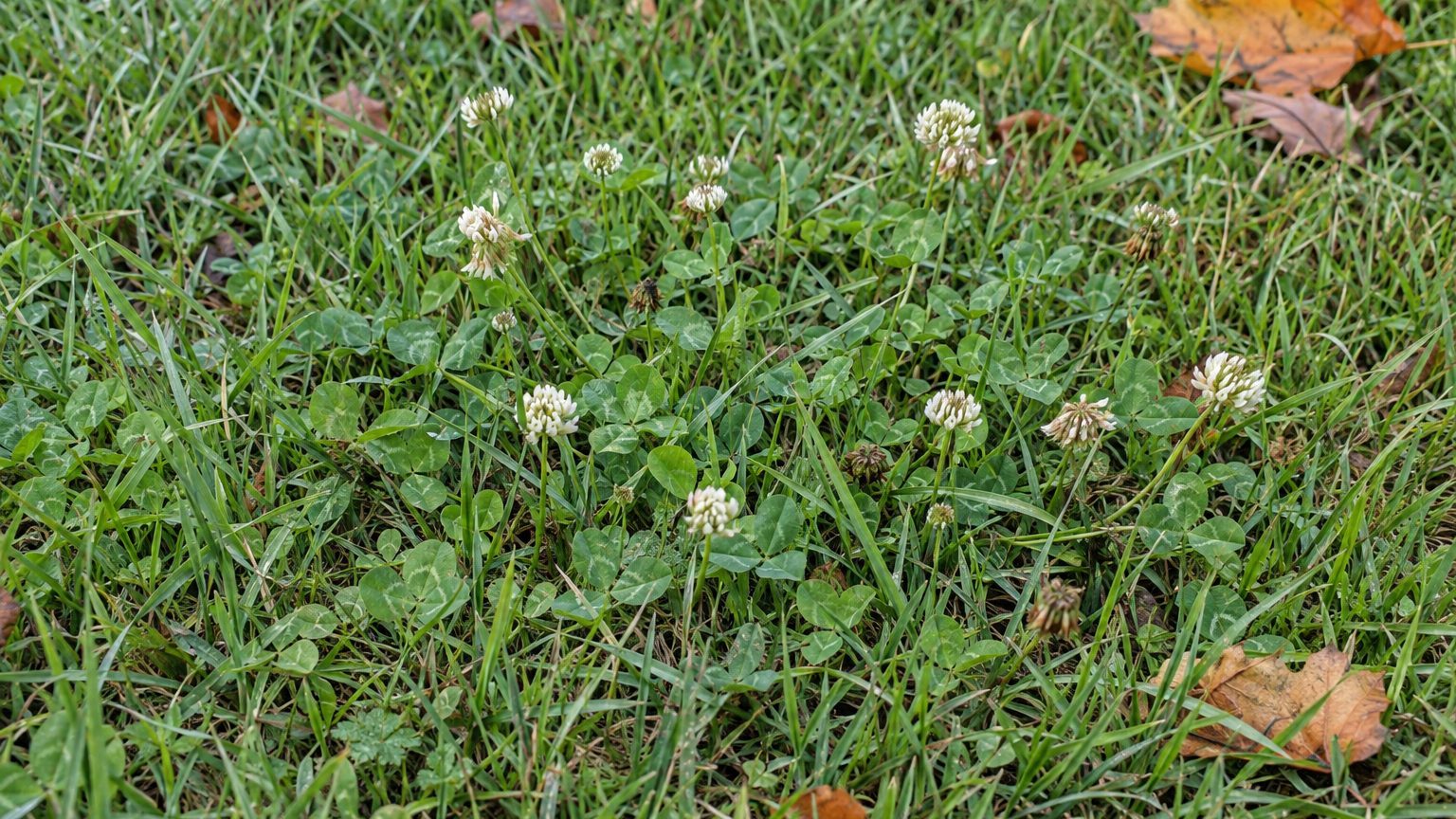
White clover shows up in the lawn as soft, low patches of three-part leaves, often greener than the grass around them, and it often spreads into thin turf. Finding it in the lawn is a reason to check fertility, moisture, and turf density. Identifying it correctly comes first, then removal and keeping it from coming back.

How to Identify White Clover

White Clover on a lawn

Start with the leaf, since its shape helps separate clover from its look-alikes.

  • Each leaf has 3 heart-shaped leaflets attached to a thin stalk that rises from a creeping stem.
  • Creeping stems run along the soil surface and root as they go, knitting the plant into a mat.
  • The flower heads are round, white and ball-like, with 40 to 80 florets in a cluster measuring ½ to 1 ½ inches in diameter.
  • In South Carolina, white flowers, often tinged with pink, appear in early summer.
  • In South Carolina, white clover has shallow roots and can be dug up easily before it is well established.

Mowing clips the flower heads but not the creeping stems, which is why the patches keep coming back at lawn height.

Weeds Mistaken for White Clover

Yellow woodsorrel and black medic share the three-leaflet look and often get blamed on clover. Yellow woodsorrel is a perennial weed, and black medic grows in the same low, sprawling way. Check the leaf shape and the flower color together before you decide.

Looks like How to tell them apart
Yellow woodsorrel Leaflets are distinctly heart-shaped and the flowers are yellow, not white. In Maryland, it is usually first noticed when yellow flowers form from May through September.
Black medic Flowers are yellow, with tiny individual blooms clustered so tightly they resemble one flower. The leaflets lack the distinct heart shape of woodsorrel.

Woodsorrel also fires its seed capsules when ripe, flinging seeds as far as 12 feet and seeding a surprisingly wide area. Treat it as its own problem, not as clover.

What Causes White Clover in Lawns

Clover moves in when the grass is weak. White clover can fix its own nitrogen, so it thrives in unfertilized areas, and a lawn full of it often points to inadequate fertility. Grass that is hungry and thin leaves open soil, and clover fills it.

Moisture matters too. In South Carolina, white clover has a shallow root system and does not do well in dry soils. In Pennsylvania, seed germination takes place during cool, moist periods in spring and fall, which is when new seedlings appear.

How to Get Rid of White Clover

Pulling and rebuilding work well on small infestations, and they set up the grass to hold the ground afterward.

  1. Dig out the patches while they are young, because in South Carolina white clover can be dug up easily before it is well established.
  2. Remove the plants and any rooted creeping stems so they do not reestablish in the lawn.
  3. Rake the bare spots level, so the new turf has loose, even soil to root into.
  4. Fill the gaps with plugs or sprigs of the turfgrass you want, as advised in South Carolina once the clover is eliminated.
  5. Feed the lawn as your grass type needs, since clover thrives where fertility runs low and nitrogen-fixing gives it an edge.

For large areas, your state extension office can tell you which herbicides are registered where you live and when to apply them. Read the label closely, as turfgrass species differ in what they tolerate.

How to Prevent White Clover

Dense turf is the working defense, and each season has a gesture that keeps it thick.

  • In early spring, check for thin or bare patches and fill them before clover seedlings, which germinate in cool, moist spring weather in Pennsylvania, claim the space.
  • As the grass greens up, feed according to your grass type, since a lawn short on nitrogen hands clover an advantage.
  • Through summer, water deeply and keep mowing at the height your grass prefers, so the turf stays dense enough to compete.
  • In South Carolina, check edges and beds in early summer and remove unwanted white clover before the patches spread farther.
  • In Pennsylvania, cool, moist fall weather favors germination, so watch thin areas for new seedlings.

In Maryland, maintaining healthy, dense turf helps prevent weeds from establishing.

Common Questions

Is White Clover Bad for a Lawn?

White clover fixes nitrogen, but whether it belongs in a lawn is largely a matter of appearance. Many homeowners dislike how it looks against turf and how it browns or thins in drought, so the choice is mostly about appearance.

Why Does Clover Grow Where Grass Will Not?

Poor fertility can give clover an advantage. Clover makes its own nitrogen, so it keeps spreading where the grass is starving and the turf has opened up.

Can You Mow White Clover Out of a Lawn?

Mowing alone does not remove it. Creeping stems sit below the blade, so the plant regrows, and the soil and turf density have to change for it to fade.

Spotted Spurge in Lawns: How to Identify It and Kill It

Spotted Spurge in Lawns: How to Identify It and Kill It

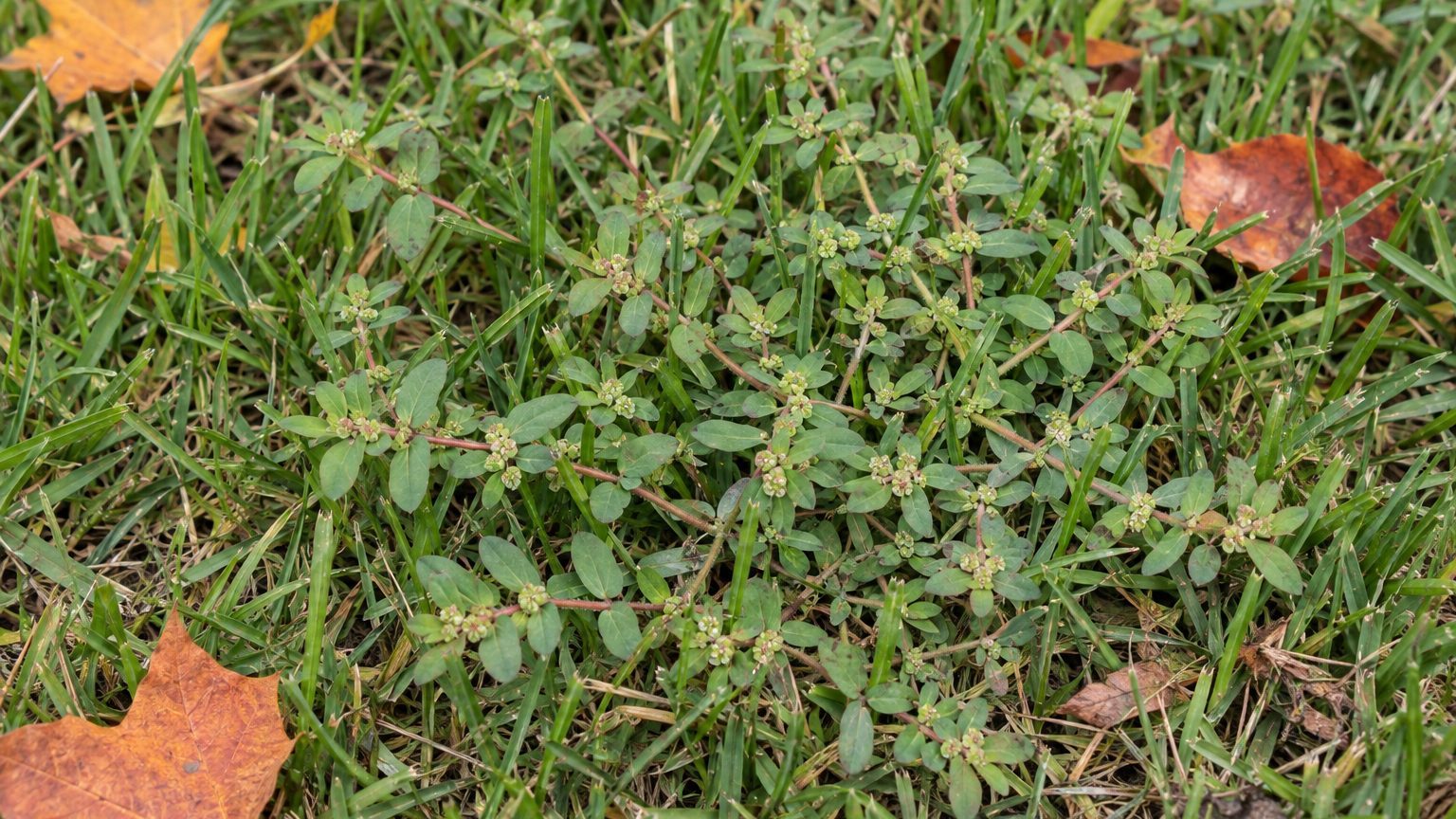
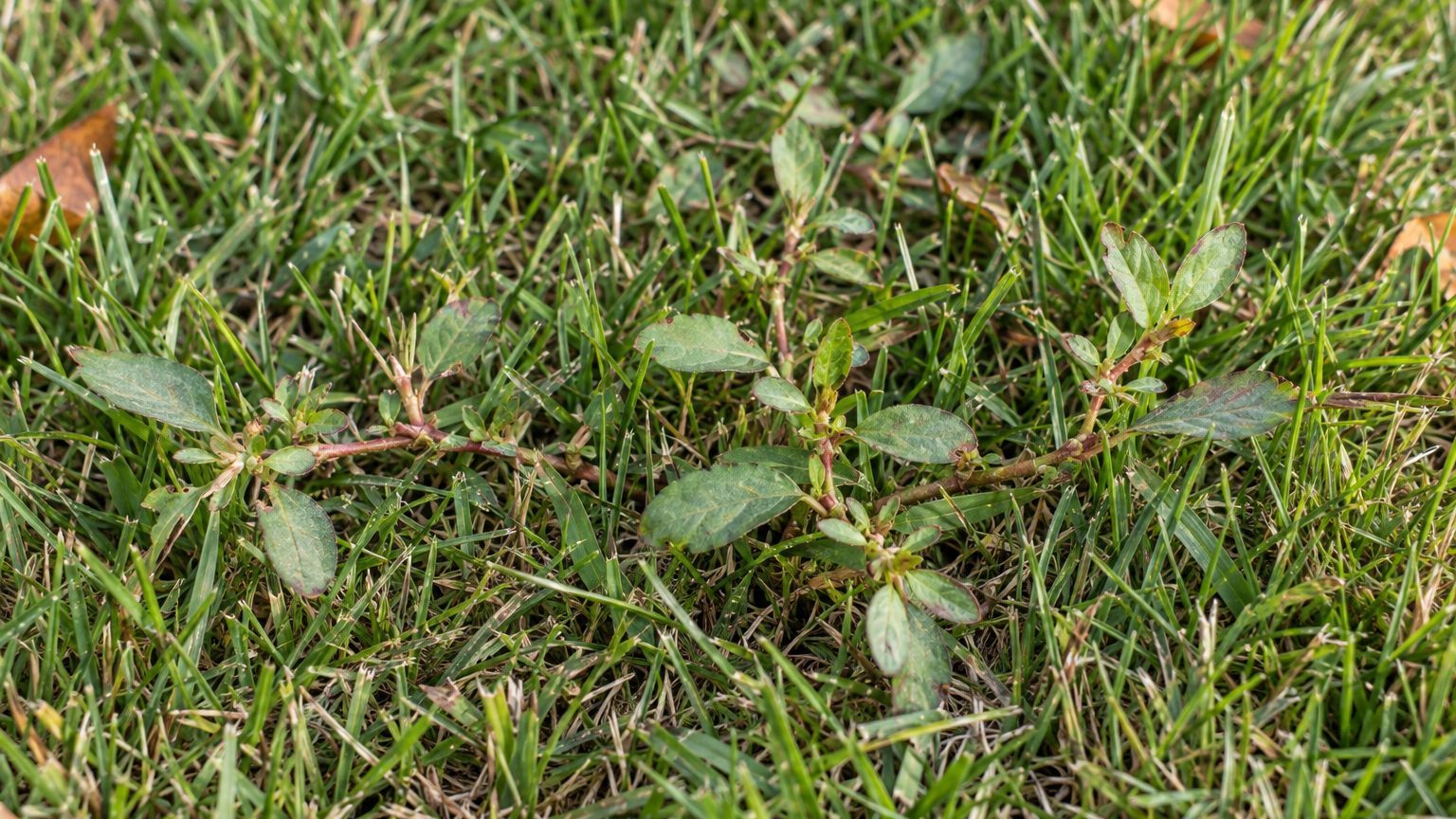
A flat green-red mat spreading outward from a crack in the driveway or a bare patch near the curb is how spotted spurge usually shows itself in summer. It is a summer annual that lives on seed, so it finds thin spots in a lawn and fills them fast. Knowing it on sight, and what lets it in, makes it far easier to stop.

How to Identify Spotted Spurge

Spotted Spurge on a lawn

Look low and close, because this weed hugs the ground and hides in short turf.

  • A small reddish spot usually sits near the center of the leaf, which helps distinguish spotted spurge from other flat, creeping weeds.
  • The leaves are small and oval, and they grow in opposite pairs along the stem.
  • The stems lie flat or rise slightly, forming a mat that can reach 3 feet across when conditions suit it.
  • Tiny three-celled seed capsules, 1/16 inch or less, form along the stems, each cell holding one seed about 1/25 inch long.
  • It appears in the warm months, in full sun, often along pavement edges and in worn or thin areas of turf.

Snap a stem and the milky sap that bleeds out is another hint that you are looking at a spurge.

Weeds Mistaken for Spotted Spurge

Several other spurges lie flat in the same way, so a quick glance can mislead you. Check the leaf and the seed pod together before you decide what you are pulling.

Leaf markings are a useful clue, though the fruit and seed can settle any doubt if you have a hand lens handy.

Looks like How to tell them apart
Ground spurge Leaves never carry a reddish central spot, and the fruit is hairy mostly on its edges only, with seeds that are cross-ridged.
Creeping spurge It also grows flat, but its leaves have no markings at all, unlike spotted spurge, which usually shows the red spot and hairs pressed over the whole fruit.

Spotted spurge, by contrast, has seeds that are cross-wrinkled and fruit covered in hairs lying flat against the surface. Plain clover and knotweed can also pass for it at a distance, but neither bleeds milky sap when a stem is broken.

What Causes Spotted Spurge in Lawns

Light on bare soil is what starts it. When turf thins from stress, disease, low fertility, insects, or heavy wear, light reaches the ground and spotted spurge germinates in the gap. A thick lawn shades the soil and leaves it little room, which is why this weed is mostly a problem in thin turf.

Warmth sets the timing. According to UC IPM, University of California, seeds germinate best at 75° to 85°F, though they can sprout as low as 60°F and as high as 100°F. According to University of Wisconsin Extension, seeds sprout best once soil is above 75 °F, and they will still come up in cooler soil when moisture is present.

Each plant can make several thousand seeds, and those seeds can sit dormant in the soil until conditions are right. That seed bank explains why a cleared patch can return. The weed is also common in poor, compacted soil in full sun, such as along walks and driveways.

How to Get Rid of Spotted Spurge

Because it is an annual that lives on seed, the goal is to remove plants before they set seed and then close the gap they came from.

  1. Pull young plants by hand while the soil is moist, taking the whole mat so no stem pieces are left to root or drop seed.
  2. Bag the pulled plants rather than composting them, so mature seed capsules do not scatter back across the lawn.
  3. According to UC IPM, University of California, check the thatch layer, which should be less than 1/2 inch, and loosen compacted soil where the weed grew so grass can root there.
  4. Reseed or patch the bare spot with grass suited to your region, because open soil invites the next round of seedlings.
  5. Raise the mowing height on tall fescue or perennial ryegrass to 2 inches or more, which shades the soil and cuts down early invasions in California.
  6. Ask your state extension office which herbicides are registered where you live if the infestation is too large to pull.

Work through the spots early in the warm season, since small plants come out easily and have not yet made seed.

How to Prevent Spotted Spurge

Prevention follows the season, and it comes down to keeping the turf dense and the soil covered.

  • In early spring, before the soil warms, check for thin patches and thatch, and repair them so no open ground is waiting when seeds begin to sprout.
  • According to University of Wisconsin Extension, once soil warms above 75 °F, maintain dense turf through proper mowing, fertilization, and irrigation so grass can compete with seedlings.
  • Around beds and edges, spread organic mulch such as shredded bark, compost, or straw at least 2 inches thick, which blocks the light the seeds need in Wisconsin.
  • Through summer, watch pavement edges and worn corners, and pull any red-spotted seedlings you see before they flower and set seed.
  • Feed and repair weak areas at the time recommended for your grass type, so the turf is thick going into the next warm season.

According to UC IPM, University of California, seeds buried deeper than 1/2 inch do not germinate well because they receive too little light.

Common Questions

Is Spotted Spurge Poisonous to Touch?

Its milky sap can irritate skin in some people, so wear gloves when you pull it, and wash your hands afterward.

Will Spotted Spurge Come Back Every Year?

It can, because each plant leaves behind seed that stays dormant in the soil. Removing plants before they set seed and keeping turf thick gradually runs down that supply.

Does Spotted Spurge Grow in Shade?

It generally prefers full sun and open, thin turf. Shaded, dense grass gives it little light to germinate in.

Common Purslane in Lawns: How to Identify It and Kill It

Common Purslane in Lawns: How to Identify It and Kill It

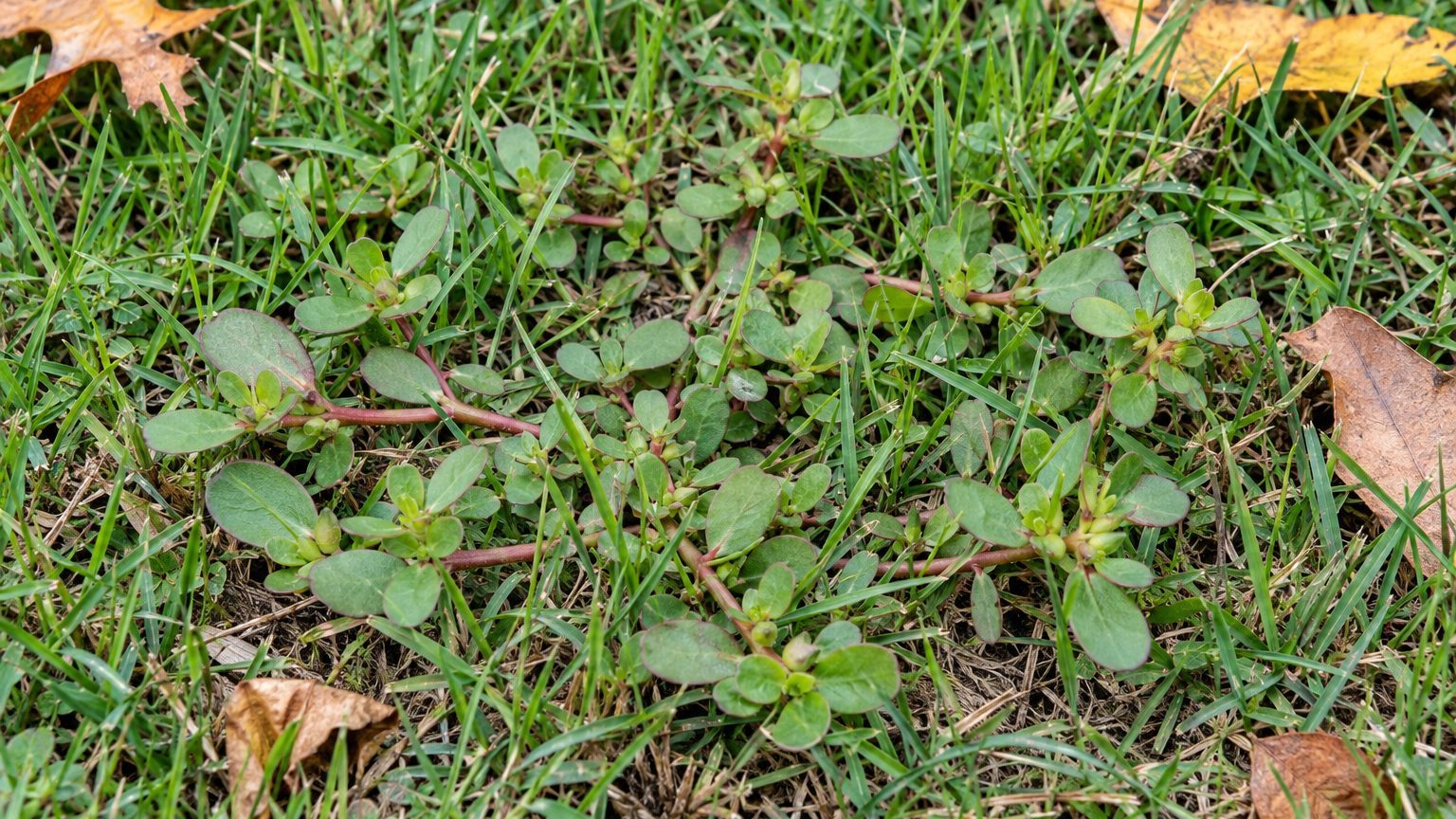
A flat, reddish mat of fleshy leaves creeping across a bare patch of lawn in midsummer is usually common purslane, a summer annual that moves in where the turf has thinned. Young plants come out by hand; in California, common purslane is usually not a problem in healthy, well-established turfgrass. Getting it out of a lawn comes down to timing and a denser stand.

How to Identify Common Purslane

Common Purslane on a lawn

Look low, near the ground, where the plant spreads outward from its center like a flat star.

  • Thick, smooth, shiny leaves that feel succulent and sit directly on the stem with no leaf stalk, each between 1/2 to 2 inches long.
  • Oval leaf shape, often wider toward the tip, which sets it apart from the narrow blades of the grass around it.
  • Stems that lie flat and branch outward, forming a mat that smothers the turf beneath it.
  • Small yellow flowers with five notched petals, only 1/4 to 1/3 inch across, so they are easy to miss.
  • A summer annual life cycle, with emergence timing that varies by region.

A single plant can set 240,000 seeds, so a small patch in July becomes a bigger one next year if it is left alone.

Weeds Mistaken for Common Purslane

Several low, spreading weeds get confused with purslane because they crawl across bare soil in the same warm months. Each has a feature that helps settle the identification quickly.

Check the leaf and the stem together. Texture and flower color tell you more than the overall shape of the mat.

Looks like How to tell them apart
Horse purslane Also a flat, fleshy plant, but the leaves have stalks and the flowers are pinkish purple, not yellow.
Prostrate pigweed Lies flat in the same bare, sunny spots, but the leaves are not fleshy when you pinch them.
Prostrate knotweed Mats across compacted soil, but papery sheaths called ocreas wrap the stem just above each leaf.

Pinch a leaf if you are unsure. Purslane feels thick and juicy, while pigweed feels thin, and the stem sheath on knotweed is easy to spot once you know to look for it.

What Causes Common Purslane in Lawns

Seed is always waiting in the soil. It can germinate even after 5 to 40 years, so the seed bank is rarely the thing you can change. What changes is whether the seedlings find open ground and sun when the soil warms.

In California and Pennsylvania, that is why purslane shows up in weak turf. In California, it is usually not a problem in healthy, well-established turfgrass; in Pennsylvania, it often appears in thinning, poorly maintained lawns and newly established turf seeded in late spring or summer. In Pennsylvania, it grows best in full sun and handles poor soil and moderate drought, so a dry, compacted, sunny strip along a driveway is a classic spot.

Timing depends on where you live. In California, seedlings start in February to March in the southern desert areas and in late spring in cooler areas, once the soil reaches about 60°F. In New York, most seedlings emerge in late spring when the maximum air temperature passes 86 °F and rain is adequate.

How to Get Rid of Common Purslane

Young plants come out easily, so work early and do not let any plant flower and set seed.

  1. Pull small plants by hand while the soil is moist, taking the whole mat, because broken stem pieces can lie there and keep growing.
  2. Bag what you pull instead of tossing it on the compost pile or the edge of the lawn, so the stems and seed do not spread.
  3. Rake and stir bare patches lightly before reseeding. According to Cornell Cooperative Extension, stirring the top 1-2 inches of soil 2-4 times after the soil warms is highly effective at removing most individuals in open ground.
  4. Solarize larger bare areas that you plan to renovate. In California, covering moist soil with a clear plastic sheet for 4 to 6 weeks in summer can kill purslane and its seed.
  5. Reseed or patch the cleared spots with grass suited to your area, so bare soil does not stay open for the next flush.

If hand work is not enough, your state extension office can tell you which herbicides are approved where you live and when to apply them.

How to Prevent Common Purslane

Dense turf helps keep common purslane out.

  • Fill thin spots and fix compacted ground so no bare soil is waiting when the weather warms.
  • As seedlings emerge, check bare edges and thin areas and pull them before they spread.
  • Through summer, water deeply when the lawn needs it and mow at the height recommended for your grass, since a taller, thicker canopy shades out seedlings.
  • According to UC IPM, keep organic mulch at least 3 inches thick where beds border the lawn so seedlings have a harder time emerging.
  • Pull any plants that are still flowering so they do not add more seed.

In Pennsylvania, avoid seeding new turf in late spring or summer when you can, because that is when purslane has the advantage.

Common Questions

Can You Eat Common Purslane from Your Lawn?

The plant is edible, but a lawn is a poor place to harvest it if the grass has been treated or if pets use the area. Pick from spots you know are clean and wash it well.

Does Common Purslane Come Back Every Year?

It comes back from seed, not from the root, because it is a summer annual. Seed already in the soil can sprout for decades, so expect some new seedlings each summer until the turf is thick.

Why Does Purslane Grow in the Cracks of a Driveway but Not in the Middle of the Lawn?

Full sun and poor soil favor purslane, helping explain why driveway cracks can suit it. Healthy grass leaves purslane little room, so edges and thin patches deserve attention.

Nutsedge in Lawns: How to Identify It and Kill It

Nutsedge in Lawns: How to Identify It and Kill It

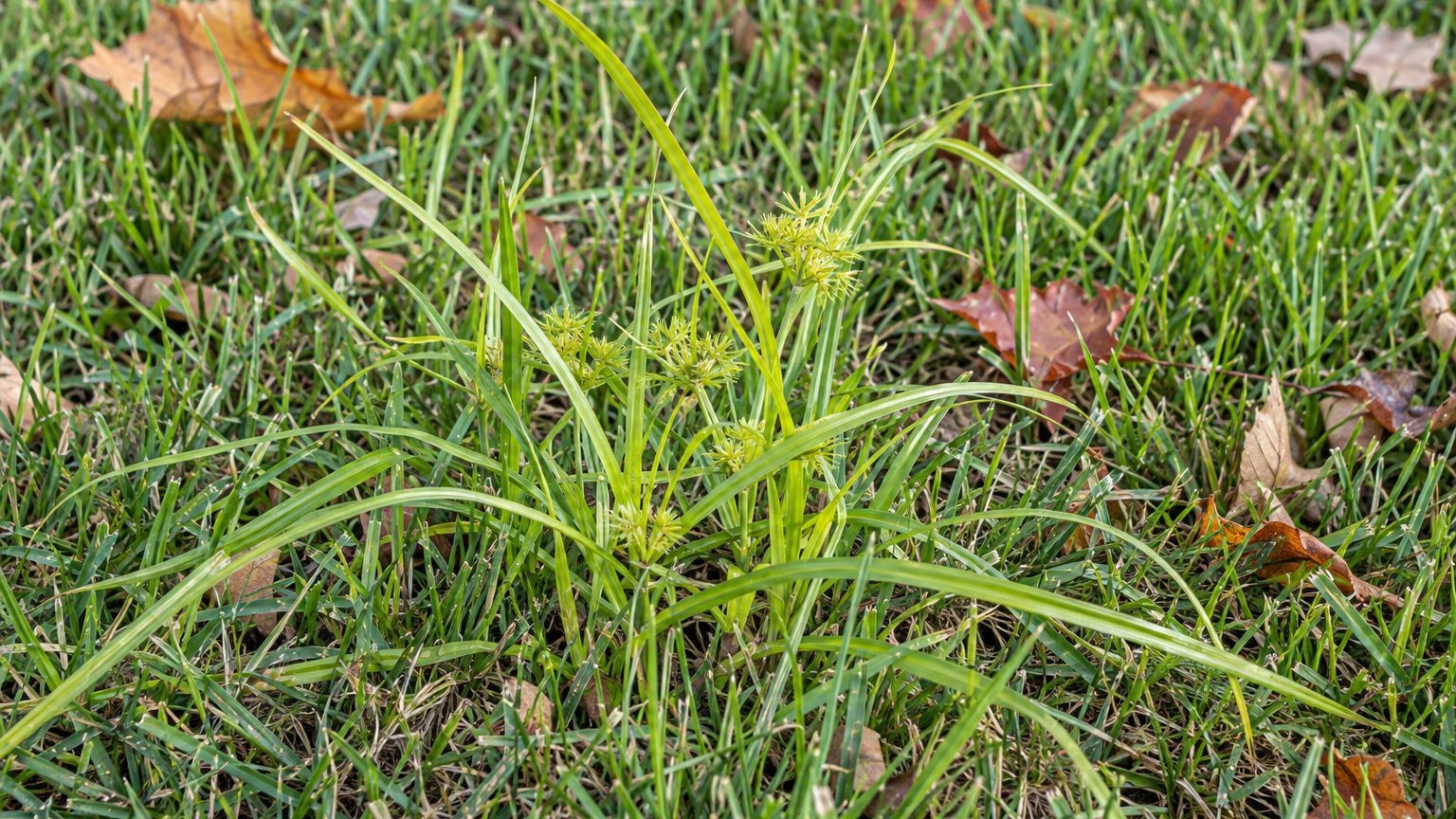
Nutsedge stands out in a mowed lawn by looking like a grass that grew faster than its neighbors, a lighter green patch that soon sticks up after you cut. It is a sedge, not a grass, and that difference decides how you deal with it.

How to Identify Nutsedge

Nutsedge on a lawn

Rolling a stem between your fingers tells you more than looking at the blades, so start there.

  • Roll the stem base between your thumb and index finger and you feel three flat sides, which a true grass never has.
  • Leaves leave the stem in sets of threes, so the clump looks like a tidy little star from above.
  • Strip away the outer leaf sheaths at the base and the stem often shows a reddish hue.
  • Blades look yellow-green and glossy, standing taller and lighter than the turf around them.
  • Small yellowish or yellowish brown flower spikelets show up on the taller stems.

In Pennsylvania, shoots appear in spring; in Iowa, growth speeds up through the warm summer months.

Weeds Mistaken for Nutsedge

Nutsedge gets called nutgrass because it closely resembles grasses, so plenty of ordinary grassy weeds get blamed for it, and the other way around. Guessing wrong costs you, since most grass herbicides do nothing to sedges.

Looks like How to tell them apart
Tall, fast-growing grassy weed clump Roll the stem base: a grass stem is round or flat, while nutsedge feels triangular. Nutsedge leaves also come off in sets of threes.
Lighter green tufts that rise above the mowed turf Strip the outer sheaths at the base: a reddish hue points to nutsedge. Dig a plant and look for tubers attached to rhizomes, which grasses do not make.

Coarse clumps of crabgrass or other weedy grasses fool many homeowners, because they also stand out after mowing. Rolling the stem is a quick, reliable check.

What Causes Nutsedge in Lawns

Nutsedge is a perennial, and a single plant can produce multiple tubers that stay dormant in the soil for one to several years before sprouting. Seed plays a small part. New plants come mostly from nodes on rhizomes and from those tubers, so a lawn can look clean for seasons and then break out.

Moist, poorly drained soil is a warning sign in Pennsylvania and South Carolina. In Pennsylvania, the plant thrives in moist, poorly drained soils and holds on in full sun and moderate shade. In South Carolina, a patch of nutsedge often points to poor drainage, irrigation that runs too often, or leaky sprinklers.

In South Carolina, shade works against it. In South Carolina, nutsedges do not grow well in the shade, so sunny, soggy spots deserve close attention. Tubers start forming at the tips of rhizomes in late June or early July across most of Pennsylvania, which is why the early part of the season matters so much.

How to Get Rid of Nutsedge

Work from gentle measures toward stronger ones, and match the effort to the size of the patch.

  1. Confirm the plant by rolling the stem, so you do not spend effort on a grass that a different approach would handle.
  2. Pull a few plants by hand soon after the leaves emerge in spring, because in Pennsylvania this works before tubers form later in the season.
  3. Dig out the whole clump with the roots, since leftover tubers in the soil send up new shoots.
  4. In South Carolina, fix wet spots by correcting drainage and trimming back irrigation, because nutsedge thrives in moist areas.
  5. In Pennsylvania, feed and mow the turf regularly so it thickens, which slows the spread, though it may not suppress an established patch.
  6. For a big infestation, ask your state extension office which sedge herbicide is approved where you live, since grass products will not work.

Expect to repeat the work. Tubers that stay dormant can sprout after you think the patch is gone, so keep checking the same spots as the season warms.

How to Prevent Nutsedge

In Iowa, a dense, healthy lawn and proper cultural practices are central to preventing nutsedge.

  • In South Carolina, check low spots and patches near downspouts, and fix drainage wherever water lingers.
  • In Pennsylvania, pull yellow nutsedge soon after its leaves emerge in spring and before tubers form later in the growing season.
  • In Pennsylvania, mow regularly at the height that suits your grass so the turf stays thick.
  • In South Carolina, avoid overly frequent irrigation and repair leaky sprinkler heads, since nutsedge thrives in moist areas.
  • In Pennsylvania, fertilize thin areas and use turfgrass well adapted to your site to improve turf density.

In South Carolina, soggy corners deserve close attention.

Common Questions

Can Nutsedge Come Back After You Pull It?

Yes. A single plant can leave multiple tubers in the soil, and they can lie dormant for one to several years before germinating, so pulled patches often reappear.

Will Regular Grass Weed Killer Work on Nutsedge?

Usually not. Correct identification matters because most herbicides made for grass control are not effective on sedges.

Does Nutsedge Grow in Shade?

Poorly. In South Carolina, nutsedges do not grow well in the shade, so a thick canopy or a shaded lawn corner is less likely to host it than a sunny, wet area.

Mallow in Lawns: How to Identify It and Kill It

Mallow in Lawns: How to Identify It and Kill It

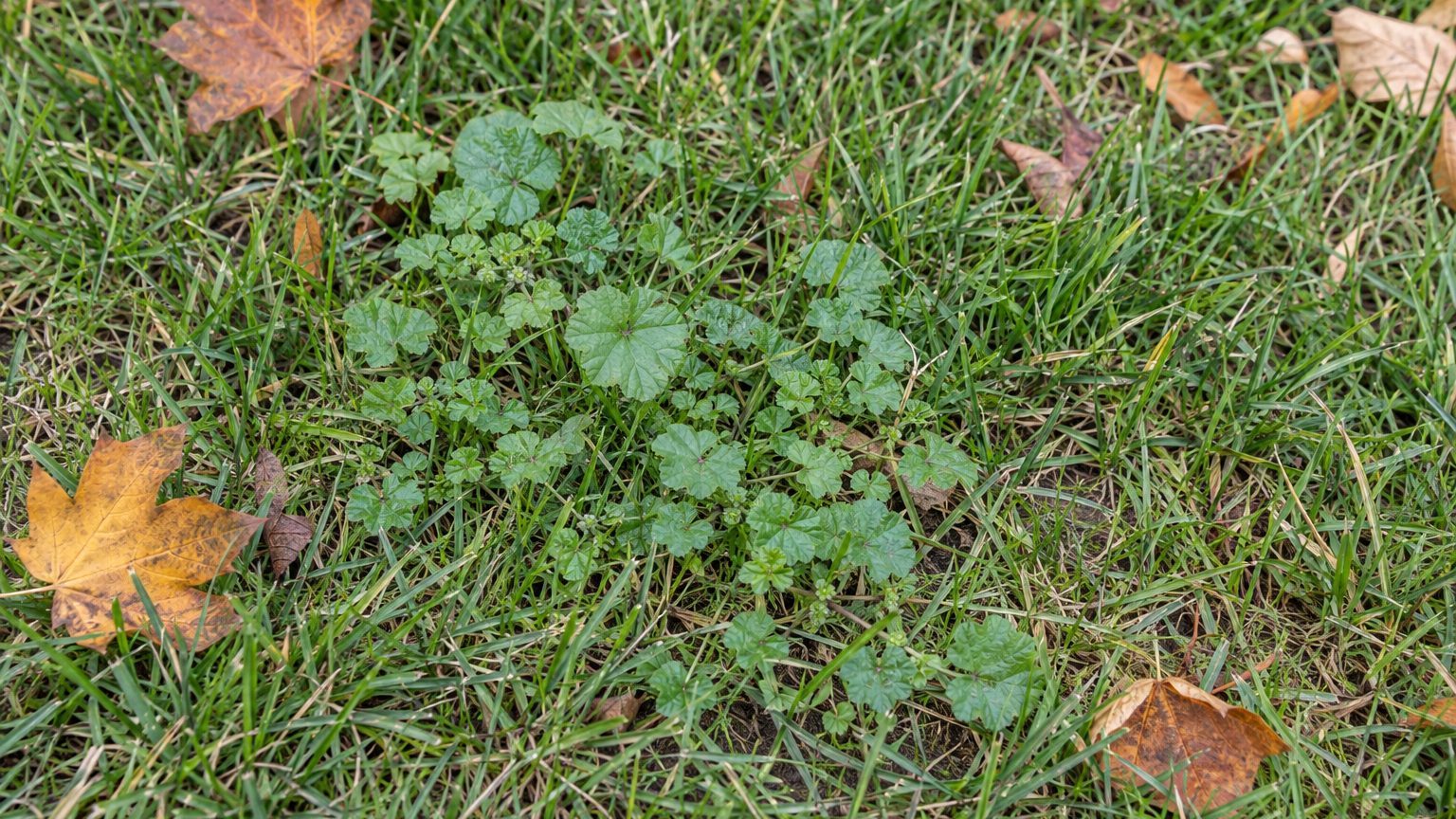
A patch of rounded, scalloped leaves spreading flat between the blades of grass, usually where the turf has gone thin, may be mallow. In Pennsylvania and Maryland, common mallow favors low-maintenance areas. Young plants come out by hand, while thick turf helps you take the patch back.

How to Identify Mallow

Mallow on a lawn

Look at the leaves first, since they give mallow away long before anything else does.

  • The leaves are rounded, with veins fanning out from the center like fingers on a palm and toothed edges.
  • Each leaf sits on a long stalk, and the leaves alternate along the stem instead of pairing up.
  • Branching starts right at the ground, so a plant forms a loose, sprawling clump that can climb past 1 ft. high if the mower skips it.
  • Five pale lavender to white petals open on the plant, and they are followed by a flat, button-like fruit much like a hollyhock’s.
  • Dead stems can stand through winter, so a brown, stiff skeleton in the lawn edge is often last year’s mallow.

Because the plant is found growing all year in many yards, you may spot it in any season, not only in summer.

Weeds Mistaken for Mallow

Common mallow and little mallow can be confused in a lawn. Both have the same round, lobed leaves, so the difference lies in the petals and the fruit.

Check the petals and fruit on the same plant before deciding which species you have.

Looks like How to tell them apart
Common mallow (M. neglecta) Petals are longer, and the button-like fruit feels smooth when you roll it between your fingers.
Little mallow (M. parviflora) Petals are shorter, and the fruit looks wrinkled up close.

Hollyhock fruit looks much like the fruit of common mallow, which is a reminder that the whole mallow family shares that button shape. A hollyhock grows tall in a garden bed, though, while mallow stays low and sprawls in turf.

What Causes Mallow in Lawns

In Pennsylvania and Maryland, lightly maintained turf gives mallow room to establish. In Pennsylvania, common mallow turns up in turfgrass and landscape beds, most often in low-maintenance areas. In Maryland, low-maintenance turf, landscapes and nursery crops are the places it favors.

The weed spreads by seed alone, and the seeds wear a tough coat that lets them wait in the soil. In Pennsylvania, common mallow seeds can germinate throughout the growing season, so a bare spot can fill with seedlings in any warm month. In California, the seedlings begin growing with the first rains of fall.

Speed makes it harder to stay ahead. In Australia, little mallow seeds mature only 15 days after the plant begins to flower, so a patch you ignore for a short while can reseed itself before you act.

How to Get Rid of Mallow

Start with the youngest plants, then change the conditions that let them in.

  1. Pull seedlings as soon as you see them. According to UC IPM, University of California, home lawns and landscapes are best handled by pulling plants with four or fewer true leaves, when they still come out easily.
  2. Dig out larger plants by hand, taking as much root as you can, because a broken plant is more likely to regrow.
  3. Clear last year’s dead stems from the lawn edge, since they can stand through winter and make new growth harder to spot.
  4. Raise the mowing height. According to University of Maryland Extension, 3-4 inches is the advice, because taller grass shades the soil and gives mallow seedlings a harder start.
  5. In Maryland, test the soil for pH and fertilize to match the results so the grass thickens and fills the gaps.
  6. Spread mulch over any bed that borders the turf. According to UC IPM, University of California, at least 3 inches of bark or wood chips makes it physically difficult for seedlings to emerge.

For a big infestation, your state extension office can tell you whether a herbicide is approved where you live and how to apply it safely.

How to Prevent Mallow

Prevention should follow the weed’s own calendar, since seed can germinate across the growing season.

  • In Maryland, test the soil for pH and fertilize according to the results so the turf can fill its gaps.
  • According to University of Maryland Extension, mow at 3-4 inches once the grass is growing steadily.
  • According to UC IPM, University of California, walk the lawn regularly and pull any seedling that has four or fewer true leaves.
  • Before fall rains begin, top up mulch in nearby beds to a depth of at least 3 inches, which is the advice in California, where seedlings start growing with the first rains.
  • Clear standing dead stems so new seedlings are easier to spot.

In California, mulched beds leave seedlings less room to emerge.

Common Questions

Is Mallow an Annual or a Perennial?

It is usually called an annual, a winter annual or a biennial, because plants can be found growing all year. That mix of habits is why a patch may look different from one season to the next.

Why Does Mallow Keep Coming Back After You Pull It?

The plant spreads only by seed, and the seed has a tough coat that lets it sit in the soil until conditions suit it. Pulling plants before they set seed, and thickening the turf, cuts down the supply.

Does Mallow Only Grow in Lawns?

No. In Pennsylvania, it also grows in landscape beds; in Maryland, it favors low-maintenance landscapes and nursery crops. A bed beside your lawn can be the source of the seedlings you keep finding in the grass.

Prostrate Knotweed in Lawns: How to Identify It and Kill It

Prostrate Knotweed in Lawns: How to Identify It and Kill It

Pull back a mat of wiry, bluish-green stems from the edge of a driveway or a worn path across the grass, and you are probably looking at prostrate knotweed. Spotting prostrate knotweed early, and loosening the compacted soil that lets it thrive, are the first steps toward a healthier yard.

How to Identify Prostrate Knotweed

Prostrate Knotweed on a lawn

Start with the way the plant sits, because the habit gives it away before the leaves do.

  • Mature plants lie flat and sprawl outward in tough, wiry stems that are hard to pull apart and form a tight mat.
  • Leaves are small, narrow and oval, and they measure 1/2 – 1 inch wide, set alternately along the stem.
  • Underneath, each plant holds on with a thin taproot, which is why a tug on the stem often snaps it.
  • Seedlings in early spring have a red hypocotyl, the short stem just below the seed leaves, and the seed leaves are so narrow they look like a germinating grass.
  • It is a summer annual, so the mat builds through the warm months and dies back when the season ends.

That grassy look in seedlings fools many people, so check for the red base and a broadleaf pattern as the first true leaves appear.

Weeds Mistaken for Prostrate Knotweed

Two low, spreading weeds get mixed up with knotweed all the time, and both also thrive in summer heat on bare, hard ground. Each has a quick test that settles it.

Snapping a stem and checking the leaf arrangement answers the question quickly.

Looks like How to tell them apart
Spotted spurge or prostrate spurge Leaves grow in opposite pairs, and young leaves carry a red spot; a broken stem oozes milky, sticky white sap, while knotweed leaves are alternate and the stem stays dry.
Purslane Spurge and knotweed have thin leaves, but purslane is the odd one out here; check for thick, fleshy, succulent leaves and stems, then compare with knotweed’s wiry stems and thin taproot.

The sap test helps rule out spurge. If nothing white appears, compare the leaves and stems next: knotweed is wiry, while purslane is fleshy.

What Causes Prostrate Knotweed in Lawns

Knotweed moves in where grass struggles. It reproduces by seed, and those seeds germinate very early in the spring, so the weed gets a head start on turf that is still waking up. Thin, weak grass leaves room for it to fill in.

Soil conditions do the rest. In Indiana, it is often found in low-oxygen soils, including compacted strips beside sidewalks and areas that have flooded before. In Pennsylvania, it specializes in stressed spots with compacted soil and low nutrients, the kind of site most plants avoid. In Maryland, it settles in heavily trafficked, compacted ground.

Timing varies with the climate. In many Midwest states, germination starts in late February and early March, and in Indiana the first seedlings have appeared in late February or the first week of March in recent years. In North Carolina, it germinates with the first warm temperatures of spring. In these places, the pattern is hard-packed, tired soil with thin turf, while North Carolina adds the trigger of an early warm spell.

How to Get Rid of Prostrate Knotweed

Because knotweed is a symptom of hard, stressed ground, the lasting fix starts with the soil and not just the plant. Work in this order.

  1. In Pennsylvania, pull small patches by hand, getting under the stem so the thin taproot comes out too.
  2. In Indiana, aerate compacted ground to reduce the low-oxygen conditions associated with knotweed.
  3. In Indiana, improve drainage in spots that are prone to flooding.
  4. In Pennsylvania, lay mulch wherever grass is not meant to grow, such as bare strips and beds.
  5. Restore the thin turf afterward so dense grass fills the gaps the weed left behind.

If the infestation is too large for hand work, your state extension office can tell you which herbicides are registered in your state and when to apply them. Because the plant is an annual, catching it as seedlings is far easier than fighting a mature, wiry mat.

How to Prevent Prostrate Knotweed

Prevention starts before the soil warms.

  • In many Midwest states, use late winter to mark the compacted edges and worn paths where knotweed returns.
  • In Indiana, aerate hard spots; in North Carolina, watch for germination with the first warm temperatures of spring.
  • Through spring, mow the grass at a steady height and keep it dense, so thin patches do not give seedlings an opening.
  • In Pennsylvania, check trouble spots regularly and hand weed new plants while they are still small and easy to remove.
  • Restore thin areas at the right time for your grass; in Indiana, correct drainage where water collects.

Where foot traffic cannot be avoided, a path or stepping stones keep feet off the turf and spare the soil from packing down again.

Common Questions

Does Prostrate Knotweed Come Back Every Year?

Yes, from seed. The plant itself is a summer annual and dies at season’s end, but the seeds it dropped germinate again the next spring, which is why dense turf and loosened soil matter more than any single pulling.

Why Does Knotweed Grow Along Sidewalks and Driveways?

Those strips are heavily trafficked and compacted, with little oxygen in the soil, and few lawn grasses cope there. Knotweed tolerates the stress, so it fills the gap.

Can You Pull Prostrate Knotweed by Hand?

In small numbers, yes. Grip near the base and lift the thin taproot along with the stem, and the work is easier while the plants are young and the soil is soft.

Kikuyu Grass in Lawns: How to Identify It and Kill It

Kikuyu Grass in Lawns: How to Identify It and Kill It

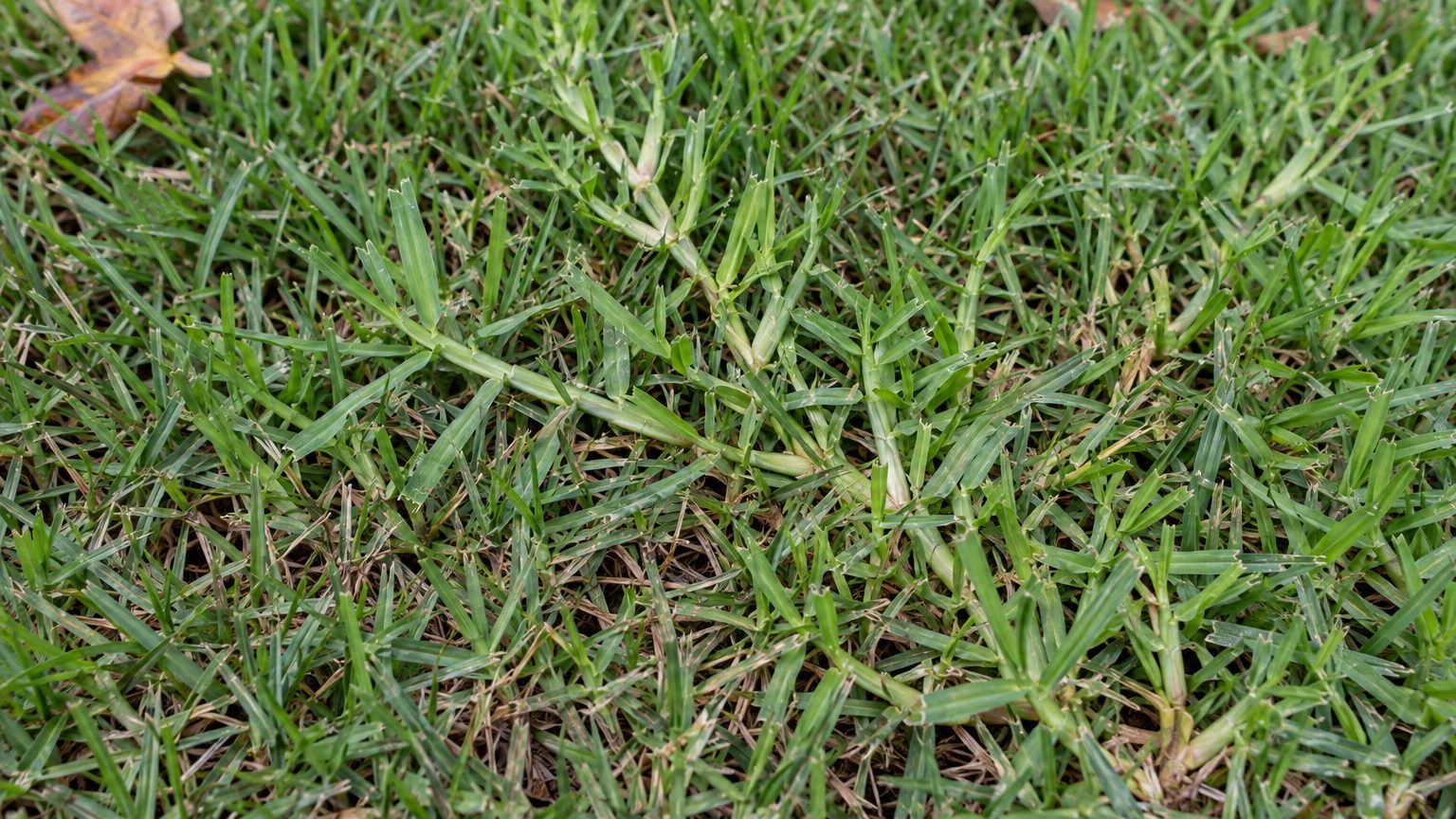
A coarse runner that creeps over the lawn edge and roots at every joint is a familiar sight through the warm months. That pattern points to kikuyu grass, an aggressive mat-former that muscles into thin turf and crowds out what grew there. Spotting it early, telling it from look-alikes, and clearing it out takes a few steady habits.

How to Identify Kikuyu Grass

Kikuyu Grass on a lawn

Look at the stems and leaf joints before the blades, because useful clues sit low on the plant.

  • A long fringe of hairs runs parallel to the stem where the leaf meets it, in the leaf collar region.
  • Thick, fleshy stems creep along the surface and root at the nodes, forming a mat or thatch above the soil.
  • Stout surface runners reach 20 inches or more in length, allowing the plant to cross a bed edge or walkway.
  • Underground rhizomes run 1 to 4 inches deep, which is why a patch that looks removed often comes back.
  • In California, growth picks up in late spring and runs hard through summer and early fall.

Check the collar and the runners, since together they distinguish kikuyu from similar grasses.

Weeds Mistaken for Kikuyu Grass

Kikuyu was long confused with St. Augustinegrass, and it may even have been planted by mistake in its place. The two share a creeping habit and a broad, coarse look, so a glance from standing height settles nothing.

Get down and compare a runner, checking the leaf collar and the way the stem roots.

Looks like How to tell them apart
St. Augustinegrass (creeping, coarse, mat-forming) Kikuyu shows a long fringe of hairs along the stem at the leaf collar, and its thick stems root at the nodes and build a mat or thatch.

Bermudagrass is the other relative to rule out, since it is also a spreading grass with creeping stems. When a patch leaves you unsure, bring a stem with the collar attached to your state extension office and ask for a confirmation before you treat anything.

What Causes Kikuyu Grass in Lawns

Seed does most of the work. Most new stands are fertile and produce abundant seed, so spread into new areas is largely by seed rather than by runners creeping over from next door. In California, the seeds germinate in spring and early summer.

Thin turf gives that seed an open door. Kikuyu seeds are more likely to grow where the lawn is less vigorous, whether from compaction, uneven watering, shade loss, or a past scalping. A dense, healthy stand leaves little bare soil for a seedling to claim.

Climate does the rest. According to UC IPM, University of California, kikuyu grows best in moist conditions from 60° to 90°F. It also survives well there at 100°F. That wide comfort range explains why it takes hold in California lawns through most of the growing season. Once a patch is rooted, its aggressive spread by rhizomes and stolons finishes the job.

How to Get Rid of Kikuyu Grass

Clearing kikuyu means attacking runners above ground and rhizomes below it, in an order that leaves the patch no easy recovery.

  1. Do not mow the patch shorter than your lawn grass can tolerate, and bag the clippings so cut pieces of runner do not root in clean turf.
  2. Cover the area with clear plastic in full sun during the hottest part of the year, which in most of California runs mid-July to mid-September, and leave it for 4 to 6 weeks so the heat builds under it.
  3. Pull the plastic and dig out any surviving runners and rhizomes, going deep enough to reach the rhizomes 1 to 4 inches down.
  4. Reseed or resod the bare ground promptly, so dense turf fills the space before kikuyu seed does.
  5. Keep checking the edges of the cleared area, and dig out new shoots while they are small.

Mowing alone will not finish the job, because kikuyu survives cutting heights of less than 1/2 inch. If you want a herbicide in the plan, your state extension office can tell you what is approved where you live and when it works best.

How to Prevent Kikuyu Grass

Prevention follows the season, and in California the calendar starts well before the first runner appears.

  • In March, apply a preemergent herbicide where kikuyu has shown up before, since that timing can limit germination in spring.
  • Between April 1 and October 1, vertically mow before thatch builds up and aerate the lawn, doing each several times through the season.
  • Once growth resumes in late spring, mow regularly at the height your lawn grass prefers, and patch any thin or bare spots before seed lands.
  • Through summer, when seed production continues, pull or dig out any new kikuyu shoots before they set seed.
  • In fall, as seeding continues, rake out stray runners at the edges and keep irrigation even so no weak patches open up.

A thick lawn remains a dependable barrier against a plant that needs bare, thin ground to start from seed.

Common Questions

Will a Hard Freeze Kill Kikuyu Grass?

Prolonged exposure to freezing temperature kills it readily. A short cold snap is a different matter, since kikuyu tolerates moderate cold better than other warm season grasses, so a light frost will not clear a patch.

Does Mowing Make Kikuyu Grass Flower?

Mowing stimulates flowering, which begins in late spring in California, and seed production continues throughout summer and fall. Unclipped stands produce few seeds because flowering is very rare. A mown patch is therefore more likely to scatter seed, which is another reason to bag clippings from any infested area.

How Tall Does Kikuyu Grass Get If You Skip Mowing?

Left unmowed, it can reach a height of about 18 inches. It stays a low, prostrate mat until then, so a patch can hide among taller grass before the height gives it away.

Common Groundsel in Lawns: How to Identify It and Kill It

Common Groundsel in Lawns: How to Identify It and Kill It

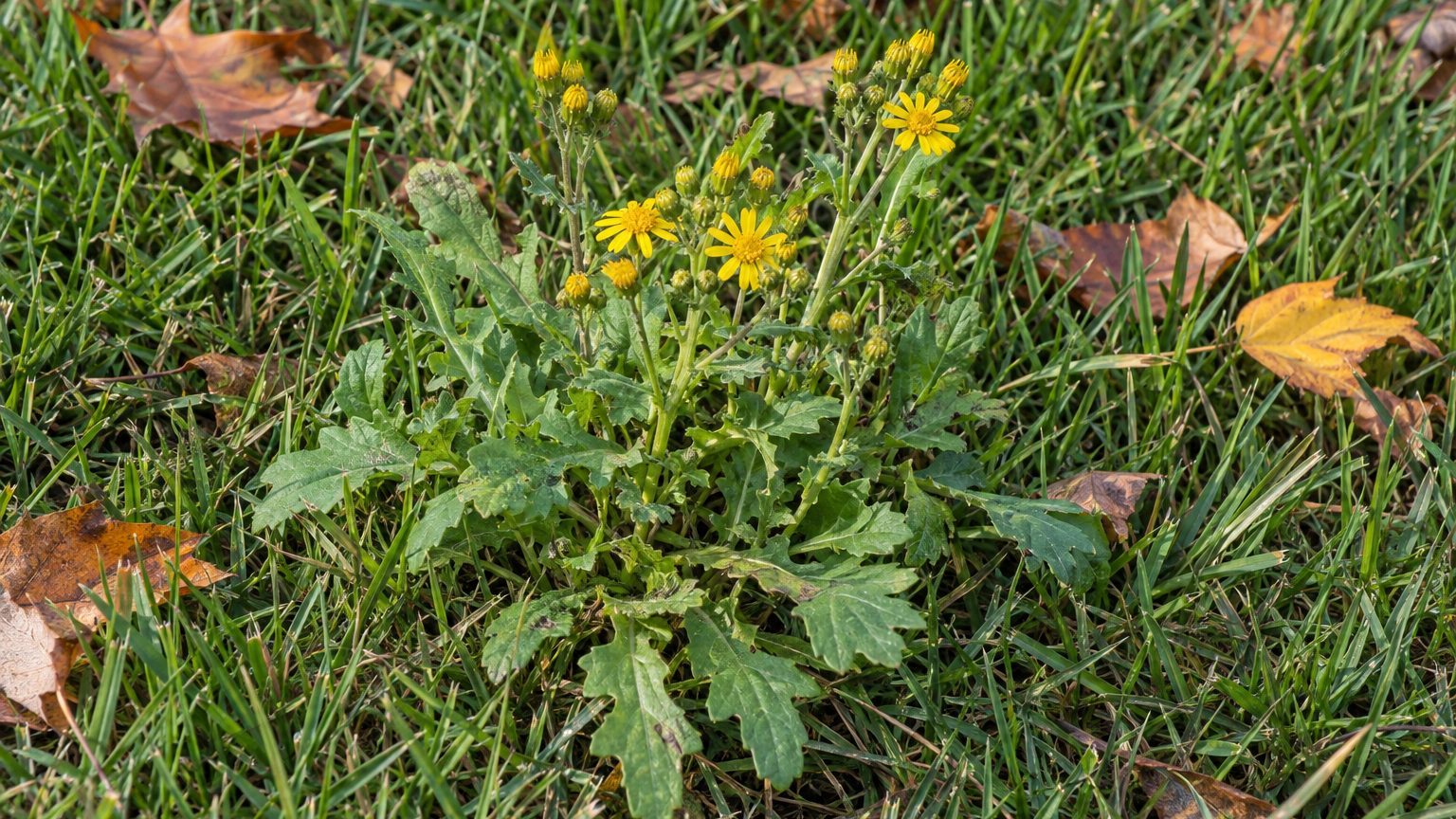
In spring, a thin patch of lawn or a bare edge can sprout upright, ragged-leaved plants topped with tufted heads that never seem to open. That is common groundsel, a quick-moving weed that gets ahead of turf in the cooler months. Knowing what it looks like and when it moves in makes it easy to stop.

How to Identify Common Groundsel

Common Groundsel on a lawn

Look for an upright, branching plant with ragged leaves standing above the grass.

  • The small heads stay closed and tufted, a bit like a dandelion that never opens.
  • Plants stand upright and branch, reaching 5-18 inches tall where mowing has missed them.
  • Older leaves are 2-4 inches long with deep, irregular lobes, coarse teeth along the edges, and no leaf stalks.
  • Plants grown late in the season are often shorter than the spring ones, up to 18 inches at most.
  • In Maryland, seedlings show up very early in spring (March), and in Wisconsin the heads can appear from early spring to late fall.

The deeply cut, stalkless leaves on an upright stem help distinguish it from the grass around it.

Weeds Mistaken for Common Groundsel

Few lawn weeds share this look, but the closed yellow heads cause confusion with a familiar one.

Seedlings in early spring can also pass for other small broadleaf weeds that sprout in cool weather, such as shepherd’s purse or henbit. Check the leaf shape and the stem before you decide.

Looks like How to tell them apart
Dandelion Groundsel heads stay closed and sit on a branched, upright stem with lobed, stalkless leaves. A dandelion’s leaves all rise from the base of the plant and its heads open wide on single stalks.

Shepherd’s purse and henbit do not share groundsel’s combination of closed heads and lobed, stalkless leaves on a branched stem. If you see closed heads and clasping, lobed leaves together, you are looking at groundsel.

What Causes Common Groundsel in Lawns

Seed does the work. Plants drop seed after their heads finish, and there can be 2 to 3 generations per year, so a few stragglers become a patch fast. Seed that overwinters germinates from late fall through early spring in Maryland, which is why the first plants often appear before the lawn has woken up.

Thin turf gives it room. In Maryland, groundsel grows best in moist, fertile soil and cannot survive on shaded, trampled, or mowed sites. Bare soil from winter damage, worn edges or a lawn that has been left tall opens the door.

It is a winter annual that can also behave as a summer annual, since seed can germinate in spring, summer or fall. In milder climates it is hardy to zone 6a, while in Wisconsin it dies at the end of the growing season.

How to Get Rid of Common Groundsel

Groundsel gives up quickly in a lawn that is mowed and thick, so start with the mower and your hands.

  1. In Maryland, mow the lawn regularly at the proper height for your grass, because groundsel cannot survive on mowed sites.
  2. Pull young plants by hand while the soil is moist, getting the whole root so nothing regrows from the base.
  3. Pull plants before the heads finish, and bag them rather than composting, so the seed does not spread across the yard.
  4. Rake out bare spots and overseed them, so grass fills the gap before new groundsel seed germinates.
  5. Ask your state extension office which herbicides are approved for lawns in your state if the patch is too large to pull, and follow the label exactly.

Keep at it through the cool months, since later flushes of seedlings are common. Dense grass leaves little room for later flushes.

How to Prevent Common Groundsel

Prevention follows the weed’s habit of sprouting early and filling any open soil.

  • Repair thin areas and bare patches so groundsel seed has less open soil to claim.
  • In Maryland and Wisconsin, spread a coarse organic mulch about 3 inches thick in beds beside the lawn, and let the surface dry out between waterings so seedlings cannot push through.
  • Once the soil warms, keep mowing on a regular schedule so any seedlings that slip in get cut before they can form heads.
  • Water according to the needs of your lawn grass so dense turf leaves less open soil for groundsel.

Thick turf is the lasting fix, since this weed does not do well where grass is dense and mowed.

Common Questions

Is Common Groundsel an Annual or a Perennial?

It is an annual. It usually acts as a winter annual, though it can also act as a summer annual, so seed that lands in the lawn at almost any time of year can start a new plant.

Does Common Groundsel Grow in Sandy or Clay Soil?

In Wisconsin, it does best in moist, loamy, fertile soil but will also grow in sandy soil, heavy clay, and infertile ground. Soil type alone will not keep it out, so a dense, mowed lawn does more.

Can Heat Kill Groundsel Seed?

Steam heating of soil or potting mix at 180 °F for 30 minutes can kill dormant and non-dormant weed seed in Maryland. That suits potting mix and small beds, not an established lawn.

The almanac, state by state. Every date on this site comes from a state’s own frost facts and its extension service’s calendar — and says where it comes from.