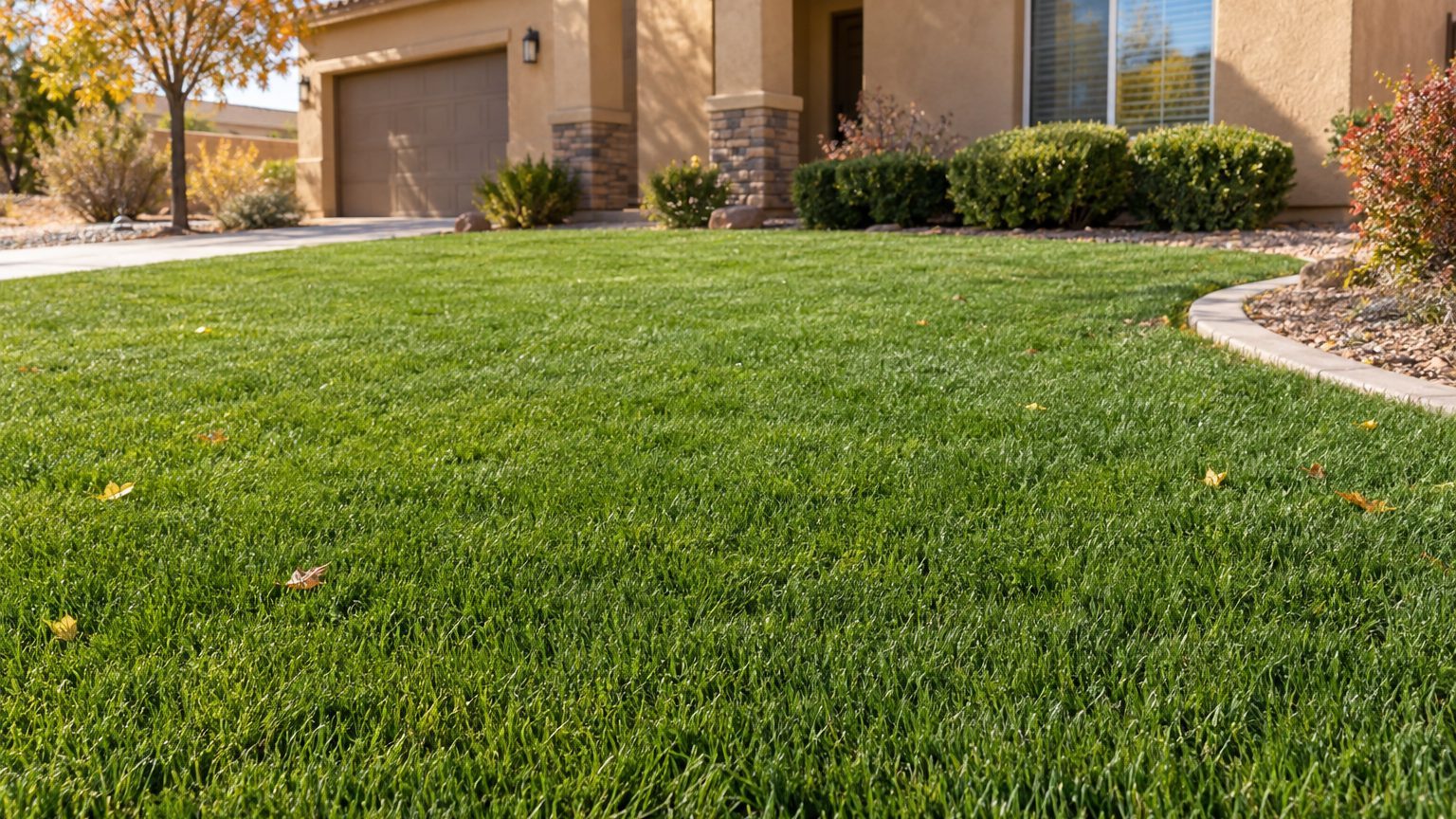
A bermudagrass lawn that sits straw-tan all winter and a tall fescue lawn that stays green through the same weeks are both behaving normally in New Mexico. Which one you own sets the schedule. Lawns in New Mexico run on high sun, dry air and big swings in elevation, so the timing of each job depends on the grass and on where you live.
Frost Dates and Growing Season in New Mexico

In Albuquerque, the last spring frost usually falls between March 31 and April 12, so seed sown too early can still lose young seedlings to frost.
- In early spring, cool-season lawns such as tall fescue wake up first, so March is the time to feed them lightly and put down crabgrass preventer.
- Once the soil warms in May and June, bermudagrass and zoysiagrass finally grow in earnest. Seeding and sod laying for these grasses belong in that stretch, because growth follows soil warmth and not the calendar date of the last frost.
- Through June, July and August, watering matters most. These are also the months when warm-season lawns get their main feeding, from May through July.
- In late summer, August is the time to aerate and overseed tall fescue, which gives new grass the long mild fall it needs to root.
- In Albuquerque, the first fall frost arrives between October 29 and November 9, so a September or October feeding helps cool-season grass store energy before it slows down.
- In winter, warm-season grass goes dormant and tan, while mowing for cool-season lawns can continue into November.
Those frost dates describe Albuquerque, not every New Mexico community. Rural and suburban yards often frost later in spring and earlier in fall, and higher ground more so, so check with your county. The state also spans USDA hardiness zones 4b to 9a, but those zones describe winter cold rather than local frost dates.
New Mexico — the year and the numbers
- State
- New Mexico
- USDA zones
- 4b-9a
- Last spring frost
- March 31 to April 12
- First fall frost
- October 29 to November 9
- Annual rain
- 9 in
- Lawn type
- cool- and warm-season
- Source
- NOAA NCEI U.S. Climate Normals 1991-2020, 32F freeze probabilities · Albuquerque
Cool-Season or Warm-Season Grass in New Mexico?
Both types can work here, and elevation usually decides. Cool-season grasses do best where winters are colder and summers milder, on higher ground. Warm-season grasses handle the heat and dryness of the lower, hotter parts of the state, at the cost of a tan winter.
| Grass | How it does in New Mexico | Why |
|---|---|---|
| Tall fescue | Stays green longer into the cold months and suits many yards | It is a cool-season grass that can be seeded in late summer |
| Kentucky bluegrass | Fits cooler, higher ground best | It prefers mild summers and struggles when heat builds |
| Bermudagrass | Handles hot, sunny lawns and goes tan in winter | It is a warm-season grass, grown from seed or sod |
| Zoysiagrass | Forms a dense turf in warm areas and browns in winter | It is a warm-season grass, mostly started from sod or plugs |
If your yard sits in a cold mountain town, lean toward bluegrass or fescue. If it bakes in full sun at lower elevation, bermudagrass is the sturdier pick, as long as you accept the dormant stretch.
When to Seed, Fertilize and Aerate a Lawn in New Mexico
Cool-season and warm-season lawns follow nearly opposite calendars. Cool-season grass is worked in late summer and fall, and warm-season grass gets its jobs in late spring and early summer once the soil is warm.
Tall fescue should not be fed in summer, since the heat pushes soft growth the grass cannot sustain.
| Task | When to do it in New Mexico | Why then |
|---|---|---|
| Crabgrass preventer | March (February, April and May also work) | It has to be down before crabgrass seed sprouts |
| Seeding tall fescue | August (September also works) | Warm soil and cooler nights help seed root before winter |
| Core aeration | August (September also works) | Cool-season grass recovers fast, and overseeding goes into the open holes |
| Fertilizing cool-season lawns | March, September, October (April also works) | Spring and fall are when this grass grows hardest |
| Seeding bermudagrass or zoysiagrass | May (June also works) | Warm soil gets seed moving quickly |
| Laying sod, warm-season | May (June and July also work) | Roots knit into warm soil quickly |
| Fertilizing warm-season lawns | May, June, July | Feeding matches the grass at its fastest growth |
| Dethatching, warm-season | May, June (April also works) | The grass fills in fast after being raked out |
Cool-season lawns can be dethatched in August or September, the same window as aeration and overseeding. The full month-by-month schedule lives on the state calendar page.
Lawn Problems to Watch for in New Mexico
Tan Grass in Winter
A bermudagrass or zoysiagrass lawn turns tan in cold weather because it goes dormant, and that is normal. Gently tug a few blades in spring. If the crowns are firm and green starts to show at the base once soil warms, the lawn is alive. Skip fertilizer until growth resumes in May.
Browning in Summer Heat
Cool-season grass, especially bluegrass, can turn dull and straw-colored during the hottest stretch. Check whether footprints stay pressed into the grass and whether a screwdriver pushes in with effort. Both point to thirst. Water slowly so moisture soaks down to the roots, and keep mowing steady.
Thin, Compacted Turf
Bare patches that form in high-traffic spots, along with water that runs off instead of sinking in, suggest packed soil. Core aeration in August opens the ground and sets up overseeding for fescue lawns. A soil test from your county extension office can show whether nutrients or soil makeup are part of the problem.
How Lawn Care Dates Change Across New Mexico
Elevation can shift lawn jobs substantially between neighboring towns.
- Santa Fe and Taos: Cold nights hold on longer in spring and arrive sooner in fall. Seeding and feeding start later, and bluegrass and fescue are the usual choices.
- Albuquerque and the middle Rio Grande Valley: Spring comes earlier and fall frost later than in the mountains, so tall fescue and bermudagrass both have room to grow.
- Las Cruces and the Mesilla Valley: The south warms soonest, which suits warm-season grasses and moves their spring work earlier.
Pay attention to your own yard, because a north-facing lot or a low pocket where cold air settles can frost later than a sunny slope nearby.
Where to Get Lawn Advice in New Mexico
The state’s land-grant university runs New Mexico State University’s Cooperative Extension Service, which offers advice written for local conditions. Your county office can answer questions about your specific yard.
- The extension service website has grass and watering guidance that fits New Mexico’s climate, so check it before choosing seed.
- Your county office can help interpret a soil test before you fertilize, which is worth doing ahead of March or September.
- Bring a sample of the struggling grass to the county office when brown patches have you guessing.
Common Questions
When Does Mowing Start and Stop in New Mexico?
Cool-season lawns are mowed from March through November. Bermudagrass and zoysiagrass run from April through October, matching their shorter active season.
When Should You Dethatch a Lawn in New Mexico?
Cool-season lawns are best dethatched in August or September. Warm-season lawns do better in May and June, when they grow fast enough to recover.
When Does a New Mexico Lawn Need the Most Water?
June, July and August call for the most watering, whatever the grass. Soak the soil slowly so water reaches the roots instead of running off the surface.