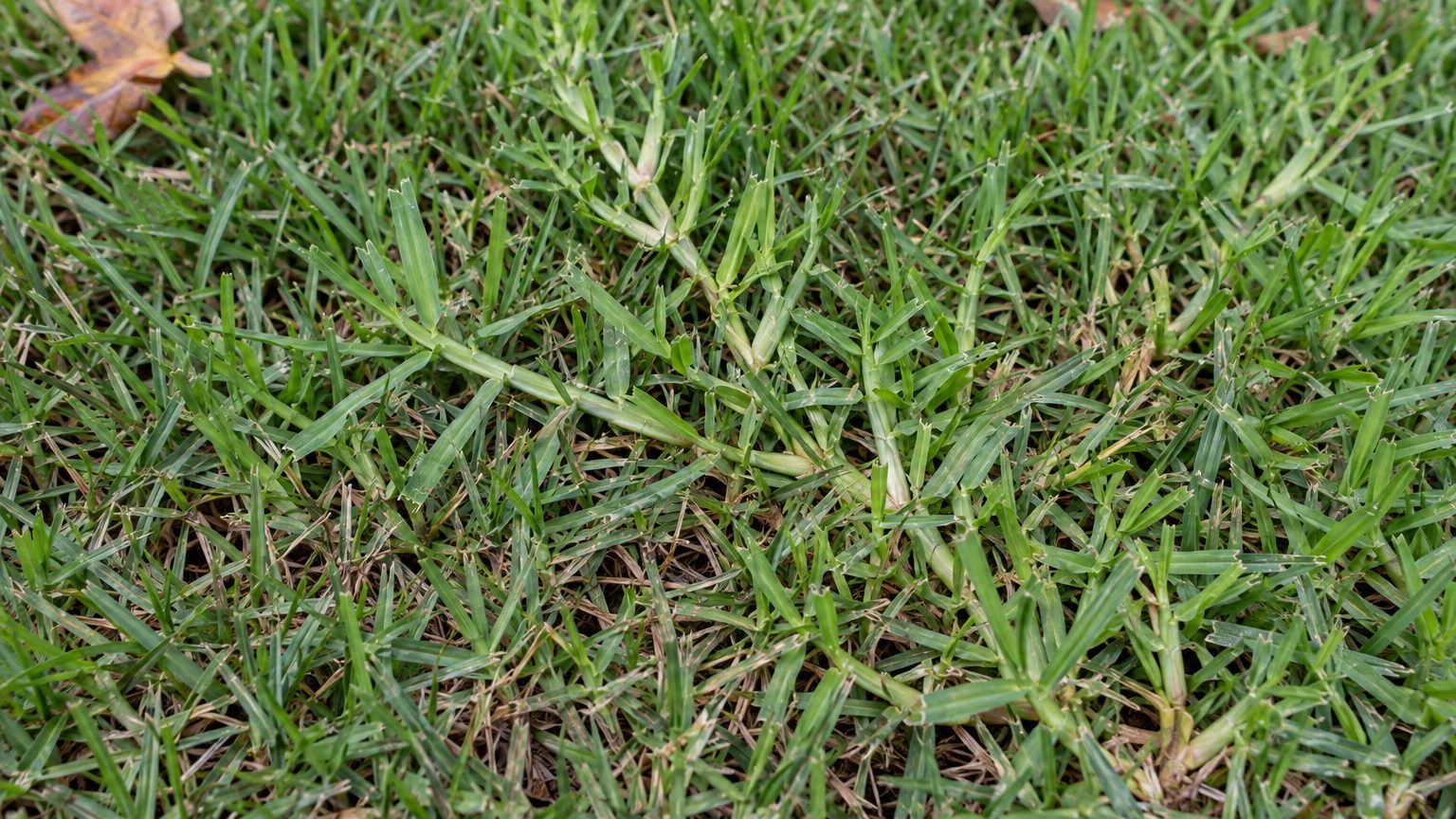
A coarse runner that creeps over the lawn edge and roots at every joint is a familiar sight through the warm months. That pattern points to kikuyu grass, an aggressive mat-former that muscles into thin turf and crowds out what grew there. Spotting it early, telling it from look-alikes, and clearing it out takes a few steady habits.
How to Identify Kikuyu Grass

Look at the stems and leaf joints before the blades, because useful clues sit low on the plant.
- A long fringe of hairs runs parallel to the stem where the leaf meets it, in the leaf collar region.
- Thick, fleshy stems creep along the surface and root at the nodes, forming a mat or thatch above the soil.
- Stout surface runners reach 20 inches or more in length, allowing the plant to cross a bed edge or walkway.
- Underground rhizomes run 1 to 4 inches deep, which is why a patch that looks removed often comes back.
- In California, growth picks up in late spring and runs hard through summer and early fall.
Check the collar and the runners, since together they distinguish kikuyu from similar grasses.
From the almanac
Lawn in your state
The dates on this page depend on where you live. Your state's page carries its frost dates, its USDA zones and the year laid out month by month.
Northeast
Southeast
- Alabama
- Arkansas
- Delaware
- Florida
- Georgia
- Kentucky
- Louisiana
- Maryland
- Mississippi
- North Carolina
- South Carolina
- Tennessee
- Virginia
- West Virginia
Midwest
Southwest
West
Pacific Northwest
Canada
Weeds Mistaken for Kikuyu Grass
Kikuyu was long confused with St. Augustinegrass, and it may even have been planted by mistake in its place. The two share a creeping habit and a broad, coarse look, so a glance from standing height settles nothing.
Get down and compare a runner, checking the leaf collar and the way the stem roots.
| Looks like | How to tell them apart |
|---|---|
| St. Augustinegrass (creeping, coarse, mat-forming) | Kikuyu shows a long fringe of hairs along the stem at the leaf collar, and its thick stems root at the nodes and build a mat or thatch. |
Bermudagrass is the other relative to rule out, since it is also a spreading grass with creeping stems. When a patch leaves you unsure, bring a stem with the collar attached to your state extension office and ask for a confirmation before you treat anything.
What Causes Kikuyu Grass in Lawns
Seed does most of the work. Most new stands are fertile and produce abundant seed, so spread into new areas is largely by seed rather than by runners creeping over from next door. In California, the seeds germinate in spring and early summer.
Thin turf gives that seed an open door. Kikuyu seeds are more likely to grow where the lawn is less vigorous, whether from compaction, uneven watering, shade loss, or a past scalping. A dense, healthy stand leaves little bare soil for a seedling to claim.
Climate does the rest. According to UC IPM, University of California, kikuyu grows best in moist conditions from 60° to 90°F. It also survives well there at 100°F. That wide comfort range explains why it takes hold in California lawns through most of the growing season. Once a patch is rooted, its aggressive spread by rhizomes and stolons finishes the job.
How to Get Rid of Kikuyu Grass
Clearing kikuyu means attacking runners above ground and rhizomes below it, in an order that leaves the patch no easy recovery.
- Do not mow the patch shorter than your lawn grass can tolerate, and bag the clippings so cut pieces of runner do not root in clean turf.
- Cover the area with clear plastic in full sun during the hottest part of the year, which in most of California runs mid-July to mid-September, and leave it for 4 to 6 weeks so the heat builds under it.
- Pull the plastic and dig out any surviving runners and rhizomes, going deep enough to reach the rhizomes 1 to 4 inches down.
- Reseed or resod the bare ground promptly, so dense turf fills the space before kikuyu seed does.
- Keep checking the edges of the cleared area, and dig out new shoots while they are small.
Mowing alone will not finish the job, because kikuyu survives cutting heights of less than 1/2 inch. If you want a herbicide in the plan, your state extension office can tell you what is approved where you live and when it works best.
How to Prevent Kikuyu Grass
Prevention follows the season, and in California the calendar starts well before the first runner appears.
- In March, apply a preemergent herbicide where kikuyu has shown up before, since that timing can limit germination in spring.
- Between April 1 and October 1, vertically mow before thatch builds up and aerate the lawn, doing each several times through the season.
- Once growth resumes in late spring, mow regularly at the height your lawn grass prefers, and patch any thin or bare spots before seed lands.
- Through summer, when seed production continues, pull or dig out any new kikuyu shoots before they set seed.
- In fall, as seeding continues, rake out stray runners at the edges and keep irrigation even so no weak patches open up.
A thick lawn remains a dependable barrier against a plant that needs bare, thin ground to start from seed.
Common Questions
Will a Hard Freeze Kill Kikuyu Grass?
Prolonged exposure to freezing temperature kills it readily. A short cold snap is a different matter, since kikuyu tolerates moderate cold better than other warm season grasses, so a light frost will not clear a patch.
Does Mowing Make Kikuyu Grass Flower?
Mowing stimulates flowering, which begins in late spring in California, and seed production continues throughout summer and fall. Unclipped stands produce few seeds because flowering is very rare. A mown patch is therefore more likely to scatter seed, which is another reason to bag clippings from any infested area.
How Tall Does Kikuyu Grass Get If You Skip Mowing?
Left unmowed, it can reach a height of about 18 inches. It stays a low, prostrate mat until then, so a patch can hide among taller grass before the height gives it away.