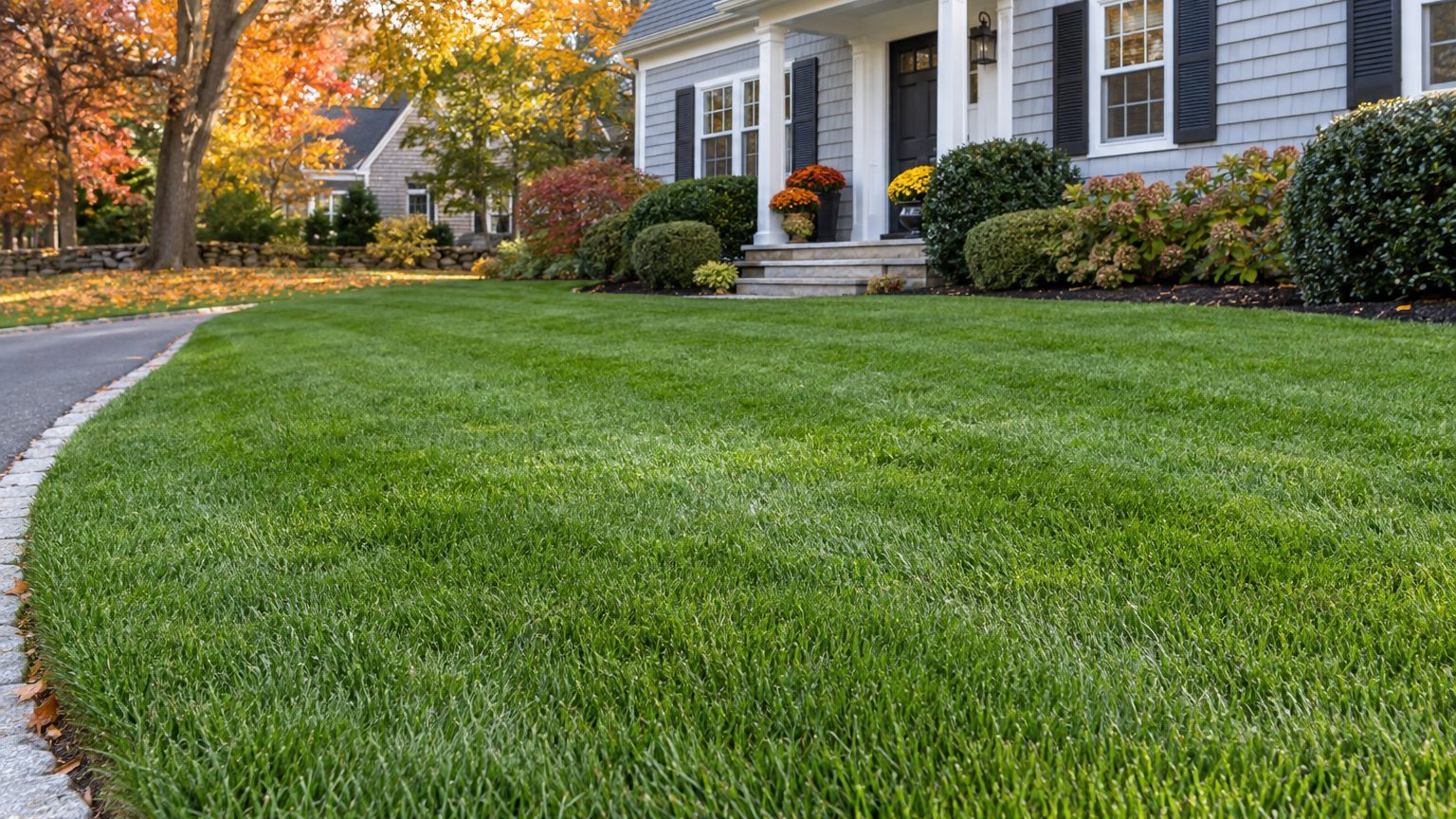
Rhode Island lawns spend the spring greening up under cool nights and the summer working through humid heat, then get their best growing weather in early fall. Cool-season grasses suit that rhythm. What follows is how the year runs in the Ocean State, which grasses hold up, and when the big jobs fit.
Frost Dates and Growing Season in Rhode Island
Around Providence, the last spring freeze usually lands between April 7 and April 17, and the first fall freeze between October 24 and November 3. Those dates describe the airport, so suburban and inland yards often see frost a week or two later in spring and earlier in fall. Rhode Island falls in USDA hardiness zones 6a to 7b, but the exact zone varies by location.
- In early spring, the ground thaws and the grass greens slowly, but a freeze can still nip a young seedling. Mowing starts in April once the blades need a trim, and crabgrass preventer goes down in April before the soil warms enough for weed seeds to sprout.
- In May, growth picks up with the warming soil, and this is a good time to feed the lawn. Seeding and aeration also work in April and May if you missed the fall window.
- From June through August, heat and humidity slow cool-season grass, so watering becomes the main chore. Mowing continues through the summer, and a deep soaking beats a light daily sprinkle.
- In August and September, the soil is still warm and nights turn cooler, which makes this the strongest stretch for seeding, sod, core aeration and dethatching. A fall feeding fits in September.
- In October and November, growth slows but mowing carries on until the grass stops growing. Seed sown too late has little time to root before the first hard freeze, so fall planting belongs early in the window, and sod still goes down in October.
Frost dates mark when freezing is a risk, not when grass starts or stops growing, because growth follows soil temperature. Check local frost guidance and watch conditions in your own yard.
Rhode Island — the year and the numbers
- State
- Rhode Island
- USDA zones
- 6a-7b
- Last spring frost
- April 7 to April 17
- First fall frost
- October 24 to November 3
- Annual rain
- 48 in
- Lawn type
- cool-season
- Source
- NOAA NCEI U.S. Climate Normals 1991-2020, 32F freeze probabilities · Providence
Cool-Season or Warm-Season Grass in Rhode Island?
Cool-season grass is the one that lasts here. Winters in zones 6a to 7b are cold enough to damage warm-season lawns, which turn brown and sit dormant long before the first frost arrives. Cool-season types stay green in spring and fall and rest through the worst of July heat.
These grasses are common across the region, and seed mixes often blend them to cover sun, shade and the occasional dry spell.
| Grass | How it does in Rhode Island | Why |
|---|---|---|
| Kentucky bluegrass | Dense, dark green lawn in full sun | Cold hardy and spreads to fill thin spots |
| Fine fescues (creeping red, chewings, hard) | Good in shade and on lean soil | Fine blades that need less feeding and less water |
| Perennial ryegrass | Sprouts quickly, useful for fast cover | Quick germination that helps new seed establish |
| Tall fescue | Handles summer stress well | Deep roots that cope with heat and dry stretches |
Warm-season grasses such as zoysia and bermudagrass are left out because they do not fit the climate well. For the full seed-by-seed breakdown, the Rhode Island grass seed page goes further.
When to Seed, Fertilize and Aerate a Lawn in Rhode Island
August and September carry most of the heavy work, because warm soil and cooler air help seed root before winter. Spring works as a backup, and dethatching only makes sense when the thatch layer is thicker than about an inch.
| Task | Best months in Rhode Island | Why then |
|---|---|---|
| Seeding | August, September (April and May also work) | Warm soil and cooler air help seedlings root |
| Laying sod | August, September (April, May and October also work) | Roots knit into warm ground before winter |
| Core aeration | August, September (April and May also work) | Grass recovers quickly while it grows strongly |
| Dethatching | August, September (April and May also work) | Lawn bounces back fast after the disturbance |
| Fertilizing | May, September (April and November also work) | Feeds spring growth and fall root building |
| Crabgrass preventer | April (March and May also work) | Goes down before weed seeds germinate |
| Watering | June, July, August | Summer heat dries the soil fastest |
If September slips by, October still works for sod, and spring is there for seed. Mowing runs from April through November, so keep the blades sharp for the whole stretch.
Lawn Problems to Watch for in Rhode Island
Brown Patches in Midsummer

Humid heat stresses cool-season grass, and a lawn that looks tan in July may simply be resting. Check by tugging a patch: if it pulls up easily, root damage may be the problem, but if it holds firm, the grass may simply be dormant. If the grass is dormant and the soil is dry, water deeply in June, July and August to help it survive.
Thin Grass Under Trees
Shade from oaks and maples, plus competing roots, leaves bare soil beneath. Sun-loving bluegrass struggles there, so overseed with fine fescues in late summer. Raising the mower blade helps too, since taller grass catches more of the dim light.
Weedy Gaps in Spring
Crabgrass fills any bare spot as the soil warms, especially along driveways and sidewalks. A preventer applied in April stops seeds before they sprout. A thick lawn is the long-term fix, which is why fall seeding pays off.
How Lawn Care Dates Change Across Rhode Island
The state is small, but the water and the elevation still shift your timing a little.
- Narragansett Bay and the south coast: Ocean air keeps spring a bit cooler and fall milder, so frost tends to arrive later in autumn and the fall seeding window stays open longer.
- Providence and the Blackstone Valley: Cities hold heat, so spring greening comes a bit earlier here than in outlying yards.
- Northwest Rhode Island, around Burrillville and Glocester: Higher, colder inland ground warms later in spring and freezes sooner in fall, so plan on starting spring jobs later and finishing fall seeding earlier.
Watch your own soil and the first fall frost in your yard, and adjust from there.
Where to Get Lawn Advice in Rhode Island
Local experts can read your soil and your lawn better than any general guide. A soil test before fertilizing keeps you from guessing.
- The University of Rhode Island Cooperative Extension offers lawn guidance and information on soil testing, useful before the September feeding.
- Your local extension contact can help diagnose a stubborn patch if you bring a sample or photos.
Common Questions
Can You Plant Grass Seed in Rhode Island in Spring?
Yes, April and May both work, though weeds compete harder than in fall. Keep the seedbed damp, and skip crabgrass preventer on seeded areas, since it blocks grass seed too.
How Short Should You Mow a Rhode Island Lawn?
Keep the blades on the taller side, especially in summer, because longer grass shades the soil and holds moisture. Remove only a modest amount of the grass blade at each mowing.
Is a Brown Lawn in August Dead?
Not always. Dormant grass often greens up again when cooler weather and rain return, while a patch with no roots needs overseeding in September.