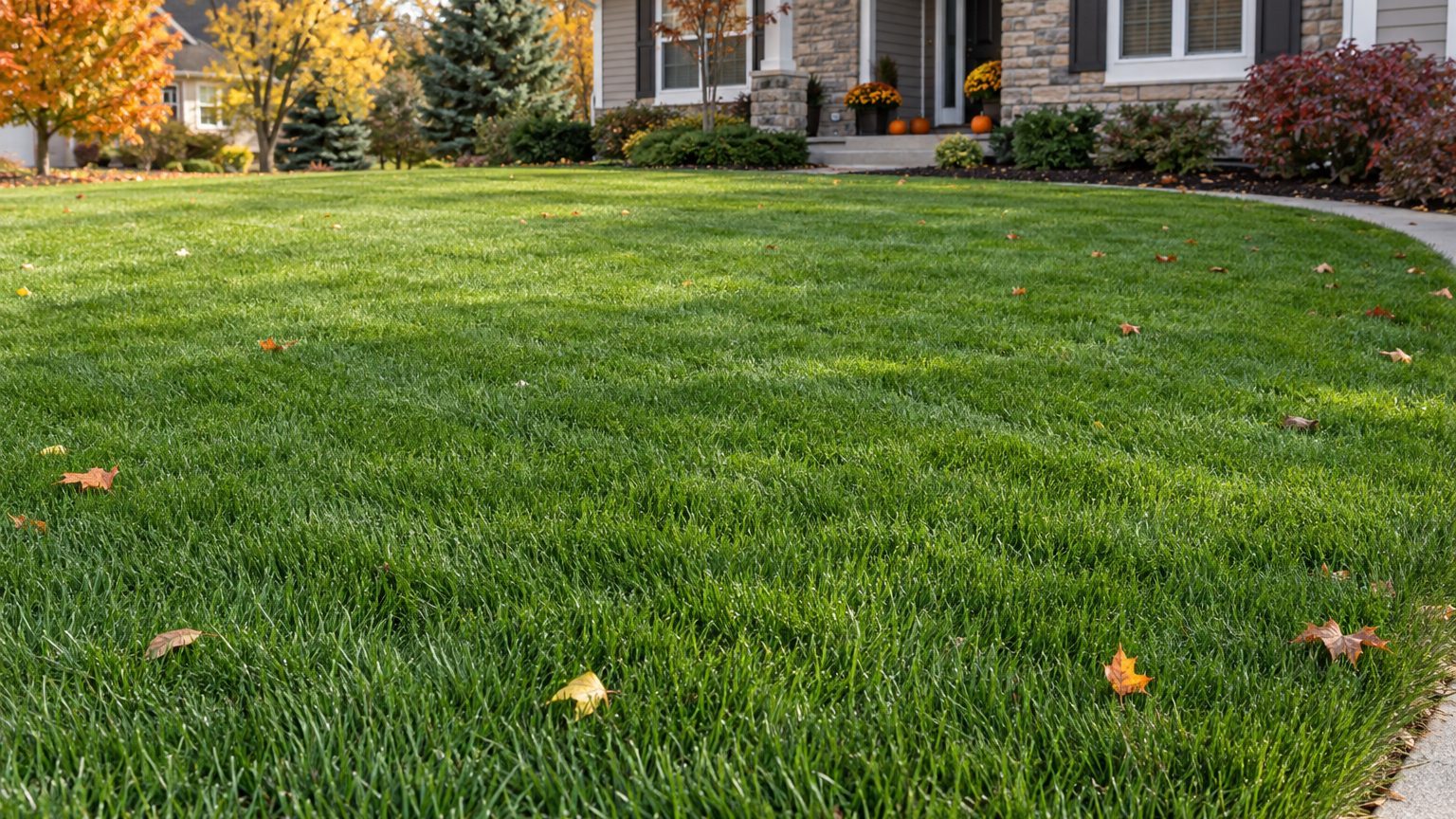
A Michigan lawn rests under winter snow, wakes up slowly in spring, and becomes active again in late summer. Cool-season grasses suit the state, and the busiest seeding and feeding happen in late summer and early fall rather than in spring.
Frost Dates and Growing Season in Michigan
Frost sets the outer edges of the season, but grass grows when the soil warms, not when the last frost passes. In Detroit, the last spring frost comes around April 30, while most of the Lower Peninsula sees it in early to mid May. Hardiness zones in Michigan run from 4a to 6b on the USDA system, so the north and the south differ.
- In early spring, the lawn is still dormant or barely stirring, and a late frost can nip tender new seedlings. Mowing begins in April once the grass grows, and crabgrass preventer goes down in April, or in May if you are late.
- In late spring, the soil warms and growth picks up fast. Fertilizing can happen in May, and the first frost danger for young grass has passed in most places by then.
- In summer, from June to August, cool-season grass slows in heat, so water is the main task. Mowing carries on through the whole warm season.
- In late summer, August and September bring the best seeding window. In Detroit, the first fall frost arrives between October 6 and October 21 in zone 6a, so seed sown now has time to root before it hits.
- In fall, core aeration and fertilizing fit September, with another feeding in November. Mowing continues until growth stops, usually into November.
Seed sown too close to the first fall frost may not root well enough to survive winter, which is why August and September matter so much here.
Michigan — the year and the numbers
- State
- Michigan
- USDA zones
- 4a-6b
- Last spring frost
- April 30 in the Detroit area; early to mid May across most of the Lower Peninsula
- First fall frost
- October 6 to October 21
- Annual rain
- 34 in
- Lawn type
- cool-season
- Source
- MSU Extension — Frost-Free Dates · Detroit
Cool-Season or Warm-Season Grass in Michigan?
Cool-season grass is the answer. Michigan winters are cold enough that warm-season grasses struggle to survive, and the lawn species that thrive here grow best in spring and fall, then slow down or rest in summer heat and drought.
The main cool-season choices for Michigan lawns are listed below.
| Grass | How it does in Michigan | Why |
|---|---|---|
| Kentucky bluegrass | Dense, hardy lawn | Cool-season grass that spreads and fills in thin spots |
| Fine fescues (creeping red, chewings, hard) | Reliable in cool conditions | Cool-season grasses suited to the region |
| Perennial ryegrass | Fast to sprout | Cool-season grass that establishes quickly |
| Tall fescue | Sturdy lawn | Cool-season grass used across the region |
Many lawns use a blend of these grasses. The state’s Best Grass Seed page goes into which mix suits sun, shade and traffic.
When to Seed, Fertilize and Aerate a Lawn in Michigan
Late summer and early fall carry most of the heavy work. Seed, aeration and feeding all fit into the same part of the season, when soil is warm and air is cooler. Spring works as a fallback for several tasks.
Michigan law limits lawn feeding. Lawn fertilizer cannot go on frozen or waterlogged soil, and phosphorus fertilizer is only for a new lawn in its first season or where a soil test shows a shortage.
| Task | Best months in Michigan | Why then |
|---|---|---|
| Seeding | August, September (April, May also work) | Warm soil and cool air help seed sprout, and roots form before winter |
| Fertilizing | September, November (May also works) | Grass stores nutrients for winter and greens up faster in spring |
| Core aeration | September (April, May also work) | Grass recovers quickly and fills in the holes while it is growing strongly |
| Dethatching | August, September (April also works) | The lawn is growing actively and heals fast |
| Crabgrass preventer | April (May also works) | It has to be down before crabgrass seed sprouts |
Water from June to August as needed, especially during dry, hot weather. If you miss September for seeding, wait until spring rather than sowing in October.
Lawn Problems to Watch for in Michigan
Thin Grass After Winter

Snow cover, cold and ice can leave patches thin or bare by spring. Seeding in August or September, or in April and May as a fallback, fills them in. Rake out dead grass first so seed reaches the soil.
Brown Lawn in Summer Heat
Cool-season grass slows in heat and dry spells, and a lawn that turns tan in July is often resting, not dead. Water during summer dry spells, and mow only while the grass is growing.
Crabgrass in Thin Spots
Crabgrass moves into thin or bare patches where summer heat has weakened the turf. Preventer applied in April stops seed from sprouting, and May is the fallback. A dense, healthy lawn also helps crowd out weeds.
How Lawn Care Dates Change Across Michigan
Michigan stretches far north to south and sits between big lakes, so the season does not start on the same day everywhere.
- In Detroit, the last spring frost comes around April 30, while local soil conditions still determine when lawn work begins.
- Northern Lower Peninsula: Frost lingers into May and the soil warms later, so spring work shifts back and fall seeding should start early in the window.
- Upper Peninsula: Cold zones such as 4a reach into the north, so the season is shorter, spring is later and the fall cold arrives sooner.
- Lakeshore communities: Great Lakes water cools spring and holds warmth in fall, which can slow green-up near the shore and extend the fall season a little.
Shift spring work later as you move north, but aim for the early part of the fall seeding window.
Where to Get Lawn Advice in Michigan
MSU Extension is the state’s land-grant extension service, and it can answer questions about soil, grass and lawn trouble specific to Michigan.
- Your county extension office can point you to a soil test, which tells you whether phosphorus is allowed on your lawn under state rules.
- Bring a sample of a troubled patch to the county office for a diagnosis, ideally before the August and September seeding window opens.
Common Questions
Can You Put Phosphorus on a Michigan Lawn?
Only on a new lawn in its first season, or where a soil test shows a shortage. A soil test through the county extension office settles it.
Is Spring a Good Time to Seed in Michigan?
It works in April and May, though August and September give better results. Spring seedlings face summer heat before roots are deep.
What Is the Hardiness Zone in Michigan?
Michigan ranges from 4a to 6b on the USDA system. Detroit sits near the warm end, while the north is colder, so local dates differ.