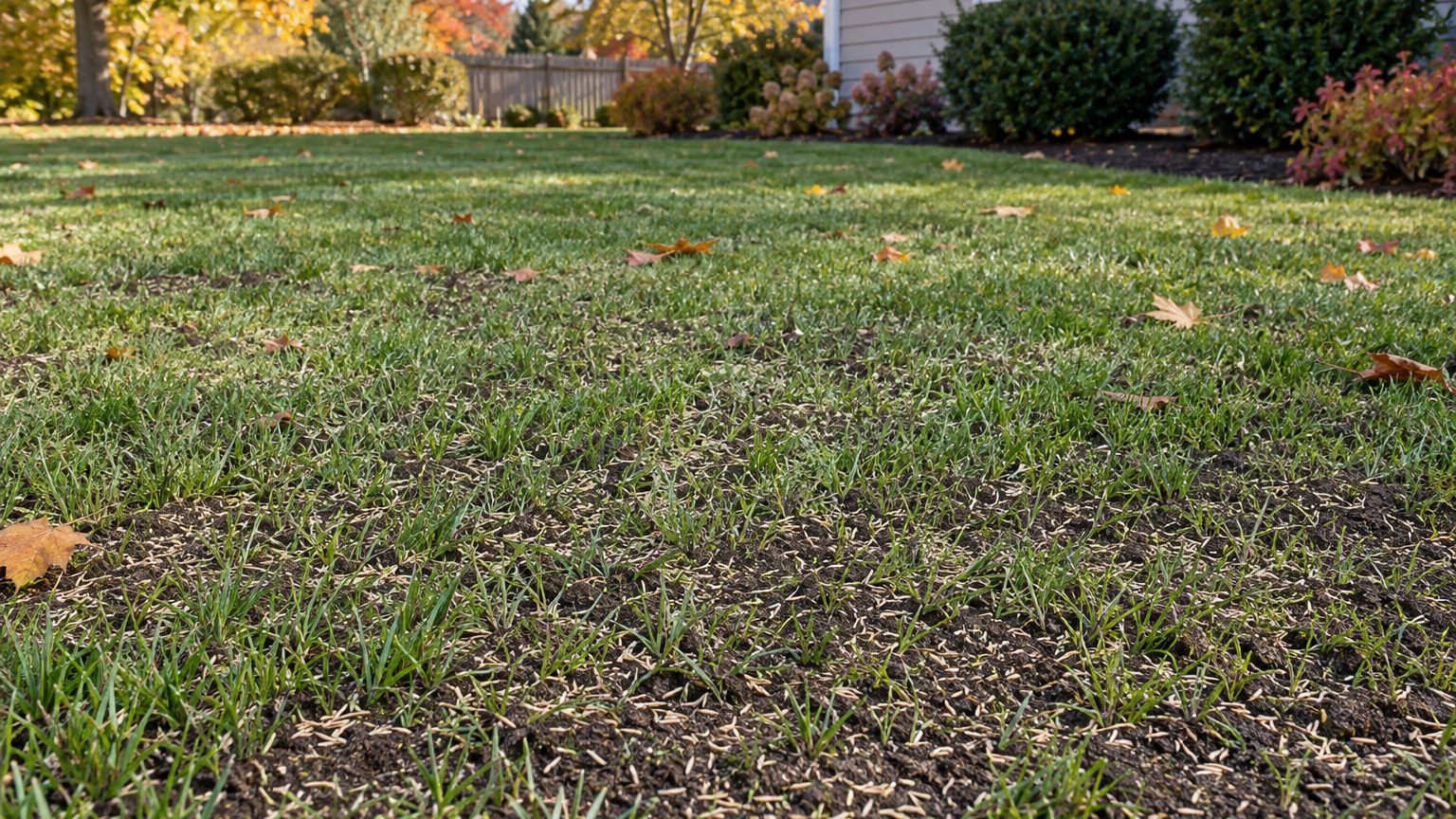
Thin spots in a lawn show up after a hot summer or a season of heavy foot traffic, and a handful of seed tossed on them at the wrong moment rarely sprouts into anything. Overseeding works when the timing matches the grass and the seed meets bare soil. Timing and seeding rate are what decide whether a thin lawn fills in.
When Should You Overseed Your Lawn?
Cool-season grasses such as fescue, ryegrass, and bluegrass tend to do best when overseeded in fall. Warm-season lawns follow a different rhythm, since they grow when the soil is warm. The window shifts with grass type, the season, and your region.
In the Kansas City area, fall brings soil that is still warm, cooler nights, and usually more rainfall. In Pennsylvania, late summer is the optimum time for cool-season grasses. Seed sown later runs into cold soil and stalls.
The state-by-state table right under this section gives the overseeding window and the zone for each state.
From the almanac
Lawn in your state
The dates on this page depend on where you live. Your state's page carries its frost dates, its USDA zones and the year laid out month by month.
Northeast
Southeast
- Alabama
- Arkansas
- Delaware
- Florida
- Georgia
- Kentucky
- Louisiana
- Maryland
- Mississippi
- North Carolina
- South Carolina
- Tennessee
- Virginia
- West Virginia
Midwest
Southwest
West
Pacific Northwest
Canada
How to Overseed a Lawn
Overseeding thickens a lawn and fills bare spots, and the steps below go in this order because each one prepares the soil for the next.
- In Iowa, mow the lawn to 1½ to 2 inches to reduce competition from the established grass.
- In Iowa, use a core aerator to leave 20 to 40 holes per square foot, giving seed better contact with the soil.
- Spread seed at the overseeding rate for your grass, which is well below the new-lawn rate, so the seedlings do not crowd each other out.
- Drag a rake lightly across the lawn to settle the seed into the holes and the loosened surface, which keeps birds and runoff from carrying it away.
- Water regularly, because in Illinois the seed needs steady moisture for about two weeks while it germinates.
A vertical mower can stand in for the aerator. In Iowa its blades cut into the upper 1/4 to ½ inch of soil, and one or two passes are enough. Watering may need to happen at least once or twice a day in Illinois, since a seedbed that dries out even briefly can lose the new sprouts.
Overseeding by Grass Type
Cool-season grasses are often overseeded in fall, and each has its own seeding rate. Rates for overseeding sit well below the amount used to start a new lawn, because an existing lawn already fills part of the space.
Bluegrass is slow to sprout, which changes how long you keep the seedbed moist. Tall fescue and the fescue and ryegrass mixes come up faster.
| Grass | Season | Overseeding rate and timing |
|---|---|---|
| Tall fescue | Cool | 3 to 4 pounds per 1000 square feet; early to mid-September in the Kansas City area |
| Kentucky bluegrass | Cool | Around 2 pounds per 1,000 square feet in the Kansas City area; two to four weeks to germinate |
| Fescue and ryegrass | Cool | 3-5 lbs. per 1000 sq. ft |
The longer germination of bluegrass means you keep watering for more weeks than you would for a faster grass. Your state’s page spells out the window for yours.
Overseeding Mistakes to Avoid
Seeding Too Late in Fall

Seed will not germinate when the soil becomes too cold in late fall, as Pennsylvania guidance warns.
In the Kansas City area, sow while the soil is still warm and nights begin to cool.
Using the New-Lawn Rate
More seed does not mean more grass. For tall fescue in the Kansas City area, the normal rate is 6 to 8 pounds per 1000 square feet, and using it on an existing lawn crowds the seedlings so they thin out and weaken.
Cut the amount to the overseeding rate for your grass and spread it evenly.
Letting the Seedbed Dry Out
Bluegrass can take a while to come up, and a dry spell in the middle of that wait ends the process. A seed that has begun to sprout and then dries out often dies.
Keep watering through the whole germination period. Whether the lawn comes from seed or from sod, Pennsylvania guidance says it will probably need regular, sometimes daily, irrigation.
When to Overseed a Lawn in Your State
Watch the season of your grass and the warmth of the soil. In the Kansas City area, soil is still warm when nights begin to cool and rainfall usually increases.
- Open the page for your state to find its overseeding months and its zone.
- Check the months there before you buy seed or rent an aerator, so the work lands inside the window.
Common Questions
Can You Overseed in Spring?
Yes, with limits. In Pennsylvania, cool-season seeding can be done from mid-spring to early fall, but seedlings planted in spring face summer heat and weeds before they root deeply. Fall gives them an easier start.
Can Overseeding Change the Type of Grass in Your Lawn?
It can. In Illinois, overseeding is described as a way to introduce a new grass species when your current one is not what you want. Match the new seed to your region and sun, and expect the change to happen gradually.
Does Overseeding Help with Weeds and Drainage?
When overseeding follows aeration, it builds a denser lawn that competes with weeds, according to Illinois guidance. Aeration also relieves compaction and improves drainage, which can make the lawn less prone to disease.