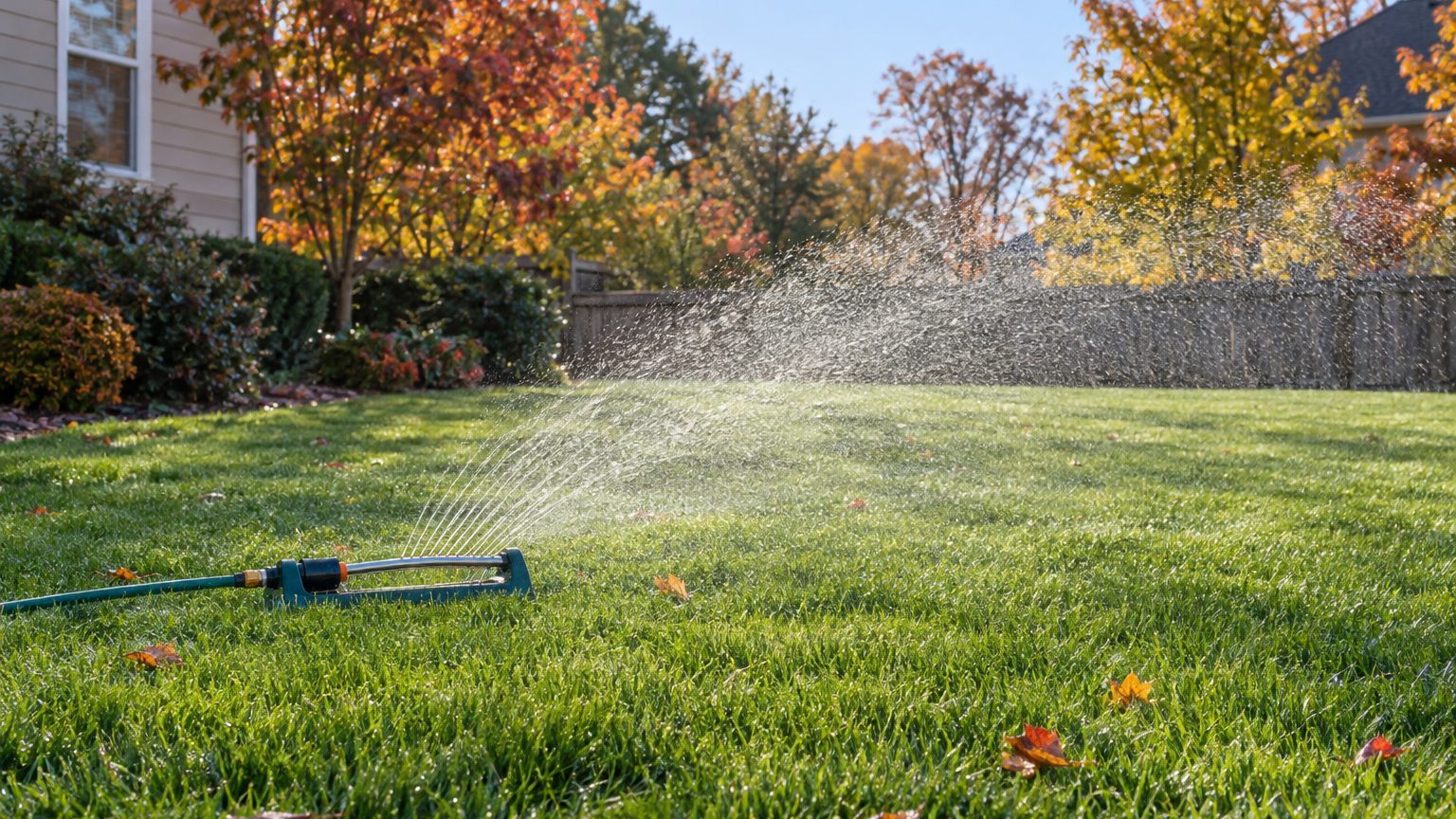
A thirsty lawn often shows stress before it browns: its color shifts, and footprints linger in the blades after you walk across. Watering lawns well comes down to giving the soil a deep drink and then letting it dry a little, rather than relying on routine light sprinkling.
How Much Water Does a Lawn Need?
For an established lawn, the goal is a deep soaking that wets the root zone, followed by a pause that lets the top of the soil dry. How much that takes shifts with the grass type, the season and your region. According to Iowa State University Extension, most lawns need approximately 1 to 1 1/2 inches of water per week.
Hot, dry stretches push that need up, and cool or rainy weather pulls it down. Warm-season and cool-season grasses also drink differently, which the grass-type section covers. The state-by-state table just below gives the watering window for each state, with its months and zone.
From the almanac
When to water, state by state
The months each state's extension calendar marks for this, kept inside that state's own frost-free season. Open your state for the frost dates, the USDA zone and the rest of the year.
Northeast
- ConnecticutJun–AugUSDA 6a-7b
- MaineJun–AugUSDA 3b-6a
- MassachusettsJun–AugUSDA 5a-7b
- New HampshireJun–AugUSDA 3b-6a
- New JerseyJun–AugUSDA 6a-7b
- New YorkJun–AugUSDA 3b-7b
- PennsylvaniaJun–AugUSDA 5a-7b
- Rhode IslandJun–AugUSDA 6a-7b
- VermontJun–AugUSDA 3b-5b
Southeast
- AlabamaMay–SepUSDA 7a-9a
- ArkansasJun–AugUSDA 6b-8a
- DelawareJun–AugUSDA 7a-8a
- FloridaApr–OctUSDA 8b-11b
- GeorgiaMay–SepUSDA 6a-9b
- KentuckyJun–AugUSDA 6a-7a
- LouisianaMay–SepUSDA 8a-10a
- MarylandJun–AugUSDA 5b-8a
- MississippiMay–SepUSDA 7b-9a
- North CarolinaJun–AugUSDA 5b-8b
- South CarolinaMay–SepUSDA 7a-9a
- TennesseeJun–AugUSDA 5b-8a
- VirginiaJun–AugUSDA 5a-8b
- West VirginiaJun–AugUSDA 5a-7a
Midwest
- IllinoisJun–AugUSDA 5a-7b
- IndianaJun–AugUSDA 5b-7a
- IowaJun–AugUSDA 4b-6a
- KansasJun–AugUSDA 5b-7a
- MichiganJun–AugUSDA 4a-6b
- MinnesotaMay–OctUSDA 3a-5a
- MissouriJun–AugUSDA 5b-7b
- NebraskaJun–AugUSDA 4a-5b
- North DakotaMay–SepUSDA 3a-4b
- OhioJun–AugUSDA 5b-6b
- South DakotaMay–SepUSDA 3b-5b
- WisconsinMay–OctUSDA 3b-6a
Southwest
- ArizonaApr–OctUSDA 4b-10b
- New MexicoJun–AugUSDA 4b-9a
- OklahomaJun–AugUSDA 6a-8a
- TexasJun–AugUSDA 6a-10a
West
- AlaskaJun–AugUSDA 1a-8a
- CaliforniaApr–OctUSDA 5a-11a
- ColoradoJun–AugUSDA 3b-7b
- HawaiiAll yearUSDA 9a-13a
- IdahoJun–AugUSDA 3b-7b
- MontanaJun–AugUSDA 3a-6a
- NevadaJun–AugUSDA 4a-10a
- UtahJun–AugUSDA 4a-9a
- WyomingJun–AugUSDA 3a-6a
Pacific Northwest
Canada
- AlbertaMay–SepZone 4a
- British ColumbiaJun–AugZone 9a
- ManitobaMay–SepZone 3b
- New BrunswickJun–AugZone 5a
- Newfoundland and LabradorJun–AugZone 6a
- Northwest TerritoriesJun–AugZone 1b
- Nova ScotiaJun–AugZone 6b
- NunavutJun–AugZone 0a
- OntarioJun–AugZone 7a
- Prince Edward IslandJun–AugZone 5b
- QuebecJun–AugZone 5b
- SaskatchewanMay–SepZone 3a
- YukonJun–AugZone 1b
Sources: state frost facts and Penn State Extension — Lawn Management through the Seasons; Lawn Establishment · UMass Extension — BMPs for Lawn and Landscape Turf, Appendix B (calendar) · Clemson Cooperative Extension, HGIC — Bermudagrass / Zoysiagrass / Centipedegrass / St. Augustinegrass maintenance calendars · University of Tennessee Extension — PB1903 Lawn Maintenance Calendar (2025). A state with no marked month is not shown.
How to Water a Lawn

Good watering follows a rhythm: measure what your sprinkler delivers, soak the soil at the right hour, and adjust to the dirt under your feet. Work in this order.
- Set out rain gauges or shallow cans in the spray pattern, so you learn what your sprinkler really delivers. According to Iowa State University Extension, the suggestion is 2 or 3 rain gauges within the spray pattern. According to Clemson Cooperative Extension, the guidance calls for around five to seven containers, such as tuna cans or jars, spread around the zone.
- In South Carolina, wait for a slight blue-gray cast before watering; in Illinois, lingering footprints also indicate stress. Those signs mean the blades are running low, and watering on a schedule rather than on need wastes water and keeps roots shallow.
- Iowa, South Carolina, and Illinois all favor early-morning watering. In Iowa, 5 a.m. to 9 a.m. is recommended, and in Illinois the advice is to water early, when lawns are normally wet from dew, so the grass dries off during the day and less water is lost to the heat.
- Match the amount to your soil. According to Clemson Cooperative Extension, very sandy soils get 1/3 of an inch of water three times a week, while sandy to loamy soils get around ½ inch twice a week, because sand lets water slip past the roots quickly.
- Split the water on clay or slopes if it starts to run off. In Illinois, heavy clay and sloped ground may need two applications so the water soaks in, though in South Carolina 1 inch is best delivered all in one event on heavy clay.
- In South Carolina, keep a rain gauge handy and watch the forecast, so you supplement rainfall instead of doubling up on it.
A new lawn plays by different rules. According to Iowa State University Extension, a newly sodded lawn is watered once or twice a day for the first 7 to 10 days, then once the turf has been mowed 2 or 3 times, a thorough watering once a week should be adequate. After seeding, keep the upper 1 inch of soil moist with frequent, light applications.
Watering Needs by Grass Type
Roots set the schedule. Grasses with extensive, deep roots can reach water far below the surface and cope with long gaps between drinks, while shallower-rooted grasses need water more often.
That split between cool-season and warm-season grasses is the first thing to know about your own turf before you pick a rhythm.
| Grass | Season | How it waters |
|---|---|---|
| Warm-season grasses | Warm | Extensive roots reach deep, so they want deep, infrequent watering. In California, usually 1 or 2 times a week without runoff. |
| Cool-season grasses | Cool | Roots are not as extensive, so they need water more often. In California, the weekly minutes are divided into about 3 equal irrigations. |
Warm-season grasses are pretty drought-tolerant, and so is tall fescue, as South Carolina advice puts it. Tall fescue’s drought tolerance still does not replace checking the lawn for signs of stress. Darker color is another thirst signal: in Illinois, grasses tend to turn darker as they go under drought stress, so a deepening tone is a cue to water before the lawn browns.
Lawn Watering Mistakes to Avoid
Watering on a Fixed Schedule
Running the sprinklers on a fixed schedule whether or not the lawn needs it keeps roots shallow and wastes water. Watch instead for the slight blue-gray cast or lingering footprints, then give a full soaking.
Watering Late in the Day
Evening watering leaves the blades damp through the night, and much of the early-day advantage is lost. In Iowa, South Carolina, and Illinois, move the cycle to early morning, when dew already sits on the grass and the sun dries it off.
Letting Water Run Off
On heavy clay or a slope, a long single run can send water into the street instead of the soil. In Illinois, splitting the application in two lets it soak in. Check the edges of the lawn during a cycle, and pause the sprinkler when you see a puddle forming.
How Often to Water a Lawn in Your State
Let the lawn set the pace. Slowing growth, footprints that linger, a blue-gray cast and the turf’s season (cool or warm) tell you when a drink is due, and the weather and soil temperature shape how fast that comes around.
- Open your state’s page to find the months when watering matters most where you live.
- Go there before hot weather arrives, then keep a rain gauge on the lawn and water when the grass asks.
Common Questions
Is It Better to Water a Lawn Deeply or Lightly?
Deep watering suits an established lawn, because it pushes roots down into the soil. In Iowa, light, frequent watering is for new seed, where the upper 1 inch of soil needs to stay moist.
Can You Water a Lawn Too Much?
Yes. Water that runs off or pools is wasted, and constant wetness keeps roots shallow. Cut back when the lawn stays green and the soil still feels damp.
How Can You Tell If Your Sprinkler Puts Down Enough Water?
In Iowa, set out rain gauges; in South Carolina, use straight-sided containers across the spray pattern, then check how much water has collected. Adjust your run time until it matches what your soil and grass need.