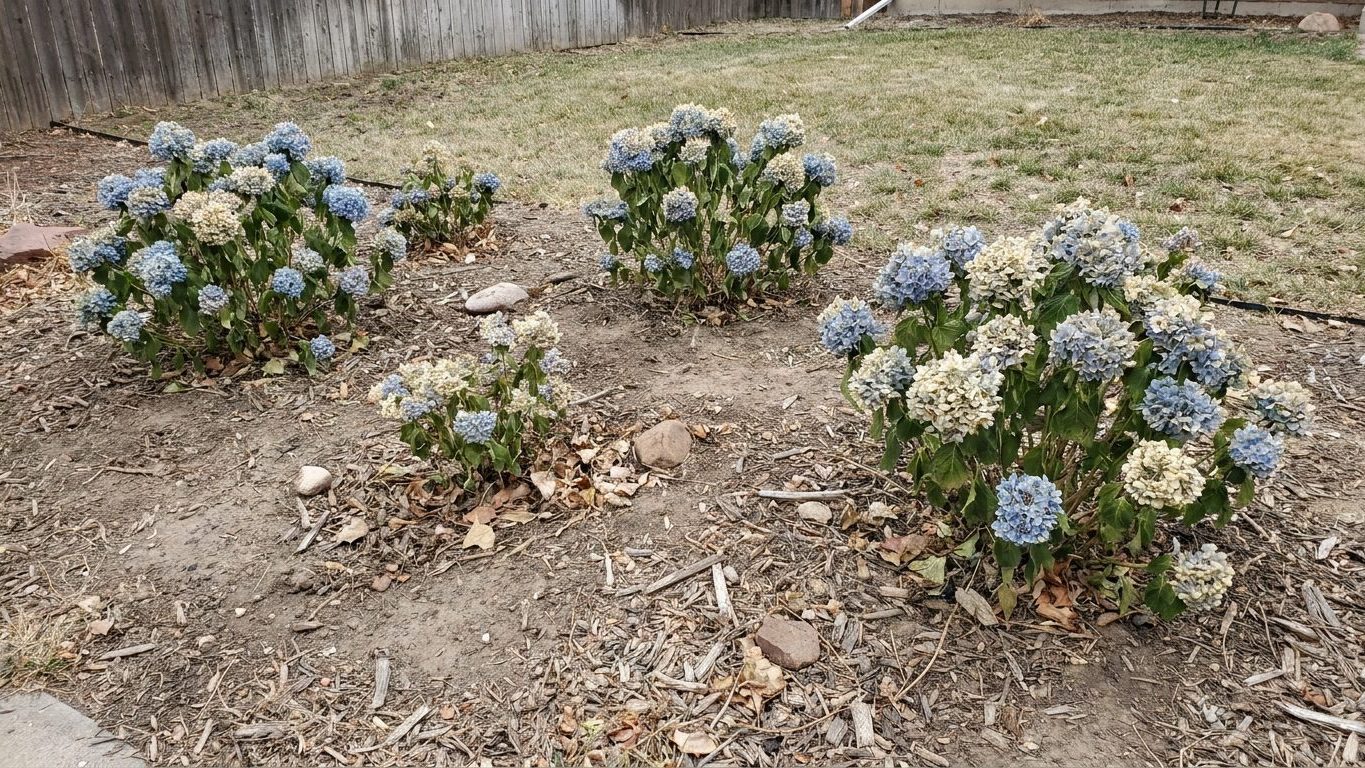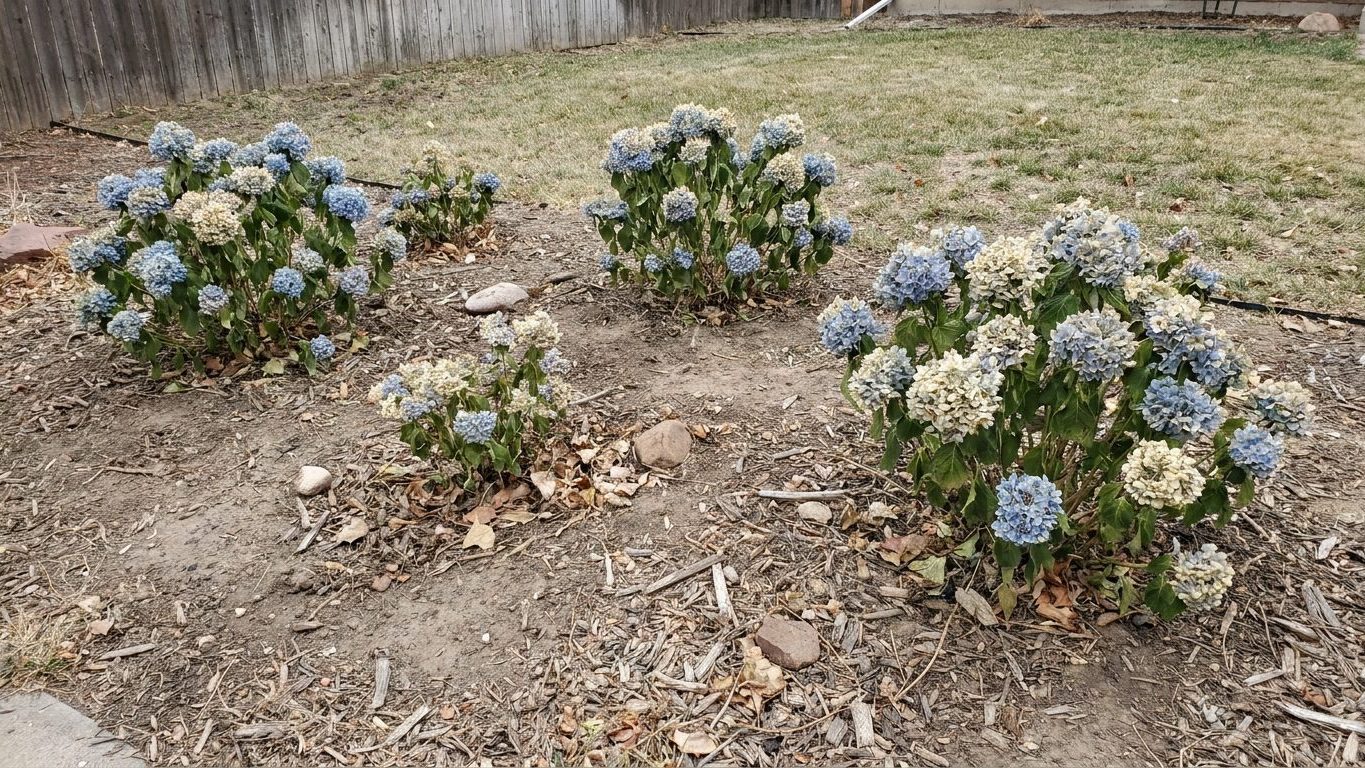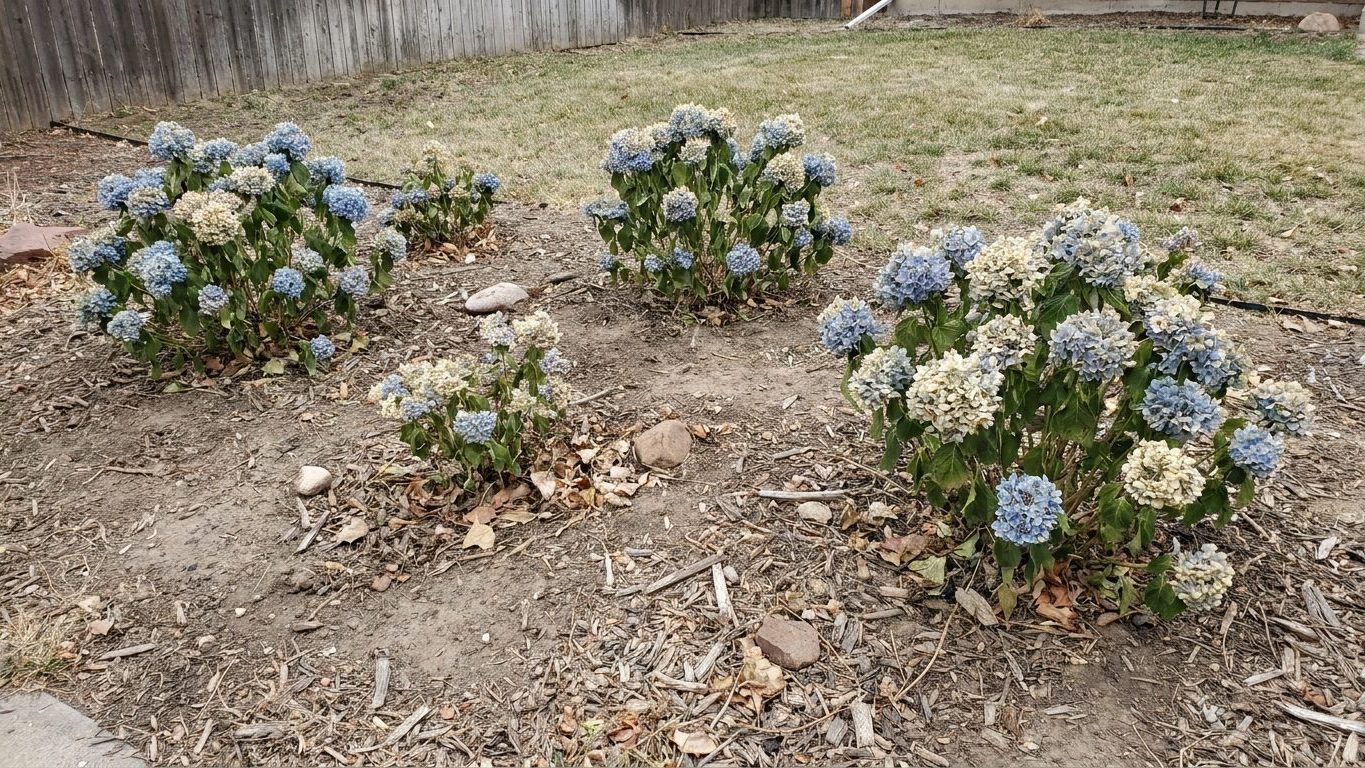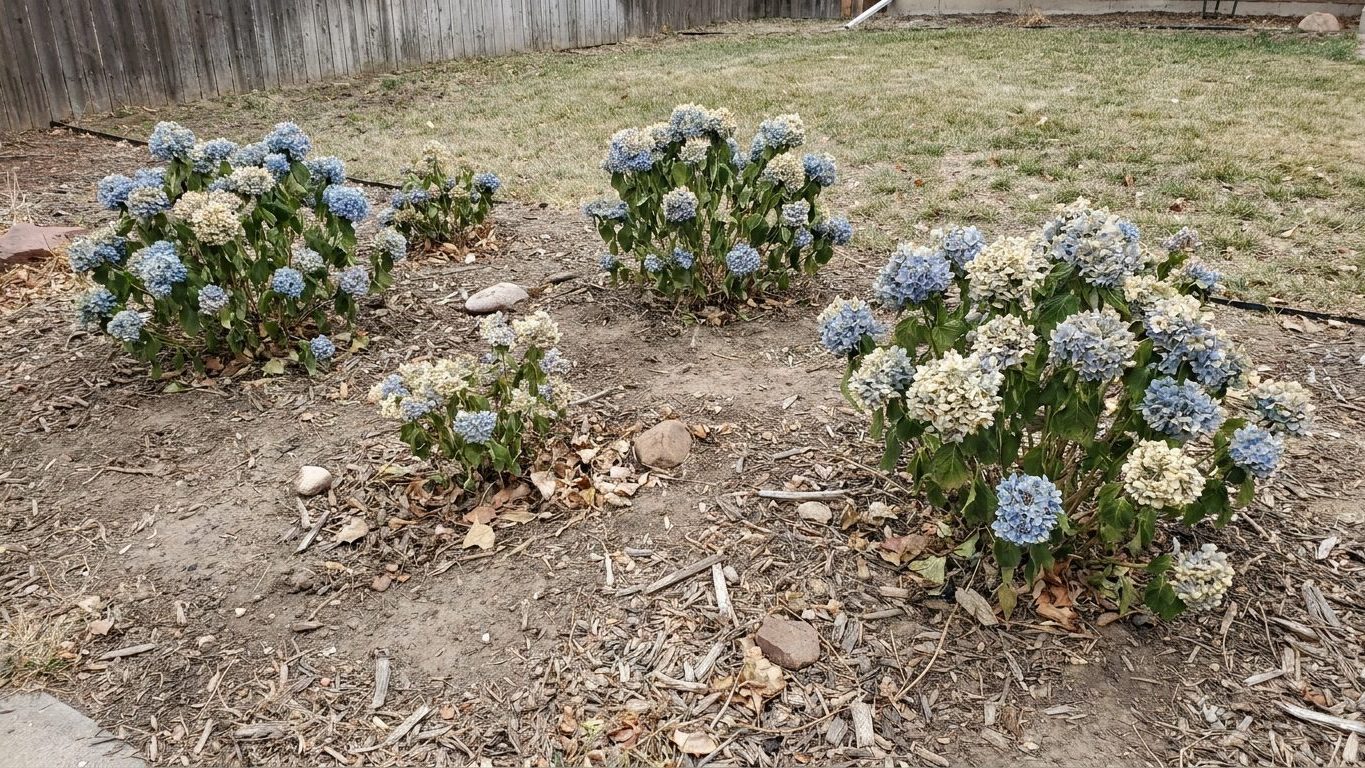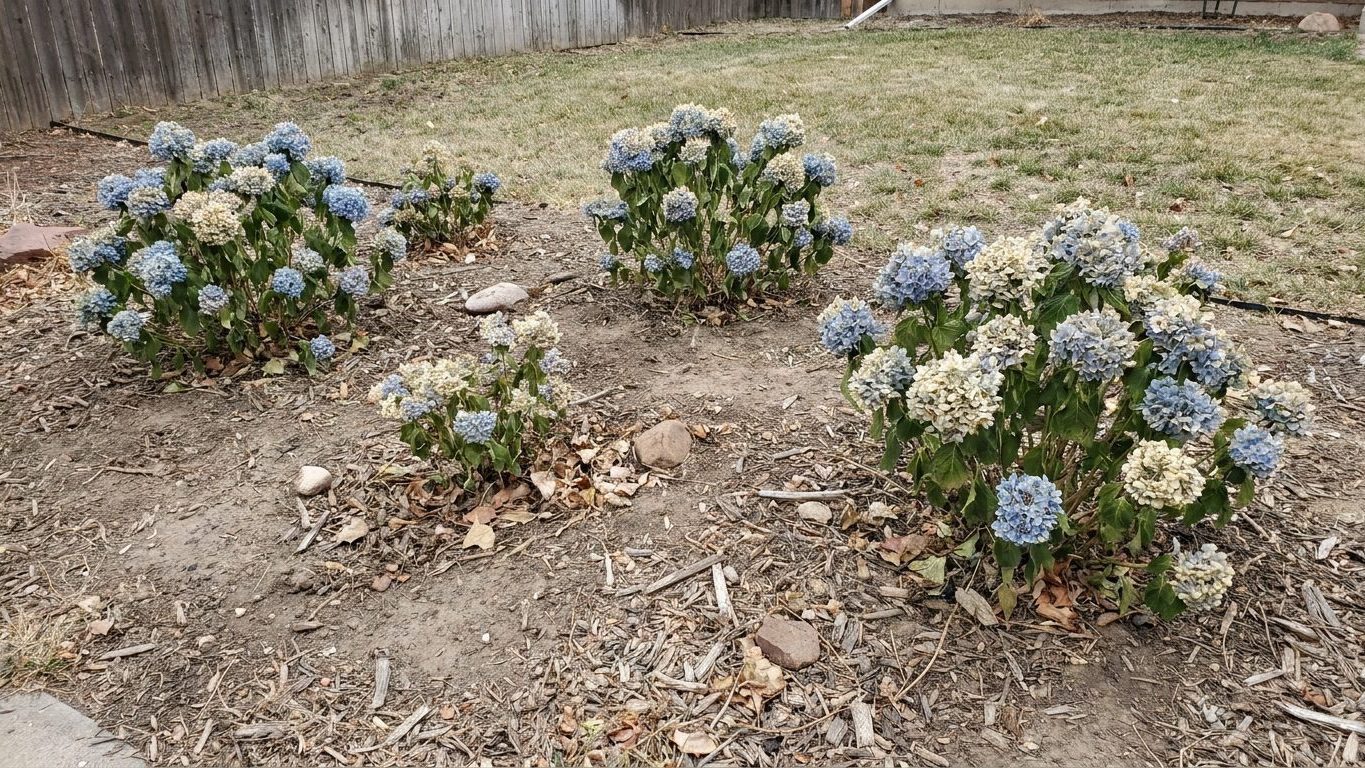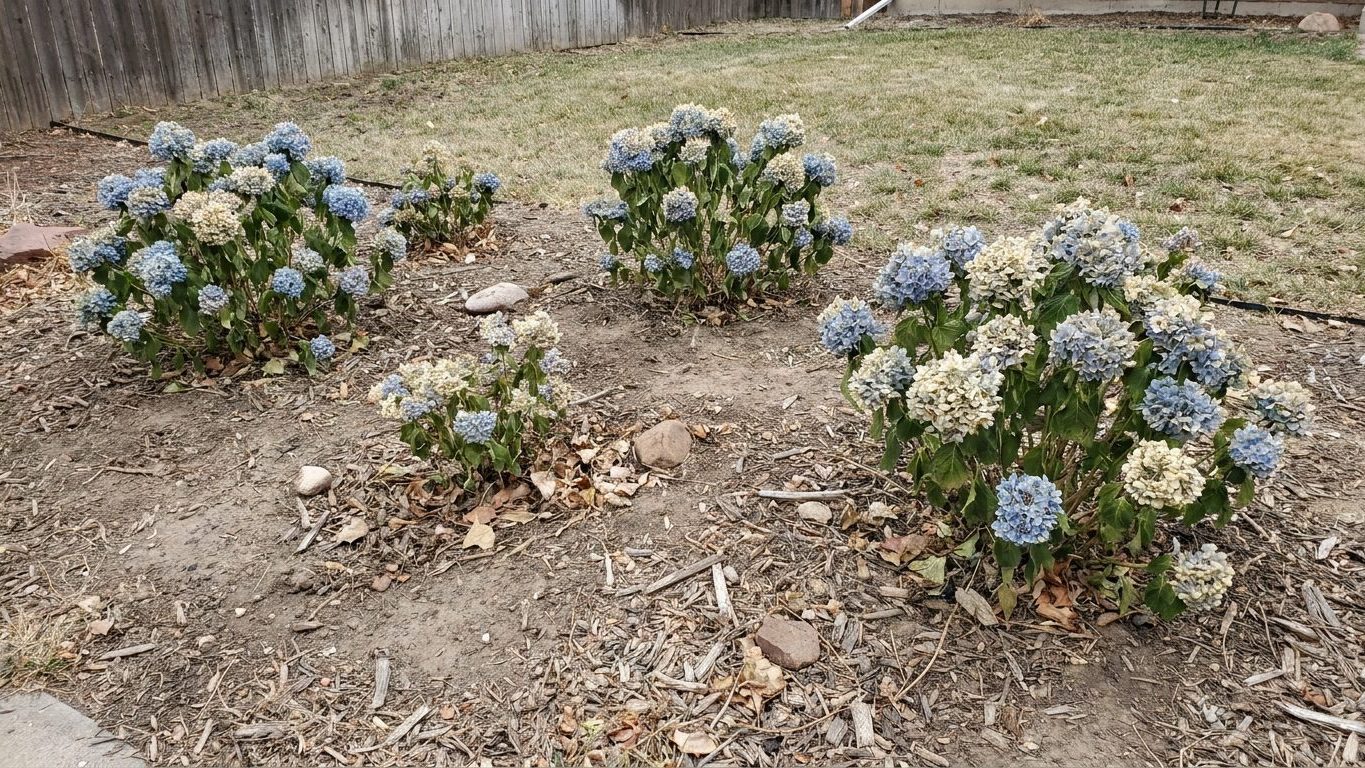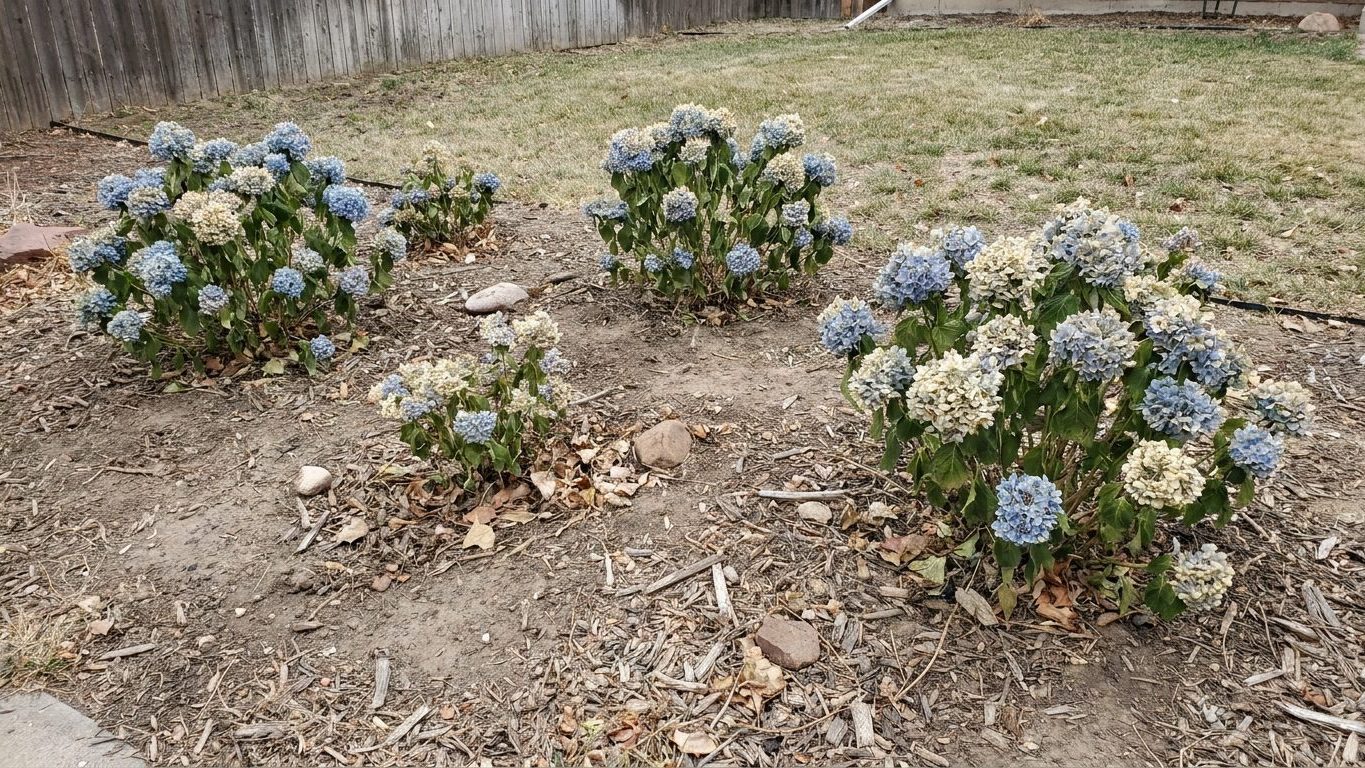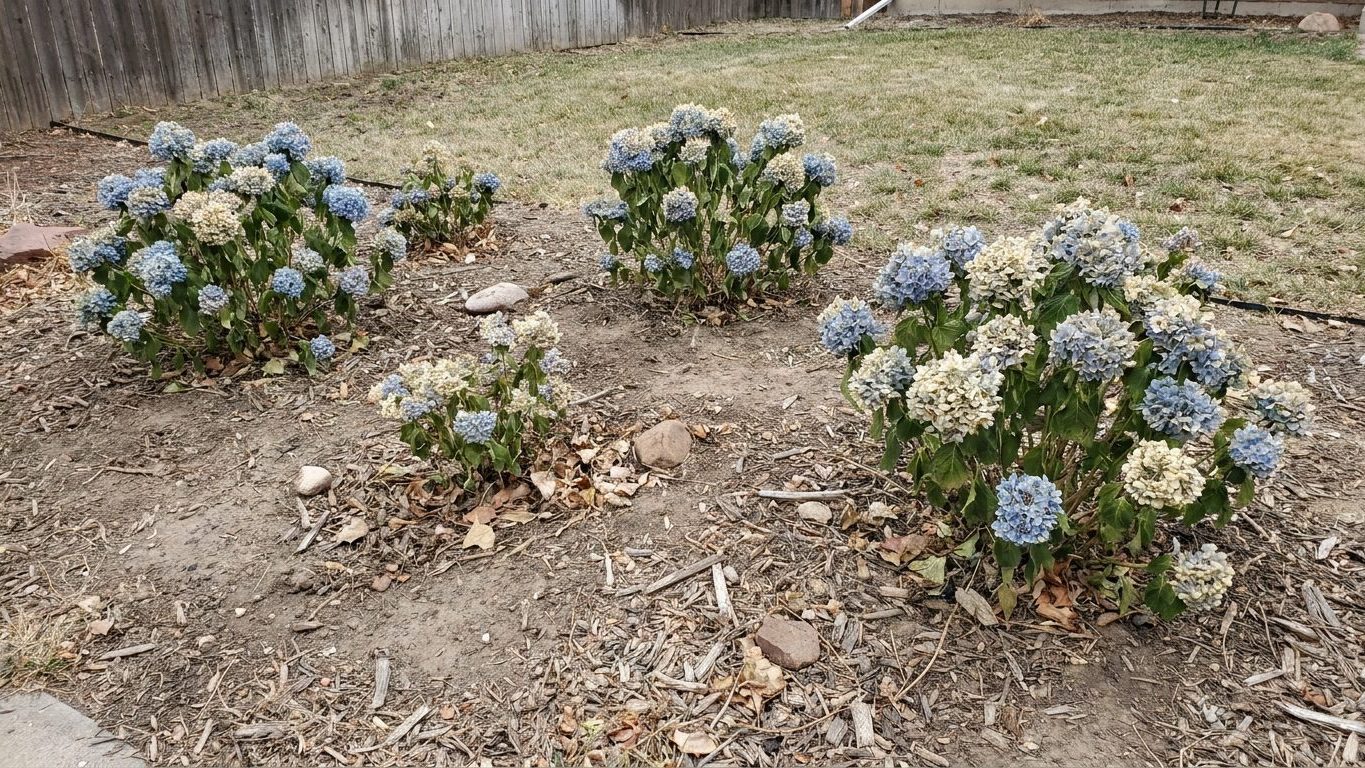
Hydrangeas

Growing Hydrangeas in Minnesota: Dates and Varieties

Growing Hydrangeas in Minnesota: Dates and Varieties

Minnesota’s winters rule out most bigleaf hydrangeas but reward panicle and smooth types with reliable summer blooms year after year. Plant in spring once the ground thaws or in late summer before frost returns, prune bigleaf wood right after it flowers, and feed on a schedule matched to the state’s short growing season. The details below cover exactly when and which.

Hydrangeas Care Calendar for Minnesota

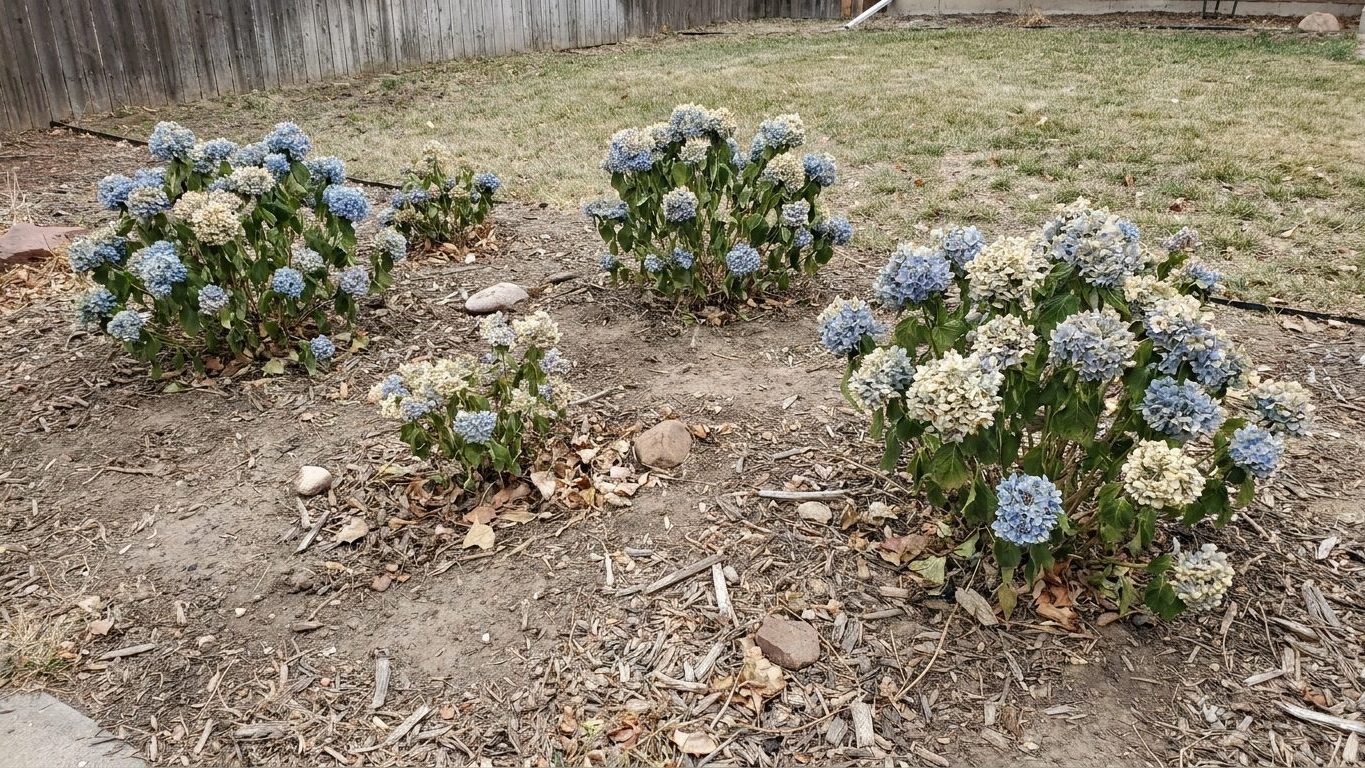
Hydrangeas in a Minnesota home landscape

NOAA NCEI 1991-2020 Climate Normals put the last spring freeze in Minneapolis-St Paul at April 17 to April 30 and the first fall freeze at October 11 to October 23, with the state spanning USDA zone 3a to 5a.

  • Dormancy: the one safe window to move a plant, roots undisturbed, falls in late winter before new growth pushes.
  • Planting: set new shrubs in April, May, August or September, once the soil has thawed and warmed enough to work.
  • Bud protection: shield tender new growth through the last spring freeze window of April 17 to April 30, since a late cold snap can still take the season’s first flush.
  • First feeding: fertilize in March, before the plant breaks dormancy.
  • Bloom-season feeding: feed again in May and July, matching the plant’s two pushes of active growth.
  • Pruning bigleaf: cut spent bigleaf wood in June or July, right after the flowers fade, never once fall arrives.
  • Fall wind-down: stop feeding and let new wood harden before the first fall freeze of October 11 to October 23.

That six-month rhythm, tied to two frost dates rather than a single mark on the calendar, decides more for a Minnesota hydrangea than any other single factor.

Best Hydrangeas for Minnesota

The USDA Plant Hardiness Zone Map puts Minnesota at zone 3a to 5a, colder than most states in this guide. That single fact eliminates more hydrangea types than it allows, mostly by killing overwintering flower buds rather than the plant itself.

Whether a shrub blooms again next summer comes down to where it sets those buds, on last year’s stems or on the current season’s new growth. New-wood bloomers shrug off a hard winter here.

Kind Verdict here Why
Panicle Reliable statewide Blooms on new wood, so winterkill at the state’s cold edge doesn’t touch the flower buds.
Smooth (Annabelle type) Reliable statewide Also flowers on new wood and rebounds from a hard dieback every spring.
Bigleaf Root-hardy, blooms unreliable Sets buds on last year’s wood, which winter lows across zone 3a to 5a often kill before spring.
Oakleaf Marginal, sheltered spots only Suits the milder edge of the state’s zone range but loses buds in an exposed yard.
Climbing Slow, mostly foliage Needs years of shelter to reach flowering wood in a climate this short.

Mountain hydrangea and other regional selections are uncommon enough here that they belong on the varieties page rather than this table. For most yards, the practical choice sits between panicle and smooth.

When to Plant, Prune and Feed Hydrangeas in Minnesota

NOAA NCEI 1991-2020 Climate Normals set the Minneapolis-St Paul freeze windows at April 17 to April 30 in spring and October 11 to October 23 in fall, and those two brackets anchor every date below.

Planting, pruning and feeding don’t share one clock. Each follows its own trigger, tied to root growth, bud set or frost risk rather than a fixed month.

Task Window here Counted from
Plant April, May, August, September Spring slots wait out the freeze risk, fall slots leave time to root before frost returns.
Prune bigleaf June, July Right after the spent flowers fade, ahead of next year’s buds forming on that same wood.
Feed March, May, July Once before growth starts, then twice more through the active growing months.

A shrub planted in September still needs several weeks of root growth before that October freeze window closes, which is why the earlier fall slot is the safer bet in a short-season state like this one.

Hydrangeas Problems in Minnesota and What Causes Them

No flowers despite a healthy plant

Plant shows lush green foliage, full and bushy in shape, with no buds or blooms anywhere along the stems; stem tips are smooth and rounded, lacking th

A bigleaf hydrangea that leafs out fine but skips flowering usually lost its buds over winter, either to the cold itself across zone 3a to 5a or to a late freeze after they swelled. Switching to a new-wood bloomer sidesteps the problem entirely.

New growth blackened in spring

Young shoots and leaf tips are shriveled and charred-looking, turning from pale green to dark brown-black, with a soft, water-soaked, wilted texture;

Tender shoots that emerge early and then turn black and limp got caught by a freeze still inside the April 17 to April 30 window. The fix is patience, not protection: hold off uncovering plants until that window has fully passed.

Blooms cut short in fall

Flower buds are small, tight, and underdeveloped, tinged with brown at the petal edges instead of opening fully; some buds appear dried and papery, sh

Flowers that fade fast or brown early are often just running out of season, since the first freeze can arrive as soon as October 11. Stopping feeding after July, per the calendar above, lets wood harden before that date instead of pushing soft late growth.

Minnesota North to South: How the Dates Shift

The state-level frost dates above describe Minneapolis-St Paul, and the rest of Minnesota shifts from that mild southern reading in a fairly predictable direction.

  • The Twin Cities and the south (the mild end of zone 5a): carries the latest last spring freeze relief and the widest practical planting window in the state.
  • Central Minnesota (zone 4a to 4b): sits between the two extremes, with a season noticeably shorter than the metro but gentler than the northern counties.
  • The North and the Arrowhead (zone 3a, the coldest end): runs two to three weeks tighter at both ends of the season, per the caution built into the frost data, which trims the safe planting and pruning windows accordingly.

Anyone gardening outside the metro should treat the dates on this page as a starting point and lean on the tighter northern range if the county sits near the Canadian border.

Minnesota Extension Offices and County Contacts

Extension research runs county by county, and the University of Minnesota Extension is the state’s land-grant service for exactly this kind of local answer.

  • University of Minnesota Extension: extension.umn.edu connects to the county office nearest you for site-specific advice.
  • Which ones hold up here: a deeper look at bloom-on-old-wood versus bloom-on-new-wood varieties for this state.
  • What goes wrong here: the pests and diseases that show up on Minnesota hydrangeas beyond winterkill.

September still falls inside the planting window here, so a new shrub going in now has just enough time to root before the ground closes for winter.

Common questions

Do hydrangeas survive Minnesota winters?

Panicle and smooth hydrangeas survive reliably across the state’s zone 3a to 5a range because they rebuild their flowering wood each spring. Bigleaf hydrangeas usually survive as a plant but often lose the flower buds themselves.

When is it safe to plant hydrangeas in Minnesota?

April, May, August and September are the state’s planting months, with spring planting timed after the last freeze clears around April 17 to April 30 and fall planting left early enough to root before mid-October.

Why didn’t my hydrangea bloom this year in Minnesota?

The most common cause is a bigleaf variety that lost its old-wood buds to winter cold or a late spring freeze. Pruning at the wrong time in fall can also remove next year’s buds before they get the chance to open.
Growing Hydrangeas in Missouri: Dates and Varieties

Growing Hydrangeas in Missouri: Dates and Varieties

Yes, hydrangeas grow well across most of Missouri, but which type and when you plant it depends on where you sit inside the state’s 5b to 7b hardiness range. Kansas City’s last spring freeze runs April 6 to April 20, the first fall freeze lands October 18 to October 29, and those two dates set every planting, feeding, and pruning window that follows.

Hydrangeas Care Calendar for Missouri

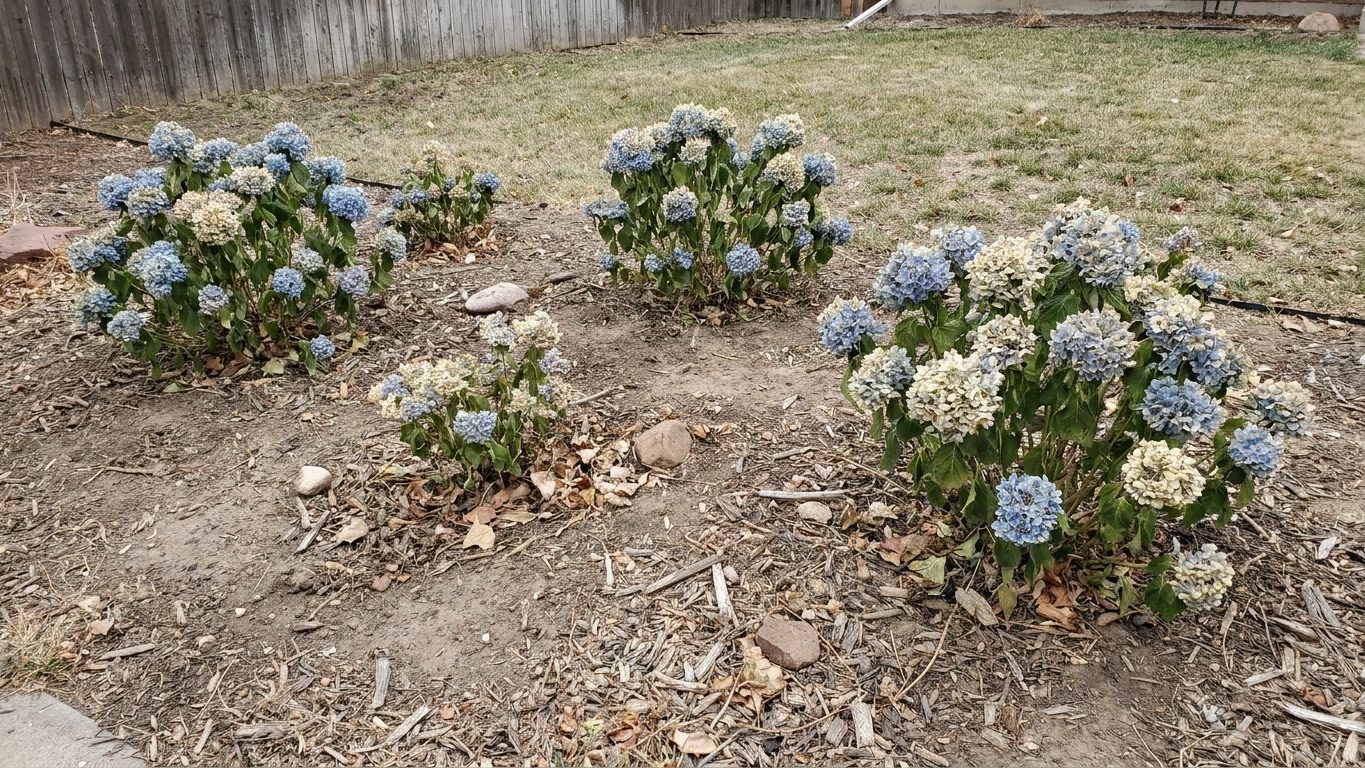
Hydrangeas in a Missouri home landscape

Kansas City’s last spring freeze runs April 6 to April 20, and NOAA NCEI 1991-2020 Climate Normals put the first fall freeze at October 18 to October 29, with the whole state falling across USDA zones 5b to 7b.

  • Dormancy: from mid-winter into early spring is the one safe window to move a rooted hydrangea without disturbing its roots.
  • Planting: set new shrubs in April or May once the ground has warmed past that spring freeze window, or wait for August and September when the second planting stretch opens.
  • Feeding: the first round goes down in March, a second in May, and a third in July, spacing nutrients across the season instead of dumping them all at once.
  • Leafing out: new growth pushes within a couple of weeks of the last freeze, and buds set on whatever stems made it through winter.
  • Pruning bigleaf: June and July are the only pruning months here, right after bloom, so next year’s flower buds have time to form before frost.
  • Watering: Missouri summers turn humid and hot fast, so a deep soak twice a week beats a daily sprinkle.
  • Fall mulch: lay down mulch before the October freeze window lands, insulating roots and buried buds through winter.

Follow that order and a hydrangea planted this spring should carry blooms into fall without a single freeze catching it off guard.

Best Hydrangeas for Missouri

The USDA Plant Hardiness Zone Map puts Missouri at 5b to 7b, a wide enough span that a shrub thriving in the state’s warmer corner can struggle in the northern counties.

That range matters most for old-wood bloomers, whose flower buds sit exposed on last year’s stems all winter and can freeze out before a single bloom opens.

Kind Verdict here Why
Panicle Reliable statewide Blooms on new wood, so a hard winter doesn’t cost it flowers
Smooth (Annabelle type) Reliable statewide New-wood bloomer, tolerant of the state’s heavy clay soils
Oakleaf Best in southern counties Prefers the milder end of the range, less forgiving up north
Bigleaf Risky north, workable south Old-wood buds can freeze out in a hard winter
Climbing Slow but sturdy Takes several seasons to bloom, tolerant across the zone range

Mountain hydrangea and other lesser-planted kinds get their own page, since siting and care details run longer than a single row can hold.

When to Plant, Prune and Feed Hydrangeas in Missouri

Missouri’s calendar splits into three windows that matter for hydrangeas, each one anchored to Kansas City’s frost dates rather than a fixed date on paper.

Planting happens twice, once in spring after the ground warms and again in late summer before the first freeze locks in, giving new roots two chances to establish.

Task Window here Counted from
Plant April, May, August, September spring plantings follow soon after the last freeze, fall plantings land well before the first one
Prune bigleaf June, July the weeks right after bloom fades, ahead of next year’s bud set
Feed March, May, July spread from first green growth through mid-summer, before fall dormancy

The month-by-month rundown, including watering and mulch timing, lives on the calendar page. These three windows are the ones that shift a bloom from surviving to failing.

Hydrangeas Problems in Missouri and What Causes Them

No blooms on an otherwise healthy bigleaf

A rounded, bushy shrub with abundant large, glossy, deep-green heart-shaped leaves in full mature size, but the stems end in bare, leafless tips or sm

Bigleaf hydrangeas set next year’s flower buds on old wood by late summer, and those exposed buds ride out winter with no leaf cover. A freeze that lands after the spring window closes, once buds have swollen, kills the flower but leaves the plant standing. Reblooming types sidestep this, and the which-ones page covers the trade-off.

Leaves scorched along the southern edge

Broad, dark-green leaves with crisp, tan-to-brown, papery margins running along one side (the side that faced the sun), the discoloration starting at

Full afternoon sun paired with Missouri’s summer humidity scorches leaf edges fast, especially in the state’s warmer counties. The fix is siting new shrubs where they catch morning sun and afternoon shade, plus a deep soak twice a week instead of a daily sprinkle. The what-goes-wrong page has the full pest and disease list.

Slow rebound after a hard winter

A woody shrub with numerous thin, gray-brown, leafless stems of uneven height, some tipped with blackened or shriveled dead wood, while only the lower

Counties sitting in the state’s colder pockets sometimes see stems die back further than usual after a hard winter. Cutting too early risks removing wood that’s still alive underneath the bark. Scratch a stem and look for green before pruning, and check the calendar page for the exact window.

Missouri North to South: How the Dates Shift

Frost dates and hardiness both drift across Missouri, and the shift runs mostly north to south rather than east to west.

  • Northern Missouri: the coldest pocket in the state, where the last spring freeze lingers longest and bigleaf hydrangeas are the least reliable.
  • Kansas City and the western edge: close to the reference station used for the frost dates on this page, so the windows above apply almost as written.
  • St. Louis and the east: similar timing to Kansas City, with slightly milder stretches near the river.
  • The Ozarks and the Bootheel: the mildest corner of the state, where the last freeze arrives earliest and hydrangeas leaf out sooner.

Anyone gardening outside the Kansas City area should treat these dates as a starting point and nudge them earlier heading south, later heading north.

Missouri Extension Offices and County Contacts

Missouri’s statewide zone range of 5b to 7b is a starting point, not a verdict for your yard. The county extension office narrows that down to your soil and microclimate.

  • Your state page: the frost dates and pruning window for where you live.
  • Which ones hold up here: the type-by-type verdict for Missouri conditions.
  • Missouri extension service: Missouri Extension connects to the county office nearest you, worth a call before you plant this September or prune next July.

Common questions

Do hydrangeas need winter protection in Missouri?

Old-wood bloomers like bigleaf benefit from a thick layer of mulch and a burlap wrap in the state’s colder northern counties, where exposed buds face the harshest winters. New-wood bloomers like panicle and smooth hydrangeas generally shrug off winter without extra cover.

When is the safest time to plant hydrangeas in Missouri?

April and May, once soil has warmed past the last spring freeze window, or August and September ahead of the first fall freeze, give roots the longest stretch to settle before extreme temperatures arrive.

Can every part of Missouri grow the same hydrangea?

Not quite. The state’s 5b to 7b hardiness range means a shrub that thrives in the milder south can struggle in the colder northern counties, so it pays to check a local extension office before committing to an old-wood bloomer.

Growing Hydrangeas in Hawaii: Dates and Varieties

Growing Hydrangeas in Hawaii: Dates and Varieties

In lowland Hawaii, hydrangeas never meet a frost date because none exists here, so the state’s growing calendar runs on rainfall and elevation instead. USDA places the islands in zones 9a through 13a. Plant in January, February, October or November, feed in March, May and July, and prune bigleaf types in June and July.

Hydrangeas Care Calendar for Hawaii

Hydrangeas in a Hawaii home landscape

NOAA NCEI 1991-2020 Climate Normals list zero days at or below 32°F for the Hilo station behind these numbers, and every freeze percentile comes back not-computable because frost simply never reaches the gardens people plant.

  • January and February planting: the first of two windows in the state’s calendar, timed to steady lowland rain rather than any thaw.
  • March feeding: the first of three fertilizing months, feeding new spring growth before the heat builds.
  • May feeding: a second round, feeding while flower buds are forming for the first summer bloom.
  • June and July pruning: the one cut bigleaf types get all year, done right after the earliest flowers fade.
  • July feeding: the last of the three feeding months, closing out the summer push.
  • October and November planting: the second planting window, set ahead of the wetter winter months.

Elevation and rainfall drive more of this than the calendar does, so treat these months as a starting point and watch your own slope and rain.

Best Hydrangeas for Hawaii

USDA Plant Hardiness Zone Map puts the islands at zone 9a through 13a, one of the widest ranges of any state, which matters more for hydrangeas than any frost date since frost never factors in here.

Most hydrangea types were bred for a cold winter they’ll never get in lowland Hawaii, so the real question isn’t cold hardiness but how much winter chill a variety needs to set flower buds.

Kind Verdict here Why
Bigleaf Common but uneven bloomer Needs some winter chill for buds, which lowland gardens barely get
Panicle Better at higher elevation Flowers on new wood, less dependent on a cold winter to bloom
Smooth (Annabelle type) Reliable low-elevation choice Also blooms on new wood each year, so a mild winter doesn’t skip a season
Climbing Good on shaded, wet walls Tolerates the humidity and rain of windward sites well

Oakleaf and mountain hydrangeas are the other kinds, and they lean on a seasonal cold snap lowland Hawaii doesn’t supply, so they stay niche choices reserved for high-elevation gardens.

When to Plant, Prune and Feed Hydrangeas in Hawaii

There’s no frost to count backward or forward from here, so the state’s three key windows follow rainfall and the growing season instead of any thaw date.

Plant twice a year, feed three times, and give bigleaf types a single pruning pass once their first flowers are spent.

Task Window here Counted from
Plant January-February and October-November The two steadier rain windows in the state’s calendar, not a frost date
Fertilize March, May, July Roughly two months apart through the active growing season
Prune bigleaf June-July Right after the first flush of bloom fades

Smooth and panicle types skip the pruning debate entirely since they bloom on new wood and can be cut back hard in late winter without losing a season of flowers.

Hydrangeas Problems in Hawaii and What Causes Them

No flowers on an otherwise healthy bigleaf

Lush mound of large, dark-green, heart-shaped leaves with no discoloration or wilting, but bare of blooms — stems end in small, tight, brownish-green

Lowland Hawaii rarely delivers the stretch of cool nights bigleaf hydrangeas use to set next year’s buds, so a shrub can leaf out fine and still skip bloom. Switch to a panicle or smooth type instead, or move the plant upslope where nights run cooler.

Leaves scorched on the dry, leeward side

Leaves on one side of the shrub show broad tan-to-brown papery patches starting at the margins and tips, edges curling upward and crisping; the discol

Kona, Waianae and similar leeward coasts get intense sun and far less rain than the windward side of the same island, and hydrangea leaves burn fast in that combination. Afternoon shade and deep, regular watering fix most of it.

Roots sitting wet on windward slopes

Exposed root zone appears dark, blackened, and mushy, with a slimy or waterlogged sheen; fine feeder roots are sparse, discolored gray-brown, and slou

Windward valleys can see rain on most days of the year, and hydrangea roots left in soggy, poorly drained soil will rot before they ever wilt from thirst. Raised beds or a slope that sheds water solve this before it starts.

Hawaii North to South: How the Dates Shift

Hawaii doesn’t run north to south so much as low to high and wet to dry, and that split matters more here than in almost any other state.

  • Windward coasts and valleys (Hilo, Hamakua, windward Oahu): rain falls most days of the year, so drainage matters more than watering.
  • Leeward and dry coasts (Kona, Waianae, Kihei): strong sun and light rainfall call for afternoon shade and a regular hose.
  • Upland and high-elevation gardens (Volcano, Kula, Waimea): cooler nights come closest to the winter chill bigleaf types were bred for.

Your county office and your own hillside will tell you more than any statewide date, and the Hawaii page lays out the full zone range, while the Manitoba hydrangea guide shows what a true frost calendar looks like by contrast.

Hawaii Extension Offices and County Contacts

USDA NIFA lists CTAHR as the land-grant extension service for the islands, and its county offices know your soil and your slope better than any statewide zone number can.

Common questions

Do hydrangeas need a winter freeze to bloom in Hawaii?

Bigleaf types bloom best after some winter chill, which lowland Hawaii rarely provides, so panicle and smooth types that flower on new wood are the more reliable bloomers at low elevation.

What USDA zone is Hawaii for hydrangeas?

The USDA Plant Hardiness Zone Map places the islands from zone 9a up to zone 13a, one of the widest ranges in the country, so a plant that struggles on the coast can thrive a few thousand feet up the same mountain.

When should I plant hydrangeas in Hawaii?

The state’s calendar sets two windows, January and February, then October and November, both timed to steadier rainfall rather than any thaw since frost never factors into the islands’ growing season.

Growing Hydrangeas in Illinois: Dates and Varieties

Growing Hydrangeas in Illinois: Dates and Varieties

Hydrangeas grow across Illinois, but the window is tighter than gardeners moving from warmer states expect. Chicago’s last spring frost falls April 11 to April 22, the first fall frost arrives October 24 to November 3, and the state spans USDA zones 5a to 7b. That gap decides planting dates, pruning cuts, and which kind of hydrangea actually blooms here.

Hydrangeas Care Calendar for Illinois

Hydrangeas in a Illinois home landscape

Chicago’s frost record, tracked by NOAA NCEI 1991-2020 Climate Normals, runs from a last spring freeze of April 11 to April 22 to a first fall freeze of October 24 to November 3, and that stretch is what a hydrangea planted in Illinois has to work with.

  • Dormancy: the one safe window to move a plant, roots undisturbed, runs from the first fall freeze through late winter.
  • Planting: set new hydrangeas in the ground two to three weeks after the last spring frost, once the soil has warmed past bare mud.
  • Leaf-out: buds break within a month of that planting window, and this is when an old-wood bloomer can still get caught by a late freeze.
  • Bud set: by early summer, panicle and smooth types are already pushing flower buds on this year’s growth, safe from any spring frost.
  • Peak bloom and watering: through the hottest weeks before the first fall frost, a deep weekly soak matters more than any fertilizer.
  • Pruning: cut new-wood types back in late winter, before growth starts, well ahead of the April frost window.
  • Fall prep: stop feeding six to eight weeks before the first fall frost so new growth has time to harden off.

Miss the planting window by a few weeks and the shrub usually survives anyway, it just spends its first year catching up instead of blooming.

Best Hydrangeas for Illinois

Illinois spans USDA zones 5a to 7b, and Chicago’s frost window, from NOAA NCEI 1991-2020 Climate Normals, closes the growing season by early November most years. That combination favors hydrangeas that set flower buds fresh each spring rather than ones that need last year’s stems to survive.

Panicle and smooth hydrangeas do exactly that, which is why they show up on so many Illinois yards. Bigleaf and oakleaf can work too, mostly toward the state’s milder southern counties, but they need real winter protection farther north.

Kind Flowers on Verdict here Why
Panicle New wood Reliable statewide Buds form after the last frost, so a late freeze cannot erase the season’s flowers.
Smooth New wood Reliable statewide Same new-wood habit, and it tolerates the state’s clay soils well.
Bigleaf Mostly old wood Risky north of I-80 Winter buds can die back in a hard Chicago-area winter, skipping bloom entirely.
Oakleaf Old wood Better toward the south Needs the milder winters found closer to the state’s zone 7b end.

Climbing hydrangea and reblooming bigleaf cultivars are the other kinds worth knowing, and they get their own page since they lean more on microclimate than on the state number alone.

When to Plant, Prune and Feed Hydrangeas in Illinois

Three dates carry more weight than the other fifty weeks combined, and all three trace back to Chicago’s frost window from NOAA NCEI 1991-2020 Climate Normals.

Planting waits for soil to warm, pruning happens before growth starts, and feeding has to stop early enough for new wood to toughen up before the cold returns.

Task Window here Counted from
Planting Two to three weeks after last frost, so roughly late April into May Last spring frost, April 11 to April 22
Pruning new-wood types Late winter, before buds swell, ahead of the April thaw Last spring frost
Last feeding Six to eight weeks before first frost, so by early to mid September First fall frost, October 24 to November 3

Old-wood pruning follows a different, narrower rule, right after bloom instead of late winter, and that gets its own explanation on the calendar page for this state.

Hydrangeas Problems in Illinois and What Causes Them

No flowers after a mild-looking winter

Bare, leafy stems with no flower buds at all; wood may show shrivelled, brown, dried-up flower buds no bigger than a grain of rice, shriveled and pape

An old-wood variety set its buds the previous fall, and a hard freeze anywhere in that April 11 to April 22 window can kill them before they ever open, leaving healthy green leaves and no blooms.

Buds killed by a late frost

Small, swollen buds turned brown or blackened at the tips, soft and mushy or dried and shrunken, sometimes with a translucent, water-soaked look, stil

New growth pushes early during a warm stretch, then a frost lands inside Chicago’s normal spring range and burns the tender tips, a risk that new-wood types mostly avoid by budding later in the season.

Wilting in heavy clay soil

Leaves and stems drooping and limp despite damp soil, foliage dull green to yellowish, sometimes with soil visibly waterlogged, cracked, and grey-brow

Illinois clay holds water long after rain, and roots sitting wet through a cool spring rot before summer heat even arrives, a problem solved more by raised planting than by extra watering.

Illinois North to South: How the Dates Shift

The frost numbers above come from one Chicago-area station, and the rest of the state does not match them exactly.

  • Northern Illinois (Chicago, Rockford, DeKalb): closest to the reference station, with the coldest end of the state’s zone range and the shortest safe planting stretch.
  • Central Illinois (Springfield, Bloomington, Peoria): frost typically breaks a little earlier in spring and holds off a little later in fall than the northern counties.
  • Southern Illinois (Carbondale, Cairo, Marion): closest to zone 7b, with winters mild enough that bigleaf and oakleaf hydrangeas have a fair shot at keeping their old-wood buds alive.

Anyone gardening outside the Chicago area should treat these numbers as a starting point and check the frost dates for their own county before setting a calendar.

Illinois Extension Offices and County Contacts

The zone range and frost dates above cover the whole state, but a county office knows the ground down the road.

  • University of Illinois Extension, listed by USDA NIFA’s Land-Grant University Extension directory, connects to county offices with local soil and frost advice.
  • Your county office: the closest source for a frost date specific to your yard rather than the airport station.
  • This month’s task: check the calendar section above and match it to whatever is dormant, budding, or blooming outside right now.

Common questions

Can hydrangeas survive an Illinois winter without protection?

Panicle and smooth types generally do, since they rebuild their flowering wood every spring. Bigleaf and oakleaf types are the ones that need mulch or a protected spot, especially north of the state’s midsection.

What is the best month to plant hydrangeas in Illinois?

Aim for two to three weeks after the last spring frost, which lands roughly in late April to May depending on how close a yard sits to the Chicago reference station or farther south.

Why did my hydrangea leaf out but never flower?

The most common cause in Illinois is a spring freeze killing buds that formed on old wood the previous fall. Switching to a new-wood variety like panicle or smooth usually solves it for good.

Growing Hydrangeas in Arkansas: Dates and Varieties

Growing Hydrangeas in Arkansas: Dates and Varieties

Hydrangeas do fine across most of Arkansas as long as the variety matches the state’s freeze pattern. Panicle and smooth types bloom reliably almost everywhere, while bigleaf needs a sheltered spot and a little luck with late frost. The right pick depends less on the calendar month than on how each shrub sets its buds.

Hydrangeas Care Calendar for Arkansas

Hydrangeas in a Arkansas home landscape

In Little Rock, the last spring freeze lands between March 12 and March 28 and the first fall freeze arrives between November 7 and November 20, according to NOAA NCEI 1991-2020 Climate Normals, and that gap sets every hydrangea task on the calendar.

  • Dormancy: from the first fall freeze through late winter, roots sit still and this is the one safe window to dig up or move a plant undisturbed.
  • Planting: once the ground has warmed past the last spring freeze window, new hydrangeas get roughly two to three weeks to settle before summer heat pushes in.
  • Bud break: buds swell through April, and a late cold snap inside the freeze window can still nip the season’s first flush on tender types.
  • Pruning: cut back panicle and smooth wood in late winter, but leave bigleaf and oakleaf alone until right after they finish blooming.
  • Feeding: a light feed once new leaves are fully out, then a second light round in early summer, carries most varieties through the season.
  • Mulch and water: a two to three inch mulch ring by early summer holds moisture through Arkansas’s humid, hot stretch.
  • Fall protection: top off mulch before the first fall freeze arrives to insulate roots and buds already set for next year.

The whole rhythm runs off two dates, the last spring freeze and the first fall freeze, and everything else here counts forward or back from them.

Best Hydrangeas for Arkansas

The USDA Plant Hardiness Zone Map 2023 puts most of Arkansas between 6b and 8a, with Little Rock sitting inside that band, and every hydrangea sold here needs to tolerate both that winter low and the state’s long, humid summer.

Bigleaf types are the most popular but also the most freeze-sensitive, since a late frost inside the March window can strip a season’s flowers even when the plant itself survives just fine.

Kind Verdict here Why
Bigleaf Grows well, blooms can fail Buds break early, a freeze inside the March window burns them
Panicle Reliable choice Blooms on new wood, sidesteps the spring freeze problem entirely
Smooth Reliable choice Same new-wood habit, handles 6b cold without much fuss
Oakleaf Grows well in part shade Old-wood bloomer but sets buds later, more buffer than bigleaf

Mountain and climbing hydrangeas show up here too, but they lean on siting and shade more than on the freeze calendar, and the other kinds are covered in full on the hydrangea hub.

When to Plant, Prune and Feed Hydrangeas in Arkansas

Planting works best two to three weeks after the last spring freeze clears Little Rock, so anywhere from late March into mid-April, once the frost risk named by NOAA NCEI 1991-2020 Climate Normals has passed.

Pruning timing splits by wood type, and feeding follows the same two windows, once growth is established in spring and again by midsummer before the first fall freeze slows things down.

Task Window here Counted from
Plant Late March to mid-April Two to three weeks after the March 12 to 28 last freeze
Prune old-wood types Right after bloom fades, midsummer Sets next year’s buds ahead of the November freeze window
Prune new-wood types Late winter, before growth starts Just ahead of the March 12 to 28 freeze window
Feed Two rounds, spring green-up and early summer Between the two freeze windows

Feeding a third time in fall risks pushing tender new growth right before the November 7 to 20 freeze window, so most schedules stop by midsummer.

Hydrangeas Problems in Arkansas and What Causes Them

No blooms after a mild winter

Shrub or perennial is fully leafed out in healthy green foliage but entirely lacks flowers, buds, or spent flower stalks anywhere on its branches — a

A warm February can trick bigleaf buds into breaking early, and a freeze still inside the March window kills them before they open. Mulch heavy, delay pruning, or plant a new-wood type instead. Arkansas’s own problems page goes deeper on this one.

Leaf scorch in midsummer heat

Leaf edges and tips turn brown and brittle, curling or crisping upward, often with a yellow band separating the dead margin from the still-green leaf

Long, humid Arkansas summers push leaf edges to brown when a shrub sits in full afternoon sun without enough water reaching its roots. Part shade siting and deep, regular watering through July and August keep foliage from crisping.

Wilting despite wet soil

Leaves and stems hang limp and drooping, looking dull, soft, and flaccid rather than crisp; color may be slightly pale, yellow-green, or grayish, with

Heavy clay is common across much of the state and holds water long enough to suffocate roots, which shows up as wilting even after rain. Working in organic matter at planting, or raising the bed a few inches, usually solves it.

Arkansas North to South: How the Dates Shift

The frost window that applies to Little Rock stretches or tightens depending on where in the state a yard actually sits.

  • The Ozarks and northwest highlands (zone 6b): higher elevation keeps the last freeze lingering longest, so gardeners here plant and prune latest.
  • The Arkansas Delta and eastern lowlands (zone 7a to 7b): flatter, humid ground warms earlier, pushing planting up by a week or two.
  • South Arkansas near the Louisiana line (zone 8a): the mildest winters in the state, closer to what growers see further south, the kind of climate covered on Alabama’s hydrangea page.

None of these edges show up on a single statewide date, so check the Arkansas page for the frost window closest to home.

Arkansas Extension Offices and County Contacts

Little Rock’s freeze dates are a starting point, not a rule for every county, and local soil, elevation, and microclimate can shift the window either way.

Call before you plant if your yard sits in a frost pocket the state map won’t catch.

Common questions

What USDA zone is Arkansas for hydrangeas?

The USDA Plant Hardiness Zone Map 2023 places most of the state between 6b and 8a, with Little Rock as the reference point, though northern highlands run cooler and the southern border runs milder.

When is the last frost in Arkansas?

NOAA NCEI 1991-2020 Climate Normals put Little Rock’s last spring freeze between March 12 and March 28. For frost-tender new growth, NWS Little Rock’s tighter 36F threshold points to April 3.

Which hydrangea blooms most reliably in Arkansas?

Panicle and smooth hydrangeas bloom on new wood, so they sidestep the late-frost bud damage that sometimes strips bigleaf types of flowers in a mild winter followed by a cold March.

Growing Hydrangeas in Maine: Dates and Varieties

Growing Hydrangeas in Maine: Dates and Varieties

Maine’s growing season is short, and its winters split the difference between zone 3b inland and 6a along the coast, so a hydrangea that thrives near Portland can die out a county away. Panicle and smooth types shrug off the cold statewide, bigleaf types gamble on a mild pocket, and planting waits until the last frost clears in May.

Hydrangeas Care Calendar for Maine

Hydrangeas in a Maine home landscape

Portland’s last spring frost falls between April 22 and May 1, and the first fall frost arrives October 9 to October 21, per NOAA NCEI 1991-2020 Climate Normals. Winters here run 3b to 6a on the USDA hardiness scale, cold enough to erase flower buds on any hydrangea that blooms on old wood.

  • Dormancy: from November into March is the one safe window to move or divide a shrub, roots undisturbed by frozen ground.
  • Planting: wait two to three weeks after the last-frost window closes, so past mid-May near Portland, before roots go into open soil.
  • Bud break: new leaves show once nights hold above freezing, and a late cold snap inside the April 22 to May 1 window can still burn them.
  • Pruning: cut back stems that grew this year in early spring, and leave old wood alone until after it flowers.
  • Bloom and feed: from June through August, water deeply once a week and skip fertilizer once buds show color.
  • Fall taper: stop feeding by late August so stems can harden off before the October 9 to October 21 frost window arrives.
  • Winter cover: mound mulch or wrap the base once leaves drop, protecting buds that carry next year’s bloom through a 3b to 6a winter.

Skip a step and the shrub usually survives, but the bloom is what pays for it the following June.

Best Hydrangeas for Maine

Maine’s hardiness range runs 3b to 6a on the USDA Plant Hardiness Zone Map, and that spread decides which hydrangea types come back reliably and which gamble on a mild pocket near the coast.

New-wood bloomers set their buds each spring, so a hard winter can’t erase the show. Old-wood bloomers carry next year’s flowers through the cold, which is where trouble starts inland.

Kind Verdict here Why
Panicle (paniculata) Reliable statewide Blooms on new wood, tolerates cold well past Maine’s coldest counties
Smooth (arborescens) Reliable statewide Native to the Northeast, dies back hard and returns fine every spring
Bigleaf (macrophylla) Risky inland, better near the coast Old-wood bloomer, buds often killed where winters drop toward 3b
Oakleaf (quercifolia) Marginal Needs the mild pocket near Portland to flower most years
Climbing hydrangea Slow but workable Takes years to establish, tolerant of Maine’s swings once rooted

Mountain hydrangea and other niche types are on their own pages, since Maine’s climate makes them a smaller fit than the ones above.

When to Plant, Prune and Feed Hydrangeas in Maine

Three dates decide most of the year for a Maine hydrangea, and all three run off the same two frost windows tracked at Portland.

Planting and feeding count forward from the last spring frost, while pruning splits depending on whether the shrub blooms on old or new wood.

Task Window here Counted from
Plant Mid-May to early June Two to three weeks after the April 22 to May 1 last-frost window
Prune old-wood types Right after bloom fades, by late August Ahead of next year’s bud set, before the October 9-21 first frost
Prune new-wood types Late March to early April While still dormant, before the last-frost window opens
Feed At bud break and again by early July Stopped six to eight weeks before the October frost window

The month-by-month calendar page lays out all twelve months, this is just the three dates that decide the bloom.

Hydrangeas Problems in Maine and What Causes Them

No flowers on an otherwise healthy shrub

Lush green shrub with abundant unblemished foliage but bare, smooth stem nodes where flower buds should sit — no colour, no swelling, no bud scars, ju

Winters that drop into the 3b to 4 end of the USDA Plant Hardiness Zone Map’s range for Maine kill old-wood bigleaf buds before they open. Choose a rebloomer or a new-wood type instead, or mound mulch over the crown before the ground locks up. The what-goes-wrong page covers other causes behind a missing bloom.

Leaf edges scorched by late summer

Leaves with a dry, brown, brittle margin ringing the outer edge like a burn line, tan to dark-brown in colour, crisp and papery texture, sometimes cur

A dry stretch through June and August, paired with full afternoon sun, browns the leaf margins on shallow-rooted hydrangeas. Mulch to hold moisture and water deeply once a week rather than lightly every day. That same page details watering fixes for scorch.

Stems killed back each spring

Woody stems that are dark brown to black and shriveled at the tips, dry and brittle, contrasting sharply with fresh green new growth lower down; dead

A freeze landing inside the April 22 to May 1 last-frost window can kill new growth that broke bud early during a warm stretch. Wait to prune new-wood types until past that window, and expect some tip dieback most years regardless. The problems page walks through cold damage on stems in more detail.

Maine North to South: How the Dates Shift

Maine’s frost dates aren’t the same from the coast to the northern counties, and that gap moves every window on this page.

  • Coastal south (York, Cumberland, Sagadahoc counties): frost arrives latest in spring and latest in fall here, matching the Portland reference dates, and offers the mildest pocket for borderline bigleaf types.
  • Central and lakes region (Kennebec, Franklin, Oxford counties): frost comes earlier in fall and lingers later in spring than the coast, tightening the planting and pruning windows.
  • Northern Maine (Aroostook, Piscataquis, northern Penobscot counties): the growing season runs shortest, favoring cold-hardy panicle and smooth types over anything blooming on old wood.

The state’s zone map and the month-by-month calendar page break down where each county falls before a date goes on the calendar.

Maine Extension Offices and County Contacts

A statewide zone figure only goes so far, and county conditions bend the calendar further than that. The University of Maine Cooperative Extension answers the local part.

  • Your county extension office: soil test results and frost-damage diagnosis specific to your address.
  • University of Maine Cooperative Extension: extension.umaine.edu lists county offices and current pest and disease alerts.
  • This month’s task: check the calendar page for the pruning or feeding window due right now.

Common questions

Can bigleaf hydrangeas survive winter in Maine?

Only in the mildest coastal pockets near Portland, where conditions hold closer to zone 6a. Inland gardens that drop into 3b to 4 usually lose the flower buds even when the shrub itself survives.

When is the safest time to plant hydrangeas in Maine?

Wait until mid-May to early June, two to three weeks past the April 22 to May 1 last-frost window, so roots aren’t sitting in soil that can still freeze.

Do hydrangeas need winter protection in Maine?

Old-wood bloomers like bigleaf benefit from mulch mounded over the crown before the ground freezes. Panicle and smooth types generally skip that step given their hardiness through the state’s coldest counties.

Growing Hydrangeas in California: Dates and Varieties

Growing Hydrangeas in California: Dates and Varieties

Hydrangeas will grow almost anywhere in California, but the calendar that decides bloom, pruning and water looks nothing like the one gardeners use east of the Rockies. Along the coast and through the south, frost never really shows up. Inland, in the Central Valley and the Sierra foothills, it still does. The state’s zone range runs from 5a to 11a, and that spread is the whole story here.

Hydrangeas Care Calendar for California

Hydrangeas in a California home landscape

NOAA NCEI 1991-2020 Climate Normals list the frost-free season at Los Angeles as 365 days a year, and the state’s USDA hardiness zones run from 5a in the high Sierra to 11a on the immediate coast, which means the calendar here turns on heat and water, not on a last freeze date.

  • Dormancy: winter is the safe window to move a plant, its roots undisturbed.
  • Planting: put new hydrangeas in the ground through late winter along the coast, or once the last hard cold breaks inland.
  • Leaf-out: new growth pushes as soon as nights stay mild, often weeks earlier near the ocean than in the valley.
  • Bud set and bloom: flower buds swell through spring and open by late spring in southern gardens, later at elevation.
  • Summer water: inland heat pulls moisture fast, and a hydrangea left dry for even a few days will droop by afternoon.
  • Post-bloom pruning: cut spent flowers back once the color fades, before the plant sets next year’s buds.
  • Fall tidy: mulch roots in the foothills and Sierra where nights turn cold, skip it on the frost-free coast.

None of these steps waits on a frost date here. They wait on heat and on the difference between the coast and the interior.

Best Hydrangeas for California

Not every hydrangea suits every part of this state. What does well on a foggy coastal street can sulk in the Central Valley, and the reverse is just as true.

Bigleaf types want steady moisture and part shade, which the coast supplies easily and the interior does not without real effort. Panicle and oakleaf types tolerate the drier, hotter yards found away from the ocean.

Kind Verdict here Why
Bigleaf (mophead, lacecap) Good on the coast, tricky inland Needs part shade and steady moisture, struggles in Central Valley heat and dry air
Panicle Reliable inland and in the valley Tolerates more sun and heat than bigleaf types
Oakleaf Works statewide in part shade Handles heat once established, wants afternoon shade inland
Smooth (Annabelle type) Struggles in mild-winter zones Wants more winter chill than the coast or south provides
Climbing Slow but workable in coastal shade Prefers the cool, moist part shade the immediate coast offers

Mountain hydrangea and a few other lesser-grown kinds are on their own pages. The fuller rundown of which hydrangea suits which yard lives on the hydrangeas guide.

When to Plant, Prune and Feed Hydrangeas in California

Planting, pruning and feeding each follow a different clock here, and none of them start counting from a frost date, since the coast and south do not reliably freeze.

Inland and in the Sierra foothills a real winter still arrives, so gardeners there watch soil temperature and the last cold snap the way the rest of the country watches frost.

Task Window here Counted from
Planting Fall through late winter, coast and south The frost-free calendar, since no freeze date applies
Pruning (mophead, lacecap) Right after bloom fades, roughly midsummer Bloom time, not a frost date
Feeding Early spring as new leaves emerge The start of active growth, before bud set

The month-by-month version of this same calendar, broken out for your part of the state, goes further than these three windows alone.

Hydrangeas Problems in California and What Causes Them

Leaves scorched on the sunny side

Broad tan-to-brown dead patches with dry, papery texture concentrated on the leaf's outer or upper edge facing the sun, edges slightly curled or crisp

Inland heat and direct summer sun burn leaf edges even when the soil underneath is damp, since a hydrangea loses water through its leaves faster than roots can replace it. Afternoon shade solves most of this.

No flowers despite healthy green growth

Lush, deep-green, full foliage with no buds, stems, or flower structures anywhere on the plant — just uniform leafy growth with completely bare stem t

A shrub pruned at the wrong point in the year, or one that never gets the chill some bigleaf varieties expect, can leaf out fine and still skip flowering. Check the pruning window above before assuming a plant problem.

Blooms turn an unwanted color

Flower petals showing an abnormal or faded hue — for example, blue or purple blooms appearing washed-out pink, or white flowers showing brownish-pink

California’s often alkaline soil pushes bigleaf blooms toward pink even in a garden built for blue, because color follows soil pH, not the season. A soil test settles the question faster than guessing.

California North to South: How the Dates Shift

Gardeners moving from a state that truly freezes, the way it’s counted on the Alberta hydrangeas page, will notice the whole spring dance around a last frost date simply doesn’t apply along the California coast.

  • The coast (Los Angeles, San Diego, the Bay Area shoreline): frost-free conditions let bigleaf hydrangeas run a mild, steady schedule with no winter dieback to prune away.
  • The Central Valley (Sacramento, Fresno, Bakersfield): occasional winter cold and much hotter summers push gardeners toward panicle types and more shade.
  • The Sierra foothills and higher elevations: a real dormant season shows up here, closer to the 5a end of the state’s zone range.
  • Southern inland valleys (Riverside, San Bernardino): desert-adjacent heat rewards drought-tolerant panicle types over thirsty bigleaf ones.

Whichever part of the state you garden in, the California page ties these differences back to your own county.

California Extension Offices and County Contacts

UC ANR runs California’s Cooperative Extension network, listed in the USDA NIFA Land-Grant University Extension directory at ucanr.edu, and the county office nearest you turns the state’s broad zone range into a yard-specific answer.

  • Your state page: the California hydrangeas page ties the coast, the valley and the Sierra back to one place.
  • Which ones hold up here: the fuller rundown of hydrangea kinds suited to this state, beyond the short table above.
  • What goes wrong: pests and problems particular to California gardens, covered in more depth on their own page.

Whatever month you’re reading this in, check that page before you cut anything back.

Common questions

Do hydrangeas need a winter freeze to bloom in California?

No. The coast and south run frost-free in an average year, and bigleaf hydrangeas there bloom without ever seeing a hard freeze. Inland and in the Sierra, real cold does still arrive most winters.

What zone is my part of California for hydrangeas?

The state spans USDA zones 5a to 11a. The coast sits near the warm end, the high Sierra near the cold end, and everywhere between depends on elevation and distance from the ocean.

Can I grow hydrangeas in Southern California without frost?

Yes, and frost is not the obstacle there. Heat, drought and water restrictions do more damage to a Southern California hydrangea than cold ever will, so shade placement and irrigation matter more than any frost date.

Growing Hydrangeas in Louisiana: Dates and Varieties

Growing Hydrangeas in Louisiana: Dates and Varieties

Hydrangeas grow across Louisiana’s zones 8a to 10a, and the state’s real limit is summer heat, not frost. Bigleaf and oakleaf types hold up best statewide. Plant in fall or late winter, prune according to whether a variety blooms on old or new wood, and water deeply through July and August.

Hydrangeas Care Calendar for Louisiana

Hydrangeas in a Louisiana home landscape

New Orleans sits inside zones 8a to 10a on the USDA Plant Hardiness Zone Map, and NOAA NCEI 1991-2020 Climate Normals put its last spring freeze between January 18 and February 8, with the first fall freeze arriving between December 17 and January 8.

A 32°F freeze only happens in 86.8 percent of years at that station, so about one winter in seven never freezes, and the fall window even crosses New Year’s Eve. Summer heat, not frost, sets the real limit for a hydrangea here.

  • Dormancy: from the first fall freeze window through the last spring freeze window, the plant rests and roots undisturbed can be moved.
  • Planting: set new hydrangeas out two to three weeks after the last spring freeze window closes, or in fall once the first freeze window has passed.
  • Pruning old wood bloomers: cut back bigleaf and oakleaf types right after the flowers fade, well before the first fall freeze window opens, since next year’s buds form on this year’s growth.
  • Pruning new wood bloomers: trim panicle and smooth types in the weeks before the last spring freeze window closes, while they are still dormant.
  • Feeding: apply a light feed two to three weeks after the last spring freeze window closes, once new leaves show.
  • Watering through heat: water deeply through July and August, since the freeze dates barely limit this state, summer drought does.
  • Fall mulch: lay two to three inches of mulch in the weeks before the first fall freeze window opens, to buffer roots through any freeze that does show up.

Follow the freeze windows instead of the calendar month, and a Louisiana hydrangea rarely misses a season.

Best Hydrangeas for Louisiana

Louisiana’s zones 8a to 10a, per the USDA Plant Hardiness Zone Map, rule out almost nothing for cold. Heat and humidity decide the list instead, and a few kinds handle both far better than others.

Bigleaf and oakleaf hydrangeas are the safest picks statewide, since both tolerate long, humid summers and the freeze windows here rarely touch them. Panicle and smooth types work too, though they want more sun than shade to bloom well.

Kind Verdict here Why
Bigleaf (mophead, lacecap) Good, with afternoon shade Handles the humid heat, needs shelter from harsh midday sun
Oakleaf Good, most reliable Native to the Gulf South, shrugs off humidity better than most
Panicle Good, in full sun Blooms on new wood, unbothered by the mild winters
Smooth (Annabelle type) Fair Prefers cooler summers, can wilt in the peak of the heat

Oakleaf and bigleaf are the two most planted across the state. Climbing hydrangea and other less common types are on their own page, which sorts out where each one actually performs.

When to Plant, Prune and Feed Hydrangeas in Louisiana

Three windows matter more than any single date: when to put a hydrangea in the ground, when to cut it back, and when to feed it. All three count from the freeze windows NOAA NCEI 1991-2020 Climate Normals set for New Orleans.

Because the last spring freeze there runs January 18 to February 8, and the first fall freeze runs December 17 to January 8, the safe planting stretch covers most of fall, winter, and early spring.

Task Window here Counted from
Planting Fall through late winter, skipping only the freeze windows Before Dec 17 or after Feb 8
Pruning old wood (bigleaf, oakleaf) Right after bloom fades Before the first fall freeze window opens, Dec 17
Pruning new wood (panicle, smooth) Late winter, while still dormant Before the last spring freeze window closes, Feb 8
Feeding Once new growth starts After the last spring freeze window closes, Feb 8

Skip the exact date and watch the plant instead. New leaf buds mean the spring freeze window has effectively closed for the year, even if the calendar still says early February.

Hydrangeas Problems in Louisiana and What Causes Them

No flowers on an old wood bloomer

A woody shrub's bare stems and green foliage with a complete absence of blossoms; branch tips show old, dried, thumbnail-sized brown flower-bud scars

Bigleaf and oakleaf hydrangeas set next year’s buds within weeks of losing this year’s flowers. Pruning them in late fall or winter, or a hard cutback after a long summer, removes those buds before they open. Prune right after the blooms fade, well before the first fall freeze window opens.

Leaves scorched by midsummer sun

Leaf margins and tips turn crispy tan-to-brown, curling upward or inward, with the discoloration spreading inward as irregular dry, papery patches; su

NOAA NCEI 1991-2020 Climate Normals show a freeze at New Orleans in only 86.8 percent of years, so cold rarely touches these shrubs, heat does. Afternoon sun in July and August scorches leaf edges fast in Louisiana’s humidity. Give hydrangeas morning sun, afternoon shade, and deep water through the hottest stretch.

Wilting after heavy summer rain

Leaves and stems droop and hang limply despite full turgid green color, sometimes with a slightly darker, water-soaked sheen; soil around the base app

Louisiana’s summer downpours can leave soil saturated for days, and hydrangea roots left sitting in water start to rot rather than dry out. Raised beds or amended, well-drained soil solve most of this. If leaves droop even after rain, check the roots before reaching for a hose.

Louisiana North to South: How the Dates Shift

The frost dates and zone above describe New Orleans, but Louisiana runs from zone 8a in the north to 10a along the coast, and a hydrangea calendar shifts with it.

  • North Louisiana (Shreveport, Monroe, the hill parishes): freezes land more reliably and colder, so treat the spring freeze window as firmer here than farther south.
  • Central Louisiana (Alexandria, the Cenla parishes): sits between the two patterns, with freezes still likely most winters but rarely severe.
  • Southeast Louisiana (New Orleans, the river parishes): matches the reference numbers above, where a freeze skips roughly one winter in seven.
  • Coastal and southwest parishes (Lake Charles, the Gulf coast): stay mildest of all, and summer heat stress starts earlier and runs longer than anywhere else in the state.

Check the state calendar page for the month-by-month version tuned to wherever in Louisiana the yard sits.

Louisiana Extension Offices and County Contacts

Louisiana’s parish extension offices, under the LSU AgCenter, answer questions with a state’s worth of local trial-and-error that frost dates alone cannot cover.

  • LSU AgCenter: find your parish office for soil tests and local variety trials.
  • Your state page: the frost windows and pruning stretch for wherever you garden in Louisiana.
  • Which ones hold up here: a deeper look at bigleaf, oakleaf, panicle, and smooth hydrangeas by region.

Call ahead of the next planting window and ask the office what’s already blooming two parishes over.

Common questions

Do hydrangeas need a freeze to bloom in Louisiana?

No. Most hydrangeas set buds regardless of whether a freeze arrives, and NOAA NCEI 1991-2020 Climate Normals show south Louisiana skips a freeze in roughly one winter out of seven anyway. Bloom timing here answers to pruning and heat far more than to cold.

Which hydrangea blooms most reliably across the whole state?

Oakleaf tends to be the steadiest choice from north Louisiana down to the coast, since it tolerates both the harder freezes inland and the long, humid summers near the Gulf.

When is it too late to prune a bigleaf hydrangea?

Once the first fall freeze window opens, cutting back a bigleaf or oakleaf hydrangea removes buds already set for next year. Prune right after the blooms fade in summer instead.

Growing Hydrangeas in Kentucky: Dates and Varieties

Growing Hydrangeas in Kentucky: Dates and Varieties

Kentucky sits in USDA zones 6a to 7a, cold enough that the wrong hydrangea can lose a whole season of blooms to a late freeze. Panicle and smooth types shrug off that swing. Bigleaf, the variety most people picture when they hear the name, is the one that struggles here, especially on a cold pocket at the edge of the state’s range.

Hydrangeas Care Calendar for Kentucky

Hydrangeas in a Kentucky home landscape

In Louisville, the reference point for Kentucky’s frost data, the last spring frost falls between March 24 and April 4 and the first fall frost between November 2 and November 12, per NOAA NCEI 1991-2020 Climate Normals, and the state spans USDA zones 6a to 7a, deciding whether bigleaf buds survive winter.

  • Dormancy: from late fall through winter, before growth starts, is the one stretch to dig up or move a hydrangea without disturbing tender roots.
  • Planting: wait until two to three weeks after the last spring frost, so mid to late April in most of the state, before setting a new shrub in the ground.
  • Pruning old-wood types: cut bigleaf and oakleaf back within a few weeks of the last bloom fading, never in late winter, or next year’s flowers get lost.
  • Pruning new-wood types: panicle and smooth hydrangeas take a hard cut in late winter, four to six weeks before the last spring frost, while still dormant.
  • Feeding: apply the first round of fertilizer two to three weeks after the last spring frost, once new leaves have hardened off a little.
  • Mulching for winter: lay three to four inches of mulch over the root zone two to three weeks before the first fall frost to buffer the cold snap.
  • Deep watering: keep the soil evenly moist through the stretch between the last spring frost and the first fall frost, hydrangeas wilt fast in a dry week.

Follow that order and a hydrangea planted this spring should be blooming well before its second Kentucky winter arrives.

Best Hydrangeas for Kentucky

USDA Plant Hardiness Zone Map data puts the state at 6a to 7a, a range cold enough that hydrangea choice matters more than it does farther south.

Panicle and smooth hydrangeas bloom on new wood, so a late frost that kills old growth doesn’t cost the flowers, making them the safer bet for most Kentucky yards. Bigleaf and oakleaf, both old-wood bloomers, can struggle when a warm spell fools their buds into breaking early.

Kind Verdict here Why
Bigleaf Risky in colder pockets Old-wood buds often killed at the state’s colder edge
Oakleaf Generally reliable Native range overlaps Kentucky, tolerates both 6a and 7a swings
Panicle Best all-around choice New-wood bloomer, breaks after last frost so cold snaps spare the flowers
Smooth Solid choice Native to the eastern US, new-wood bloomer, tolerant across the zone range
Climbing Slow but workable Hardy through the state’s zone range, needs a few seasons to establish

Mountain hydrangea and other less common kinds are on their own page rather than here.

When to Plant, Prune and Feed Hydrangeas in Kentucky

Three windows decide most of a Kentucky hydrangea’s year, and each one counts backward or forward from Louisville’s frost dates, which NOAA NCEI 1991-2020 Climate Normals set at March 24 to April 4 in spring and November 2 to November 12 in fall.

Planting and feeding wait for the ground to warm, while pruning new-wood types happens while the plant is still dormant, weeks before that last frost arrives.

Task Window here Counted from
Planting Two to three weeks after the last spring frost Louisville’s last frost, March 24 to April 4
Pruning new-wood types Four to six weeks before the last spring frost Same last-frost window, while dormant
Feeding Two to three weeks after the last spring frost Same window, once new growth hardens

Old-wood bloomers like bigleaf skip this frost math, since their pruning window follows the flowers fading rather than the calendar, and the state’s month-by-month page walks through that timing in full.

Hydrangeas Problems in Kentucky and What Causes Them

No flowers on an otherwise healthy shrub

Bare shrub with full, uniformly green, glossy foliage and vigorous stems, but a total absence of flower buds or blooms anywhere on the canopy; no disc

Bigleaf and oakleaf set next year’s buds on old wood, and NOAA NCEI 1991-2020 Climate Normals put Louisville’s last frost as late as April 4, late enough that a freeze can still kill those buds. Switch to a new-wood bloomer or prune only right after flowering fades, covered on the page for which types hold up here.

Leaves scorched on the sunny side

Leaves show tan to brown, crisp, papery patches concentrated on the side facing the sun, often starting at the margins and tips and spreading inward;

Kentucky summers pair heat with humidity, and a bigleaf hydrangea planted in full afternoon sun browns at the leaf edges by midsummer. Moving the shrub to part shade or watering deeply through the stretch before the first fall frost keeps the foliage from crisping.

Buds killed after a hard winter

Buds appear shriveled, dark brown to black, and dry or mushy depending on moisture, often shrunken and collapsed inward compared to plump, healthy bud

The state’s USDA zones run 6a to 7a, and a shrub planted at the cold edge of that range can lose its flower buds even when the plant itself survives. Extra mulch over the root zone and a hardier kind, detailed on the state’s problem page, cut that risk.

Kentucky North to South: How the Dates Shift

Kentucky’s frost dates and zone don’t apply evenly from the Ohio River to the Cumberland Plateau, and elevation and latitude push the safe planting window in opposite directions across the state.

  • Northern Kentucky (near Cincinnati, along the Ohio River): frost lingers close to Louisville’s dates, and the growing season starts and ends on roughly the same schedule.
  • Eastern Kentucky (the Appalachian foothills, toward West Virginia): higher elevation tends to push the last frost later and the first fall frost earlier than the Louisville reference.
  • Western Kentucky (the Purchase region, near Tennessee): lower elevation and a longer frost-free stretch let gardeners there lean toward the earlier end of the planting window.

The state’s calendar page adjusts the reference dates for your county, so check it before setting a frost-sensitive shrub in the ground.

Kentucky Extension Offices and County Contacts

Kentucky’s 6a to 7a range is a starting point, not a final answer, and the county extension office for your zip code will know how local frost dates and soil differ from Louisville’s numbers.

  • Your state page: the frost dates and pruning window for where you garden in Kentucky.
  • Which ones hold up here: a longer look at bigleaf, panicle, oakleaf and smooth hydrangeas under Kentucky conditions.
  • University of Kentucky Cooperative Extension: find your county office for soil tests and planting advice specific to your address.

Common questions

Do hydrangeas survive Kentucky winters?

Most do, but bigleaf hydrangeas are the riskiest choice at the cold edge of the state’s 6a to 7a zone range, since a hard freeze can kill their flower buds even when the plant itself lives on. Panicle and smooth types come through winter far more reliably.

When should I plant hydrangeas in Kentucky?

Plant two to three weeks after the last spring frost, which lands between March 24 and April 4 in Louisville, so mid to late April is the safe target for most of the state.

Why didn’t my hydrangea bloom this year?

The usual cause is pruning an old-wood bloomer like bigleaf at the wrong time, or a late freeze killing buds that had already set the previous fall. Prune those types right after the flowers fade, not in late winter.

Growing Hydrangeas in British Columbia: Dates and Varieties

Growing Hydrangeas in British Columbia: Dates and Varieties

Vancouver’s growing season, the benchmark for most of coastal British Columbia, runs on a mean last spring frost of March 18 and a mean first fall frost of November 10, inside Canadian hardiness zone 9a. That window decides which hydrangea types set flower buds safely here and which lose them to a late cold snap. Panicle and smooth types shrug off the risk; bigleaf and oakleaf need a sheltered spot and a grower who watches the calendar rather than the month.

Hydrangeas Care Calendar for British Columbia

Hydrangeas in a British Columbia home landscape

Environment and Climate Change Canada’s Canadian Climate Normals put Vancouver’s mean last spring frost at March 18 and mean first fall frost at November 10, framing Canadian hardiness zone 9a for the region. That mean is a midpoint, not a safe bet, since frost lands later than either date in roughly half the years on record.

  • Dormancy: from the November 10 mean frost through late February is the one stretch to move or divide a hydrangea without disturbing live roots.
  • Planting: set new shrubs in the ground three to four weeks after the March 18 mean, once soil has warmed and the sharpest frost risk has passed.
  • Leaf out: buds break within two to three weeks of planting, and a late cold snap this early can still nip tender new leaves.
  • Bud set for next year: bigleaf and oakleaf hydrangeas form next season’s flower buds by mid to late summer, so a late prune now costs next year’s blooms.
  • Bloom: panicle and smooth types flower on new wood through summer, while bigleaf blooms depend entirely on buds that survived the winter before.
  • Fall prep: mulch the base heavily in the weeks leading up to the November 10 mean frost to buffer roots and any unopened buds.

That mulch matters more here than the date on the calendar. Coastal winters rarely freeze the ground hard, but a sharp cold spell after a mild stretch catches unprotected buds off guard, and bud damage, not the shrub itself, is what costs most bigleaf hydrangeas their flowers.

Best Hydrangeas for British Columbia

Vancouver sits in Canadian hardiness zone 9a, a system Natural Resources Canada builds from seven climate variables rather than the single measure behind USDA zones used on this site’s US state pages. That difference matters for anyone comparing British Columbia to a US state.

Bigleaf hydrangeas are the shrub most gardeners picture here, but their flower buds are the least winter hardy of the common types, and a single lost bud means a bare-flowered summer.

Kind Flowers on Fits zone 9a Verdict here
Bigleaf Last year’s wood Marginal Common but buds risk winter kill
Panicle New wood Comfortable Reliable bloom nearly every year
Smooth (Annabelle types) New wood Comfortable Cold hardy and dependable
Oakleaf Last year’s wood Marginal Needs a sheltered, warm wall
Climbing hydrangea Old wood Comfortable Slow to establish, then hardy

Mountain and silver-leaf hydrangeas also turn up in coastal gardens here, but they deserve their own space, covered on this site’s hydrangea guide rather than this state page.

When to Plant, Prune and Feed Hydrangeas in British Columbia

Environment and Climate Change Canada’s mean frost dates for Vancouver, March 18 for the last spring frost and November 10 for the first fall frost, set the three practical windows below.

Each window is counted from one of those means, not from a fixed month, because coastal frost timing drifts from year to year.

Task Window here Counted from
Plant Three to four weeks after the mean last frost March 18
Prune panicle and smooth Six to eight weeks before the mean last frost, while still dormant March 18
Prune bigleaf and oakleaf Right after flowers fade, on bloom timing rather than frost Bloom timing
Feed Split feeding, last application no later than six weeks before the mean first frost November 10

Bigleaf and oakleaf run on their own clock because they set next year’s buds on this year’s growth, so pruning them by frost date alone risks cutting off next summer’s flowers. Panicle and smooth types forgive a later prune since they bloom on wood grown that same spring.

Hydrangeas Problems in British Columbia and What Causes Them

No blooms after a mild winter

Plant appears fully leafed out and green but bare of flowers or flower buds; stems end in small shriveled brown nubs instead of swollen buds.

A warm stretch in January can coax bigleaf buds out of dormancy early, and a swing back to freezing before the March 18 mean last frost kills them outright. Leave winter mulch in place until past that mean date rather than clearing it on the first warm weekend.

Buds and stems rot in wet soil

Soft, blackened or dark brown mushy tissue at the stem base and buds, often slimy and collapsing, sometimes with a foul smell and surrounding wilted,

Coastal rainfall keeps clay soil saturated through much of the wet season, and hydrangea roots sitting in standing water fail before they ever reach bloom. Raise the planting hole or work coarse grit into the soil, since drainage matters more here than the frost date does.

Leaf spot in a wet, mild summer

Small circular to irregular brown or black spots with yellow halos scattered across the leaf surface, sometimes merging into larger blotches, with aff

Humidity that lingers after coastal rain gives fungal leaf spot an easy foothold on crowded shrubs. Space plants for airflow and water at the base rather than overhead, a habit that pays off more in this climate than in drier interior gardens.

British Columbia North to South: How the Dates Shift

British Columbia is not one climate, and the Vancouver dates above only hold close to the coast.

  • The South Coast and Vancouver Island (Victoria, Nanaimo, the Fraser Valley): winters stay closest to Vancouver’s mild pattern, and bigleaf hydrangeas hold their buds most reliably here.
  • The Okanagan and Southern Interior (Kelowna, Penticton, Vernon): colder nights and drier air push the spring frost later and the fall frost earlier than the coast sees.
  • The Kootenays and mountain valleys (Nelson, Cranbrook, Revelstoke): elevation adds extra weeks of risk on both ends of the season, favoring panicle and smooth types over bigleaf.
  • The North and Peace regions (Prince George, Fort St. John): winters run harshest in the province, and only the hardiest smooth and panicle hydrangeas make practical sense there.

The province page for British Columbia gardening lays out how those interior and northern differences play out season by season.

British Columbia Extension Offices and County Contacts

British Columbia’s Ministry of Agriculture and Food is the province-level starting point, but soil, wind, and rainfall shift block by block, so a local nursery or extension contact fills in what the province page cannot.

  • BC Agriculture and Food: the provincial agriculture and seafood portal for growing conditions and advisories across the province.
  • Your local nursery or garden club: the fastest read on how this spring’s frost is actually behaving in your neighborhood.
  • California’s hydrangea page: a useful comparison for gardeners moving from a warmer, drier zone into coastal British Columbia’s wetter, milder pattern, on the California hydrangea guide.

This month, check the mulch at the base of any bigleaf hydrangea and leave it in place until the risk of a hard snap has genuinely passed.

Common questions

Do hydrangeas survive winter in British Columbia?

Most types do, especially along the coast where Vancouver’s zone 9a keeps winters mild. Bigleaf and oakleaf survive the cold itself but can still lose their flower buds to a sharp swing back to freezing after a mild stretch.

Which hydrangea blooms every year on the BC coast?

Panicle and smooth hydrangeas bloom on new wood grown the same spring, so they flower reliably even after a rough winter. Bigleaf and oakleaf depend on buds that made it through the cold season intact.

When should I stop feeding hydrangeas before frost?

Stop roughly six weeks before the November 10 mean first fall frost. Feeding later pushes soft new growth that has no time to harden off before the cold arrives.