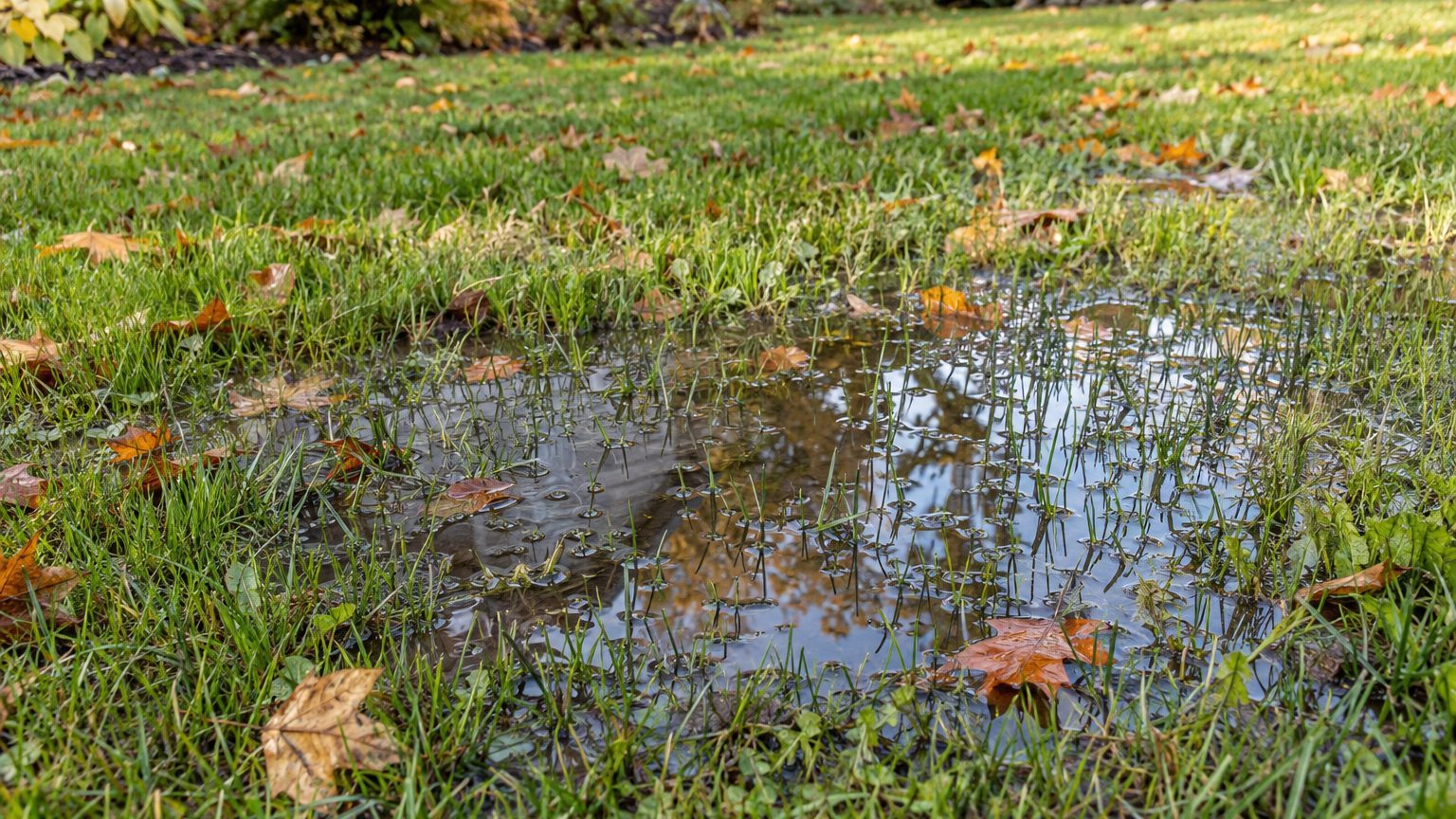
After a stretch of heavy rain, a low corner of the lawn can stay soggy and shiny long after the rest has drained. Standing water on the lawn is a sign that water has displaced air from the soil, limiting root growth. The damage shows up on its own schedule, so what you do afterward matters.
How to Recognize Standing Water

The injury is easy to confuse with other browning, so look for these signs together.
- A raw, sewage-like smell rising from the turf or soil is the first warning, and it means the soil has lost its oxygen.
- Dead brown areas appear a few days after the water recedes, not while it is still sitting there.
- The brown patches sit in the dips and hollows where water gathered, with a fairly sharp edge against greener turf on higher ground.
- The ground stays spongy underfoot and holds a footprint, which makes mowing a chore.
- Prolonged rain can bring the same soggy conditions even when no flood ever reaches the yard.
From the almanac
Lawn in your state
The dates on this page depend on where you live. Your state's page carries its frost dates, its USDA zones and the year laid out month by month.
Northeast
Southeast
- Alabama
- Arkansas
- Delaware
- Florida
- Georgia
- Kentucky
- Louisiana
- Maryland
- Mississippi
- North Carolina
- South Carolina
- Tennessee
- Virginia
- West Virginia
Midwest
Southwest
West
Pacific Northwest
Canada
Problems Mistaken for Standing Water
Brown turf has many causes, and a few of them look a lot like flood injury. Use the color, the patch’s location and a quick rake test together.
| Looks like | How to tell them apart |
|---|---|
| Drought dormancy: straw-colored turf that is dry and crisp | Patches sit on sunny, high or sandy ground rather than in hollows, the soil is dry, and there is no sour smell. Lightly rake the brown area to see whether green crowns remain. |
| Silt smothering: grass buried under a layer of mud after a flood | The brown area is covered with a visible crust of sediment, and the grass blades are flattened beneath it. Brush the layer aside and check for living turf below. |
Lawn diseases can look similar because they spread in very moist weather and prey on stressed grass. They often move in after water damage rather than replacing it, so a lawn can have both problems at once.
What Causes Standing Water
Water fills the tiny air pockets between soil particles and pushes the oxygen out. Roots need that oxygen to grow, so excessive rainfall makes an unfavorable environment for them. Without it, roots stop growing, and in extreme cases toxic gases such as hydrogen sulfides and metallic sulfides can build up in the soil.
Weakened grass then becomes an easy target. Diseases that thrive in extremely moist conditions take advantage of the stressed plants, so the browning you see can come from the lack of oxygen, from disease, or from both.
This can happen in any lawn, anywhere it rains hard or floods. Low spots, compacted ground and soil that drains slowly make it more likely, because water has nowhere to go. Injured areas follow the outline of low flooded areas.
How to Fix Standing Water
Recovery starts once the ground is firm enough to walk on, and the order of the work matters.
- Rake the brown areas lightly, so you can see where living grass survived and where bare patches need help.
- Assess the silt before removing it, since deposits exceeding three inches will likely need professional removal.
- Feed the lawn to encourage recovery, remembering that in Georgia the suggestion is one-half pound of nitrogen per 1,000 square feet.
- Seed the bare spots and cover the seed lightly with topsoil, since in Illinois that gives good seed-soil contact on areas up to 200 square feet.
- Call 811 before you dig for a drainage fix, because in South Carolina the advice is to have utility lines marked first.
Grass often fills in more than you expect. If 40 percent to 50 percent of the area has healthy grass, there is probably enough left to grow in the rest. According to University of Georgia Extension, if more than 60 percent is lost, the advice is to consider sod, seed, plugs or a planted cover to restore the lawn. Your state’s extension office can tell you which grass and timing suit your area.
How to Prevent Standing Water
Prevention follows the seasons, and most of it is about spotting wet ground early and keeping the lawn strong.
- After a hard rain, note low spots where water lingers before planning a drainage fix.
- Mow only when the soil is firm, since heavy equipment on saturated ground leaves ruts and compacts the surface.
- In Georgia, turf-type tall fescue seeded at five pounds to six pounds per 1,000 square feet in September may survive.
- In Georgia, you can establish a temporary cover with ryegrass or tall fescue from mid-September through early November.
- Keep leaves out of low spots and drains so water can leave.
After a big storm, check the dips again to see where water still lingers.
Common Questions
How Long Can Grass Stay Underwater Before It Dies?
The longer turf stays underwater, the less likely it is to recover because of the prolonged lack of oxygen and light. Shorter spells give the grass a much better chance.
How Long Does a Flooded Lawn Take to Recover?
According to University of Illinois Extension, satisfactory recovery of a home lawn can take two years. Expect patchy turf for a while, and keep up with feeding and seeding rather than giving up early.
When Should You Hire a Professional to Remove Silt?
Silt deposits exceeding three inches will likely need to be removed by a professional.