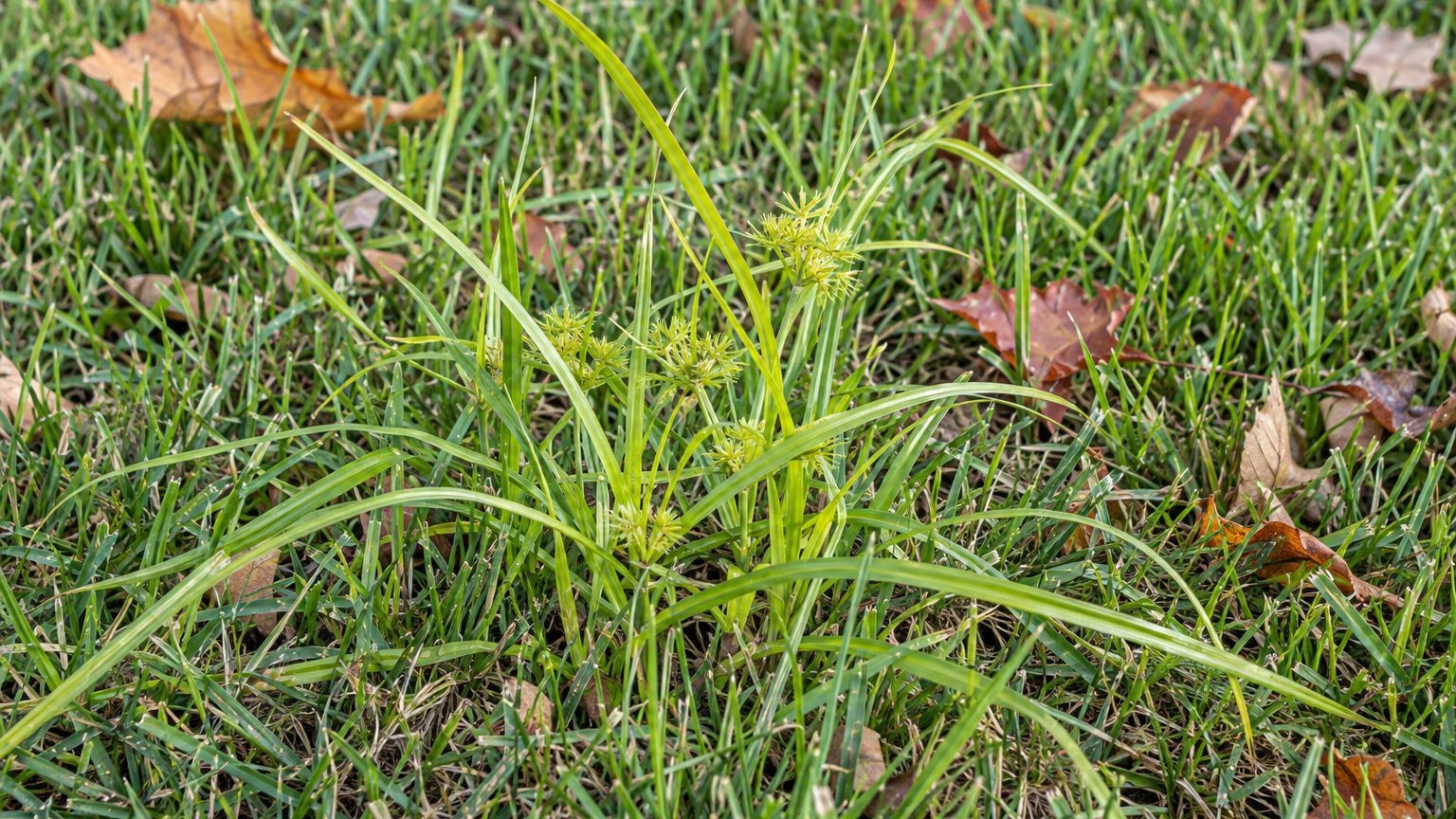
Nutsedge stands out in a mowed lawn by looking like a grass that grew faster than its neighbors, a lighter green patch that soon sticks up after you cut. It is a sedge, not a grass, and that difference decides how you deal with it.
How to Identify Nutsedge

Rolling a stem between your fingers tells you more than looking at the blades, so start there.
- Roll the stem base between your thumb and index finger and you feel three flat sides, which a true grass never has.
- Leaves leave the stem in sets of threes, so the clump looks like a tidy little star from above.
- Strip away the outer leaf sheaths at the base and the stem often shows a reddish hue.
- Blades look yellow-green and glossy, standing taller and lighter than the turf around them.
- Small yellowish or yellowish brown flower spikelets show up on the taller stems.
In Pennsylvania, shoots appear in spring; in Iowa, growth speeds up through the warm summer months.
From the almanac
Lawn in your state
The dates on this page depend on where you live. Your state's page carries its frost dates, its USDA zones and the year laid out month by month.
Northeast
Southeast
- Alabama
- Arkansas
- Delaware
- Florida
- Georgia
- Kentucky
- Louisiana
- Maryland
- Mississippi
- North Carolina
- South Carolina
- Tennessee
- Virginia
- West Virginia
Midwest
Southwest
West
Pacific Northwest
Canada
Weeds Mistaken for Nutsedge
Nutsedge gets called nutgrass because it closely resembles grasses, so plenty of ordinary grassy weeds get blamed for it, and the other way around. Guessing wrong costs you, since most grass herbicides do nothing to sedges.
| Looks like | How to tell them apart |
|---|---|
| Tall, fast-growing grassy weed clump | Roll the stem base: a grass stem is round or flat, while nutsedge feels triangular. Nutsedge leaves also come off in sets of threes. |
| Lighter green tufts that rise above the mowed turf | Strip the outer sheaths at the base: a reddish hue points to nutsedge. Dig a plant and look for tubers attached to rhizomes, which grasses do not make. |
Coarse clumps of crabgrass or other weedy grasses fool many homeowners, because they also stand out after mowing. Rolling the stem is a quick, reliable check.
What Causes Nutsedge in Lawns
Nutsedge is a perennial, and a single plant can produce multiple tubers that stay dormant in the soil for one to several years before sprouting. Seed plays a small part. New plants come mostly from nodes on rhizomes and from those tubers, so a lawn can look clean for seasons and then break out.
Moist, poorly drained soil is a warning sign in Pennsylvania and South Carolina. In Pennsylvania, the plant thrives in moist, poorly drained soils and holds on in full sun and moderate shade. In South Carolina, a patch of nutsedge often points to poor drainage, irrigation that runs too often, or leaky sprinklers.
In South Carolina, shade works against it. In South Carolina, nutsedges do not grow well in the shade, so sunny, soggy spots deserve close attention. Tubers start forming at the tips of rhizomes in late June or early July across most of Pennsylvania, which is why the early part of the season matters so much.
How to Get Rid of Nutsedge
Work from gentle measures toward stronger ones, and match the effort to the size of the patch.
- Confirm the plant by rolling the stem, so you do not spend effort on a grass that a different approach would handle.
- Pull a few plants by hand soon after the leaves emerge in spring, because in Pennsylvania this works before tubers form later in the season.
- Dig out the whole clump with the roots, since leftover tubers in the soil send up new shoots.
- In South Carolina, fix wet spots by correcting drainage and trimming back irrigation, because nutsedge thrives in moist areas.
- In Pennsylvania, feed and mow the turf regularly so it thickens, which slows the spread, though it may not suppress an established patch.
- For a big infestation, ask your state extension office which sedge herbicide is approved where you live, since grass products will not work.
Expect to repeat the work. Tubers that stay dormant can sprout after you think the patch is gone, so keep checking the same spots as the season warms.
How to Prevent Nutsedge
In Iowa, a dense, healthy lawn and proper cultural practices are central to preventing nutsedge.
- In South Carolina, check low spots and patches near downspouts, and fix drainage wherever water lingers.
- In Pennsylvania, pull yellow nutsedge soon after its leaves emerge in spring and before tubers form later in the growing season.
- In Pennsylvania, mow regularly at the height that suits your grass so the turf stays thick.
- In South Carolina, avoid overly frequent irrigation and repair leaky sprinkler heads, since nutsedge thrives in moist areas.
- In Pennsylvania, fertilize thin areas and use turfgrass well adapted to your site to improve turf density.
In South Carolina, soggy corners deserve close attention.
Common Questions
Can Nutsedge Come Back After You Pull It?
Yes. A single plant can leave multiple tubers in the soil, and they can lie dormant for one to several years before germinating, so pulled patches often reappear.
Will Regular Grass Weed Killer Work on Nutsedge?
Usually not. Correct identification matters because most herbicides made for grass control are not effective on sedges.
Does Nutsedge Grow in Shade?
Poorly. In South Carolina, nutsedges do not grow well in the shade, so a thick canopy or a shaded lawn corner is less likely to host it than a sunny, wet area.