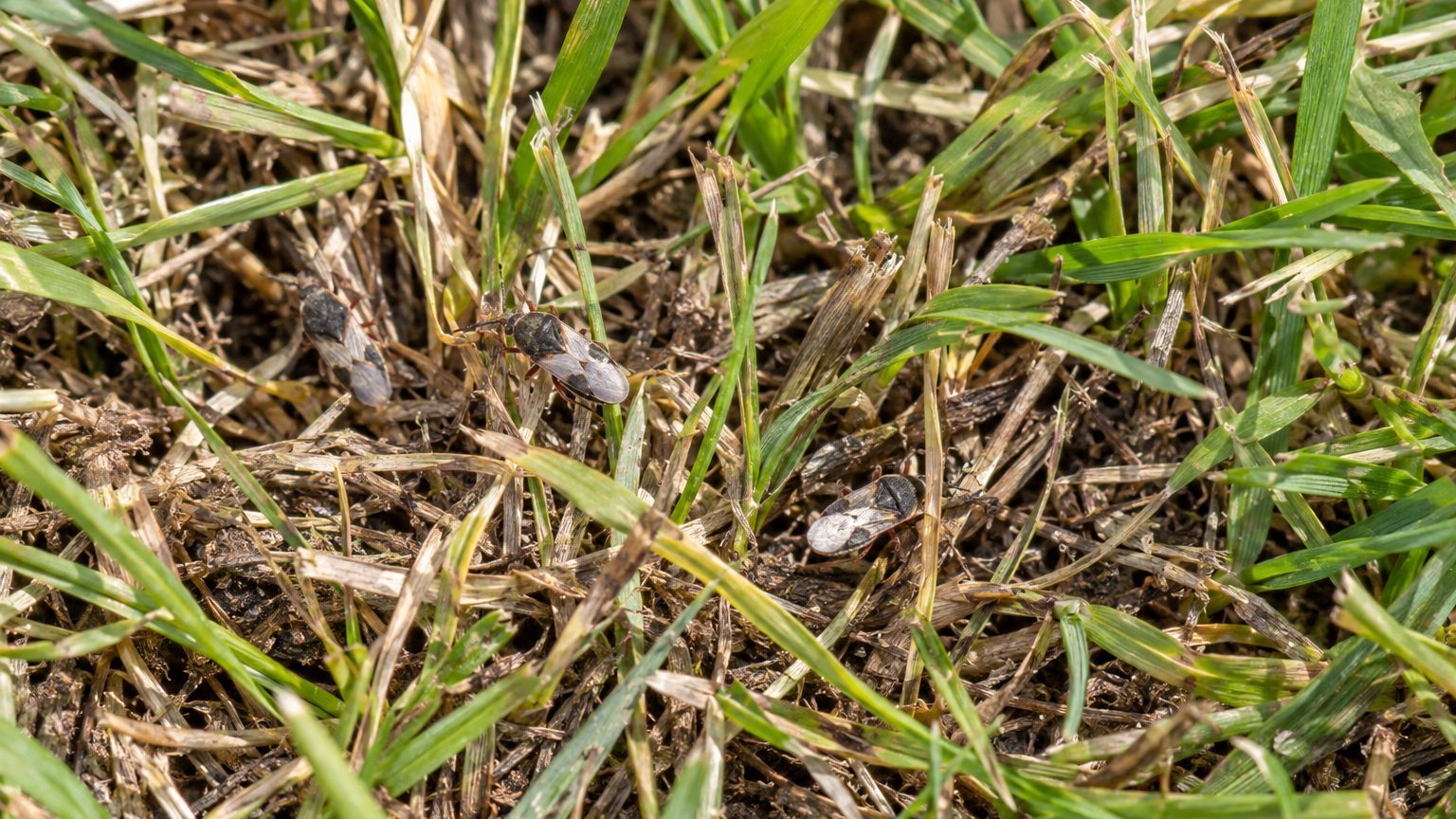
A brown patch that creeps outward from the hottest, sunniest corner of the lawn, usually along a driveway or sidewalk, is the classic start of a chinch bug problem. Water does not green it back up, and confirming the insects before treating can save needless work.
Signs of Chinch Bugs in a Lawn

Start with the pattern of the damage, then get down on your knees at the edge of a patch to look for the insects themselves.
- Patches of brown, dead grass spread outward over time instead of staying the same size.
- Irregular areas first turn yellow, then brown, and the yellow rim sits right where the lawn is still green.
- Damage shows up first in sunny spots during hot, dry stretches, often beside pavement.
- Young nymphs are reddish with a white band across the back, and they darken to black as they near adult size.
- Nymphs run from 1/20 to 1/5 inch long, while adults measure about 3.5 mm, so you will be looking for specks near the soil.
Part the grass at the base of the blades along the patch edge, where the insects hide in the thatch and around the crowns.
From the almanac
Lawn in your state
The dates on this page depend on where you live. Your state's page carries its frost dates, its USDA zones and the year laid out month by month.
Northeast
Southeast
- Alabama
- Arkansas
- Delaware
- Florida
- Georgia
- Kentucky
- Louisiana
- Maryland
- Mississippi
- North Carolina
- South Carolina
- Tennessee
- Virginia
- West Virginia
Midwest
Southwest
West
Pacific Northwest
Canada
Lawn Damage Mistaken for Chinch Bugs
Several problems brown a lawn in summer, and drought stress is the one that fools people most, since chinch bugs also like heat and sun. Use the pattern of damage together with the insects at the grass bases to confirm the problem.
| Looks like | How to tell them apart |
|---|---|
| Drought stress: dull, bluish-brown turf in sunny areas | Patches do not creep outward in a yellow rim, and no small insects turn up at the grass bases. The lawn perks up after a deep soaking. |
| Grub damage: irregular brown patches in summer | The turf pulls up like loose carpet because the roots are chewed off. Chinch bug turf stays rooted, with insects at the crowns. |
Dog urine spots can also look similar. They are round, with a dark green ring around a dead center, and they do not spread the way chinch bug patches do.
When Chinch Bugs Damage Shows Up
The damage comes from the insects sucking sap from the grass, and the injury usually becomes visible during hot, dry periods in the sunniest parts of the lawn. Warmth speeds everything up. In Ohio, eggs take about 20–30 days to hatch at temperatures below 70 degrees F but can hatch in as little as a week when above 80 degrees F, so a hot spell can speed population growth.
In Ohio, a single female may lay up to 200 eggs over 60–80 days, and populations warrant closer attention in June and July. In the Southeast, females lay around four eggs per day in leaf sheaths, thatch and soft soil.
Grass type decides how hard you are hit. Lawns with 50 percent or more bluegrass are the most likely to be attacked. St. Augustine grass is the most seriously injured, while zoysia, bermuda, bahia, and centipede grasses are also subject to attack. Perennial ryegrasses, fine fescues and tall fescues with endophytes are highly resistant.
The numbers needed for visible harm are modest. In Georgia, 20 to 25 chinch bugs per square foot can cause damage.
How to Get Rid of Chinch Bugs
Confirm the insects first, then act in this order so you do not spray a problem you do not have.
- For southern chinch bugs in California, inspect around the grass bases or run a drench test to confirm that the insects are present.
- Count the insects in a square foot, because in Ohio populations of 25–30 individuals per square foot warrant control, especially in June and July.
- Water the lawn if the soil is dry, since in Georgia the guidance is to keep pesticides off dry soil to avoid chemical injury to the turf.
- Contact your state extension office for what is currently approved and labeled where you live, since products and rules differ from state to state.
- Treat the whole damaged area plus a margin of green grass around it, because the insects keep moving into healthy turf at the edge.
- Reseed or resod dead patches once the insects are under control, using a resistant grass where your region allows it.
Dead turf does not regrow from the crowns, so expect to rebuild those spots rather than wait for them to green up.
How to Prevent Chinch Bugs
Prevention is mostly about keeping the lawn from becoming the soft, thatchy, stressed turf that chinch bugs favor, and the timing follows the season.
- In California, reduce thatch when the layer is thicker than 1/2 inch, because thicker thatch encourages chinch bug and caterpillar populations.
- In California, reduce nitrogen fertilization as a cultural control for southern chinch bugs.
- In California, irrigate adequately and check sunny edges for early yellowing.
- In June and July, scout the sunniest areas more often, since that is when Ohio lawns see numbers climb.
- When renovating or overseeding, consider perennial ryegrass, fine fescue, or endophyte-enhanced tall fescue for their high resistance.
On St. Augustinegrass in California, resistant varieties such as Floralawn, Floratam and FX-10 are the recommended planting choices.
Common Questions
What Do Chinch Bug Eggs Look Like?
The eggs are bean-shaped and tiny, about 0.84 mm long by 0.25 mm wide, with one end roundly pointed and the other blunt. They are laid in leaf sheaths, thatch and soft soil, so you will rarely see them without a magnifier.
How Many Eggs Can a Chinch Bug Lay?
In the Southeast, a female can lay up to 250 eggs in her lifetime. That rate explains why a small, unnoticed group can turn into a spreading patch once the weather turns hot and dry.
Will Grass Grow Back After Chinch Bugs?
Grass that was killed will not recover on its own, though lightly yellowed turf at the edge of a patch can bounce back once the insects are gone and the lawn is watered. Plan on reseeding or patching the brown center after the infestation is cleared.