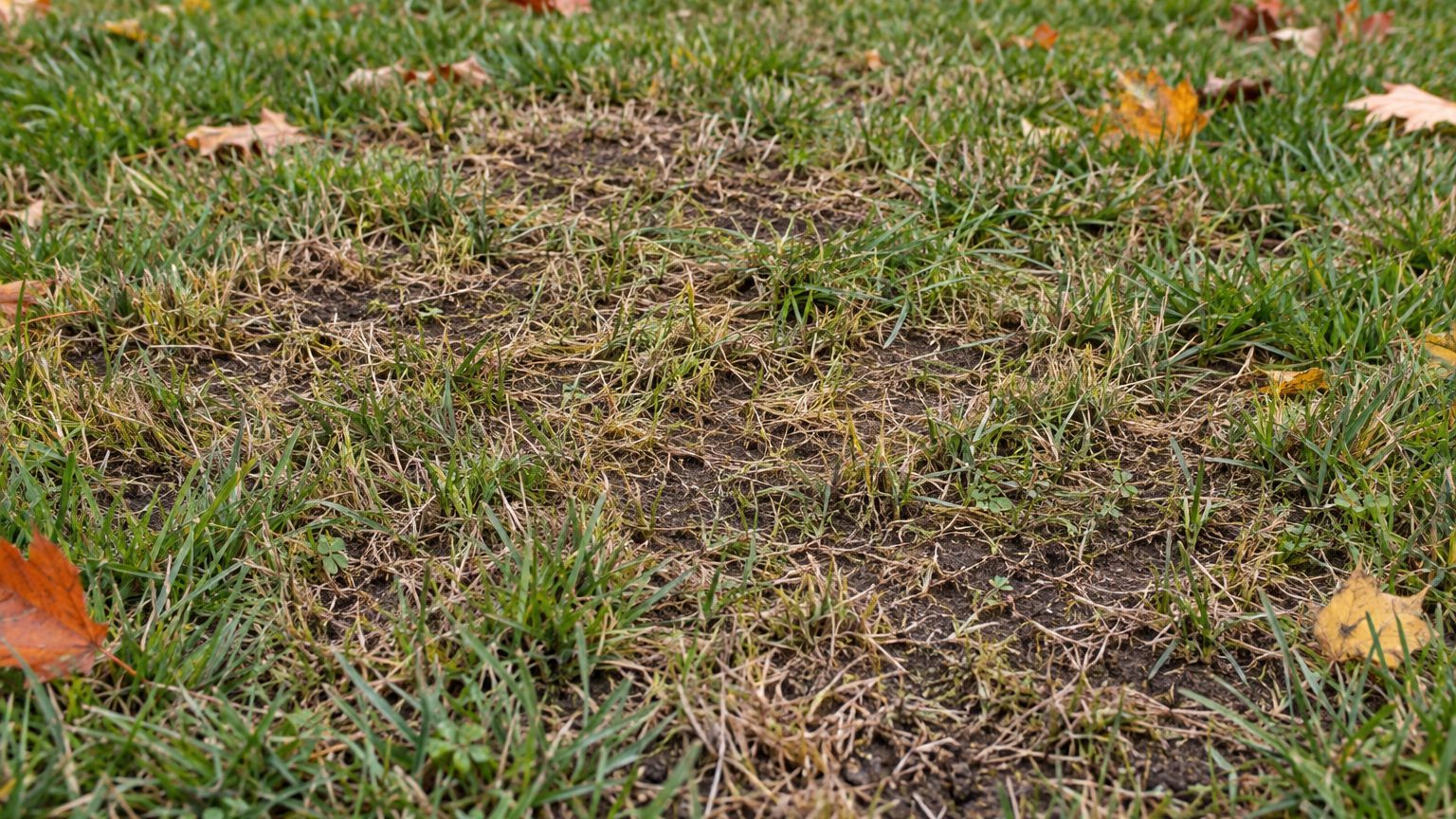
A scalped lawn is one that was mowed so low the green leaf is gone and the brown, stemmy base shows through. It usually follows a single pass with the deck set too low, or a mow that waited too long. The lawn rarely dies from it, and how fast it bounces back depends on the grass you grow.
How to Recognize a Scalped Lawn

Start with the color and texture of the cut itself, since the damage shows up right after mowing, in any growing season.
- The canopy looks brown and stemmy, because too much of the leaf blade came off in one mowing.
- The stems are exposed at the surface, so the turf looks bare and wiry instead of green and soft.
- Damaged patches turn yellow or brown, often in the shape of a hill crest, a mower wheel track or a low spot.
- On bermudagrass cut too low and too seldom, the shoots and leaves are often yellow.
- The pattern follows the mower, with streaks or blotches where the deck dipped, rather than spreading outward over time.
Green leaf left standing between the brown streaks is a good sign, since it means the plant still has something to photosynthesize with.
From the almanac
Lawn in your state
The dates on this page depend on where you live. Your state's page carries its frost dates, its USDA zones and the year laid out month by month.
Northeast
Southeast
- Alabama
- Arkansas
- Delaware
- Florida
- Georgia
- Kentucky
- Louisiana
- Maryland
- Mississippi
- North Carolina
- South Carolina
- Tennessee
- Virginia
- West Virginia
Midwest
Southwest
West
Pacific Northwest
Canada
Problems Mistaken for a Scalped Lawn
Brown turf has plenty of causes, and some look a lot like a bad mow. The quickest way to tell is to ask whether the damage lines up with where the mower went.
Check the mower itself too. Set it on a hard, flat surface and measure from the surface to the cutting edge of the blade, and you will know whether the deck was really set where you thought.
| Looks like | How to tell them apart |
|---|---|
| Drought stress | Grass looks dull and grayish, and footprints stay pressed in, across the whole lawn rather than only on mower passes. Leaf blades are still there. |
| Dull blades or tearing | Leaf tips look frayed and tan right after mowing, evenly across the lawn. Stems are not exposed, and the soil is not showing. |
| Thatch buildup | The turf feels spongy underfoot and a brown layer sits between green blades and soil. It shows up in patches that do not follow mower tracks. |
Thick thatch and very weedy turf can make scalping more likely, so these problems sometimes show up together. Sort out which one you have before you treat anything.
What Causes a Scalped Lawn
Scalping is usually caused by the mower or the mowing schedule. Equipment trouble, dull blades, blades that are not turning properly, or letting the grass grow too long between mowings will all strip too much leaf in one pass.
The ground matters too. Mowing on hills or uneven surfaces, especially where a wheel drops into a low spot, lets the deck dig into the high ground and shave it to the stems.
This can happen in any region and with any turf. Thick thatch layers and extremely weedy turf also add to the risk, since they raise the surface the blades meet. Grass left to get tall is a common trigger, because cutting it back in a single mowing leaves little green behind.
How to Fix a Scalped Lawn
Most scalped lawns need patience more than repair, and the order below keeps the grass from taking a second hit.
- Raise the mower to its highest setting, so the leaf that remains can feed the plant while it recovers.
- Check the blade and the deck, and sharpen or fix whatever is dull or not turning properly, so the same damage does not repeat.
- Mow at the recommended height for your turf species and never remove more than 1/3 of the leaf blade at each mowing, as advised in California.
- Dethatch if the thatch layer is more than 1/2 inch thick, as California guidance puts it, because a deep mat keeps raising the surface the mower catches.
- If the turf has grown excessively tall, take a different route. According to Kansas State University Extension, spend the next three or four mowings slowly bringing it down, starting with the mower as high as it can go and mowing every few days.
- Wait and let the grass fill back in on its own.
How long that wait lasts depends on the grass. Bermudagrass and other creeping types will generally outgrow scalping injury with proper care (California), and in Arizona bermudagrass bounces back quickly. Cool-season grasses grow slowly in summer, so full recovery takes probably several weeks.
How to Prevent a Scalped Lawn
Prevention comes down to mower height, mowing frequency and a quick look at the lawn before mowing begins.
- Before mowing, sharpen the blade, check that it turns properly and measure the cutting height on a hard, flat surface.
- Keep cool-season lawns between 2 and 3 inches, which is where most of them perform best.
- Through the growing season, mow often enough to follow the 1/3 rule. For Kentucky bluegrass that means mowing when the turf reaches 3 inches.
- If the lawn already shows scalping, raise the deck and mow frequently enough at the raised height to stop further damage.
- Before each mowing on slopes and uneven ground, walk the lawn and note the humps and dips, then raise the deck or change your path around them.
Common Questions
Will a Scalped Lawn Grow Back?
Usually yes, because the crowns and roots are still alive. Creeping grasses such as bermudagrass fill in sooner, while cool-season lawns take longer, especially in summer heat.
Can You Scalp a Lawn on Purpose?
Intentional scalping depends on the grass and local conditions. Before scalping intentionally, confirm the timing with your state extension office.
Should You Fertilize a Scalped Lawn Right Away?
Recovery depends mostly on leaf area, water and the right mowing height.