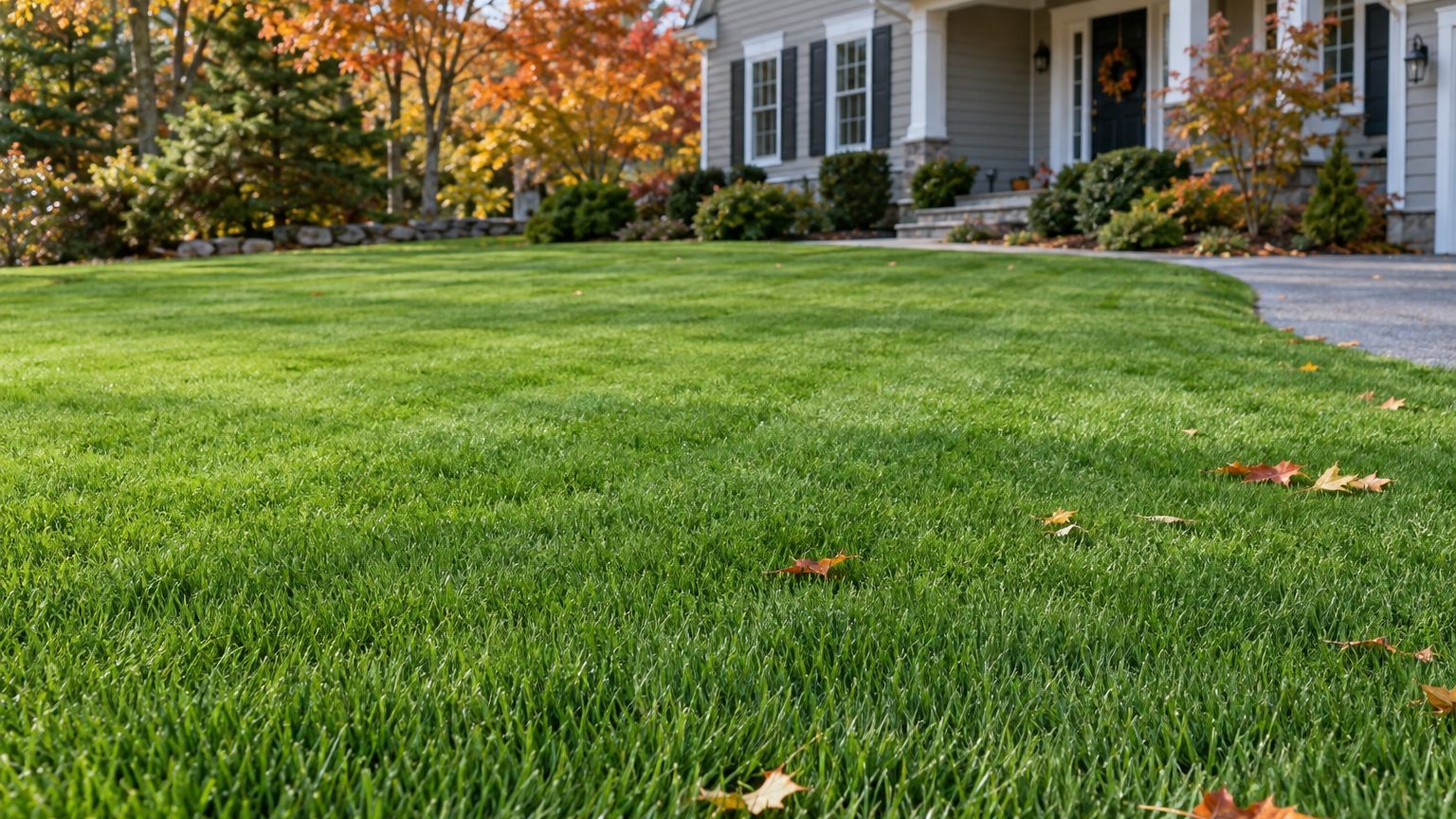
Mowing a Maine lawn in the cool of an October afternoon, with the maple leaves already coming down on the grass, is one of the last jobs of a short season. Maine lawns use cool-season grasses that grow hardest in spring and early fall, and the work that matters falls into a handful of windows.
Frost Dates and Growing Season in Maine
Maine spans a wide hardiness range, from zone 3b to 6a on the USDA system, and the dates here describe coastal Portland, the mild end of the state. Inland and northern Maine run later in spring and earlier in fall, so shift everything accordingly.
- In early spring, the soil is still cold and the grass barely moves, though in Portland the last spring frost usually lands between April 22 and May 1, which is why a freshly sown patch put down too early can get nipped.
- In April, mowing begins as growth picks up and crabgrass preventer goes down; May brings the first feeding.
- From June through August, the grass is at its steadiest, and watering is what the lawn needs when rain falls short.
- In late summer and September, seeding, core aeration and dethatching all have the warm soil and cooling air that new grass wants.
- In October and November, mowing continues while the grass keeps growing, and the first fall frost in Portland, between October 9 and October 21, closes the seeding season for good because seedlings need time to root first.
Frost marks risk to tender new growth. The grass itself starts and stops with soil warmth, so it may keep growing a little after the first frost and wake slowly after the last one.
Maine — the year and the numbers
- State
- Maine
- USDA zones
- 3b-6a
- Last spring frost
- April 22 to May 1
- First fall frost
- October 9 to October 21
- Annual rain
- 48 in
- Lawn type
- cool-season
- Source
- NOAA NCEI 1991-2020 Climate Normals, 32F freeze probabilities · Portland
Cool-Season or Warm-Season Grass in Maine?
Cool-season grass is the only sensible choice here. Winters reach the cold end of the hardiness scale, and warm-season grasses go dormant and often die back under that kind of cold. Summer heat and drought are mild enough that cool-season turf gets through them with regular watering.
The cool-season grasses listed below are often sold as blends so each covers for the others’ weak spots.
| Grass | How it does in Maine | Why |
|---|---|---|
| Kentucky bluegrass | Dense, dependable lawn in sun | Cold-hardy and spreads to fill gaps |
| Fine fescues (creeping red, chewings, hard) | Holds up in shade and thinner soil | Tolerates low fertility and cool, shaded sites |
| Perennial ryegrass | Quick to sprout and fill in | Germinates fast, useful in mixes for new seed |
| Tall fescue | Tough, deep-rooted turf | Copes better with dry spells and heavy use |
Warm-season grasses such as zoysia or bermudagrass are not a fit for a Maine yard, and St. Augustinegrass is never sold as seed anyway. Choosing among them depends on sun, shade and traffic.
When to Seed, Fertilize and Aerate a Lawn in Maine
Late summer is the main working season, because warm soil and cooler nights suit new grass. Spring handles the first feeding and weed prevention. One rule applies to feeding: Maine law bars phosphorus fertilizer on lawns unless a soil test shows a need or you are starting a new lawn.
| Task | Best months in Maine | Why then |
|---|---|---|
| Seeding | August to September | Warm soil and mild air help seed sprout and root before frost |
| Fertilizing | May and September | Grass is actively growing and can use the nutrients |
| Core aeration | September | Roots recover quickly and seed reaches the soil |
| Dethatching | September | Grass fills the opened turf before winter |
| Crabgrass preventer | April | Goes down before the weed seeds germinate |
| Watering | June to August | Summer dry spells stress cool-season turf |
If you miss a window, there is a fallback. Seeding, aeration and dethatching also work in May, as does the preventer, and feeding still works in October and November. Mowing runs from April through November.
Lawn Problems to Watch for in Maine
Winter Dead Patches
Straw-colored or matted circles that appear as the snow melts usually mean the grass was smothered or frozen over a long winter. Rake the patch gently to lift matted blades, then reseed in August or September when the soil is warm. Seeding in May also works if the bare spot cannot wait.
Dry Brown Stretches in Summer
Grass that turns tan and crunches underfoot in July or August, especially on sunny slopes or thin soil, is going dormant from drought. Cool-season turf often recovers once rain returns, but it does better with watering from June to August. Mowing a bit higher keeps the soil shaded.
Thin Grass Under Pines
Sparse, weak turf beneath evergreens, with needles layered over the ground and soil that tests acidic, is a common Maine sight. Fine fescues cope with that shade better than bluegrass. A soil test tells you whether lime is needed and whether phosphorus is allowed.
How Lawn Care Dates Change Across Maine
Dates shift with the distance from the coast and with elevation, and the timing in this article reads best for the southern coast.
- Portland and the southern coast: The ocean keeps spring cooler but often delays the first autumn frost, so the season can stretch later here.
- Western foothills and mountains: Colder nights and higher ground push spring later and bring fall frost earlier, so the seeding window closes sooner.
- Aroostook County: The far north has a shorter season, with a late thaw and an early end, so aim for the early part of each fall window.
Watch the soil and the grass rather than the date, and let your own yard set the pace within these shifts.
Where to Get Lawn Advice in Maine
Local experts can help settle a question about soil or a patch you cannot explain.
- University of Maine Cooperative Extension offers lawn guidance written for Maine conditions, useful before you choose seed or fertilizer.
- Your county extension office can send a soil test kit and help diagnose a damaged patch, so call before the September seeding window.
Common Questions
Can You Plant Grass Seed in Maine in Spring?
Yes, May works as a fallback if you cannot wait for late summer. Young grass in spring faces weeds and summer dryness, so keep the seedbed moist and expect to do more watering than with an August start.
Do You Need to Rake Leaves Off a Maine Lawn?
Yes, a thick layer of wet leaves smothers grass and invites winter damage. Mowing over a light covering chops it up, but clear heavy drifts before snow arrives.
Why Does a Maine Lawn Turn Yellow in Spring?
Pale grass that is also thin and in low or shaded spots often reflects a cold, wet start and compacted or acidic soil. A soil test, plus core aeration in September, usually helps more than extra fertilizer.