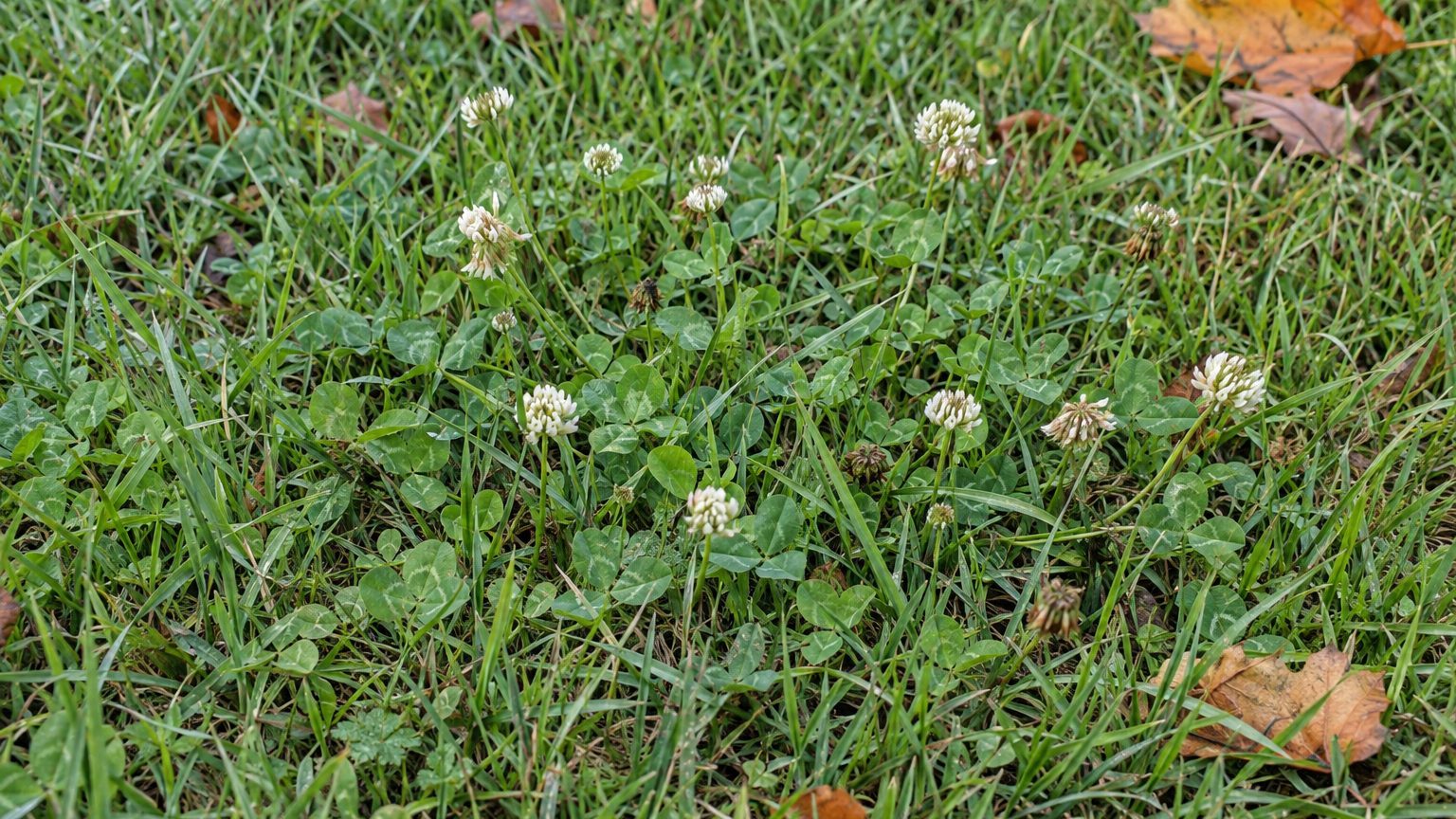
White clover shows up in the lawn as soft, low patches of three-part leaves, often greener than the grass around them, and it often spreads into thin turf. Finding it in the lawn is a reason to check fertility, moisture, and turf density. Identifying it correctly comes first, then removal and keeping it from coming back.
How to Identify White Clover

Start with the leaf, since its shape helps separate clover from its look-alikes.
- Each leaf has 3 heart-shaped leaflets attached to a thin stalk that rises from a creeping stem.
- Creeping stems run along the soil surface and root as they go, knitting the plant into a mat.
- The flower heads are round, white and ball-like, with 40 to 80 florets in a cluster measuring ½ to 1 ½ inches in diameter.
- In South Carolina, white flowers, often tinged with pink, appear in early summer.
- In South Carolina, white clover has shallow roots and can be dug up easily before it is well established.
Mowing clips the flower heads but not the creeping stems, which is why the patches keep coming back at lawn height.
From the almanac
Lawn in your state
The dates on this page depend on where you live. Your state's page carries its frost dates, its USDA zones and the year laid out month by month.
Northeast
Southeast
- Alabama
- Arkansas
- Delaware
- Florida
- Georgia
- Kentucky
- Louisiana
- Maryland
- Mississippi
- North Carolina
- South Carolina
- Tennessee
- Virginia
- West Virginia
Midwest
Southwest
West
Pacific Northwest
Canada
Weeds Mistaken for White Clover
Yellow woodsorrel and black medic share the three-leaflet look and often get blamed on clover. Yellow woodsorrel is a perennial weed, and black medic grows in the same low, sprawling way. Check the leaf shape and the flower color together before you decide.
| Looks like | How to tell them apart |
|---|---|
| Yellow woodsorrel | Leaflets are distinctly heart-shaped and the flowers are yellow, not white. In Maryland, it is usually first noticed when yellow flowers form from May through September. |
| Black medic | Flowers are yellow, with tiny individual blooms clustered so tightly they resemble one flower. The leaflets lack the distinct heart shape of woodsorrel. |
Woodsorrel also fires its seed capsules when ripe, flinging seeds as far as 12 feet and seeding a surprisingly wide area. Treat it as its own problem, not as clover.
What Causes White Clover in Lawns
Clover moves in when the grass is weak. White clover can fix its own nitrogen, so it thrives in unfertilized areas, and a lawn full of it often points to inadequate fertility. Grass that is hungry and thin leaves open soil, and clover fills it.
Moisture matters too. In South Carolina, white clover has a shallow root system and does not do well in dry soils. In Pennsylvania, seed germination takes place during cool, moist periods in spring and fall, which is when new seedlings appear.
How to Get Rid of White Clover
Pulling and rebuilding work well on small infestations, and they set up the grass to hold the ground afterward.
- Dig out the patches while they are young, because in South Carolina white clover can be dug up easily before it is well established.
- Remove the plants and any rooted creeping stems so they do not reestablish in the lawn.
- Rake the bare spots level, so the new turf has loose, even soil to root into.
- Fill the gaps with plugs or sprigs of the turfgrass you want, as advised in South Carolina once the clover is eliminated.
- Feed the lawn as your grass type needs, since clover thrives where fertility runs low and nitrogen-fixing gives it an edge.
For large areas, your state extension office can tell you which herbicides are registered where you live and when to apply them. Read the label closely, as turfgrass species differ in what they tolerate.
How to Prevent White Clover
Dense turf is the working defense, and each season has a gesture that keeps it thick.
- In early spring, check for thin or bare patches and fill them before clover seedlings, which germinate in cool, moist spring weather in Pennsylvania, claim the space.
- As the grass greens up, feed according to your grass type, since a lawn short on nitrogen hands clover an advantage.
- Through summer, water deeply and keep mowing at the height your grass prefers, so the turf stays dense enough to compete.
- In South Carolina, check edges and beds in early summer and remove unwanted white clover before the patches spread farther.
- In Pennsylvania, cool, moist fall weather favors germination, so watch thin areas for new seedlings.
In Maryland, maintaining healthy, dense turf helps prevent weeds from establishing.
Common Questions
Is White Clover Bad for a Lawn?
White clover fixes nitrogen, but whether it belongs in a lawn is largely a matter of appearance. Many homeowners dislike how it looks against turf and how it browns or thins in drought, so the choice is mostly about appearance.
Why Does Clover Grow Where Grass Will Not?
Poor fertility can give clover an advantage. Clover makes its own nitrogen, so it keeps spreading where the grass is starving and the turf has opened up.
Can You Mow White Clover Out of a Lawn?
Mowing alone does not remove it. Creeping stems sit below the blade, so the plant regrows, and the soil and turf density have to change for it to fade.