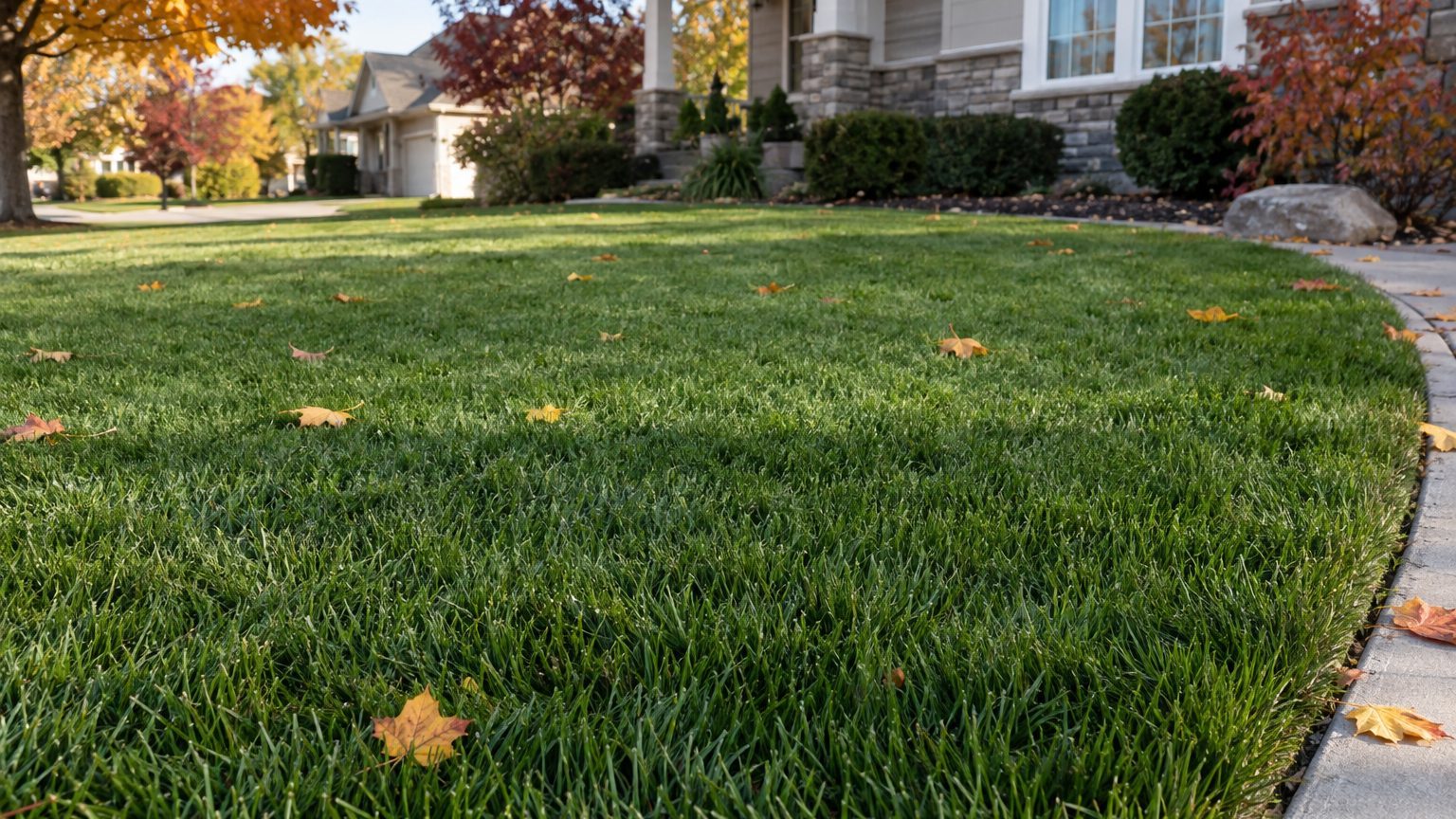
Brown, dormant grass in winter is normal for lawns in Nebraska, and it usually greens up once spring settles in. Cool-season grasses suit Nebraska yards, and the work clusters in fall and spring, when roots grow and weeds lose ground.
Frost Dates and Growing Season in Nebraska
For Omaha, the last spring freeze usually lands between April 12 and April 23, and the first fall freeze between October 15 and October 26. Yards outside the city often freeze later in spring and earlier in fall, so check your own county. Nebraska spans USDA hardiness zones 4a to 5b.
- In late winter, the grass sits dormant and brown, and avoid walking on frozen turf so the crowns are not crushed.
- In early spring, the soil is still cold and growth is slow, but this is when crabgrass preventer goes down, ahead of the weeds.
- Once the soil warms, usually from April into May, the lawn picks up speed and mowing begins in earnest.
- Through summer, from June to August, cool-season grass slows in the heat, and deep watering is what keeps it alive.
- In late summer and early fall, from August into September, seed sown now has warm soil to sprout in and time to root before freezing weather arrives.
- In late fall, the last mowing and a final feeding in November prepare the lawn for dormancy.
A freeze date marks frost risk, not the day grass starts or stops growing, since growth follows soil warmth. A spring frost can damage young seedlings, and a fall frost brings the seeding season to an end.
Nebraska — the year and the numbers
- State
- Nebraska
- USDA zones
- 4a-5b
- Last spring frost
- April 12 to April 23
- First fall frost
- October 15 to October 26
- Annual rain
- 32 in
- Lawn type
- cool-season
- Source
- NOAA NCEI U.S. Climate Normals 1991-2020, 32F freeze probabilities · Omaha
Cool-Season or Warm-Season Grass in Nebraska?
Cool-season grass is a sound choice for Nebraska yards. It handles Nebraska winters, and it grows vigorously in spring and fall. Summer heat and dry spells are its weak point, which is why watering matters so much in July and August.
| Grass | How it does in Nebraska | Why |
|---|---|---|
| Kentucky bluegrass | Dense, durable turf in full sun | Spreads and recovers well, and handles cold winters |
| Tall fescue | Stands up to heat and dry spells better than bluegrass | Deep roots reach moisture lower in the soil |
| Perennial ryegrass | Sprouts quickly, often blended with other seed | Fills in fast while slower grasses establish |
| Fine fescues | Good choice for lighter, shadier spots | Can perform well with modest fertilizer |
Creeping red, chewings and hard fescue are common fine fescues. Seed mixes often combine these grasses so the lawn has backup when a variety struggles in a given year.
When to Seed, Fertilize and Aerate a Lawn in Nebraska
Late summer and early fall suit cool-season root growth. Spring works as a fallback for several tasks, though young seedlings face summer heat sooner.
If you miss September for seeding, spring still works, and a late fertilizing can wait until November.
| Task | Recommended timing in Nebraska | Why then |
|---|---|---|
| Seeding | August, September (April and May also work) | Warm soil and cooler air help seed sprout and root |
| Core aeration | September (April and May also work) | Grass is growing and fills the holes quickly |
| Fertilizing | September, November (May also works) | Feeds roots in fall instead of pushing leaf growth in heat |
| Dethatching | August, September (April also works) | Turf can recover while it is actively growing |
| Crabgrass preventer | April (May also works) | Goes down before weed seeds germinate |
| Watering | June, July, August | Summer heat and dry spells stress cool-season grass |
Mowing runs from April through November, so the mower stays busy for most of the year.
Lawn Problems to Watch for in Nebraska
Straw-Colored Grass in Summer

When grass turns tan across the whole lawn during a hot, dry stretch, it has often gone dormant to survive. Gentle pressure on a blade that springs back suggests it is alive. Water deeply during June, July and August, and the green usually returns.
Thin Spots After Winter
Patches that stay brown after neighbors green up point to winter injury, especially where snow piled up or ice sat. Rake the dead grass out in spring, then reseed in April or May, or wait for August and September when seed establishes more easily.
Crabgrass in Open Areas
Crabgrass fills thin, sunny turf, especially along driveways and sidewalks where soil heats fast. A preventer applied in April stops it before it sprouts. A thick lawn is the longer-term answer, so overseed bare patches in late summer.
How Lawn Care Dates Change Across Nebraska
Nebraska stretches a long way east to west, and the season shifts with it. Elevation and distance from the Missouri River both matter.
- Omaha and Lincoln: Check local conditions before starting spring work, especially outside city centers.
- The Panhandle: Higher ground and drier air mean cold lingers longer in spring and fall frost arrives sooner, so seeding windows close earlier.
- The Sandhills: Sandy soil warms quickly but dries out fast, so lawns here need watering sooner and more often through summer.
Whatever the region, a lawn on the edge of town usually freezes later in spring and earlier in fall than one in the city center.
Where to Get Lawn Advice in Nebraska
Local advice beats general rules, because soil and microclimate vary from yard to yard. The state extension service publishes research-based guidance for the state.
- Your county extension office can walk you through a soil test, which tells you what the lawn lacks before you buy fertilizer.
- Staff there can also help diagnose odd patches if you bring a sample, ideally while the problem is visible.
- In late summer, call ahead about seeding during the recommended August and September window.
Common Questions
Should You Rake Leaves Off a Nebraska Lawn in Fall?
Yes, when they pile thick enough to cover the grass. A heavy mat blocks light and holds moisture against the blades. Light leaf scatter can be mulched with the mower.
Can You Plant a Lawn on Bare Ground in Spring?
Yes, April and May work as a fallback for seeding. Keep the seedbed evenly moist, and expect more weed pressure and summer stress than fall seeding brings.
Why Does a Nebraska Lawn Go Brown in July?
Straw-colored turf with firm soil underneath usually means heat dormancy, not death. If the brown spreads in irregular patches and blades pull out easily, look for a different cause and bring a sample to your county extension office.