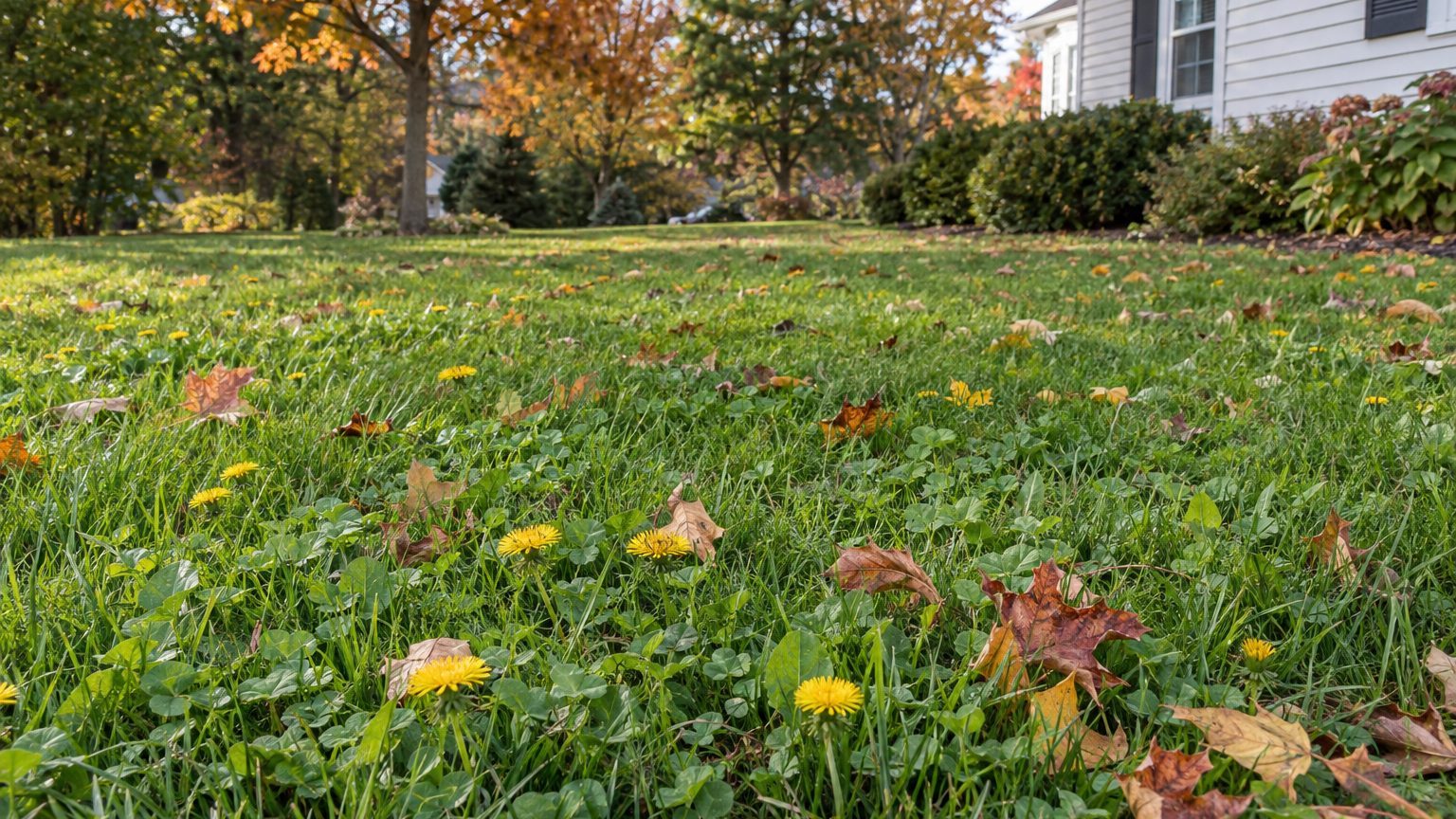
Crabgrass, dandelions and chickweed all exploit thin spots, but they do not follow the same seasonal pattern. Lawn weeds follow the calendar because each one has its own life cycle. Knowing the weed’s life cycle helps you choose when to act and which kind of control fits.
Which Lawn Weeds Appear in Each Season?
Weed timing changes with local growing conditions, so use the state selector below to match the weed to your lawn. Common dandelion is a perennial that can persist and produce seed. Grass type and region shift the timing.
In Pennsylvania, annual weeds such as crabgrass and common chickweed complete their cycle in one growing season. In Pennsylvania, a common dandelion can live for three or more years and produce new plants from seed.
The state selector just below this section leads to the page for your state, with the months that fit your lawn.
From the almanac
Lawn in your state
The dates on this page depend on where you live. Your state's page carries its frost dates, its USDA zones and the year laid out month by month.
Northeast
Southeast
- Alabama
- Arkansas
- Delaware
- Florida
- Georgia
- Kentucky
- Louisiana
- Maryland
- Mississippi
- North Carolina
- South Carolina
- Tennessee
- Virginia
- West Virginia
Midwest
Southwest
West
Pacific Northwest
Canada
How to Control Lawn Weeds

Weed control works best when you do the jobs in the order the year hands them to you, starting with prevention and ending with spot treatment.
- Mowing too low stresses turfgrass, so raise the mower to the correct height for your lawn type.
- Maintaining a thick, healthy lawn minimizes the sunlight that reaches the soil surface.
- In South Carolina, some weeds may require a pre-emergent applied before emergence to prevent seed germination.
- Watch the soil warm in spring, since in Maryland crabgrass germination begins when soil temperatures stay above 55°F for several days.
- Contact herbicides are most effective against young annual weeds and are a poor choice for perennial weeds.
- Pull or treat perennials like dandelion separately, so the root does not simply send up new growth.
In Maryland, pre-emergents are commonly used in spring against annual weeds such as crabgrass. In South Carolina, some weeds may require a pre-emergent applied before emergence to prevent seed germination. Ready-to-use spot products avoid the need to mix a dilution or use a sprayer.
Lawn Weeds by Grass Type
Grass type decides which weeds find an opening. Cool-season and warm-season lawns each have a stretch when they grow strongly and a stretch when they rest, and weeds move into the resting stretch.
A thick lawn is the common thread. Weeds exploit weak turf caused by poor soil fertility or pH, compaction, excess thatch, too much or too little water, and mowing too low.
| Weed type | Life cycle | What helps |
|---|---|---|
| Crabgrass | Annual, one growing season | In Maryland, pre-emergent in spring; in South Carolina, dense turf |
| Common chickweed | Annual, one growing season | In South Carolina, thick turf; in Maryland, contact treatment while young |
| Dandelion | In Pennsylvania, perennial; can live for three or more years | Check local guidance for control that suits the lawn |
| Black medic | Broadleaf | In Maryland, a selective herbicide is often used for broadleaf weeds in lawns |
Telling broadleaf from grass weeds saves you from the wrong product. Broadleaf species such as black medic bear colorful flowers of various shapes and sizes, while grass weeds lack flowers and have similar leaf shapes. Selective herbicides are often used against broadleaf weeds without injuring lawn grass, while nonselective herbicides affect every plant they contact.
Weed Control Mistakes to Avoid
Mowing Too Low
Scalping stresses turfgrass and creates an opening for weeds. Raise the mower to the correct height for your lawn type.
Spraying Perennials with Contact Products
Contact herbicides are a poor choice for perennial weeds. Contact herbicides are most effective against young annual weeds.
Applying Pre-Emergent Too Late
A pre-emergent is intended to act before crabgrass germinates. In Maryland, crabgrass germination begins when soil temperatures are above 55°F for several days; contact herbicides are most effective against young annual weeds.
Lawn Weeds in Your State
Let the lawn give the signal. Watch for new growth, soil that has stayed warm, and your grass entering its active season, then act on the weed that fits that moment.
- Your state page gives the months for pre-emergent timing, so check it before the soil warms in spring.
- It also shows when cool-season weeds start up, so you can thicken the turf ahead of them.
Common Questions
Are Dandelions Annual or Perennial Weeds?
They are perennials. In Pennsylvania, a common dandelion can live for three or more years and produce new plants from seed.
How Can You Tell a Grass Weed from a Broadleaf Weed?
Look at the leaves and the flowers together. Broadleaf species such as black medic bear colorful flowers, while grass weeds lack flowers and have similar leaf shapes.
Does a Thick Lawn Really Reduce Weeds?
Yes. In South Carolina, dense turf limits sunlight at the soil surface; in Pennsylvania, fertilization and proper mowing help build that density. In Pennsylvania, dense turf helps control summer annual grasses.