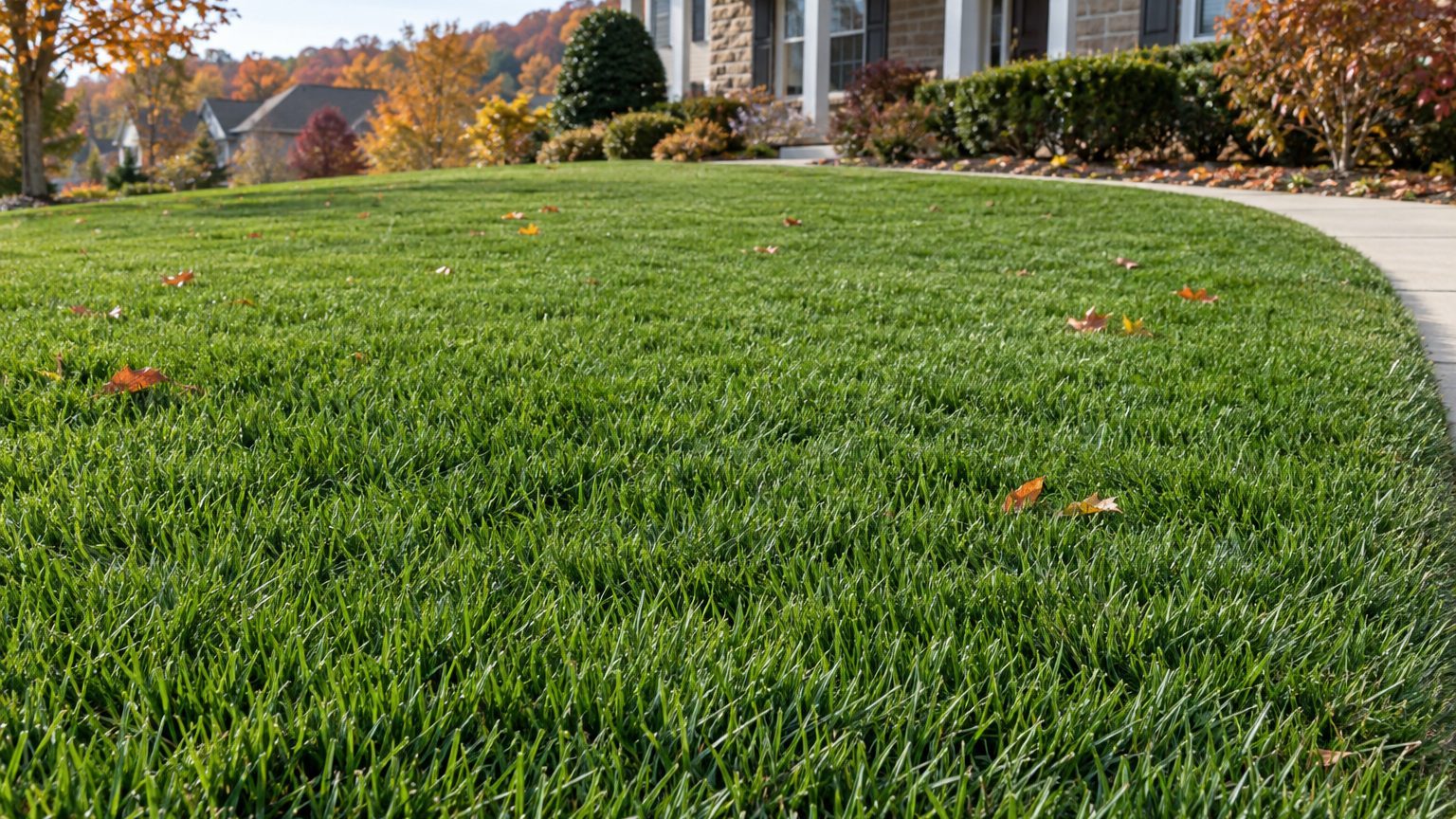
Cool-season turf in West Virginia greens up in spring, struggles through humid midsummer, and does its best rooting work in early fall. Most lawns here are bluegrass, fescue and ryegrass mixes, and the year runs on a simple rhythm: feed and prevent crabgrass in spring, water in summer, then seed, aerate and feed again once the nights cool.
Frost Dates and Growing Season in West Virginia
Charleston, a river valley, sees its last spring freeze between April 9 and April 23, and its first fall freeze between October 18 and November 1. Hardiness zones in the state run from 5a to 7a on the USDA system, so ridgetops and valleys differ. Frost matters most to a young seedling, but growth itself follows soil warmth.
- In early spring, the soil is still cold and grass grows slowly, so this is the time to rake off debris and put down crabgrass preventer in April before weed seed germinates.
- Once the soil warms in May, cool-season grass grows fast, mowing becomes a regular job, and a spring feeding fits well.
- In June through August, growth slows in the heat, and watering matters most from June to August when rain falls short.
- In late summer, August and September give seed and sod the warm soil and cooling air they need to root before winter, and this is also the time for core aeration and dethatching.
- In fall, mowing continues into November, while September is the main feeding month and November can still work if needed.
A seedling sown too late has little time to root before freezing weather, especially on higher ground where fall arrives earlier.
West Virginia — the year and the numbers
- State
- West Virginia
- USDA zones
- 5a-7a
- Last spring frost
- April 9 to April 23
- First fall frost
- October 18 to November 1
- Annual rain
- 46 in
- Lawn type
- cool-season
- Source
- NOAA NCEI 1991-2020 Climate Normals, 32F freeze probabilities · Charleston
Cool-Season or Warm-Season Grass in West Virginia?
Cool-season grass is the right choice here. West Virginia winters are cold enough to injure warm-season turf, and the state’s humid summers suit the grasses that thrive in spring and fall and rest a little in July heat.
The main lawn grasses for this region are listed below.
| Grass | How it does in West Virginia | Why |
|---|---|---|
| Kentucky bluegrass | Makes a dense, fine lawn in sun | Spreads to fill gaps, though it is slow to establish |
| Tall fescue | Handles summer heat and dry spells well | Deep roots reach moisture lower in the soil |
| Perennial ryegrass | Sprouts quickly and gives fast cover | Often blended with bluegrass to speed up establishment |
| Fine fescues | Suits shadier, lower-care spots | Creeping red, chewings and hard fescue tolerate lower light |
Warm-season grasses stay out of this list on purpose. St. Augustinegrass, for one, is never sold as seed, and none of that group is a safe bet through a West Virginia winter.
When to Seed, Fertilize and Aerate a Lawn in West Virginia
Late summer into early fall is the busiest stretch for lawn work, because warm soil and cooler air favor new roots. Spring still works for most tasks if fall gets away from you.
Dethatch only when thatch is thicker than about an inch, since a thin layer actually helps the lawn.
| Task | Best months in West Virginia | Why then |
|---|---|---|
| Seeding | August, September (April, May also work) | Warm soil and mild air help seed root before winter |
| Laying sod | August, September (April, May, October also work) | Roots knit into the soil in moderate weather |
| Core aeration | August, September (April, May also work) | Grass recovers quickly while it is actively growing |
| Fertilizing | May, September (April, November also work) | Feeds growth in spring and root storage in fall |
| Crabgrass preventer | April (March, May also work) | Goes down before crabgrass seed germinates |
| Dethatching | August, September (April, May also work) | Turf fills in again during strong growth |
Mowing runs from April through November, and watering matters most from June to August. If you miss September for seeding, a spring sowing in April or May still gives a decent result.
Lawn Problems to Watch for in West Virginia
Crabgrass in Thin Spots

Pale green, sprawling clumps that appear in summer along driveways and in thin turf are often crabgrass. Seed germinates in warm spring soil, so preventer applied in April stops it before it starts. Thick grass is the long-term fix, because crabgrass needs bare ground and sunlight to take hold.
Brown Patches in Midsummer
Tan or straw-colored areas in July and August, especially in sunny spots where the soil dries out, usually point to heat and drought stress. Cool-season grass often goes dormant rather than dying. When the soil is dry from June through August, water deeply; the turf typically greens up again when the weather eases.
Thin Grass Under Trees
Sparse, mossy turf in shade, often with hard, compacted soil, reflects too little light and root competition. Fine fescues cope better than bluegrass in these spots. Core aeration in August or September opens the soil, and overseeding then gives new grass a chance to root.
How Lawn Care Dates Change Across West Virginia
The state’s terrain is mountainous, so the calendar shifts a good deal from one place to the next, and Charleston dates are only a starting point.
- Charleston and the Kanawha Valley: The valley floor warms earlier in spring and holds frost off a little longer in fall, so seeding and spring work can start here ahead of the hills.
- The Allegheny Highlands: Higher elevations thaw later and freeze noticeably earlier in fall, so aim for the early end of the seeding window and skip late sowing.
- The Eastern Panhandle and Potomac Valley: Lower ground in this part of the state generally allows a somewhat earlier spring start than the mountains, though cold nights can still linger in sheltered hollows.
Within a single county, a ridgetop yard can lag a valley yard noticeably, so let soil warmth and your own frost experience adjust the dates.
Where to Get Lawn Advice in West Virginia
Local help is close at hand. West Virginia University Extension offers research-based lawn guidance, and your county office can help with soil tests and diagnosing problems on your particular property.
- Contact your county extension office for a soil test before you fertilize or seed, so you know what the soil actually needs.
- Bring a sample of a troubled patch to the county office when grass turns brown or thin and the cause is unclear.
- Check the extension site for seeding and fertilizing guidance in late summer, before the September window opens.
Common Questions
Can You Plant Grass in West Virginia in Spring?
Yes. April and May work for seeding, though young grass then has to face summer heat and will need regular watering. Fall sowing generally gives better results because roots develop before the stress of summer.
What Mowing Height Is Right for Lawns in West Virginia?
Mow on the higher side of your grass’s range, especially in summer. Taller blades shade the soil, hold moisture and crowd out weeds. Avoid mowing so low that the lawn looks scalped.
Should You Rake or Leave Leaves on the Lawn in November?
Remove thick layers, since a heavy mat smothers grass over winter. A light scattering can be mowed into small pieces, which return nutrients to the soil, and mowing continues through November.