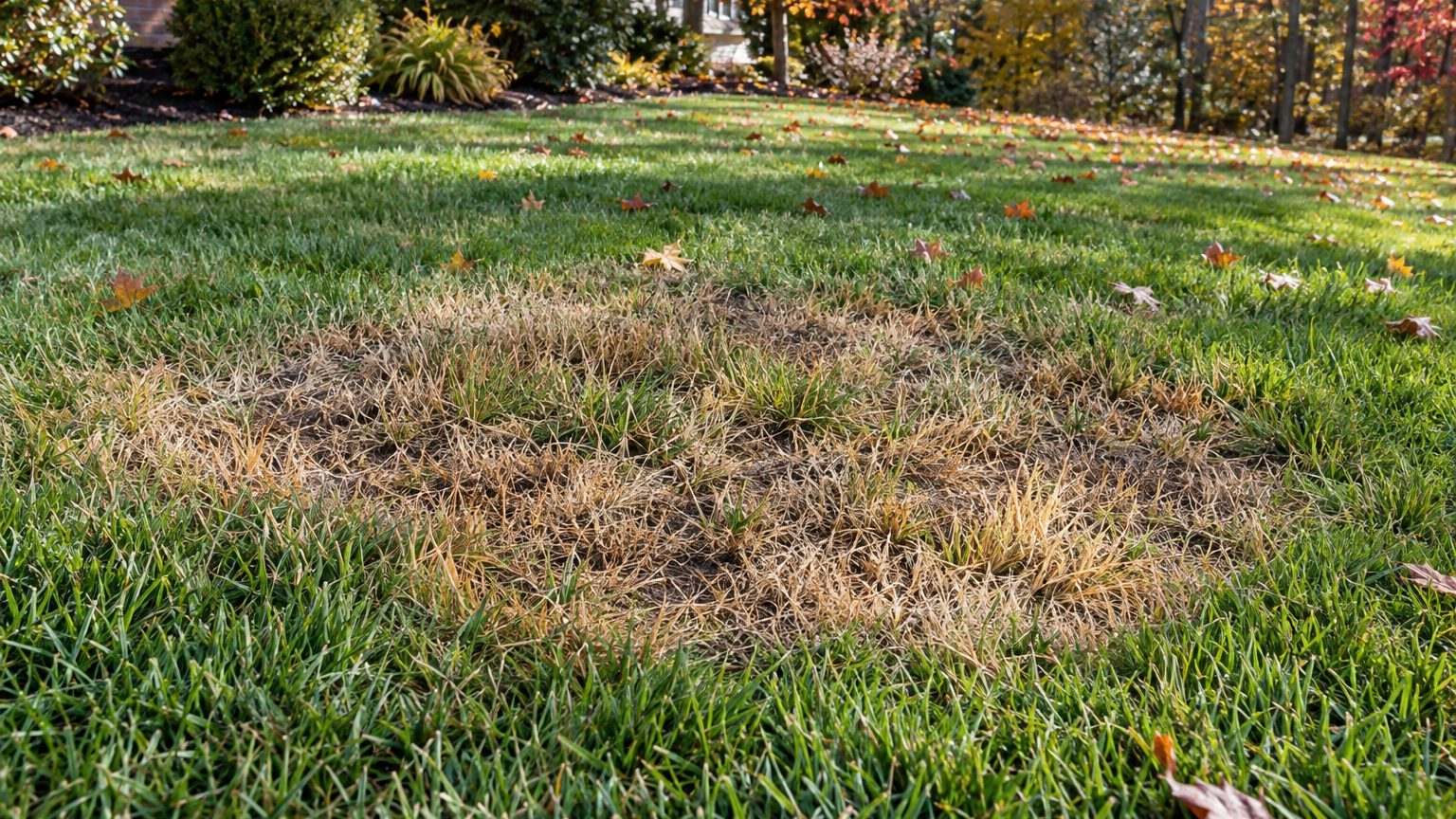
After a fertilizer pass across the lawn, straw-colored stripes sometimes show up exactly where the spreader ran. That is fertilizer burn: the grass is dehydrated by the product meant to feed it. Knowing the pattern, the cause and the cleanup steps helps you distinguish burn from other lawn troubles and support recovery.
How to Recognize Fertilizer Burn

A strong clue is that the damage follows the path you walked with the spreader.
- Stripes of browning turf appear where spreader passes overlapped.
- Patches of brown, dead grass show up at turns, and at the spots where you started and stopped, where extra product tends to drop or spill.
- Browning is spread evenly over each affected plant rather than appearing as scattered speckles or spots.
- Blade tips and leaf edges turn dry and dead, and some leaves look bleached, twisted or cupped.
- Growth in the affected areas is stunted, and severely affected spots may die outright.
Compare the damaged area with the route taken by the spreader; overlap stripes and spill patches are the useful clues.
From the almanac
Lawn in your state
The dates on this page depend on where you live. Your state's page carries its frost dates, its USDA zones and the year laid out month by month.
Northeast
Southeast
- Alabama
- Arkansas
- Delaware
- Florida
- Georgia
- Kentucky
- Louisiana
- Maryland
- Mississippi
- North Carolina
- South Carolina
- Tennessee
- Virginia
- West Virginia
Midwest
Southwest
West
Pacific Northwest
Canada
Problems Mistaken for Fertilizer Burn
Brown turf can have other causes, some close enough to burn to send people reaching for the hose when they should be looking at something else.
Use the shape of the damage together with the application history. Check the shape of the damage, then think back to what you applied and when.
| Looks like | How to tell them apart |
|---|---|
| Disease or insect damage, with brown patches in the lawn | The symptoms are not evenly distributed on each plant and do not follow the fertilizer application pattern, while burn lines up with that pattern. |
| Injury from a pesticide or other chemical, with scorched, twisted or bleached blades | The symptoms can match burn closely, so look at which product went down and where. Damage that traces your fertilizer pass points to burn. |
Drought stress and pet urine spots also leave brown turf. These problems do not follow a spreader pattern, so compare the shape of the damage with the recent fertilizer application.
What Causes Fertilizer Burn
Mineral fertilizers are salt-based products. When mineral fertilizer spills on turf, the high salt concentration pulls water out of plant cells, causing them to die. Salts building up in the soil also damage roots and cut down the water they can take up.
Anywhere grass is fertilized, the same few habits lead to trouble:
- Quick-release products that are not watered in properly.
- Applying in hot weather.
- Putting down far more than the lawn needs.
- Dropping extra at turns, starts and stops, or spilling product on the turf.
Region matters less than these habits. Lawns are at risk when quick-release products are applied in hot weather or are not watered in properly. Grass that is already stressed has less room for error.
How to Fix Fertilizer Burn
Act quickly when you catch a spill, then be patient while you watch the damaged turf.
- Pick up loose granules, since every bit you remove is salt the soil no longer has to absorb. Extension guidance for a spill on turf is to use a shop vacuum or another method to collect as much as possible.
- Flush the area with water once the product is picked up, which dilutes whatever remains and moves salts down away from the roots.
- Skip any further fertilizer on the damaged turf, because more salt on stressed roots only deepens the injury.
- Continue providing good care while you wait to see whether the grass recovers.
- Hold off on judging the damage, since in Iowa the advice for a burned plant is that all that can be done is to wait and see while providing good care.
- Reseed or patch with sod any spots that stay brown and bare after new growth has filled in everywhere else, because dead turf does not return on its own.
Your state’s extension office can tell you which seed or sod suits your lawn and the best planting window for patches where you live.
How to Prevent Fertilizer Burn
Careful application habits can reduce the risk of fertilizer burn.
- In Washington, fertilize moderately according to the lawn’s needs.
- Keep each application within the recommended rate. According to Kansas State University Extension, no more than 1 pound of actual nitrogen per 1,000 square feet per application reduces burn potential dramatically.
- Split potash applications throughout the growing season. According to Kansas State University Extension, potash goes down in 1.5-pound increments because rates above 1.5 pounds per 1,000 square feet may cause burning.
- In hot weather, hold off on quick-release products, which are a common cause of burn under those conditions.
- Water quick-release products in properly after application.
Shut the spreader before turns and sweep stray granules off the driveway to help prevent overlap stripes.
Common Questions
How Soon Does Fertilizer Burn Show Up?
It depends on the product. Symptoms can develop within a few hours, a few days, or take more than a week after the application. The pattern in which you spread the fertilizer is the giveaway.
Will Burned Grass Grow Back?
Sometimes. Recovery depends on how severe the damage is, the grass itself, its overall health and the product involved. New growth may be unaffected, but badly burned turf can die, and those areas need reseeding or sod.
Can Potted Plants Recover from Too Much Fertilizer?
Leaching may remove some excess salts, but recovery is not guaranteed. Water the container heavily and let the wastewater drain away from the pot, which flushes out some of the excess salts.