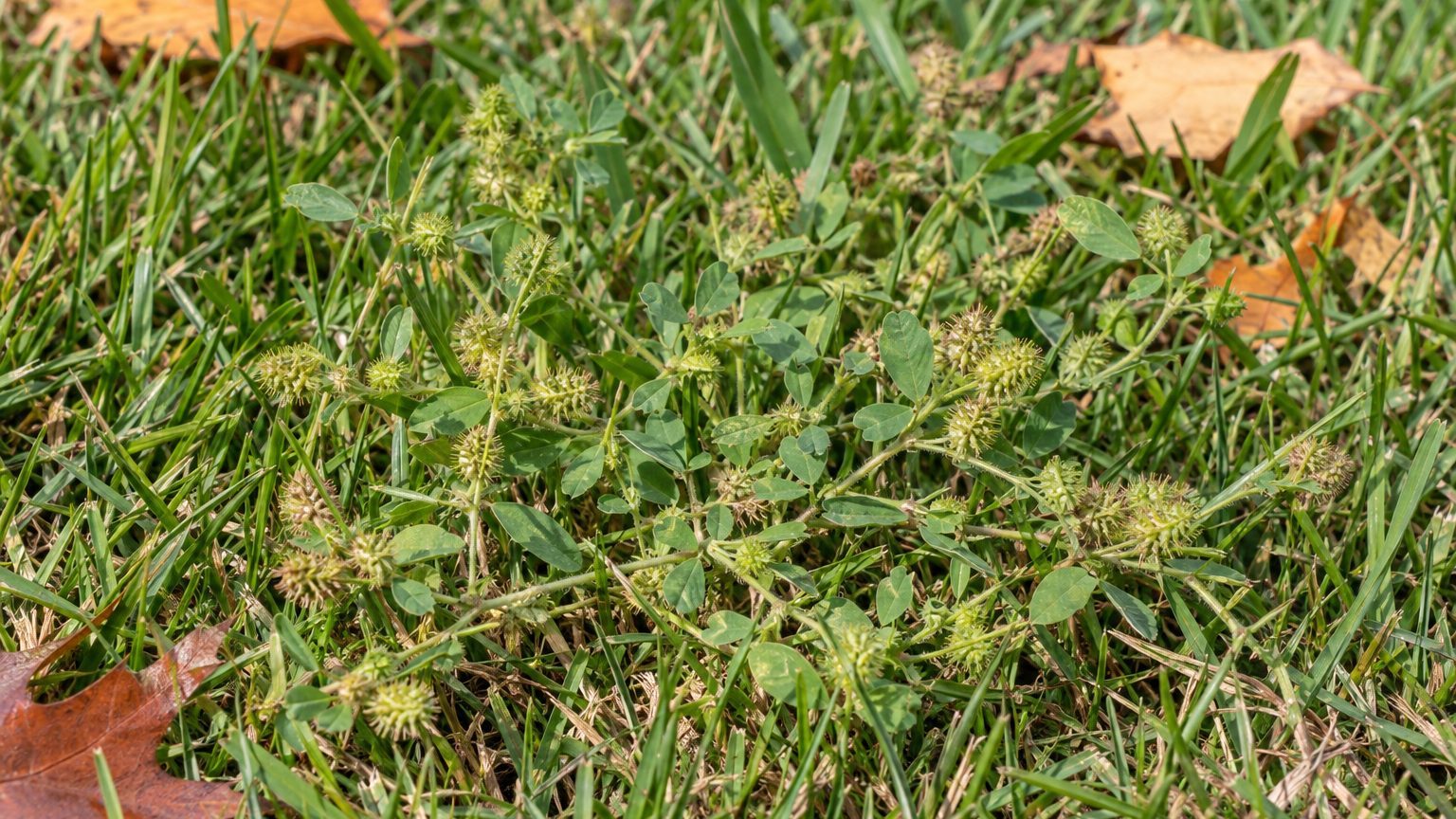
A patch of low, yellow-green, clover-like leaves can spread across thin spots in the lawn, and its coiled burs can cling to socks and paws. That is burclover, an annual weed that takes over wherever turf is thin. Knowing it on sight makes it easier to remove.
How to Identify Burclover

Start at ground level, because the pods and the way the plant sprawls give it away faster than the leaves do.
- The seed pod is a flattened, tightly coiled bur, commonly up to 1/4 inch wide, and it often carries small prickles that catch on shoes and fur.
- Each leaf has small leaflets with finely toothed edges, a look that reads as clover at a glance.
- Stems radiate from a central crown like spokes, and the plant spreads out 6 to 30 inches in a flat mat.
- The stems trail along the ground and can reach 2 feet long, though they may rise upright when the plant is crowded.
- In California, it germinates in fall and continues through winter and early spring.
Finding a coiled pod is a strong sign that the plant is burclover.
From the almanac
Lawn in your state
The dates on this page depend on where you live. Your state's page carries its frost dates, its USDA zones and the year laid out month by month.
Northeast
Southeast
- Alabama
- Arkansas
- Delaware
- Florida
- Georgia
- Kentucky
- Louisiana
- Maryland
- Mississippi
- North Carolina
- South Carolina
- Tennessee
- Virginia
- West Virginia
Midwest
Southwest
West
Pacific Northwest
Canada
Weeds Mistaken for Burclover
Oxalis is commonly confused with clovers, and it grows in many of the same thin, bare spots. A quick look at the leaf stalk and the leaflet tip separates oxalis from burclover.
| Looks like | How to tell them apart |
|---|---|
| Oxalis, with leaves in a clover-like arrangement | Each leaflet has a more pronounced notch at the top, and there is no stipule (the small leafy flap) where the leaf stalk meets the stem. |
Black medic is the other near twin, and plant guides often mix it up with Medicago polymorpha, the burclover in your lawn. Both are annual clovers that cause trouble in turf. Check the pods: burclover makes a coiled bur, while black medic makes tiny dark pods without that spiny coil.
What Causes Burclover in Lawns
Seed is the cause. A well-developed plant can produce more than 1,000 pods, and those seeds wait in the soil until conditions suit them. A thin, stressed lawn gives them room to sprout and spread, which is why bare patches and worn edges fill first.
According to UC IPM, University of California, seeds begin to germinate in fall when soil temperatures are in the 50° to 60°F range, and germination continues through the winter and early spring months. Also in California, high phosphorus in the soil promotes the invasion of clovers, so a soil test before you fertilize is worth the small effort.
The weed is adaptable, too. It is often found along roadsides, disturbed areas, and stream banks, and it tolerates most soil types and moisture levels. Disturbed areas are common places to find it.
How to Get Rid of Burclover
Control can follow a sequence, starting with the plants you can see and ending with the bare ground they leave behind.
- Pull young plants by hand when the soil is moist, because the whole crown comes out and the mat cannot regrow from it.
- Mow regularly with the bag attached, since cutting the trailing stems keeps the mat from spreading and the bag keeps pods off the soil.
- Rake the patch and bag everything, so loose pods and stems do not reseed the area.
- Fill the bare spots with grass seed or sod, because a dense lawn leaves little room for the next round of seedlings.
- Control options include hand pulling, mowing, and herbicides; ask your state extension office which lawn products and timing fit your area.
Mulch can also control seedlings in planting beds beside the lawn. According to UC IPM, University of California, mulch laid after seedlings have sprouted needs to be 4 to 6 inches deep and cover the plants completely.
How to Prevent Burclover
Prevention follows the weed’s own calendar, since it sprouts in the cool months and sets seed as the weather warms.
- Repair thin turf so grass can fill the gaps before burclover establishes.
- Before seeds germinate, lay a 4-inch layer of organic mulch over bare beds beside the lawn, which in California prevents clovers from establishing.
- In California, scan the lawn edges through winter and early spring and pull seedlings as they appear, since germination continues through those months.
- Before fertilizing in California, test the soil and skip extra phosphorus if the test shows plenty, because high levels favor clovers.
- Mow with a bag and clean the mower deck and your shoes after working a weedy patch, so pods do not travel to clean turf.
Use these measures together, and burclover will find very little open ground in which to establish.
Common Questions
Does Burclover Come Back Every Year?
It returns from seed, not from old roots. Burclover is an annual, so the plants die after setting pods, but seed left in the soil can sprout later. Stopping the pods from dropping is what ends the cycle.
Is Burclover the Same as White Clover?
No. Depending on the species, clovers have an annual or a perennial life cycle. Burclover is an annual with coiled pods, so it can be pulled out and kept from reseeding, while a perennial clover keeps coming back from its roots.
Are Burclover Burs a Problem for Pets and Bare Feet?
They can be. The prickly coiled pods stick to fur, socks, and shoe soles, and they are uncomfortable underfoot. Brush pets after a walk across a patch of the weed and clear the pods from the lawn before the play season.