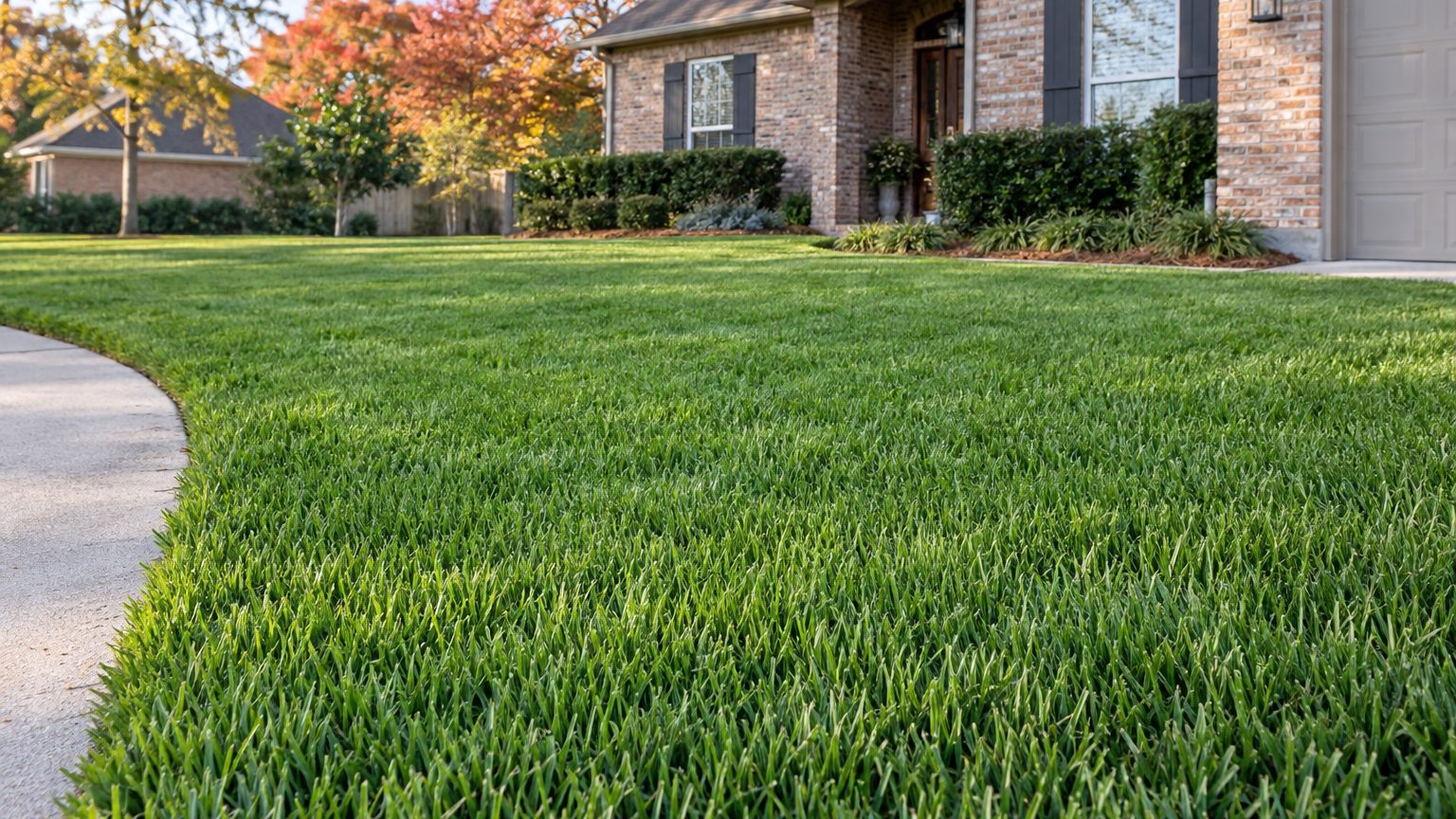
Summer in Louisiana does more to a lawn than winter ever will. Heat, humidity and heavy rain set the pace for Louisiana yards, and the right grasses and the timing of the main lawn jobs follow from that.
Frost Dates and Growing Season in Louisiana
The dates below are for New Orleans, while the USDA hardiness system places Louisiana across zones 8a to 10a; summer heat matters more to the lawn than frost.
- In New Orleans, a freeze can still arrive between December 17 and January 8, but roughly one year in seven passes with no freeze at all, so warm-season grass mostly rests rather than suffers.
- By late winter in New Orleans, the last spring freeze falls between January 18 and February 8, which means a young seedling rarely faces frost there, though north Louisiana freezes far more reliably.
- In early spring, mowing starts in March as the grass greens up, because growth follows soil warmth and not the calendar of the last frost.
- Fertilizing and watering span much of the warm season, while dethatching and core aeration belong in narrower windows around the start of active growth.
- In autumn, mowing continues through November while growth slows, and there is no frost deadline that closes a seeding season, since seeding belongs to late spring here.
Summer heat, not frost, is the limit you plan around, and that flips the usual planting calendar upside down.
Louisiana — the year and the numbers
- State
- Louisiana
- USDA zones
- 8a-10a
- Last spring frost
- January 18 to February 8
- First fall frost
- December 17 to January 8
- Annual rain
- 63 in
- Lawn type
- warm-season
- Source
- NOAA NCEI 1991-2020 Climate Normals, 32F freeze probabilities · New Orleans
Cool-Season or Warm-Season Grass in Louisiana?
Warm-season grass is the answer. Mild winters make cold hardiness a minor concern, while long, humid summers and heat stress rule out cool-season types like tall fescue, which struggle to survive a Louisiana July.
Warm-season grasses go dormant and turn tan in a hard freeze, then wake up as the soil warms. That short brown spell is normal and does not mean the lawn has died.
| Grass | How it does in Louisiana | Why |
|---|---|---|
| St. Augustinegrass | A common choice for home lawns | Sold as sod or plugs only, with no seed available |
| Centipedegrass | Suits low-maintenance lawns | Can be started from seed, sod or plugs |
| Bermudagrass | Handles heat and sun well | Can be started from seed |
| Zoysiagrass | Forms a dense turf | Mostly planted as sod or plugs |
| Bahiagrass | Tough on poor ground | Can be started from seed |
Each of these five is a warm-season grass, so the choice comes down to sun, upkeep and whether you want to start from seed or sod.
When to Seed, Fertilize and Aerate a Lawn in Louisiana
Nearly every big lawn job here lands in late spring and summer, when warm-season grass is growing fast enough to recover. Work done in that stretch heals quickly.
Only seeded grasses (bermuda, centipede, bahia) can be started from seed. St. Augustine has no seed, so it goes in as sod or plugs.
| Task | When to do it in Louisiana | Why then |
|---|---|---|
| Seeding | May, and June if May slips by | Warm soil gets seed up and rooted quickly |
| Laying sod | May, and it also works in April, June and July | Active growth helps sod knit into the soil |
| Core aeration | May, and June also works | The grass fills in the holes fast |
| Dethatching | May and June, and April also works | Growing turf recovers from the disturbance |
| Fertilizing | May through August | Feeding matches active turf growth |
| Watering | May through September | Heat and dry spells call for extra moisture |
Mowing runs the longest of all, from March through November, so the mower is the tool you reach for most often.
Lawn Problems to Watch for in Louisiana
Winter Browning
Tan, crispy-looking grass after a cold snap is usually dormancy, not death. Warm-season turf pauses when temperatures drop, and it returns as the soil warms. Hold off on fertilizer until growth resumes in spring.
Heat and Drought Stress
Grass that turns dull blue-gray and stays flat after you walk across it is asking for water. Louisiana summers can dry a lawn quickly even in a humid climate. Water as needed from May through September, soaking deeply rather than sprinkling lightly.
Thin Turf in Wet, Shady Spots

Humidity and heavy rain keep shaded areas damp, and thin, patchy grass there often points to too little sun combined with soggy soil. Improve drainage where water sits, and consider a shade-tolerant choice or a bed of mulch where turf will not hold.
How Lawn Care Dates Change Across Louisiana
Louisiana is mostly flat, so latitude and distance from the Gulf drive the differences more than elevation does.
- The Gulf Coast: Mild winters can bring an early green-up and a short dormant season.
- New Orleans and Baton Rouge: Freezes are occasional, and spring growth starts early enough that mowing can begin in March.
- North Louisiana around Shreveport and Monroe: Freezes come more reliably, so dormancy lasts longer and spring green-up arrives a little later.
If you live in the northern parishes, lean toward the later side of any spring window, and near the coast, the earlier side.
Where to Get Lawn Advice in Louisiana
The LSU AgCenter is the state’s extension service, and it has an office tied to every parish, which makes it the natural place for questions about your own soil and grass.
- Contact your parish extension office to arrange a soil test, which tells you what the lawn needs before you buy fertilizer.
- Bring a sample of a struggling patch to the office for a diagnosis when the cause is not obvious.
- Go in late winter or early spring, so you have results in hand before the May window for seeding and feeding opens.
Common Questions
Can You Plant Cool-Season Grass in Louisiana?
You can, but it rarely lasts. Cool-season types struggle through the heat of a Louisiana summer, so most homeowners stay with warm-season grasses that are built for it.
Why Is My St. Augustine Lawn Not Growing from Seed?
St. Augustinegrass is never sold as seed. It has to be planted as sod or plugs, and May is the best month, with April, June and July also working.
Is Brown Grass in Winter a Sign the Lawn Is Dying?
Not by itself. Look for tan grass across the whole yard after cold weather, followed by green growth as spring warms the soil. That pairing points to normal dormancy.