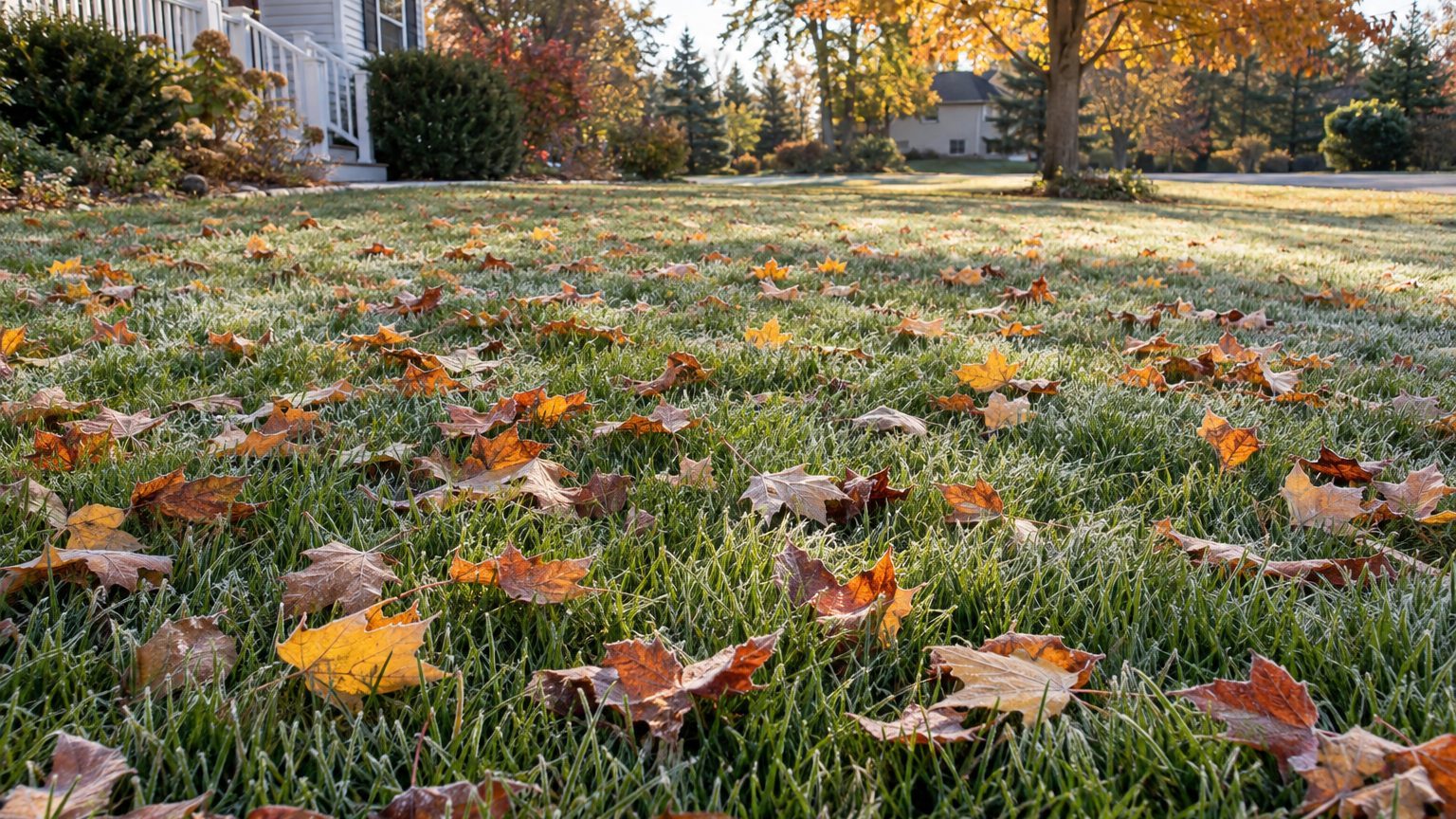
Leaves settle on the grass, the mower sounds different as growth slows, and frost silvers the lawn in the morning. Fall and winter lawn care is the work that happens between those signs: feeding, seeding, late-season mowing, leaf cleanup, and staying off the turf once it freezes. Timing shifts with your grass and your region.
What Should You Do to Your Lawn in Fall and Winter?
The work may include feeding, seeding, aerating, mowing, and clearing leaves, with timing set by grass type and region. For cool-season lawns, local fall timing depends on soil warmth and the arrival of winter. Warm-season lawns slow down sooner and mostly need a tidy finish and a rest.
What varies is the grass type, how fast your soil cools, and how early winter arrives where you live. The state-by-state calendar just below gives each state’s window, with its months and zone.
From the almanac
Lawn in your state
The dates on this page depend on where you live. Your state's page carries its frost dates, its USDA zones and the year laid out month by month.
Northeast
Southeast
- Alabama
- Arkansas
- Delaware
- Florida
- Georgia
- Kentucky
- Louisiana
- Maryland
- Mississippi
- North Carolina
- South Carolina
- Tennessee
- Virginia
- West Virginia
Midwest
Southwest
West
Pacific Northwest
Canada
How to Prepare a Lawn for Winter

Use the lawn’s growth and local frost timing to schedule the work below.
- Core-aerate compacted areas so water drains and any seed you sow afterward has better contact with the soil.
- Sow seed or lay sod while the ground is still warm. In Maryland, that means no later than mid-October, since killing frosts in November can damage young seedlings.
- Feed with nitrogen in early fall, when the grass is still putting energy into roots. According to University of Wisconsin Extension, about 1 pound per 1,000 square feet in early fall suits all lawns.
- In Wisconsin, keep mowing until the lawn goes dormant, and do not let the grass enter winter excessively tall.
- Make the last cut ½ inch shorter than usual, which improves air circulation and makes snow mold less likely. In Maryland, that final mow may fall in late November.
- In Wisconsin, clear leaves before snow arrives. If leaves cover the grass thickly, move them onto planting beds or shred them in place with the mower so the pieces filter down into the lawn.
Fertilizer has a legal edge in some places. Maryland’s lawn fertilizer law sets a cutoff of November 15, so the last feeding has to go down before then. The legal cutoff still applies if the lawn remains green and growing.
Fall Lawn Care by Grass Type
Cool-season grasses grow actively in the mild, moist weather of fall, which is why seeding and feeding cluster there. Warm-season grasses run on soil warmth, so they fade as the ground cools and sit out winter as a brown, resting lawn.
Brown does not always mean dead. Each grass has its own way of shutting down, and knowing yours keeps you from panicking or overworking it.
| Grass | Season | How it does in cold or stress |
|---|---|---|
| Tall fescue | Cool | Goes dormant in hot, dry weather and turns brown, then greens up when it cools and rain returns (Maryland) |
| Kentucky bluegrass | Cool | Survives several weeks of drought in a completely brown state by going dormant (Wisconsin) |
| Zoysia | Warm | Generally dormant from mid-October to mid-May (Maryland) |
Dormant grass is alive but not repairing itself, so it handles foot traffic poorly. In Wisconsin, irrigation to prevent dormancy is a good practice if you use your yard actively all summer. With zoysia, a long brown winter is normal, so judge it by spring recovery rather than by winter color.
Fall Lawn Care Mistakes to Avoid
Feeding in Mid-Fall
A nitrogen application in mid-fall can trigger a late surge of growth. In Wisconsin, that soft, lush growth can promote snow mold and vole damage over winter. Feed earlier in the season, while the grass can still use the nitrogen, and skip the mid-fall round.
Walking on Frozen Turf
Frozen or snow-covered grass is brittle, and steps can injure the crowns, the main growth points. The damage often shows as thin or dead patches in spring. In Maryland, the advice is to stay off it, so route shortcuts and dog runs onto paths or mulch.
Melting Ice with Fertilizer
Fertilizer is not a deicer, and it can burn grass along walks and driveways. In Maryland, using fertilizer to melt ice also violates the lawn fertilizer law. Use sand or a product made for ice instead, and shovel early so less treatment is needed.
Fall Lawn Care in Your State
Let the lawn tell you when to act. Cool-season grass is ready to seed and feed while it is still growing and the soil holds warmth. Warm-season grass is ready to rest once growth stops and color fades.
- Your state’s own page gives its months for seeding, feeding, and the last mow, so check it before you buy seed or fertilizer.
- Go back to it in late fall to time your leaf cleanup and your final cut before the ground freezes.
Common Questions
What Does Snow Mold Look Like?
In Wisconsin, look for circular, sometimes irregular patches of matted grass that show up as the snow melts. That pattern points to snow mold diseases such as Typhula blight or Microdochium patch. Rake the patches gently once the lawn dries, and the grass often recovers.
Should You Rake Leaves in Spring as Well?
Yes, if leaves and winter debris are left on the lawn. In Wisconsin, the advice is to rake them up carefully as the snow melts and conditions dry out. Raking too early, while the soil is soggy, can tear up the grass.
Does the Lawn Need Lime Every Year?
No. In Maryland, fertilizer and lime are applied as needed based on soil test results, and lime is not needed every year. Your state extension office can tell you how to send in a soil sample.