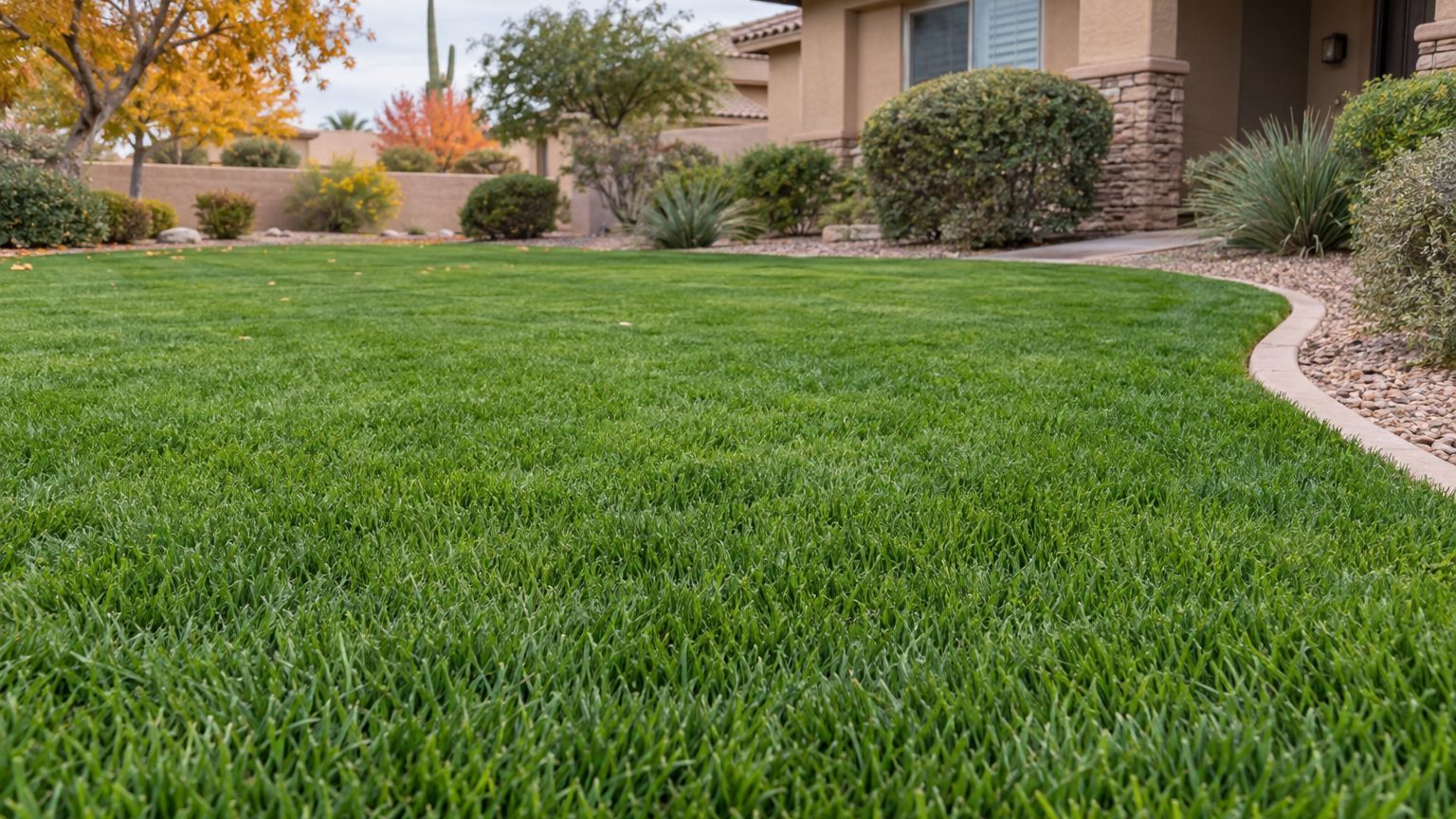
Brown, crunchy grass in July signals summer stress across the Arizona desert, while a green lawn in January often comes from winter overseeding. Lawns in Arizona follow heat more than cold, so the care schedule runs on soil warmth and summer stress rather than on frost dates.
Frost Dates and Growing Season in Arizona
In Phoenix, the low desert reference point, a freeze is rare, with a cold snap reaching 32F only between late December and mid January in some years. Those cold snaps matter little for an established lawn but can nip a young seedling. There is no dependable fall freeze, so the seeding season is not cut short by cold. Growth follows soil warmth, and the zone range of 4b to 10b on the USDA system means Flagstaff and the high country live in another climate entirely.
- In winter, bermudagrass goes dormant and tan, and a perennial ryegrass overseeding keeps the yard green through the cool months.
- In March and April, mowing begins as the grass wakes up, and watering starts in April once growth picks up.
- In April and May, soil is warm enough for seed to sprout quickly, which makes these the months to seed.
- In May and June, the lawn is growing hard, so this is the window for dethatching and feeding.
- From July through August, heat is the main stress, so you keep mowing and watering and hold off on heavy work.
- In September and October, cooling nights bring a fall feeding window.
Because the low desert has almost no frost season, the limiting factor is summer heat rather than a last-frost date.
Arizona — the year and the numbers
- State
- Arizona
- USDA zones
- 4b-10b
- Frost
- none in an average year
- Annual rain
- 7 in
- Lawn type
- warm-season
- Source
- NOAA NCEI 1991-2020 Climate Normals + NOAA RCC ACIS daily records, station USW00023183 — https://www.ncei.noaa.gov/access/services/data/v1?dataset=normals-annualseasonal&stations=USW00023183 · Phoenix
Cool-Season or Warm-Season Grass in Arizona?
Warm-season grass is what holds up in the low desert. Summer heat and dry air punish cool-season types, while mild winters let warm-season grass go dormant without damage.
Many homeowners add a cool-season grass on top in fall so the yard stays green through winter, then let it fade as heat returns.
| Grass | Season | How it does here |
|---|---|---|
| Bermudagrass | Warm | Thrives through summer heat, then turns tan in winter |
| Perennial ryegrass | Cool | Used only for winter overseeding, since it fades in summer heat |
St. Augustinegrass is also grown in warm climates, but it is never sold as seed, so it goes in as sod or plugs. In the high country around Flagstaff, where winters freeze hard, the choice looks very different.
When to Seed, Fertilize and Aerate a Lawn in Arizona
The key dates cluster in late spring and early fall. Seed when the soil is warm enough for fast germination but before intense summer heat arrives.
Ask your county extension office about aeration timing, since the available guidance does not provide a window.
| Task | Best months in Arizona | Why then |
|---|---|---|
| Seeding | April, May | Warm soil sprouts seed fast and roots build before peak heat |
| Fertilizing | May, June, September, October | Grass is actively growing and can use the nutrients |
| Dethatching | May, June | The lawn is growing strongly and recovers quickly |
| Watering | April through October | Growth and heat demand regular moisture |
| Mowing | March through November | The lawn is growing for most of the year |
If you miss the spring seeding window, wait for the next season rather than seeding into peak summer heat.
Lawn Problems to Watch for in Arizona
Brown Patches in Midsummer

Heat and dry air stress turf even when it is watered. Look for dull, bluish grass that stays footprinted after you walk across it, especially along hot driveways and sidewalks.
Water regularly through summer and keep mowing, since the lawn is still growing and needs moisture to hold up.
Thick Thatch and Spongy Turf
Bermudagrass builds a layer of dead stems and roots at the soil surface. If the lawn feels springy underfoot and water runs off instead of soaking in, thatch is the likely cause.
Dethatch in May or June, when the grass grows fast enough to recover.
Winter Dormancy That Looks Like Death
Straw-colored bermudagrass in winter alarms many homeowners. If the turf is tan across the whole lawn and the stolons still look firm and pale rather than brittle, it is simply dormant. It greens up again as the soil warms.
How Lawn Care Dates Change Across Arizona
Elevation shapes the season more than distance. The desert floor and the mountains run on different clocks.
- Phoenix and the low desert: Frost is rare, so summer heat sets the pace, and the schedule here follows the calendar above.
- Flagstaff and the high country: Winters freeze hard and the growing season starts later, so spring work comes later and cool-season grass makes more sense.
- Southern valleys and foothills: Conditions vary, so local advice is more reliable than a statewide climate shortcut.
If you live outside Phoenix, treat these dates as a starting point and shift them toward your own local warmth.
Where to Get Lawn Advice in Arizona
Local conditions vary a great deal across the state, so local advice pays off, especially for soil and diagnosis.
- University of Arizona Cooperative Extension offers lawn guidance written for desert and high country conditions, useful before you plan a seeding.
- Your county extension office can help with a soil test or a diagnosis of problem patches, and a visit before spring work helps you plan.
Common Questions
Can You Keep a Lawn Green All Year in Arizona?
Yes, in the low desert. Bermudagrass goes tan in winter, so many homeowners overseed with perennial ryegrass to keep the yard green until warm weather returns.
Is Summer Too Hot to Seed a Lawn in Arizona?
Yes. Seeding works best in April and May, when soil is warm but peak heat has not set in.
Does Frost Matter for Lawns in Phoenix?
Rarely. A freeze happens only in some years, and the biggest risk is to young seedlings rather than established grass.