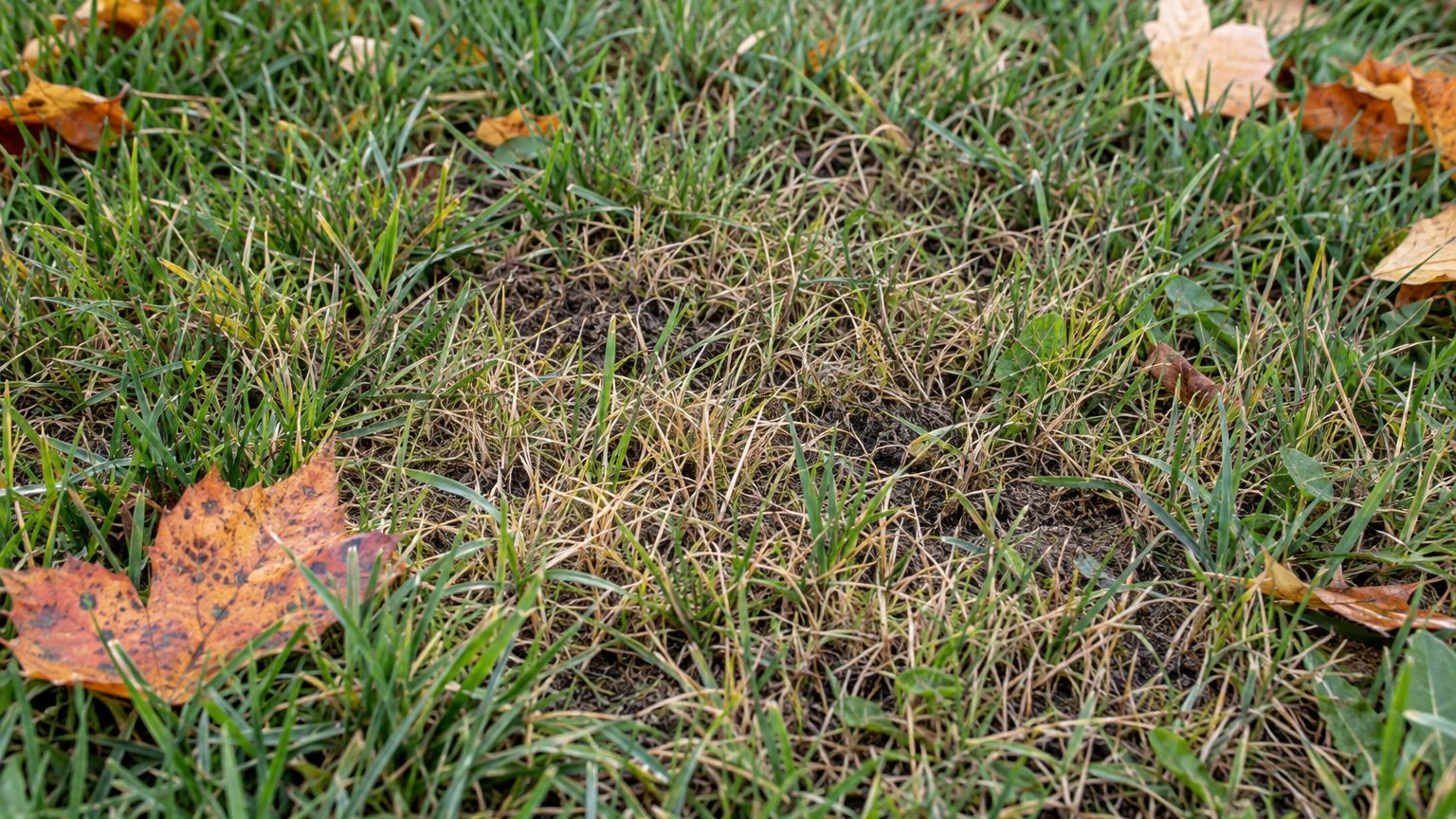
Under an old maple or oak, the grass rarely looks like the lawn out in the open. It grows sparse, pale and floppy, with soil showing between the blades. The shadow pattern points to limited light as the place to start.
How to Recognize Thin Grass in Shade

A useful sign is a lawn that thins out only where shadow falls and stays dense in the sunny stretches beside it.
- The thin area follows the shadow line of a tree, fence or house, and the turf turns thick again where the sun reaches it.
- Bare soil shows between the grass plants, and the gaps may widen as the turf thins.
- Leaf blades look pale, narrow and floppy, and the grass lies down instead of standing upright.
- Moss and shade-loving weeds can move into the gaps.
- Patches may look worse once the canopy is fully leafed and blocks more light.
Lawns under trees are typically thin, weak and of poor quality, and too much shade lowers grass vigor until the turf thins out.
From the almanac
Lawn in your state
The dates on this page depend on where you live. Your state's page carries its frost dates, its USDA zones and the year laid out month by month.
Northeast
Southeast
- Alabama
- Arkansas
- Delaware
- Florida
- Georgia
- Kentucky
- Louisiana
- Maryland
- Mississippi
- North Carolina
- South Carolina
- Tennessee
- Virginia
- West Virginia
Midwest
Southwest
West
Pacific Northwest
Canada
Problems Mistaken for Thin Grass in Shade
Plenty of things leave a lawn looking thin. Some of them happen in shade too, which makes the light the wrong place to look first.
Check the pattern of the damage and what the lawn has been through, and the real cause usually shows itself.
| Looks like | How to tell them apart |
|---|---|
| Foot traffic wear | Thin strips follow a walking path or play area rather than the shadow line, and the soil underneath feels packed hard. |
| Too much nitrogen | Weak, thin turf shows up after heavy feeding, and the sunny parts of the lawn may look off too. |
| Perennial ryegrass dying out | In Nebraska, perennial ryegrass seeded in shade may fade because it survives only one or two seasons. |
Heavy traffic can add wear to shaded turf, especially along paths.
What Causes Thin Grass in Shade
Grass makes its food from sunlight, and a canopy takes that away. Turfgrasses need a minimum of 6 hours of full sun a day, so anything less makes keeping them healthy a challenge. Even shade-tolerant grasses still need an acceptable amount of light to grow.
Feeding can make things worse. Too much nitrogen can be detrimental to shade lawn species, so a heavy dose meant to thicken the turf often does the opposite.
A tree canopy can reduce the light reaching turf and cause thinning. In summer, a fully leafed canopy can limit the light reaching the grass.
Light is also the reason the right grass type matters. A shade-tolerant mixture is a better fit, but no turfgrass grows in darkness.
How to Fix Thin Grass in Shade
Start by checking the light, then work through the lawn in this order.
- Watch how light moves across the yard in summer, when the canopy is fully leafed, so you know how many hours of sun the turf gets. A shade-tolerant lawn species needs at least 2 hours of direct sunlight every day.
- Prepare the thin area so the seed can reach the soil.
- Sow a shade-tolerant grass mixture, since in Illinois choosing one is considered critical; in Nebraska, perennial ryegrass fades quickly in shade.
- Water the new seed so the top layer stays moist until it sprouts, then ease off so roots can reach deeper.
- Feed lightly, because in Illinois about one to two pounds of actual nitrogen per 1,000 square feet per growing season is all that is needed.
- Mow high all summer, and in Nebraska the advice is 3 to 3.5 inches, which builds a deeper root system and cuts down on weeds.
Once the grass is established, wait to water again until the top 2-3 inches of soil appear dry, as Nebraska guidance puts it. That may mean one, two or more weeks depending on temperatures. If practices have been followed and the lawn still fails, there probably is not enough light even for shade-tolerant grass species. At that point, your state extension office can suggest ground covers or mulch for the deepest shade.
How to Prevent Thin Grass in Shade
Routine care should avoid adding stress to a shaded lawn.
- Clear matted leaves and debris so light and air can reach the grass.
- In Illinois, choose a shade-tolerant mixture when overseeding thin spots.
- In Nebraska, mow high all summer and wait to water until the topsoil appears dry.
- Clear fallen leaves so they do not smother the grass.
- In Illinois, reduce foot traffic over lawns in the shade.
Illinois guidance also says that following these steps helps avoid thin turf in the first place.
Common Questions
Why Does Shaded Grass Look Worse in Late Summer?
A fully leafed canopy can limit the light reaching the turf. Heat and dry spells add stress, and the thinning becomes visible.
What Can Replace Grass Where Shade Is Too Dense?
Mulch, shade-loving ground covers or a path of stepping stones suit spots where grass keeps failing. Local garden centers can name plants that suit your area.
Does Raking Leaves Off a Shaded Lawn Really Matter?
Yes. A mat of wet leaves blocks what little light there is and holds moisture against the grass. Keeping the surface clear helps the turf stay thick.