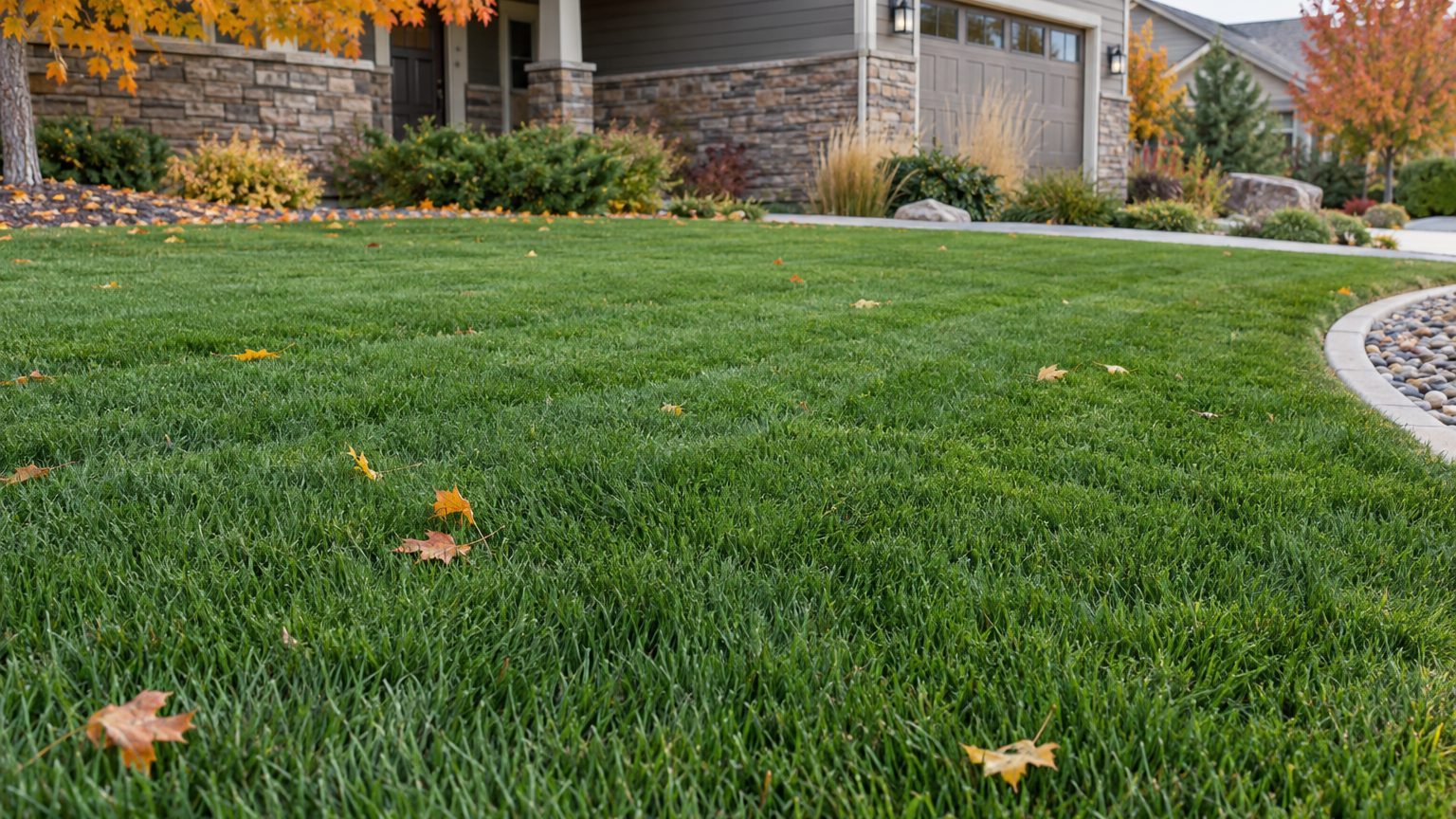
Colorado lawns go dormant and straw-colored for months, then green up fast when the soil warms in spring. Most of the work happens from late summer into fall, with a lighter push in spring, and the grass that suits the state is the cool-season kind.
Frost Dates and Growing Season in Colorado
On the Front Range plains around Denver (USDA zones in Colorado run from 3b to 7b across the whole state), the last spring freeze usually lands between May 1 and May 11. Young seedlings can be killed by a freeze, so a late seeding needs that margin. The first fall freeze arrives between September 30 and October 12, which ends the useful seeding season because new grass needs time to root first. Grass growth itself follows soil warmth, not the calendar date of a frost.
- In early spring, the lawn is still dormant or just waking, so this is the time to rake off winter debris and plan crabgrass control before the soil warms.
- Once the soil warms in April and May, mowing begins and the grass thickens, and a spring fertilizer or a light overseed can go down if the lawn needs it.
- From June through August, heat and dry air set the pace, and watering matters most in these months.
- In late summer, August and September suit seeding and dethatching, while September is the time for core aeration.
- In October and November, mowing continues while the grass slows down, and a final feeding in November helps the roots store energy for winter.
Mountain towns have far shorter seasons and can see frost even in July, so treat these dates as a guide for the Denver area only.
Colorado — the year and the numbers
- State
- Colorado
- USDA zones
- 3b-7b
- Last spring frost
- May 1 to May 11
- First fall frost
- September 30 to October 12
- Annual rain
- 15 in
- Lawn type
- cool-season
- Source
- NOAA NCEI 1991-2020 Climate Normals, 32F freeze probabilities · Denver
Cool-Season or Warm-Season Grass in Colorado?
Cool-season grasses are the sensible choice for most Colorado yards. They handle cold winters and bounce back after dormancy, and they grow hardest in spring and fall when the weather is mild.
Summer heat and dry air are the real tests, so water use and drought tolerance matter as much as winter hardiness.
| Grass | How it does in Colorado | Why |
|---|---|---|
| Kentucky bluegrass | Dense, classic lawn that needs regular water in summer | Spreads by rhizomes and repairs itself after dormancy |
| Tall fescue | Holds up better in heat and dry spells | Deep roots reach moisture lower in the soil |
| Perennial ryegrass | Sprouts quickly, often mixed with other grasses | Fast germination fills in bare spots |
| Fine fescues | Suited to lighter, lower-input lawns and some shade | Fine blades manage on less feeding and water |
Creeping red, chewings and hard fescue are the fine fescues you will see in seed mixes. Which one fits your yard depends on sun, shade and how much you want to water.
When to Seed, Fertilize and Aerate a Lawn in Colorado
Late summer into fall carries most of the big jobs, because warm soil and cooler air help seed and roots settle in. Spring works for lighter tasks, and a missed window usually has a fallback.
If you miss the fall window for seeding, April and May still work, though young grass will face summer heat sooner.
| Task | Best months in Colorado | Why then |
|---|---|---|
| Seeding | August, September | Warm soil speeds germination and roots form before winter |
| Core aeration | September | Grass is actively growing and recovers quickly |
| Dethatching | August, September | The lawn can fill in the thinned areas right away |
| Fertilizing | September, November | Feeds roots before and after top growth slows |
| Crabgrass preventer | April | Goes down before weed seeds sprout in warming soil |
| Watering | June, July, August | Summer heat and dry air demand the most moisture |
Aeration also works in April and May, dethatching in April, fertilizing in May, and crabgrass preventer in May. Mowing runs from April through November.
Lawn Problems to Watch for in Colorado
Winter Dryness and Straw-Colored Patches
Colorado winters are dry and often sunny, so grass can lose moisture while the ground stays frozen or the air stays windy. In spring you may see tan, crispy areas, usually along south-facing slopes or near pavement where the soil dries fastest.
Water the lawn during dry winter spells when the ground is not frozen. Wait for spring growth before deciding whether a patch is dead or only dormant.
Brown Grass in Summer Heat

When summer sun and dry air push hard, grass turns dull and stiff underfoot, and footprints stay visible after you walk across. Water deeply and regularly during June through August instead of sprinkling lightly, so roots grow down rather than staying shallow.
Compacted, Thin Turf
Much Colorado soil is heavy or packed, and water runs off instead of soaking in. Thin turf plus puddling after irrigation points to compaction. Core aeration in September opens the soil, and seeding right afterward helps the lawn thicken.
How Lawn Care Dates Change Across Colorado
Elevation does most of the shifting here, with Denver as the reference point for the frost dates above.
- Denver: The frost dates above apply to the reference location; elsewhere on the Front Range, follow local conditions.
- Mountain towns such as Breckenridge and Leadville: Seasons run far shorter, spring tasks start later, and seeding needs to happen earlier in late summer so roots set before frost.
- Grand Junction and the Western Slope: The climate differs again from the Front Range, with warmer, drier conditions that call for close attention to watering.
The higher you live, the more you should lean toward the earliest part of each fall window.
Where to Get Lawn Advice in Colorado
Colorado State University Extension offers research-based lawn guidance for the state’s soils and climate, and your county office can help with local questions.
- Check the extension website for guidance on grass choice, watering and soil before you buy seed or fertilizer.
- Contact your county extension office for a soil test or to get help diagnosing a patchy area.
Common Questions
Is Colorado Soil Good for Growing Grass?
It can be, but many yards have heavy or compacted soil that sheds water. A soil test through your county extension office shows what yours needs, and aeration helps with compaction.
Should You Rake or Leave Grass Clippings on a Colorado Lawn?
Leaving short clippings in place returns nutrients to the soil. Rake or bag them if they clump and smother the grass underneath.
Can a Brown Lawn in Colorado Come Back?
Often yes. If the crowns are still alive, a dormant lawn greens up when conditions improve. Tug a handful of grass, and if it pulls out easily with no roots holding, that patch is likely dead and needs reseeding.