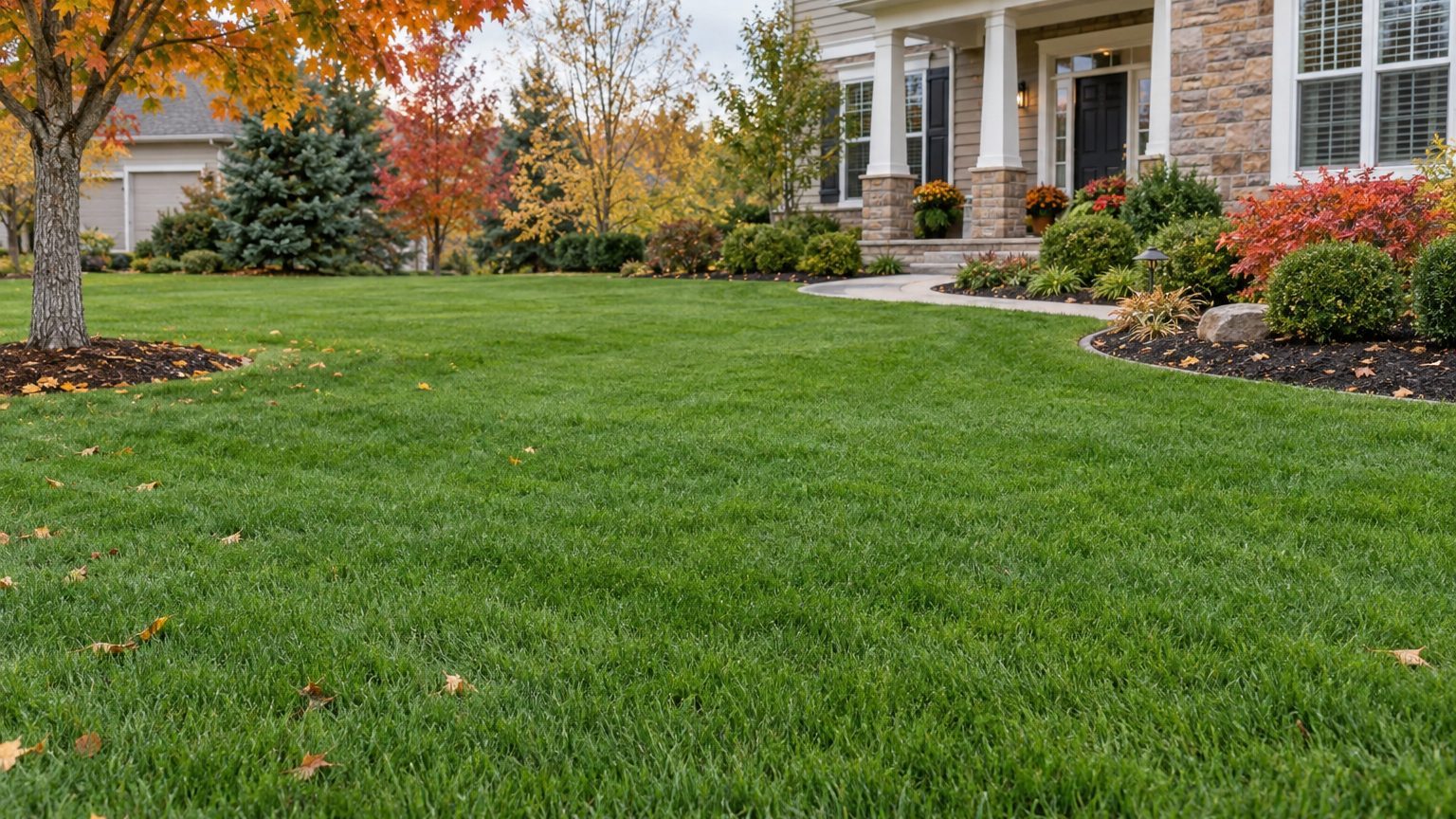
Kentucky bluegrass is the deep green, dense turf that fills in around a worn spot on its own after a hard winter or a summer of foot traffic. It is a cool-season grass that suits sunny yards across the northern half of the country, and it needs more attention in the transition belt.
What Is Kentucky Bluegrass?
Kentucky bluegrass is a cool-season grass, so it grows hardest in spring and fall and slows when summer heat settles in. It spreads by rhizomes, underground stems that knit the turf into a tight mat.
Those rhizomes are why it recovers well from damage, filling thin patches without reseeding. It wants full sun, though its shade tolerance is rated good. Cold hardiness is excellent to very good, and wear tolerance is good.
You can start it from seed or sod. For a new lawn from seed, the range runs from 1 to 3 lb per 1000 square feet, depending on whether it is planted alone or in a mix.
From the almanac
Lawn in your state
The dates on this page depend on where you live. Your state's page carries its frost dates, its USDA zones and the year laid out month by month.
Northeast
Southeast
- Alabama
- Arkansas
- Delaware
- Florida
- Georgia
- Kentucky
- Louisiana
- Maryland
- Mississippi
- North Carolina
- South Carolina
- Tennessee
- Virginia
- West Virginia
Midwest
Southwest
West
Pacific Northwest
Canada
Where Does Kentucky Bluegrass Grow Best?
Kentucky bluegrass does best on sunny, well-drained sites in the cool-season zone, and it struggles as summer heat days pile up. The state selector just under this section leads to the page for your state.
- Upper Midwest and Great Plains: Nebraska, Iowa, Minnesota and the Dakotas are first-choice territory. That excellent to very good cold hardiness is a strong fit for this region.
- Great Lakes and Northeast: Ohio, Michigan, New York and New Hampshire suit it well. Summers in these states generally suit this cool-season grass.
- Transition belt: Kentucky, Tennessee, Kansas, Oklahoma and Colorado make it a compromise where no grass excels. Oklahoma’s summer heat makes summer stress the main worry.
- Deep South and Southwest: Texas, Florida, Louisiana, Mississippi, Arizona and Nevada will not hold it. Choose a locally adapted warm-season grass such as bermudagrass instead.
A state is not a zone, so the far ends of a large state can fall in the neighboring one. Western Kansas or high-elevation Colorado can behave differently from the reference figures above.
How to Care for Kentucky Bluegrass Through the Year
Spring Wake-Up
Bluegrass greens up early, as soil warms, and its rhizomes start filling gaps left by winter. Rake out matted debris so new shoots reach light, and overseed bare spots while the weather is still cool.
Mowing Height
Extension sources vary, and together they span 1.5 to 3.5 inches. Most land between 2 and 3 inches, with the taller end suiting hot or shaded yards.
Keep blades sharp and cut often enough that you never remove much of the leaf at once.
Summer Heat

Drought tolerance is good to fair, so bluegrass can go dormant and brown in a dry spell, then recover. Mow at the high end of the range, and water deeply when you do water, rather than sprinkling lightly.
Fall Growth
Fall is when a cool-season lawn rebuilds. Cooler air and warm soil favor root growth, making it the natural time to seed thin areas, using the lower overseeding rate if the lawn is already established.
Winter Rest
Bluegrass goes dormant and tolerates deep cold. Keep heavy traffic off frozen, frosted turf, since the blades snap easily, and avoid piling snow or debris on the same patch all season.
Kentucky Bluegrass Diseases, Pests and Weak Points
The documented strengths of this grass are about climate and recovery rather than a list of diseases. Extension sources used here rate its cold, shade and wear tolerance well, and describe its spreading habit as a strength.
Heat and dry spells are where it gives ground. Specific disease and insect resistance is not documented in these sources, so there is nothing reliable to claim either way.
| Threat | How Kentucky Bluegrass handles it |
|---|---|
| Cold | Excellent to very good hardiness |
| Drought | Good to fair, may go dormant |
| Foot traffic | Good wear tolerance, recovers by rhizomes |
| Shade | Good tolerance, though it prefers full sun |
Diseases and insect pests are not covered by the sources here, so check with your local extension office if you see patches that worry you.
Is Kentucky Bluegrass Right for Your Yard?
It suits sunny yards with well-drained soil in the cool-season zone, where kids and pets wear the grass down. It is a poor match for the Deep South, or for owners who want a lawn that stays green through long, hot, dry stretches.
- In a sunny yard in the northern states, expect a dense lawn that repairs itself, and plan seeding for the cool months of fall.
- In the transition belt, accept some summer browning, or consider whether a different grass fits your site better.
- In the South and Southwest, skip it and choose a warm-season grass, then open the state selector to find your state’s page.
Common Questions
Can Kentucky Bluegrass Grow in Partial Shade?
Yes, its shade tolerance is rated good, but it still wants full sun to look its best. Thin turf under trees often needs a taller cut.
Does Kentucky Bluegrass Need Seed or Sod?
Either works.
Will Kentucky Bluegrass Survive a Hot Summer in Kentucky?
Often it does, though Kentucky is a transition territory where it is a compromise. Expect some browning in dry heat, and deep watering helps it recover.