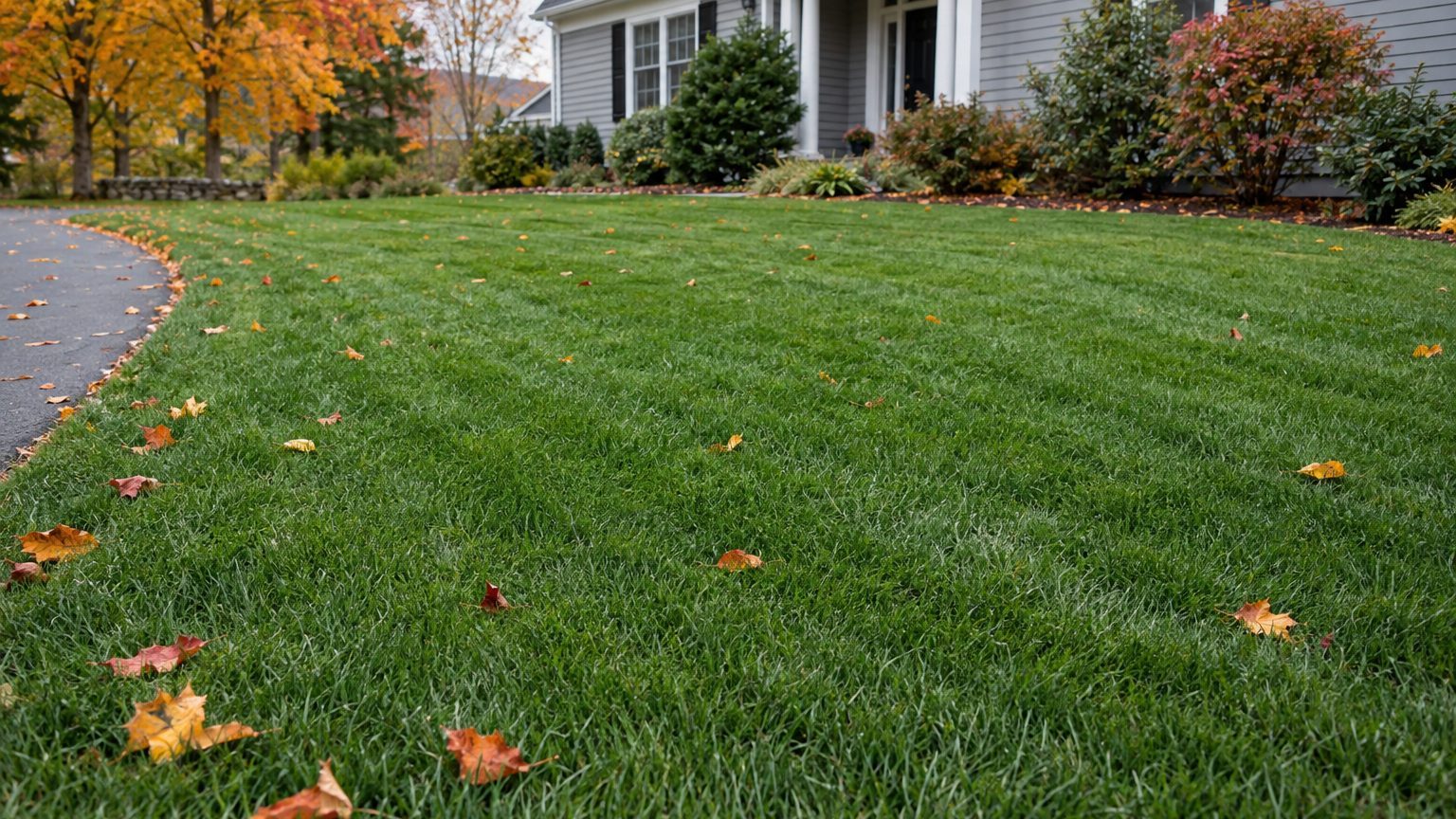
Snow melts off the lawn, the grass greens up slowly, and by midsummer a Vermont yard is thick and cool-looking if the right seed went down at the right time. Lawns in Vermont run on cool-season grasses, a short growing season and a legal fertilizer window, so the timing of each job matters more than the effort behind it.
Frost Dates and Growing Season in Vermont
Around Burlington, on the mild shore of Lake Champlain, the last spring freeze usually lands between April 30 and May 10, and the first fall freeze between October 3 and October 13. The statewide hardiness range runs from zone 3b to 5b (USDA system), so the Green Mountains and the Northeast Kingdom run shorter than those dates. The year in the yard unfolds like this:
- In early spring, the ground thaws and the snow mold mats may need a light rake.
- In April and May, crabgrass preventer goes down before the weed seed germinates, and a late freeze near the end of that stretch can still nip a young seeding.
- Once the soil warms in late spring, mowing picks up and the lawn grows actively, which makes May a good month for feeding.
- From June through August, watering becomes the main chore as summer dry spells stress cool-season grass.
- In late summer and September, seeding, aeration and dethatching all have their best window, with soil still warm and nights turning cool.
- In October and November, mowing continues as long as the grass grows, but the seeding window has already closed.
Frost dates mark when cold can injure tender growth, not when grass starts or stops. Growth follows soil warmth, so the lawn wakes later and sleeps earlier than the calendar alone suggests.
Vermont — the year and the numbers
- State
- Vermont
- USDA zones
- 3b-5b
- Last spring frost
- April 30 to May 10
- First fall frost
- October 3 to October 13
- Annual rain
- 38 in
- Lawn type
- cool-season
- Source
- NOAA NCEI 1991-2020 Climate Normals, 32F freeze probabilities · Burlington
Cool-Season or Warm-Season Grass in Vermont?
Cool-season grass is the only sensible choice here. Warm-season species such as bermudagrass or zoysia are poorly suited to Vermont’s climate, while cool-season types go dormant under snow and return in spring.
Summer heat is mild by national standards, so the main stress is a dry spell in July or August rather than sustained heat.
| Grass | Season | How it does here |
|---|---|---|
| Kentucky bluegrass | Cool | Handles hard winters and spreads to fill thin spots |
| Fine fescues | Cool | Copes with shade and poorer soil, needs less feeding |
| Perennial ryegrass | Cool | Sprouts fast and works well in seed mixes |
| Tall fescue | Cool | Deep roots help it ride out dry summer stretches |
Fine fescues include creeping red, chewings and hard fescue. Blending these grasses can help a lawn hold up in both sun and shade.
When to Seed, Fertilize and Aerate a Lawn in Vermont
Vermont law bars lawn fertilizer before April 1 and after October 15, and on frozen ground at any time. Within that window, spring and early fall feedings are the ones that pay off.
If you miss the best seeding stretch, May still works, though summer heat then tests the new grass.
| Task | Recommended timing in Vermont | Why then |
|---|---|---|
| Seeding | August, September | Warm soil and cool nights help seedlings root before winter |
| Fertilizing | May, September | Grass is growing actively and can use the nutrients |
| Core aeration | September | Opens compacted soil while grass can recover and seed can follow |
| Dethatching | September | Roots recover quickly in the cooler weather |
| Crabgrass preventer | April | Goes down before weed seed sprouts |
| Watering | June, July, August | Summer dry spells stress shallow roots |
Aeration and dethatching also work in May, and a feeding can wait until October if September slips away. Mowing runs from April through November.
Lawn Problems to Watch for in Vermont
Matted Patches After Snowmelt

Grayish or pinkish circles of flattened grass appear as the snow leaves. This is snow mold, which develops under long snow cover. Rake the patches gently to lift the blades and let air in, and the grass usually recovers on its own. Heavy late fertilizing makes it worse.
Compacted, Thin Turf
Grass that thins along paths, near driveways or where kids play often sits on packed soil, and water pools or runs off instead of soaking in. Core aeration in September opens the soil, and overseeding right after fills the gaps while the weather favors seedlings.
Brown Grass in Summer Dry Spells
A lawn that turns straw-colored in July or August, and crunches underfoot, is usually dormant rather than dead. When rain falls short in June, July or August, water deeply enough to support the roots. Raising the mower height also shades the soil and slows the loss of moisture.
How Lawn Care Dates Change Across Vermont
Elevation and lake influence set the pace, so the dates above lean toward the mildest part of the state and shift as you move away from it.
- Champlain Valley: Lake Champlain softens the cold, so spring comes earlier and fall frost arrives later than elsewhere in the state.
- Green Mountains: Higher ground stays cold longer, so spring work starts later and the fall seeding window closes sooner.
- Northeast Kingdom: Cold air settles here and the season runs shorter, so seed earlier in late summer to give roots time before freeze.
- Connecticut River Valley: Lower elevations in the east tend to warm earlier than the hills, so spring tasks can start a little sooner.
When in doubt, watch the soil and the grass itself, and let your own spot set the schedule.
Where to Get Lawn Advice in Vermont
For soil testing and diagnosis of strange patches, local experts know Vermont conditions and can match advice to your yard.
- University of Vermont Extension offers soil testing guidance and lawn care information, and the best time to ask is before you buy fertilizer or seed.
- Your county extension office can help identify a problem from a sample or photo, so reach out when a patch of grass looks wrong.
Common Questions
Can You Fertilize a Lawn in Vermont in Winter?
No. Frozen soil cannot absorb nutrients anyway, so they would wash away.
Is a Vermont Lawn Ever Too Shady for Grass?
Heavy shade under maples and pines limits bluegrass, but fine fescues tolerate it better. If grass still thins out, and moss moves in where the soil stays damp, consider a shade-tolerant mix or a groundcover instead.
Should You Mow Vermont Grass Short Before Winter?
Lower the height a little for the final mowings, but do not scalp. Mowing continues into November while the grass grows, and moderate height protects the crown through the cold.