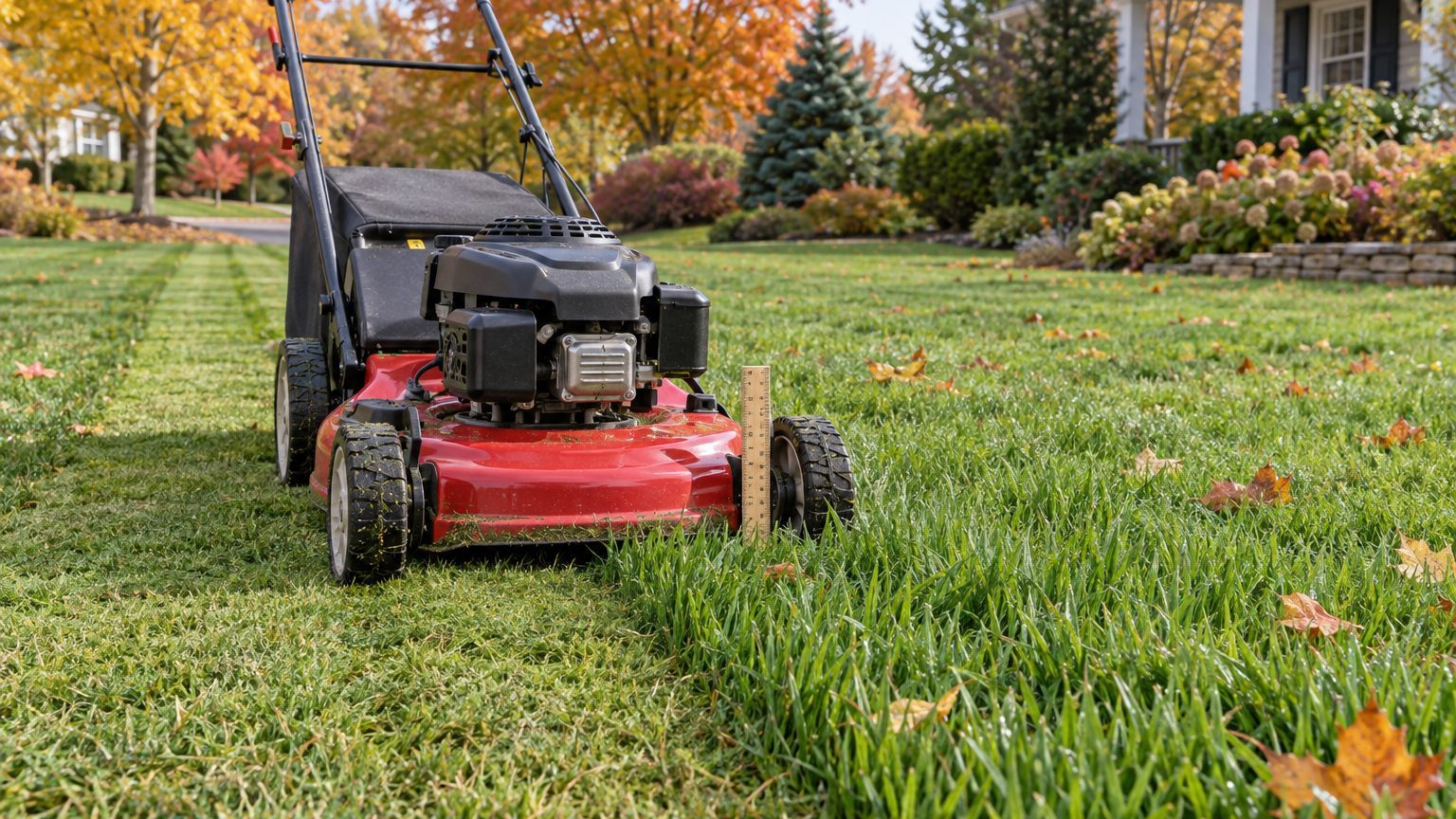
Walk across a lawn left too long between cuts and you can see the problem: seed heads, uneven blades, a bit of yellow at the base. Mowing height plays an important part in lawn health through the year, and the right setting depends on the grass you grow, the season and where you live.
How High Should You Mow Your Lawn?
Mowing height should stay within the range for the grass you grow, and that range can be wide. Cool-season grasses such as tall fescue and Kentucky bluegrass like more height than warm-season grasses such as bermudagrass or zoysiagrass.
Season and weather move the setting too. Heat, drought and shade all call for the higher end of the range, because longer blades shade the soil and feed deeper roots.
Where you live decides which grass you grow and when it is actively growing. The by-state table just under this section gives each state’s window, with its months and zone.
From the almanac
When to mow, state by state
The months each state's extension calendar marks for this, kept inside that state's own frost-free season. Open your state for the frost dates, the USDA zone and the rest of the year.
Northeast
- ConnecticutApr–NovUSDA 6a-7b
- MaineApr–NovUSDA 3b-6a
- MassachusettsApr–NovUSDA 5a-7b
- New HampshireApr–NovUSDA 3b-6a
- New JerseyApr–NovUSDA 6a-7b
- New YorkApr–NovUSDA 3b-7b
- PennsylvaniaApr–NovUSDA 5a-7b
- Rhode IslandApr–NovUSDA 6a-7b
- VermontApr–NovUSDA 3b-5b
Southeast
- AlabamaMar–NovUSDA 7a-9a
- ArkansasMar–NovUSDA 6b-8a
- DelawareApr–NovUSDA 7a-8a
- FloridaAll yearUSDA 8b-11b
- GeorgiaMar–NovUSDA 6a-9b
- KentuckyMar–NovUSDA 6a-7a
- LouisianaMar–NovUSDA 8a-10a
- MarylandMar–NovUSDA 5b-8a
- MississippiMar–NovUSDA 7b-9a
- North CarolinaMar–NovUSDA 5b-8b
- South CarolinaMar–NovUSDA 7a-9a
- TennesseeMar–NovUSDA 5b-8a
- VirginiaMar–NovUSDA 5a-8b
- West VirginiaApr–NovUSDA 5a-7a
Midwest
- IllinoisApr–NovUSDA 5a-7b
- IndianaApr–NovUSDA 5b-7a
- IowaApr–NovUSDA 4b-6a
- KansasMar–NovUSDA 5b-7a
- MichiganApr–NovUSDA 4a-6b
- MinnesotaMay–OctUSDA 3a-5a
- MissouriMar–NovUSDA 5b-7b
- NebraskaApr–NovUSDA 4a-5b
- North DakotaMay–OctUSDA 3a-4b
- OhioApr–NovUSDA 5b-6b
- South DakotaMay–OctUSDA 3b-5b
- WisconsinMay–OctUSDA 3b-6a
Southwest
- ArizonaMar–NovUSDA 4b-10b
- New MexicoMar–NovUSDA 4b-9a
- OklahomaMar–NovUSDA 6a-8a
- TexasApr–OctUSDA 6a-10a
West
- AlaskaJun–SepUSDA 1a-8a
- CaliforniaAll yearUSDA 5a-11a
- ColoradoApr–NovUSDA 3b-7b
- HawaiiAll yearUSDA 9a-13a
- IdahoApr–NovUSDA 3b-7b
- MontanaApr–NovUSDA 3a-6a
- NevadaApr–NovUSDA 4a-10a
- UtahApr–NovUSDA 4a-9a
- WyomingApr–NovUSDA 3a-6a
Pacific Northwest
Canada
- AlbertaMay–OctZone 4a
- British ColumbiaMay–OctZone 9a
- ManitobaMay–OctZone 3b
- New BrunswickMay–OctZone 5a
- Newfoundland and LabradorMay–OctZone 6a
- Northwest TerritoriesJun–SepZone 1b
- Nova ScotiaMay–OctZone 6b
- NunavutJun–SepZone 0a
- OntarioMay–OctZone 7a
- Prince Edward IslandMay–OctZone 5b
- QuebecMay–OctZone 5b
- SaskatchewanMay–OctZone 3a
- YukonJun–SepZone 1b
Sources: state frost facts and Penn State Extension — Lawn Management through the Seasons; Lawn Establishment · UMass Extension — BMPs for Lawn and Landscape Turf, Appendix B (calendar) · Clemson Cooperative Extension, HGIC — Bermudagrass / Zoysiagrass / Centipedegrass / St. Augustinegrass maintenance calendars · University of Tennessee Extension — PB1903 Lawn Maintenance Calendar (2025). A state with no marked month is not shown.
How to Mow a Lawn the Right Way

Good mowing is a short routine, and the order matters because each step protects the one after it.
- Set the deck to the height for your grass before you start, so you cut the lawn at the setting that suits its roots and not at whatever the mower was left on.
- Mow when the grass is dry, because wet blades bend away from the cutter and leave a ragged edge that browns and invites disease.
- Cut before the lawn gets far above your target, removing no more than one-third of the blade height in a single pass; to mow at 3 inches, cut just before it reaches 4 inches, so the grass is not shocked and the roots keep their supply of food.
- Check that the blade is sharp, since a dull blade tears the tips and the whole lawn can soon take on a grayish cast.
- Leave the clippings on the lawn when they are short, so they break down and return nitrogen to the soil.
- Change your mowing direction from cut to cut, which keeps the blades standing upright and stops the mower from wearing ruts into the turf.
When growth is vigorous and the weather is mild, keep the deck within your grass’s recommended range. If the lawn got ahead of you after a rainy stretch, bring it down gradually rather than scalping it.
Mowing Height by Grass Type
The ranges below are wide because lawns grow in very different climates and mixes. Your state extension office gives the local figure, and it is worth a quick look before you settle on a setting.
Cool-season grasses are active in spring and fall and slow down in summer heat. Warm-season grasses do the opposite, and many of them tolerate a much shorter cut.
| Grass | Season | Mowing height (inches) |
|---|---|---|
| Fine fescues | Cool | 1.5 to 4 |
| Kentucky bluegrass | Cool | 1.5 to 3.5 |
| Perennial ryegrass | Cool | 1 to 3 |
| Rough bluegrass | Cool | 1 to 3 |
| Tall fescue | Cool | 2 to 4 |
| Bahiagrass | Warm | 3 to 4 |
| Bermudagrass | Warm | 0.75 to 2 |
| Carpetgrass | Warm | 1 to 2 |
| Centipedegrass | Warm | 1 to 2 |
| Seashore paspalum | Warm | 1 to 2 |
| St. Augustinegrass | Warm | 2 to 4 |
| Zoysiagrass | Warm | 0.75 to 3 |
Start by identifying what is growing in your yard, because the recommended ranges for bermudagrass and tall fescue differ even though they overlap. Bahiagrass and St. Augustinegrass sit at the tall end among the warm-season grasses, while bermudagrass and zoysiagrass can be kept low. If your lawn is a mix, mow to the needs of the dominant grass and lean toward the higher end.
Mowing Mistakes to Avoid
Scalping the Lawn

Cutting far below the recommended height strips the leaf surface the grass uses to make food. The roots shrink, the soil bakes, and weeds find bare ground to sprout in. Raise the deck and keep the stressed lawn at the upper end of its range while it recovers.
Mowing a Dull Blade

A dull blade shreds grass instead of slicing it, and the torn tips lose moisture and turn pale or brown. The lawn also becomes easier for disease to enter. Sharpen or replace the blade at the start of each season, and again if you hit a stump or rock.
Bagging Every Clipping
Hauling off clippings every time takes nutrients out of the yard and adds work you do not need. Short clippings break down quickly and feed the soil. Bag only when the grass has grown tall and wet enough to leave clumps, and spread those clumps thinly or add them to a compost pile.
When to Start and Stop Mowing
Start when the grass visibly begins to grow in spring, and stop when growth fades in fall. Soil warmth and grass type drive this, not the calendar or the last frost date, so cool-season lawns wake earlier than warm-season ones.
- Your state’s page gives the months when mowing typically begins and ends, so check it before seasonal mowing starts.
- Watch the lawn itself for the signal: when blades have grown noticeably above your setting, it is time to mow.
- Mow when growth stops, keeping the deck within your grass’s usual range.
Common Questions
Should You Cut the Grass Shorter Before Winter?
Rake fallen leaves off before winter rather than cutting low, and never drop to a scalping height. Keep it within your grass’s normal range.
Can You Mow a Lawn That Is Wet?
You can, but you should not if you can wait. Wet grass clumps, clogs the deck and cuts unevenly, and wet soil is easily rutted by the mower wheels.
Does a Mulching Mower Change the Right Height?
No. The setting for your grass stays the same. A mulching mower chops clippings finer so they settle into the lawn and break down faster.