Skip to content

Trees

When to Prune Fruit Trees in Florida

When to Prune Fruit Trees in Florida

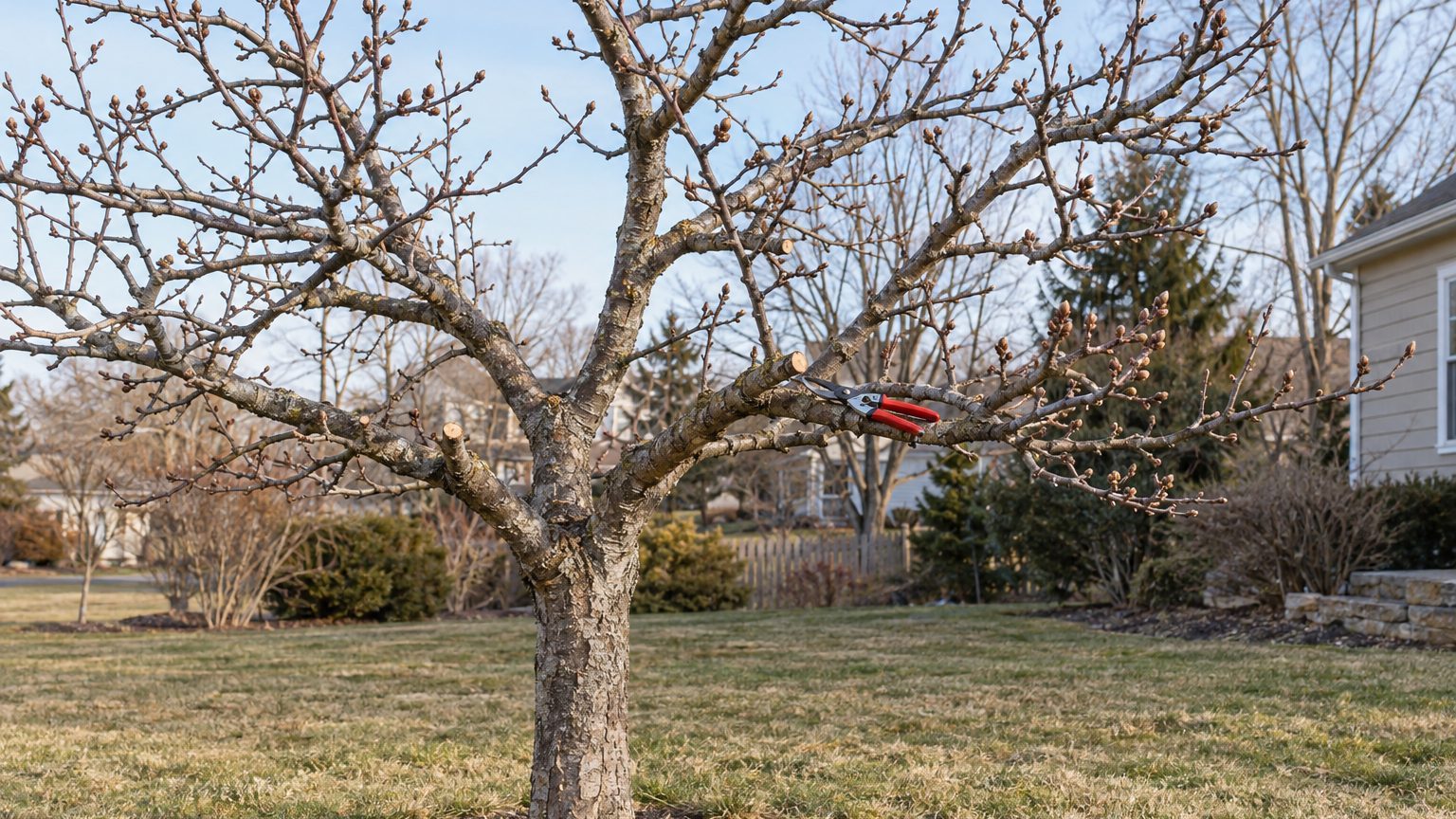
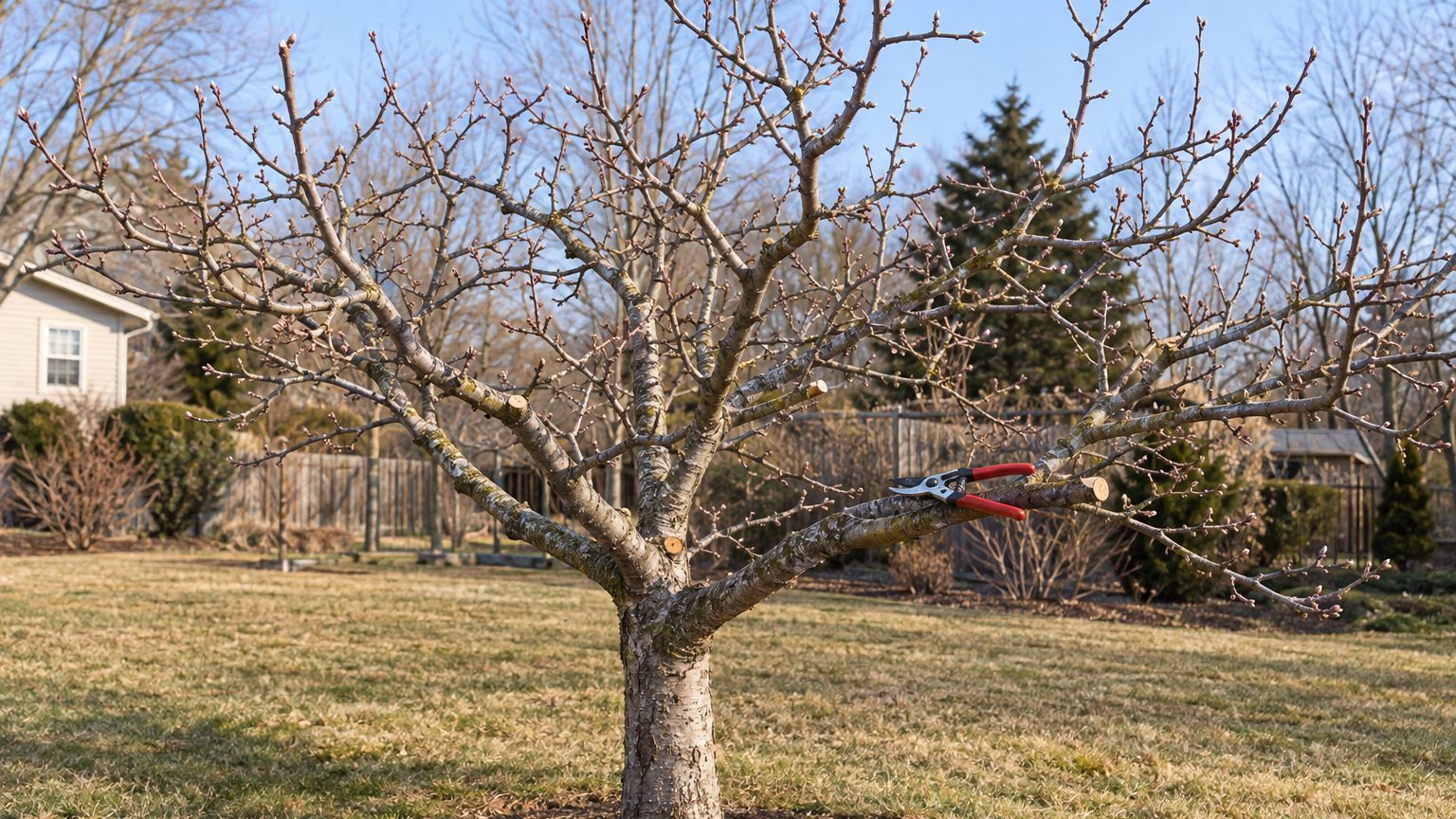
Bare branches in the yard are a sign that the pruning saw can come out. In Florida, deciduous fruit trees such as apples, pears, peaches and plums are pruned in late winter, while they rest and before the buds open.

When to Prune Fruit Trees in Florida

Pruning a dormant fruit tree before the buds open

Dormant pruning of fruit trees falls in January and February. That is the stretch when the tree is asleep and has not yet pushed new growth, so cuts heal cleanly and nothing tender is lost to a cold snap. The calendar here fits north Florida, where winters bring real dormancy.

Fruit tree When to prune in Florida Why
Apples and pears January to February, early in the dormant period Pome fruit goes first, while the tree is deeply at rest and buds are tight
Peaches and nectarines Late in the window, closest to bloom Flower buds are easily hurt by cold, so pruning waits as long as the dormant window allows
Cherries and plums January to February Deciduous fruit trees are pruned while dormant, in late winter
Young trees January to February, after planting while dormant Trees set out in December or January are shaped before spring growth begins

Avoid pruning in fall or early winter. New growth triggered by a cut may not harden before the cold arrives. Container-grown trees can go in the ground most of the year if watered, but they settle best when planted during the dormant season.

How to Tell Your Fruit Trees Are Ready to Prune

Watch the tree itself, because it gives clearer signals than any date on the wall.

  • The leaves have dropped completely, which means the tree has shut down for the winter and cuts will not draw sap.
  • The coldest stretch of winter has passed, so a fresh cut will not be followed by a hard freeze that could damage the wood.
  • The buds are still tight and closed, which tells you there is time to work before growth starts.
  • Buds that look plump or swollen mean the window is closing, and peaches should be pruned last, closest to bloom.
  • Bark and wood look firm and dry rather than green and active, a sign the tree is still resting.

If the buds have started to open, hold off on heavy cuts and remove only dead or broken wood.

When to Prune Peach and Apple Trees in Florida

Apples come first. They are pruned at the heart of the dormant period, in the early part of the January to February window, when the tree is fully at rest and the buds are still sealed.

Peaches wait. Their flower buds are easily hurt by cold, so they are pruned last, closest to bloom, once the worst of winter has passed. Cutting too early can expose buds that a late chill then damages, and you lose the crop before it starts.

Summer pruning is not part of the routine for these trees in Florida. Keep the structural work in the dormant window, and use the warm months only to snip off a broken limb or stray sucker as it appears.

Where to Get Fruit Tree Advice in Florida

Local conditions vary a great deal from the Panhandle to the southern tip, so a nearby expert saves guesswork. Two places are worth a call or a visit.

  • The UF/IFAS Extension offers guides on fruit varieties and pruning, and it is useful to browse before winter arrives.
  • Your county extension office can tell you which fruit trees suit your soil and part of the state, so contact it in late fall to plan the January pruning.

Common Questions

Can You Prune Fruit Trees in Summer in Florida?

Heavy cuts belong in the dormant window. In summer, limit yourself to removing dead, broken or crossing wood as you see it.

Which Fruit Trees Do Well in North Florida?

Loquat is well adapted to north-central Florida, with good cold hardiness and drought tolerance. Pome fruit such as apples, pears and the native mayhaw also does well, and cold-hardy fig cultivars like Celeste, Brown Turkey and Ischia are recommended.

Does the Pruning Calendar Apply in Central and South Florida?

No. Central and south Florida are effectively frost-free, and the growing calendar there runs differently, with the main season through winter. Ask your county extension office for timing that fits those trees.
When to Prune Fruit Trees in Delaware

When to Prune Fruit Trees in Delaware

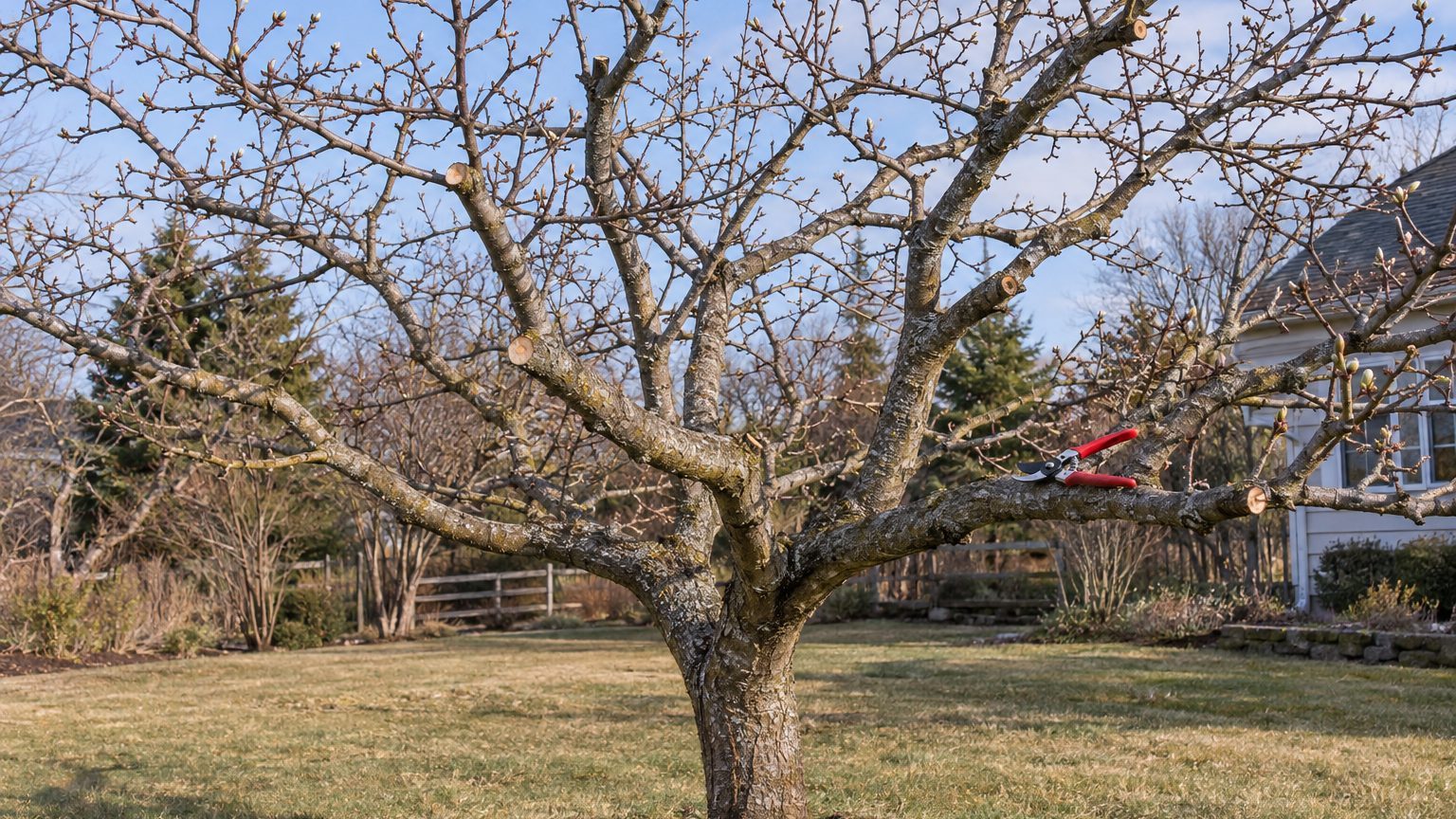
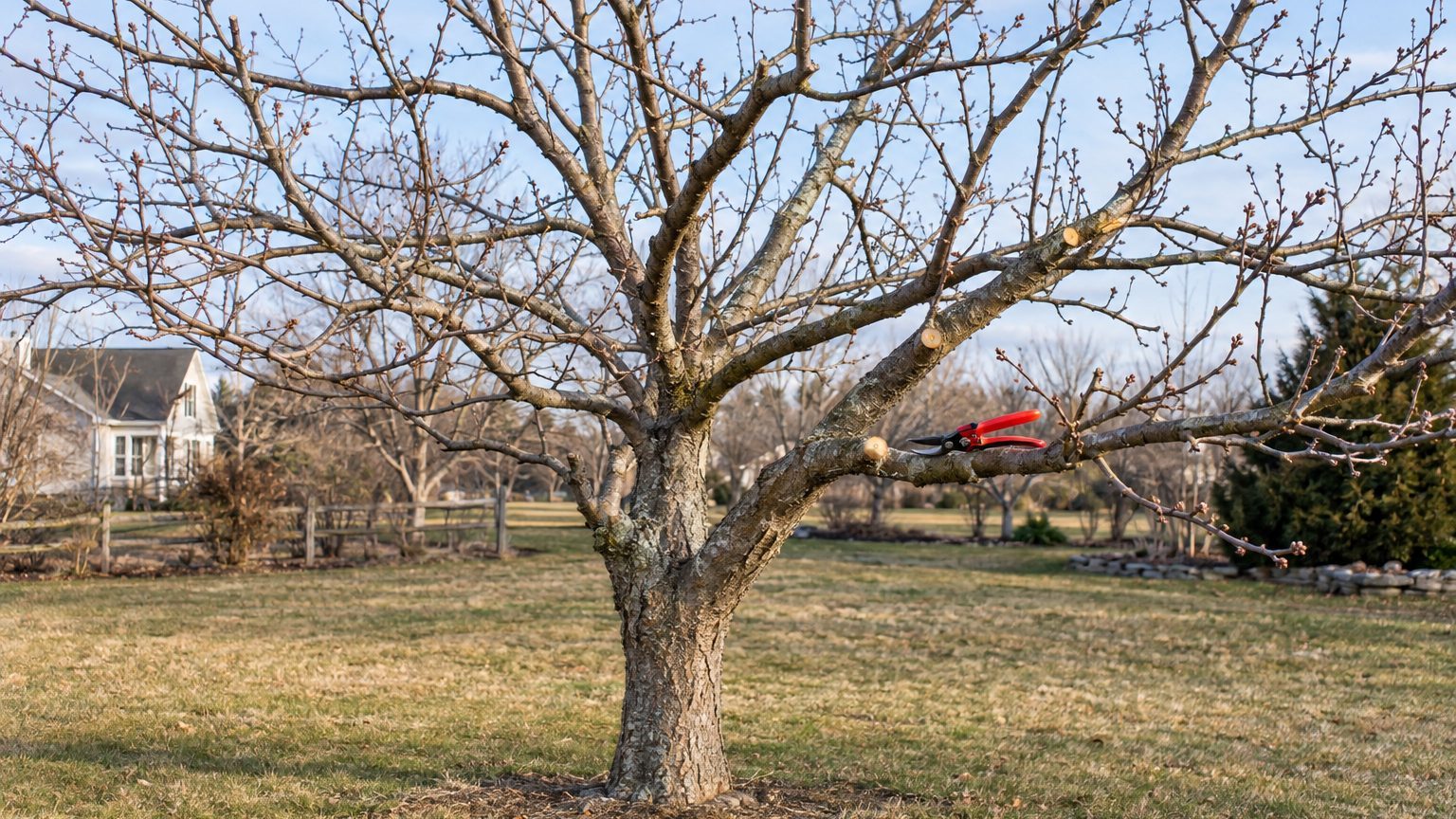
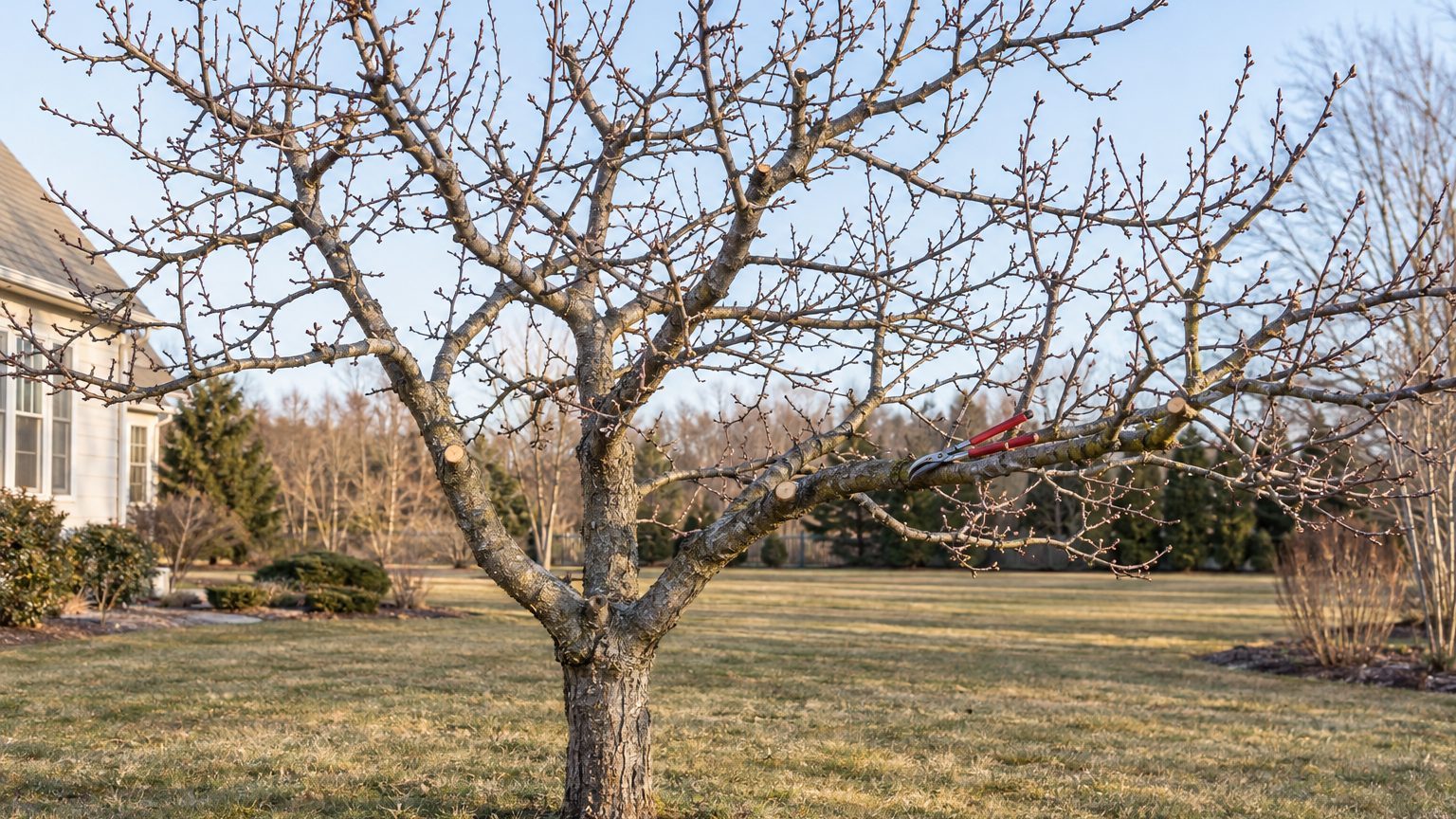
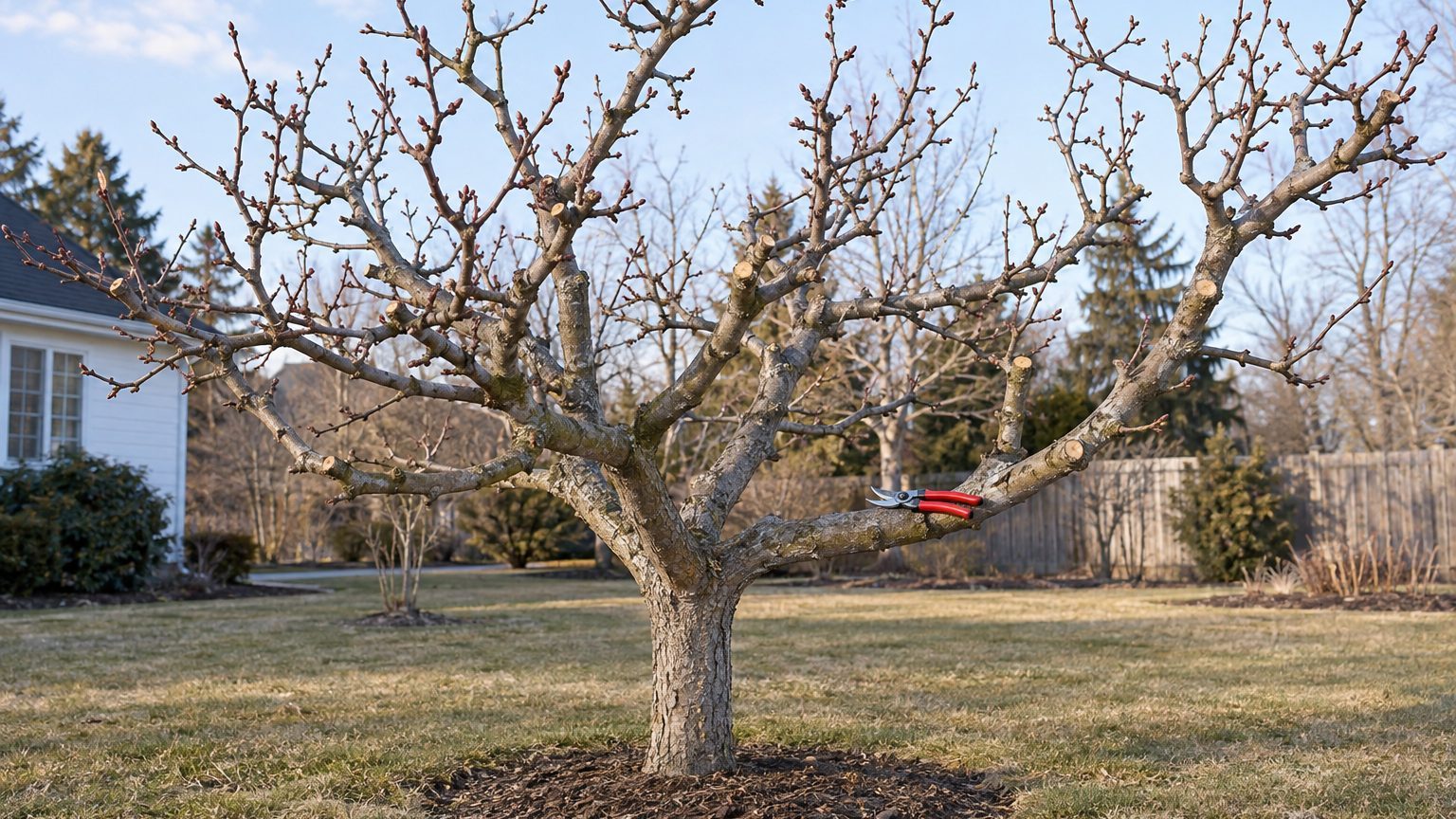
Bare branches against a gray late-winter sky are the signal for fruit tree pruning in Delaware. Apple, pear, peach, cherry and plum trees are cut while they sleep, after the hardest cold has passed and before the buds wake.

When to Prune Fruit Trees in Delaware

Pruning a dormant fruit tree before the buds open

Prune fruit trees in Delaware while they are dormant, in February and March, just before growth begins. Pruning can also be done in April. Cuts made then heal quickly, and the tree has no soft new growth for a cold snap to catch.

Pruning in fall or early winter is avoided, because new growth may not harden before the cold. The table lays out each kind of tree.

Fruit tree When to prune in Delaware Why
Apples and pears February to March, while dormant Apples go first, in the middle of the rest period, before any bud swells
Peaches and nectarines Late March, after apples and pears Their flower buds are easily hurt by cold, so they are cut last, closest to bloom
Cherries and plums February to March, with April as a fallback Cuts made just before growth starts close over quickly
Young trees Not before February Young, nonbearing trees are more likely to suffer winter injury if cut too early

Delaware sits in USDA hardiness zones 7a to 8a, and the last spring frost at the Wilmington airport falls between April 3 and April 14. Gardens inland or out in the country often see frost somewhat later, so check with your county office before you count on those dates.

How to Tell Your Fruit Trees Are Ready to Prune

The tree itself gives better timing than a calendar, and a few signs in the branches show when the window is open.

  • The leaves are all gone, which means the tree is dormant and a cut will not drain energy from active growth.
  • The hardest cold of winter has passed, so a fresh wound will not be hit by a deep freeze.
  • The buds are still tight and closed, which tells you pruning can go ahead without knocking off swelling flower buds.
  • Buds on apples and pears are just starting to fatten, a sign to finish those trees soon.
  • Peach buds are showing color or swelling, a sign that those trees are now ready, since they are cut last.

Once leaves begin to open, the dormant window has closed, and any remaining work is better left until the tree is at rest again.

When to Prune Peach and Apple Trees in Delaware

Apples are pruned first, in the middle of the dormant season, usually in February or March. Their wood tolerates a cut well, and the earlier you work, the more time the tree has to seal the wounds before spring growth. Young apple trees wait until February or later.

Peaches come last, from late March. Their flower buds are easily hurt by cold, so pruning them close to bloom lets you see which buds survived the winter and trim around any damage. Cutting too early leaves open wounds and tender buds exposed to a late freeze.

Nectarines are even more prone to brown rot than peaches, so give them open, airy branches that dry quickly after rain. Delaware advice on summer pruning is not a part of the standard dormant routine, so keep the main cutting for the dormant season.

Where to Get Fruit Tree Advice in Delaware

Local help fits the way each yard differs, from soil to frost pockets. The state extension service and your county office can answer questions about your trees and your particular spot.

  • University of Delaware Cooperative Extension offers fruit tree guidance for home growers, and it is a good first stop before winter ends.
  • Your county extension office can tell you how local frost timing affects your pruning dates, so call before the buds start to swell.

Common Questions

Can You Prune Fruit Trees in Fall in Delaware?

Fall pruning is avoided, because it can push new growth that has no time to harden before cold arrives. Wait until the tree is dormant in late winter.

Should You Plant Fruit Trees at the Same Time You Prune?

Fruit trees go in the ground in March or April, with November also working. Bare-root trees are planted while dormant, before the buds open, so the planting and pruning seasons overlap in early spring.

Do Pear, Plum and Cherry Trees Need a Partner Tree?

Plant at least two of the recommended pear, plum and sweet cherry varieties, so the trees can pollinate each other and set fruit.

When to Prune Fruit Trees in Connecticut

When to Prune Fruit Trees in Connecticut

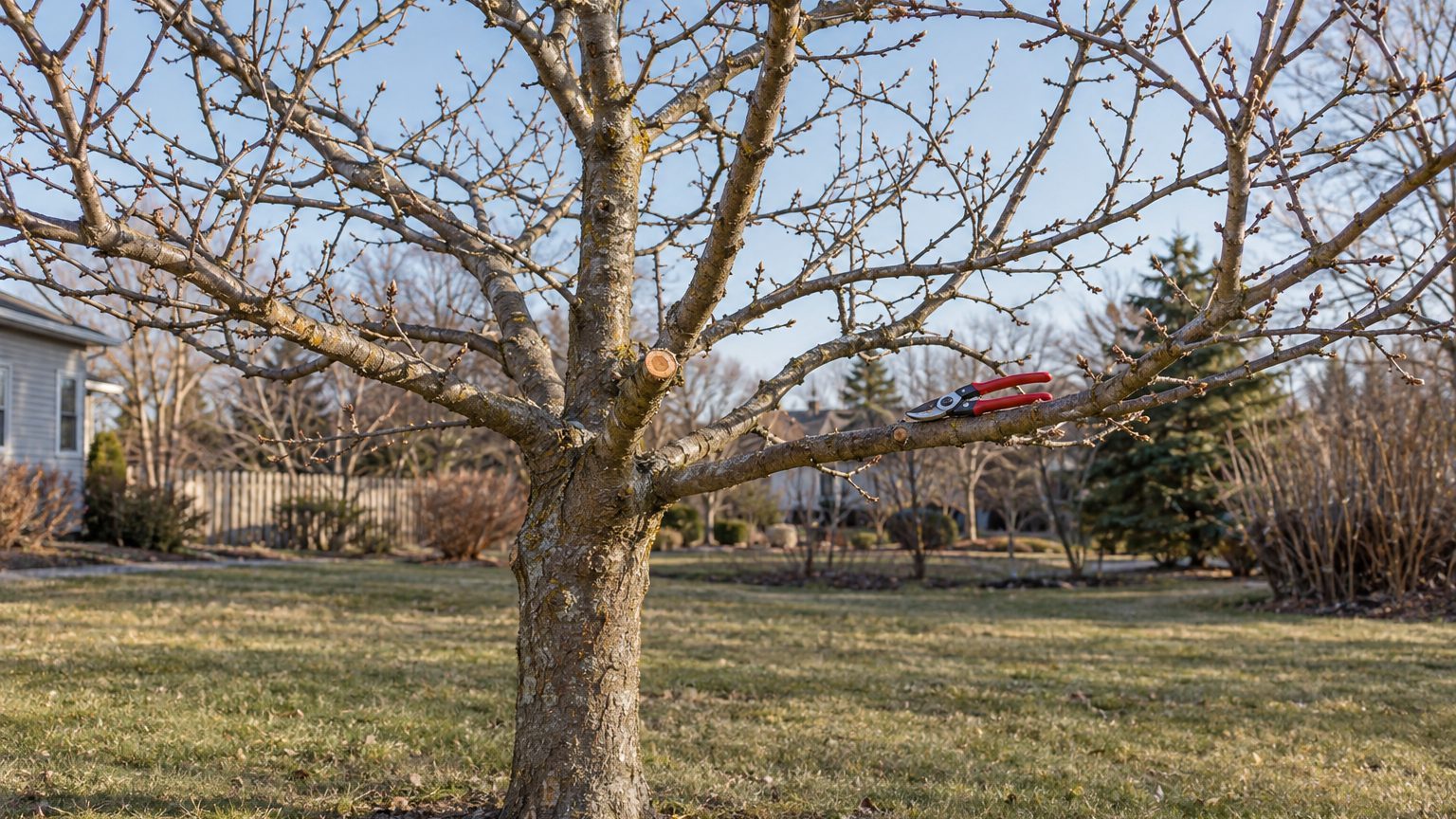
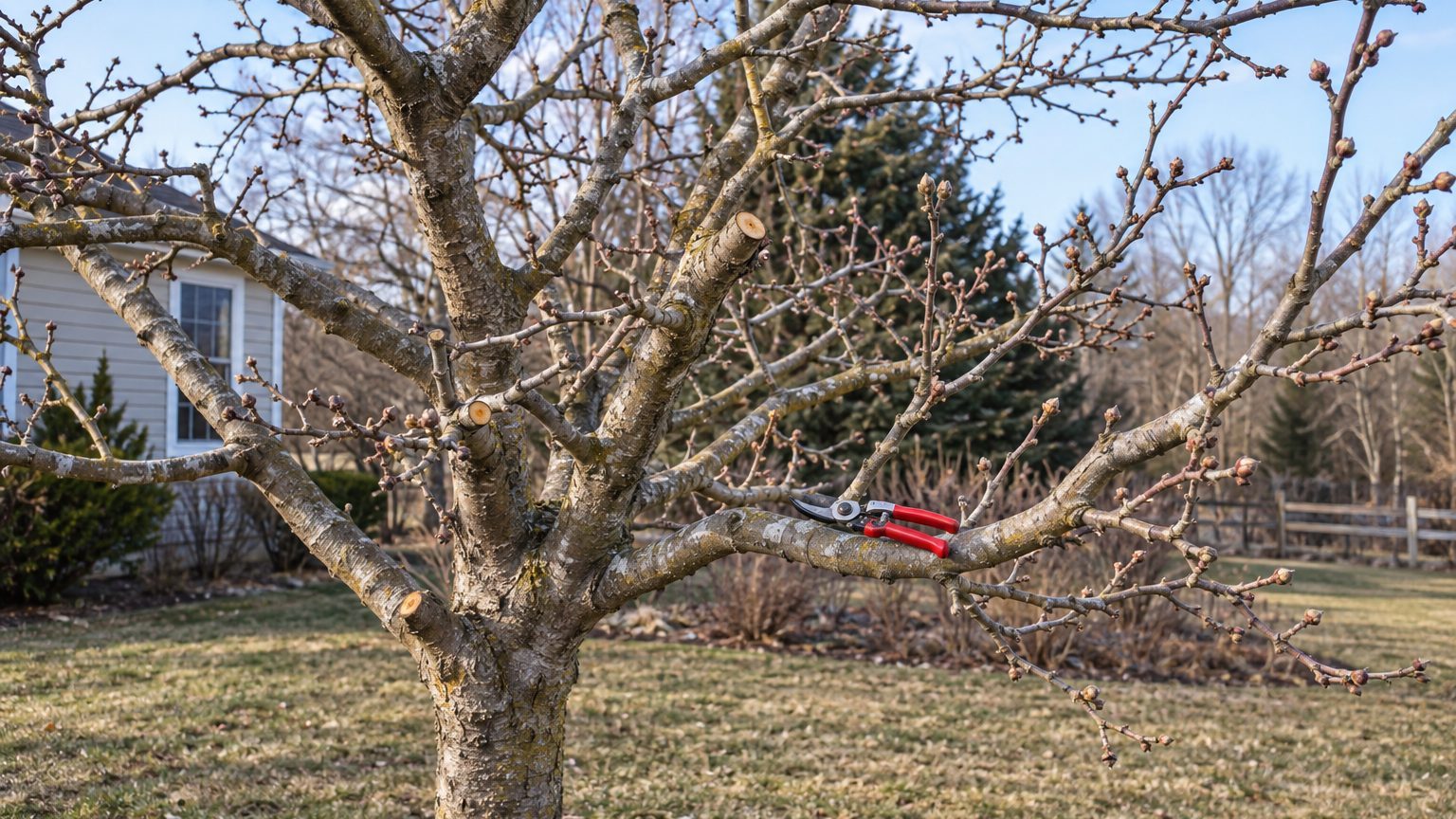
Bare branches against a gray March sky, buds still tight and closed: that is the moment to reach for the pruning saw in Connecticut. Fruit trees here are pruned in late winter into early spring, while they are still dormant and before the buds open.

When to Prune Fruit Trees in Connecticut

Pruning a dormant fruit tree before the buds open

Dormant pruning of apples, pears, peaches, cherries and plums runs from March into April. Pruning in fall or early winter is avoided, because the new growth it triggers may not harden before the cold arrives.

Fruit tree When to prune in Connecticut Why
Apples and pears Early in the dormant window, March The wood is bare and the buds are still closed, so cuts heal before growth starts
Peaches and nectarines Last in the window, April, closest to bloom Flower buds are easily hurt by cold, so you can see which ones survived
Cherries and plums March into April, before buds swell Pruning while dormant keeps cuts clear of new growth
Young trees Late winter into early spring, March to April Shaping the framework early guides how the tree grows that season

Connecticut spans USDA zones 6a to 7b, so the coast near Bridgeport wakes up sooner than the inland hills and the northwest corner. Inland trees often stay dormant longer, which means your pruning may slide later in the window than a neighbor’s near the Sound.

How to Tell Your Fruit Trees Are Ready to Prune

The tree gives clearer signals than the calendar, and a few minutes of looking before you cut saves regret later.

  • The branches are bare, because a tree without leaves is at rest and can handle cuts without losing stored energy.
  • The hardest part of winter has passed, since pruning ahead of a deep freeze can leave fresh wounds exposed to damage.
  • The buds are still tight, which tells you the tree has not yet started pushing sap and growth.
  • Buds are just starting to swell on a peach, a signal to prune it now, because peaches go last and closest to bloom.
  • The ground is workable and the days are mild enough that you can stand outside comfortably with loppers and a saw.

Once buds open into green tips, the dormant window has closed, and heavy cuts are better saved for the following winter.

When to Prune Peach and Apple Trees in Connecticut

Apples sit at the front of the line. They are pruned first, in the middle of the dormant stretch, when the wood is bare and there is no rush. Starting with them lets you work through the orchard in an order that makes sense for each tree.

Peaches come last, near bloom in April. Their flower buds are easily hurt by cold, so waiting lets you see what winter left alive and cut with that in mind. A hard cold snap after pruning matters less when the buds you kept are already known to be sound.

Summer pruning in late July or August is a second chance for light corrections. Severe cutting at that time weakens the tree, so most of the work belongs in winter or early spring. Treat summer as a time to snip a few stray shoots, nothing more.

Where to Get Fruit Tree Advice in Connecticut

Local questions about a particular orchard, variety or pruning cut are best answered by people who work with Connecticut trees. University of Connecticut Extension and your county extension office can help.

  • The state extension service offers pruning guidance written for Connecticut growing conditions, handy to read before the saw comes out.
  • Your county extension office can answer questions about a specific tree, so call when buds start to swell and you are unsure whether to cut.

Common Questions

Can You Prune Fruit Trees in Fall in Connecticut?

Fall pruning is avoided. Cuts made then can prompt new growth that has no time to harden before winter, so wait for the dormant window in late winter.

Can You Plant a Fruit Tree in Fall in Connecticut?

No. Winters here are too cold for a newly planted fruit tree, so planting happens in April and May, with bare-root trees going in while still dormant, before the buds open.

What Happens If You Prune an Apricot or Plum Too Early?

Apricot trees are generally hardy through winter but become tender as temperatures rise in late winter. Plum-apricot hybrids such as Spring Satin do not tolerate freeze-thaw cycles, so holding off on cuts until the dormant window is well along protects them.

When to Prune Fruit Trees in Colorado

When to Prune Fruit Trees in Colorado

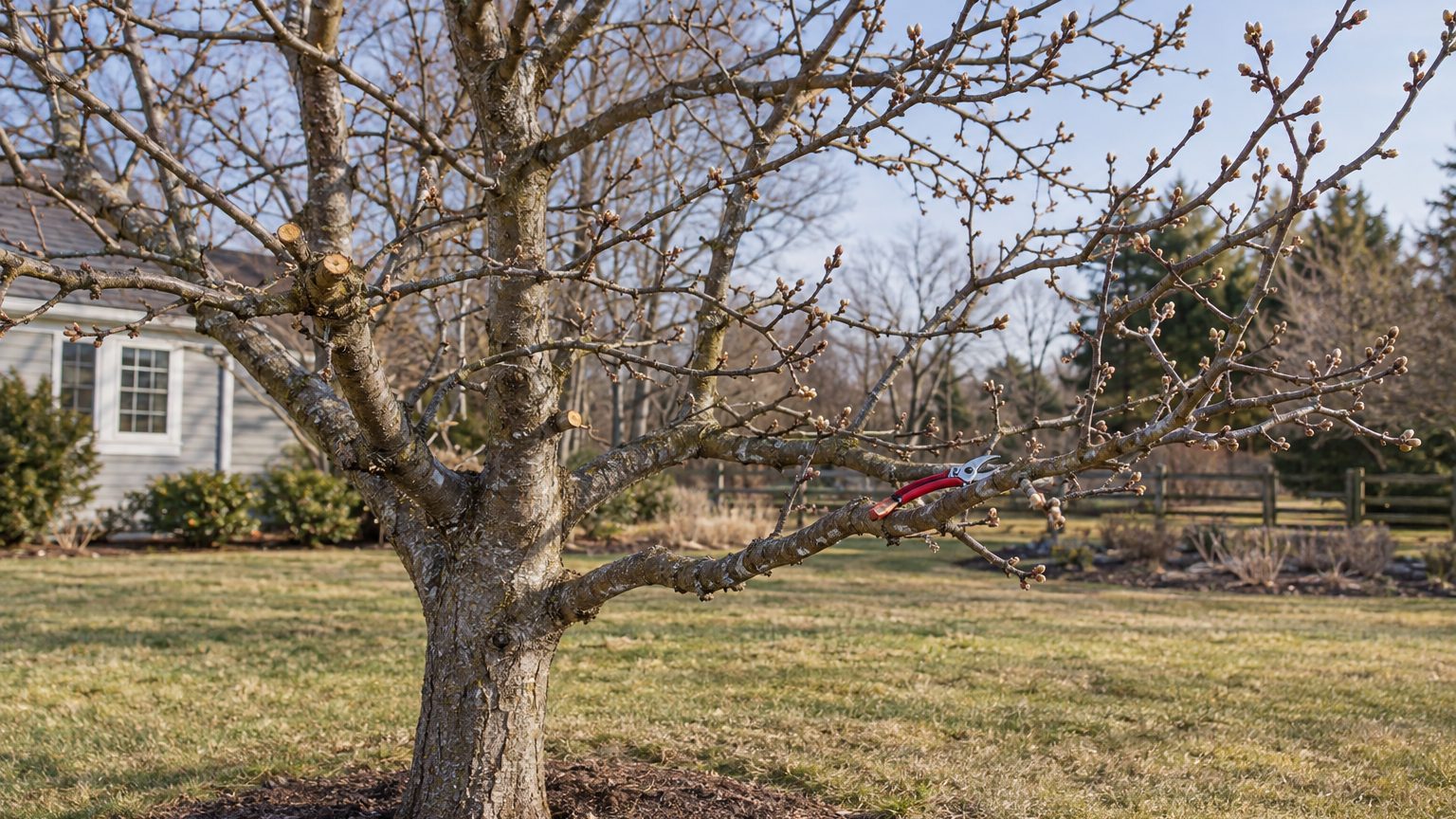
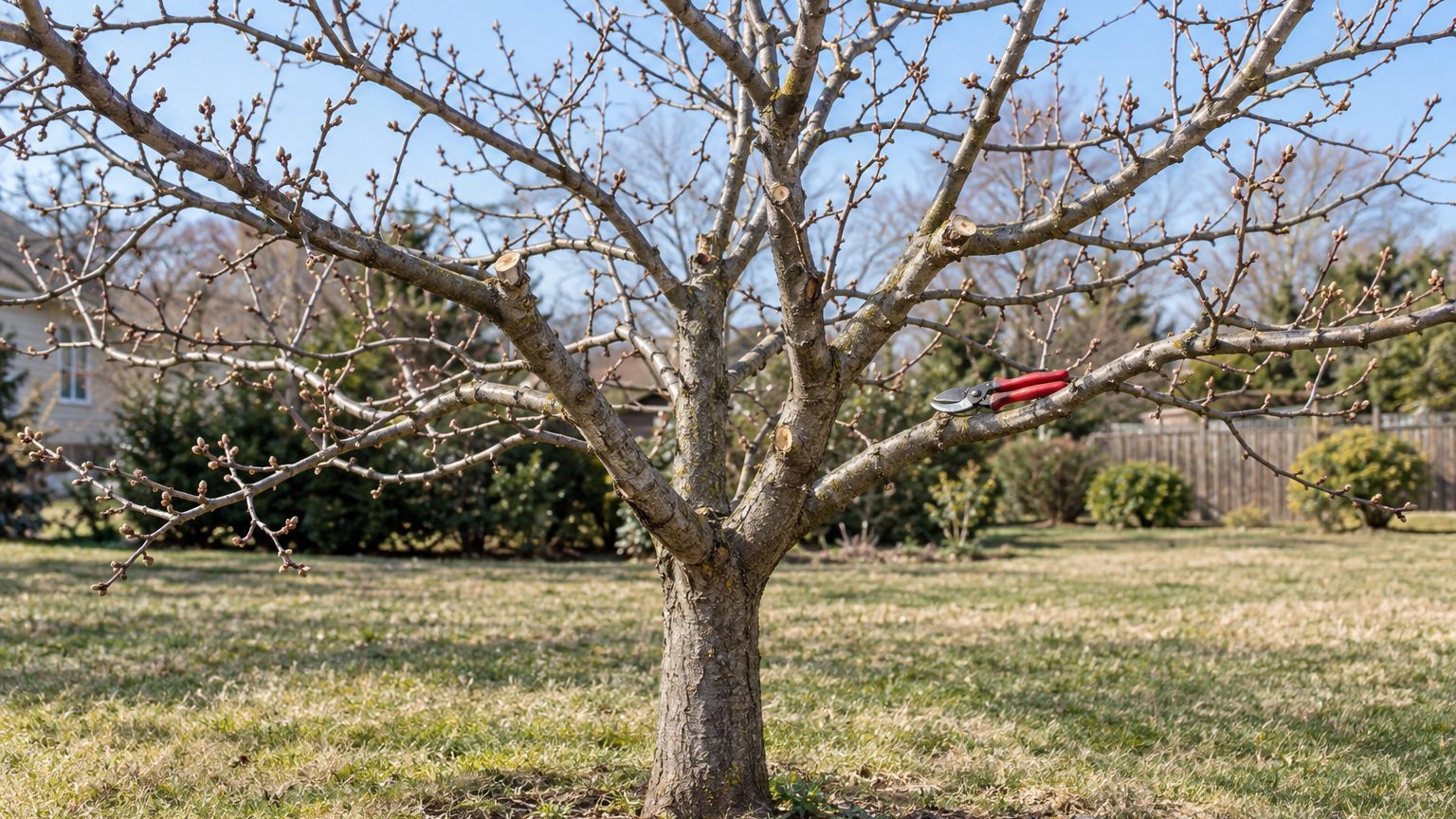
Bare branches against a gray late-winter sky are the signal fruit growers in Colorado look for. Apple, pear, peach, cherry and plum trees are pruned while they sleep, after the hardest cold has passed and before the buds open.

When to Prune Fruit Trees in Colorado

Pruning a dormant fruit tree before the buds open

Dormant pruning in Colorado happens in late winter, with February and March the usual months and April still workable. The tree is at rest, the worst cold is behind it, and the buds have not yet swelled. That order leaves time to apply dormant oil as a preventative spray.

Pruning in fall or early winter is avoided, because new growth triggered by a cut may not harden before the cold arrives.

Fruit tree When to prune in Colorado Why
Apples and pears February to March, April if needed Pruned first among fruit trees, once the deepest cold has passed
Peaches and nectarines February or March Pruned last, closest to bloom, because flower buds are easily hurt by cold
Cherries and plums February to March, April if needed Cut while dormant, before bud swell
Young trees Late winter, while still dormant Planted in April, so first shaping follows the same dormant window

These months fit the Front Range and the plains, where Denver sits at 5,280 feet and the last spring frost falls between May 1 and May 11. Mountain towns and the western slope run on different clocks, and Colorado spans zones 3b to 7b, so a high-country orchard waits longer than a backyard tree in the city.

How to Tell Your Fruit Trees Are Ready to Prune

The calendar gives the months, but the tree itself confirms them. A walk around the yard in late winter shows which signs are present.

  • The branches are bare and the leaves are long gone, which tells you the tree is dormant and can handle cuts.
  • The coldest stretch of winter, when temperatures dip below zero, has passed, so fresh wounds will not be hit by extreme cold.
  • The buds are still tight and closed, which means there is room to prune and to spray dormant oil first.
  • Buds that have begun to fatten at the tips mean the window is closing, so the remaining cuts should be finished soon.
  • Peach buds that are close to showing color are your cue to prune peaches last, after the apples and pears are done.

If the buds have already opened, wait until the tree has finished flowering and settle for light corrections rather than major cuts.

When to Prune Peach and Apple Trees in Colorado

Apples sit at the front of the line. They are pruned in the heart of the dormant season, in February or March, once the severe cold has passed. A hard freeze after pruning does less harm to an apple than to a peach, so there is no reason to hold off until the last moment.

Peaches go last, in February or March, as close to bloom as the calendar allows. Their flower buds are easily hurt by cold, and cutting too early leaves them exposed to a late hard freeze. A few extra weeks of patience protect next summer’s crop.

A practical order for a yard with both: finish the apples first, then turn to the peaches when the buds begin to show signs of life but have not yet opened. Summer pruning is not something to plan around, since the dormant cuts do the main work of shaping these trees.

Where to Get Fruit Tree Advice in Colorado

Local conditions vary a great deal across the state, from plains to foothills to the western slope. Two places can help you fit the general timing to your own yard.

  • Colorado State University Extension publishes guidance on growing tree fruit in Colorado gardens, and it is a good first stop in winter before you pick up the pruning saw.
  • Your county extension office can speak to your elevation and microclimate, so call or visit in January or February to settle on your own pruning week.

Common Questions

Can You Prune Fruit Trees in Colorado in Fall?

Fall pruning is avoided. Cuts can push new growth that has no time to harden before winter, and the tree enters the cold weaker than it should be.

Should You Spray Dormant Oil When Pruning?

Late winter pruning leaves a gap before bud swell, and that gap is the time to apply dormant oil, also called horticultural oil, as a preventative spray.

Which Apple Trees Suit a Colorado Home Garden?

Dwarf apple trees are recommended for home gardeners, but they need careful training and staking. They are also less cold-hardy than semi-dwarf trees, which matters in colder parts of the state.

When to Prune Fruit Trees in California

When to Prune Fruit Trees in California

Bare branches against a gray winter sky, a ladder leaned on the plum, loppers sharpened: that is the picture of pruning season in a California yard. The work belongs to the dormant months, when the tree is resting and the leaves are gone, and the timing shifts a little by fruit.

When to Prune Fruit Trees in California

Pruning a dormant fruit tree before the buds open

Prune fruit trees while they are dormant, with the leaves down and before spring bud break. In California that means January and February, and December can also work. The tree’s own dormancy is the signal, not a statewide frost date.

Fruit tree When to prune in California Why
Apples and pears January and February, the heart of dormancy Heavy pruning belongs in the dormant period
Peaches and nectarines Late in the dormant season, closest to bloom Their flower buds are easily hurt by cold
Plums Dormant season, then again in summer Most fruit trees get a winter pass and a summer touch-up
Young bare-root trees At planting, typically January Topping at 20-24 inches encourages low branching

Apricots and cherries are the exceptions, since they are not pruned in winter here. Avoid cutting in fall or early winter, because new growth may not harden before the cold reaches it.

How to Tell Your Fruit Trees Are Ready to Prune

The tree gives clearer signals than the calendar, and a look at the branches tells you whether the window is open.

  • Bare branches and fully dropped leaves are signs that the tree is dormant.
  • Tight, closed buds mean you are still ahead of bud break, which is the point after which heavy cuts should wait.
  • Swelling buds on a peach or nectarine mean the tree is close to bloom, which is exactly when those trees are pruned last.
  • Apples and pears are pruned while the trees are dormant and the leaves are down.
  • Open blossoms or green tips on an apricot or cherry mean you should skip winter cutting altogether, because apricots and cherries are handled differently here.

When buds start to open, set the loppers down and stop any remaining heavy pruning.

When to Prune Peach and Apple Trees in California

Apples go first. Their heavy pruning fits the middle of dormancy, in January and February, when the tree is fully asleep and the structure is easy to read without leaves in the way. Pears follow the same rhythm.

Peaches wait. Their flower buds are easily hurt by cold, so the cutting happens last, closest to bloom, once the worst of winter has passed. That later timing lets you see which buds survived before deciding what to remove.

Summer is another pruning season for most fruit trees, which are pruned in the dormant season and again in summer. Apricots and cherries skip the winter round entirely.

Where to Get Fruit Tree Advice in California

Climate varies a great deal from the coast to the Central Valley to the Sierra foothills, so local advice is worth having. University of California Agriculture and Natural Resources publishes pruning and planting guidance for the whole state.

  • Local Master Gardeners answer pruning questions and can help you plan the dormant-season work.
  • The county extension office can tell you which varieties suit your chill hours, which is worth settling before you order trees in winter.

Common Questions

Can You Prune Fruit Trees in Summer in California?

Yes. Most fruit trees are pruned in the dormant season and again in summer, with the summer pass used to keep size in check. Apricots and cherries are the ones to leave alone in winter.

Is It Too Late to Prune Once Buds Start to Swell?

Heavy pruning belongs before the buds swell. Peaches can be pruned close to bloom, so a swelling peach bud is not yet a stop sign.

Do You Need to Worry About Frost When Pruning in Coastal California?

Coastal and southern California is frost-free in an average year, so the guide is the tree’s dormancy, not a freeze date. Northern California, the Central Valley and the Sierra do freeze, which is another reason peaches are pruned last.

When to Prune Fruit Trees in British Columbia

When to Prune Fruit Trees in British Columbia

Bare branches against a gray winter sky are the cue for the pruning saw in a British Columbia orchard. Fruit trees here are pruned while they rest, once the worst of the winter cold has passed and before the buds open. That timing protects the cuts and sets up the season’s growth.

When to Prune Fruit Trees in British Columbia

Pruning a dormant fruit tree before the buds open

Dormant pruning of apples, pears, peaches, cherries and plums is best in February and March, once the danger of winter freeze has passed and before growth begins in spring. The dates follow the comparable maritime climate of this province, so confirm local timing with a garden centre or a garden society.

Fruit tree When to prune in British Columbia Why
Apples and pears February to March, early in that window Cuts heal as growth starts, and apples are pruned first
Peaches and nectarines Late in the window, close to bloom Flower buds are easily hurt by cold, so peaches are pruned last
Cherries and plums February to March, while dormant Pruning after the freeze danger and before spring growth limits cold damage
Young trees February to March, planted bare-root while dormant Bare-root trees go in before the buds open, and the first cuts follow the same dormant window

Sweet cherries have an exception: they may be pruned in August, when the risk of bacterial infection is lower. Pruning in fall or early winter is avoided for every fruit tree, because new growth may not harden before the cold. Gardens in the Fraser Valley and on southern Vancouver Island sit in a mild zone (Canadian zone 9a at the reference city of Vancouver), but upland districts run colder.

How to Tell Your Fruit Trees Are Ready to Prune

The tree itself gives better timing than any wall calendar, especially after a mild or a harsh winter. Look for these signs before you climb the ladder.

  • The branches are bare, because a tree that has dropped its leaves is dormant and will take cuts with the least stress.
  • The hardest freezes of winter have passed, since cuts made ahead of a hard freeze can leave wood exposed to injury.
  • The buds are still tight and closed, which means growth has not begun and the tree has plenty of reserves to heal.
  • Fat, plump buds on the tips of the twigs mean the window is closing, so apples and pears come first and peaches wait.
  • Pink or white showing at the bud tips on a peach means you are too late for heavy cuts on that tree.

Spring frost can arrive after pruning, and the average last frost at the Vancouver reference station is March 18. In one year out of two the frost falls later, so treat that date as the middle of a window and not as a safe day.

When to Prune Peach and Apple Trees in British Columbia

Apple trees are pruned first, in the heart of the dormant season. Their wood tolerates cold well, and early cuts leave plenty of time to heal before leaves open. Apples are among the hardier fruits and withstand cold winter temperatures here, so they are the safest to start on while the weather is still cool.

Peaches are pruned last, closest to bloom. Their flower buds are easily hurt by cold, and a cut made too early can invite damage to wood and buds that a late freeze then finishes off. Waiting until the freeze danger is truly past lets you see which buds survived and prune accordingly. Resistant varieties such as Frost and Rosydawn can help with peach leaf curl, a disease that shows up on the new leaves.

Summer pruning is the exception, not the rule. Sweet cherries can be pruned in August to lower the risk of bacterial infection, while every other fruit tree here waits for the dormant season.

Where to Get Fruit Tree Advice in British Columbia

Canada has no county extension office, so local questions go to the province and to neighbors who grow fruit. The British Columbia Ministry of Agriculture and Food is the starting point for orchard and home-fruit guidance.

  • The provincial agriculture pages cover fruit growing and pest questions, and they are worth reading in winter before pruning starts.
  • A local garden centre or garden society can tell you how your district runs compared with the coast, so visit in late winter before the buds swell.
  • Master gardener groups answer local questions about varieties and timing.

Common Questions

Can You Prune Fruit Trees in Summer in British Columbia?

Sweet cherries are the one fruit tree where summer pruning makes sense, and August is the month, because bacterial infection is less likely then. Other fruit trees wait for dormancy so the cuts heal as growth begins.

What Happens If You Prune Fruit Trees Too Early?

Pruning in fall or early winter can push new growth that may not harden before the cold. That tender growth is the part most likely to be damaged when a freeze arrives.

Should You Prune a Newly Planted Fruit Tree?

Bare-root fruit trees are planted in February or March, while dormant and before the buds open. Container trees can also go in during October. Make any first shaping cuts during the same dormant season.

When to Prune Fruit Trees in Arkansas

When to Prune Fruit Trees in Arkansas

Bare branches against a gray winter sky are the cue to pick up the pruning saw. In Arkansas, fruit trees are cut back while they sleep, in the last stretch of winter before the buds open and the sap starts to move.

When to Prune Fruit Trees in Arkansas

Pruning a dormant fruit tree before the buds open

Prune fruit trees in Arkansas while they are dormant, before the buds swell. February suits most of them, and January or March work as well when the weather or your schedule gets in the way.

Apples and pears can go first, from mid-January. Peaches and plums wait until mid-February to early March, closer to bloom.

Fruit tree When to prune in Arkansas Why
Apples and pears Mid-January into February Hardy wood, so they can be pruned first while fully dormant
Peaches and nectarines Mid-February to early March Pruned last, close to bloom, because flower buds are easily hurt by cold
Plums Mid-February to early March Follow the peach timing, after the hardest cold has passed
Young trees February, with January or March as alternatives Shaping cuts heal as growth starts, while the tree is still dormant

Cherries fit the general February window for most fruit trees. Fall and early winter are poor times for any of these cuts, since new growth they trigger may not harden before the cold arrives.

How to Tell Your Fruit Trees Are Ready to Prune

The tree itself gives better clues than a wall calendar, and a few signs line up with the months above.

  • The leaves are gone, which means the tree is dormant and can take cuts without pushing tender new growth.
  • The hardest cold of winter has passed, so fresh cuts are less likely to be hurt by a deep freeze.
  • Buds are still tight and closed, which tells you there is time to prune before the sap starts to rise.
  • Buds begin to swell on a peach, and that is the signal to finish its pruning quickly, since the flower buds are close to opening.
  • The branch structure is clearly visible without foliage, so crossing limbs, dead wood and crowded centers are easy to spot.

If buds have already opened and bloom is underway, the dormant window has closed for that year, and light cleanup is all the tree needs until next winter.

When to Prune Peach and Apple Trees in Arkansas

Apples sit at the early end of the season. They can be pruned from mid-January through February, right in the heart of dormancy, because there is no rush and the cold is rarely a concern for the wood.

Peaches run on a later clock. Prune them from mid-February to early March, as close to bloom as you can manage while buds are still closed. Their flower buds are easily hurt by cold, so cutting early can remove wood you may need if a freeze arrives.

This order is a practical way to plan the work. Start with apples and pears, then move to plums and peaches as the days lengthen. Summer pruning is not part of the routine here, so save the main cuts for the dormant months.

Where to Get Fruit Tree Advice in Arkansas

Local help matters because hardiness runs from zone 6b to 8a across the state, so timing and varieties can shift between the Ozarks and the south.

  • University of Arkansas Extension offers fruit tree guides and pruning advice, so look there before winter starts.
  • Your county extension office can answer questions about your own orchard or backyard trees, and a visit in January gives you time to plan.

Common Questions

Can You Prune Fruit Trees in Summer?

Dormant winter pruning is the main job for fruit trees in Arkansas. Leave heavy cuts for the dormant months, and keep summer to the removal of broken or dead limbs if you notice them.

What Happens If You Prune Too Early in Winter?

Cuts made in fall or early winter can prompt new growth that has not hardened before cold arrives. Waiting until the late-winter window protects the tree, and it matters most for peaches.

Is It Too Late to Prune After Buds Swell?

Swelling buds mean the window is closing. Finish quickly if you must, starting with peaches, and plan the heavier work for the next dormant season.

When to Prune Fruit Trees in Arizona

When to Prune Fruit Trees in Arizona

Bare branches in a fruit tree‘s quiet months are the cue to reach for the loppers. In Arizona, that means the stretch of winter when the tree is at rest and the buds have not yet opened. The timing leaves the tree’s cuts to heal as growth restarts, and the details shift a little from apples to peaches.

When to Prune Fruit Trees in Arizona

Pruning a dormant fruit tree before the buds open

Dormant pruning of fruit trees in Arizona fits late January and February, before growth starts. The tree is resting, the cuts are easy to read against bare wood, and spring growth fills in right after. Fall and early winter pruning is avoided, because new growth may not harden before the cold.

Fruit tree When to prune in Arizona Why
Apples and pears Late January to February, among the first trees pruned Dormant wood is easy to shape, and these trees tolerate an earlier start
Peaches and nectarines February, last of the fruit trees and closest to bloom Flower buds are easily hurt by cold, so pruning waits
Cherries and plums Late January to February, while dormant Cuts made before the buds swell heal as growth begins
Young trees Late January to February, after planting in February to March Bare-root trees go in while dormant, and early shaping sets the framework

Nectarines follow the peach schedule. Low-chill stone fruits such as apricots, plums and peaches can bloom during a warm spell once they have met their chill hours, which is one more reason to finish pruning on time and not let it drift toward bloom.

How to Tell Your Fruit Trees Are Ready to Prune

The tree itself gives better timing cues than a calendar page, and a few signs together tell you the window is open.

  • The leaves are all down, which tells you the tree is dormant and the structure of the branches is easy to see.
  • Once winter has eased, cuts are less likely to be followed by a hard freeze that dries out the fresh wood.
  • The buds are still tight and closed, which means the tree has not yet put its energy into new growth.
  • Buds along the twigs have just started to look plump, a signal that peaches and other stone fruits should be pruned now and not postponed.
  • Bark and wood look dry and firm, not soft or sappy, so cuts will seal cleanly.

Low-desert winters rarely bring hard freezes, though a rare cold snap can touch 32F between late December and mid January. Waiting until that stretch has passed keeps tender cuts from taking a hit.

When to Prune Peach and Apple Trees in Arizona

Apples go first. They sit deep in dormancy in late January and February, and the wood is sturdy enough to handle early cuts. Pruning them before the peaches also spreads out the work so no tree is rushed.

Peaches go last, close to bloom, because their flower buds are easily hurt by cold. Cutting late lets you see which buds came through the winter and which did not, so you can prune with the real crop in view. Stone fruits are far more frost-prone than apples, and that is why the peach waits.

Pruning in summer is not part of the regular routine for these trees, and the extension guidance covers dormant pruning as the main job. If a branch breaks or a limb is clearly dead in warm weather, take it off at the break and leave the shaping for winter.

Where to Get Fruit Tree Advice in Arizona

Arizona spans everything from low desert to high country, and fruit tree needs change with the elevation. Local help can confirm which varieties suit your chill hours and your yard. The University of Arizona Cooperative Extension is the place to start, and your county office adds neighborhood detail.

  • Visit University of Arizona Cooperative Extension before winter for publications on deciduous fruit and chilling requirements, so you choose and prune varieties that fit your area.
  • Call your county extension office in January to ask what the local trees are doing and whether your yard sits in a cold pocket.

Common Questions

Can You Prune Fruit Trees in Summer in Arizona?

Summer is hard on trees, since heat and dry soil stress them. Keep summer work to removing broken or dead wood, and save shaping cuts for the dormant season.

What Happens If You Prune Fruit Trees Too Early?

Pruning in fall or early winter can push new growth that does not harden before the cold. That tender growth is the part most likely to be damaged, so hold off until the late winter window.

Should Young Fruit Trees Be Pruned When You Plant Them?

Bare-root fruit trees are planted in February to March while dormant, before the buds open. Planting and early shaping happen in the same dormant stretch, so the tree settles in before growth begins.

When to Prune Fruit Trees in Alberta

When to Prune Fruit Trees in Alberta

Bare branches against a gray sky, a few clumps of old snow along the fence, and a saw hanging in the garage: that is the Alberta pruning season. Fruit trees here are cut while they sleep, after the hardest cold has passed and before the buds wake up.

When to Prune Fruit Trees in Alberta

Pruning a dormant fruit tree before the buds open

Dormant pruning of fruit trees in Alberta is best done in March and April, in late winter or early spring, once the coldest weather has passed and before bud break. Alberta has no local tree-timing page of its own, so these months follow the northern plains, where the climate is comparable.

Fruit tree When to prune in Alberta Why
Apples and pears March to April, while dormant Cuts heal as growth starts, and these trees are pruned first
Peaches and nectarines Late in the window, closest to bloom Flower buds are easily hurt by cold, so these are pruned last
Cherries and plums March to April, before buds open Pruning is finished before new growth begins
Young trees March to April, while dormant Shaping early sets the framework before the first buds swell

Fall and early winter are poor times to cut, because new growth triggered by pruning may not harden before the cold arrives. Spring frost matters too. At the Calgary reference station, the average last spring frost falls on May 21, which means frost comes later than that date in one year out of two. Treat it as the middle of a window. Districts to the north and on higher ground run weeks behind.

Alberta sits in Canadian hardiness zone 4a for the reference city. That is a Canadian rating and does not convert to a USDA zone, so rely on it only when you read Canadian nursery tags.

How to Tell Your Fruit Trees Are Ready to Prune

The tree itself gives better signals than any date on the wall, and a few minutes of looking at the branches will tell you whether to pick up the saw.

  • The tree is bare of leaves, which means it is dormant and can handle cuts.
  • The deepest part of winter has passed, so cut wood is no longer likely to be hit by a hard freeze.
  • The buds are still tight and closed, which tells you there is time to work before growth starts.
  • Buds that have begun to swell mean apples and pears should be finished soon, and peaches can now be done.
  • Green tips showing at the bud means the dormant window has closed and the work should wait.

Pick a dry day with the branches clear of ice, and clean the blades before moving from one tree to the next.

When to Prune Peach and Apple Trees in Alberta

Apples are pruned first. Cutting them in the middle of the dormant window, once the worst cold has passed, gives you time to work through the tree without hurry. They are pruned in March and April, so they are the tree to start with.

Peaches go last, as close to bloom as you dare. Their flower buds are easily hurt by cold, and pruning early can leave you cutting away wood that would have borne fruit. Waiting until the buds are clearly swelling lets you prune with confidence.

A practical order for a yard with both trees is apples early in the window, then pears, cherries and plums, then peaches at the end. Summer pruning is not part of the Alberta calendar for fruit trees, so keep the saw for the dormant season.

Where to Get Fruit Tree Advice in Alberta

Alberta has no county extension offices, so questions go to the province and to local growers. Alberta Agriculture and Irrigation is the provincial starting point for fruit growing information.

  • A local garden centre can tell you which fruit varieties have suited your town, and winter is a good time to ask before spring stock arrives.
  • A garden society or master gardener group in your area can confirm local pruning timing, and late winter meetings are a handy time to catch them.

Common Questions

Can You Prune Fruit Trees in Summer in Alberta?

Dormant pruning is the Alberta routine. Cuts are made in late winter or early spring, before bud break. Leave the saw in the garage until the next dormant season unless a branch is broken or dead.

What Happens If You Prune Fruit Trees Too Early?

Cutting in fall or early winter can push new growth that does not harden before the cold. A hard freeze then damages that tender wood. Waiting until the coldest weather has passed protects the tree, and peaches in particular benefit from the later cut.

Should You Wait Until After the Last Frost to Prune?

No. Pruning happens while the tree is still dormant, well before the frost risk is over. The last spring frost matters for blossoms, not for the saw, so follow the swelling buds rather than the frost date.

When to Prune Fruit Trees in Alaska

When to Prune Fruit Trees in Alaska

Bare branches against a snowy yard in late winter are the cue to pick up the pruning saw. In Alaska, fruit trees are pruned while they sleep, in the last stretch of winter and the first days of spring, before any bud has started to open. Timing depends on the tree and on how far along it is.

When to Prune Fruit Trees in Alaska

Pruning a dormant fruit tree before the buds open

Prune apples, pears, peaches, cherries and plums in March and April, while the tree is still dormant. Cutting at that point lets wounds heal as growth restarts, and you can see the branch structure clearly without leaves in the way.

Fruit tree When to prune in Alaska Why
Apples and pears March to April, early in that window Dormant wood cuts cleanly, and apples are pruned first
Peaches April, last of all, closest to bloom Flower buds are easily hurt by cold
Cherries and plums March to April, before buds swell Cuts made while the tree rests heal as growth begins
Young trees March to April, while dormant Shaping happens before new growth starts

Skip fall and early winter. A cut made then can push new growth that has no time to harden before the cold arrives. Hardiness varies widely across the state, from USDA zone 1a to 8a, so the milder Anchorage area and the Interior will not feel the same on any given day.

How to Tell Your Fruit Trees Are Ready to Prune

The tree gives clearer signals than a calendar page does, and in Alaska the signs shift from one yard to the next.

  • Every leaf is gone, which means the tree is fully dormant and can take a cut without losing active growth.
  • The hardest part of winter has passed, so the wood is less likely to be injured by a hard freeze after you open a wound.
  • Buds are still tight and closed, which tells you there is time left to prune before growth starts.
  • Buds that begin to swell mean the window is closing, so finish apples and pears first and leave peaches for last.
  • Peach flower buds that look plump and close to opening are your sign to make the final cuts, since cold can damage them easily.

If the buds have already opened, wait and tidy the tree the following winter rather than cutting into active growth.

When to Prune Peach and Apple Trees in Alaska

Apples go first. Their wood is tough, and the tree can be pruned in the heart of the dormant stretch, in March, once the worst cold is behind you. Hardy choices for Alaska yards include Norland, which is represented by bearing trees in Fairbanks, Palmer and Anchorage, and Rescue, an apple-crabapple cross that bears very young.

Peaches wait. Their flower buds are easily hurt by cold, so the saw comes out last, in April, as close to bloom as you can safely get. Pruning them early would expose buds to cold snaps that are still possible in late winter.

Both kinds of tree are pruned while dormant and before the buds swell. Summer pruning is not part of the plan for Alaska fruit trees, so save your cuts for the dormant window.

Where to Get Fruit Tree Advice in Alaska

Conditions vary a great deal between Anchorage, the Mat-Su Valley and the Interior, so local advice is worth having before you cut. University of Alaska Fairbanks Cooperative Extension and your county office are good places to start.

  • The extension service publishes guides on growing tree fruits and on hardy varieties, which are handy to read in winter before pruning season.
  • Your local extension office can tell you which varieties suit your area, so call before you buy a tree or plan a big cut.

Common Questions

Can You Prune Fruit Trees in Fall in Alaska?

Fall pruning is best avoided. New growth triggered by a cut may not harden before the cold sets in, which leaves the tree open to winter injury.

Which Fruit Trees Survive Alaska Winters?

Hardy apples such as Norland and Rescue do well, as do sour pie cherries, which survive through zone 3. In Southcentral Alaska, Manchurian plum and Manchurian apricot are reliably winter-hardy. Dwarfing rootstocks common in the Lower 48 are not reliably hardy here.

Do Hardy Crabapples Need Pruning at the Same Time?

Crabapples are also a good fit for Alaska, with Siberian and Dolgo types growing well and some cultivars surviving temperatures down to -40°F in the Interior. They suit the same dormant-season timing as other fruit trees.

The almanac, state by state. Every date on this site comes from a state’s own frost facts and its extension service’s calendar — and says where it comes from.